Logic’s Language Barrier

Jessica Love worries about the challenges facing non-native scientists working in the US:

[A]rguments themselves are constructed differently in English than in other languages. “In Spanish, it is much more typical to talk around the topic and only get to the point by the end of the text, whereas in English there is a bigger pressure to put the topic right up front and then make the arguments after the fact,” says [PhD grad] Kanayet. [Korean doctoral student] S notes something similar: “English writing is extremely deductive—you put the topic sentence at the beginning and your supporting evidence follows. … In East Asia the order is opposite. You need to read the whole thing” before the thesis is revealed.

Finally, and most disturbingly, conducting research solely in a non-native language can leave scientists—even ones who are by all accounts smart and successful—feeling as though their very thoughts are at risk. Says S, “you start ‘thinking’ in English. All terms are in English and you talk about your research in English. If your English is still not fluent enough, it means that you don’t have great tools to think.”

A Domed Defense Against Tornadoes

A reader writes:

Your reader from OKC who had the shelter built in her garage is so right. When you live in Tornado Alley, you need to be prepared. On a recent road trip in Texas, I was intrigued by a site in the tiny town of Italy, Texas. It was the Monolithic Dome Institute.

I exited the interstate, toured the grounds and came away fascinated as to why this architectural wonder is not more employed in places prone to hurricanes, tornadoes and cyclones. They simply cannot be blown down. Further, monolithic dome buildings qualify for FEMA grants because they meet the agency’s standards for near absolute protection from tornadoes and hurricanes. The Monolithic Dome Institute has built them for schools (great start), churches and industry. A perusal of their site will show you plenty of very nice single family homes as well. I’m sure your average HOA would freak if you started to build a dome, but if your house is the only one standing after a natural disaster, maybe it’s time to rethink how we’re building. Imagine a community, a subdivision made entirely of dome houses. Weird? For a while, sure, but what a lifesaver.

The Skinny On Obesity

Virginia Hughes examines the links between body weight and health:

Some researchers contend that what really matters is the distribution of fat tissue on the body, with excess abdominal fat being most dangerous; others say that cardiovascular fitness predicts mortality regardless of BMI or abdominal fat. “BMI is just a first step for anybody,” says Steven Heymsfield, an obesity researcher and the executive director of the Pennington Biological Research Center in Baton Rouge, Louisiana. “If you can then add waist circumference and blood tests and other risk factors, then you can get a more complete description at the individual level.”

If the obesity-paradox studies are correct, the issue then becomes how to convey their nuances. A lot of excess weight, in the form of obesity, is clearly bad for health, and most young people are better off keeping trim. But that may change as they age and develop illnesses. Some public-health experts fear, however, that people could take that message as a general endorsement of weight gain.

In a follow up, she discusses obesity with molecular biologist Jeffrey Friedman:

Each of us, he argues, has a different genetic predisposition to obesity, shaped over thousands of years of evolution by a changing and unpredictable food supply. In modern times, most people don’t have to deal with that nutritional uncertainty; we have access to as much food as we want and we take advantage of it. In this context, some individuals’ genetic make-up causes them to put on weight — perhaps because of a leptin insensitivity, say, or some other biological mechanism.

In other words, morbidly obese people lost the genetic lottery. “The irony is, it’s the people who are the most obese who are stigmatized the most, and in fact, they’re the people who can do the least about it,” Friedman says.

Dreamboat Evildoers

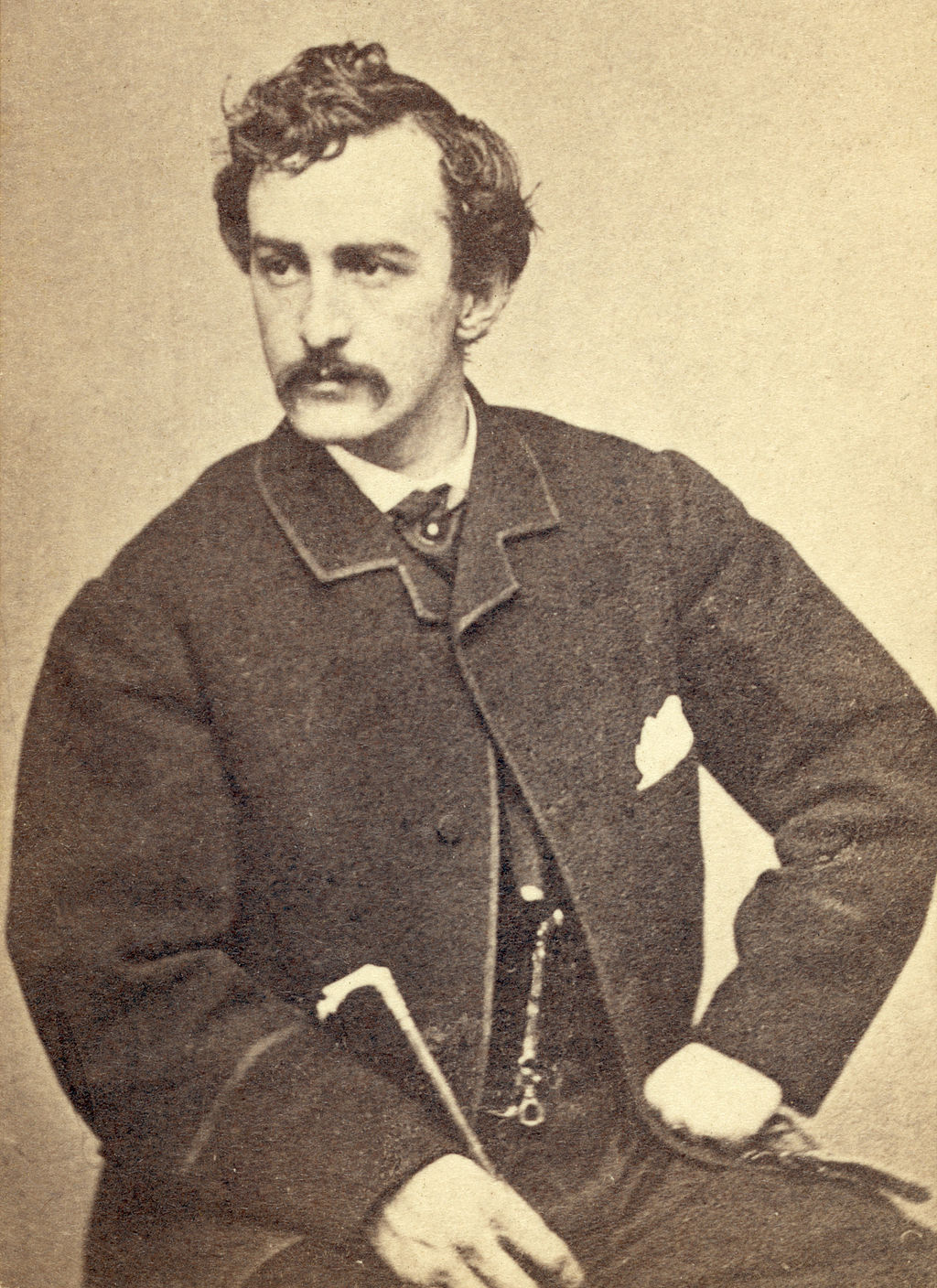
Daniel Luzer notes that Dzhokhar “Jahar” Tsarnaev is hardly the first terrorist with a pretty face:

[T]his is actually a common feature of the world’s political assassins. Tsarnaev’s John_Wilkes_Booth-portrait
attractiveness is not unusual. If you want to be a terrorist, it’s not just necessary to be an ideological zealot unconcerned with legality or normative morality; it also helps to be fairly good looking. This concept of attractive guys as the world’s killers is, in fact, so common that the 2001 Ben Stiller comedy Zoolander posited that male models were behind all of the political assassinations of the last two centuries.

That’s very funny. What’s perhaps a little less funny is that the pretty boy assassin observation is technically accurate. And because they’re so often young men—older guys with mortgages and children aren’t often political terrorists; they have too much to lose—from unfortunate backgrounds, they tend to develop strange followings of teenage girls more than any other group.

Previous Dish on Jahar’s fan club here.

(Portrait of John Wilkes Booth via Wikimedia Commons)

The People’s Facebook

Ari Melber, Woodrow Hartzog and Evan Selinger push back against the imbalance of power that they see in the “terms of service” agreements employed by social media sites:

In return for driving the profits of social media companies, users get free software. But too often, the cost is unpredictable vulnerability: confusing, generic contracts that give companies control over your data, prose, pictures, personal information and even your freedom to simply quit a given website. This is a classic example of form contract abuse—when a single, powerful party pushes a contract onto a disparate group of other parties.

They call for a “People’s Terms of Service” developed by social media users to serve as “a common reference point and stamp of approval”:

There are two potential benefits: The result could be pressed on existing Internet companies, and also provide a model for new companies that want compete for users who demand respect for their freedom, choice and privacy. To be effective, the contract would use plain English, not legal jargon. It should be short enough so people can read it. (That’s a contrast to Facebook, which offers a contract almost as long as the US Constitution.) Beyond terminology itself, we propose five values worth considering for a model agreement: security, confidentiality, transparency, permanency and respect for intellectual property.

The Most Delicate Spring Flowers

dish_microflowers2

Harvard researcher Wim L. Noorduin has developed a process that creates self-assembling “flowers” comprised of microscopic crystals:

The process calls for dissolving barium chloride and sodium silicate in a container of water. A chemical reaction then forms barium carbonate crystals (thanks to carbon dioxide in the air). From there, the shape of these crystals can be manipulated with small pH changes to the solution.

One formed, they’re placed under an electron microscope and the final product resembles a field of flowers on a flat surface – which are actually glass plates, razor blades, and even pennies. “When you look through the electron microscope, it really feels a bit like you’re diving in the ocean, seeing huge fields of coral and sponges,” says Noorduin. “Sometimes I forget to take images because it’s so nice to explore,” he continued.

(Image courtesy of Wim L. Noorduin, Harvard University)

Fanfic For Sale

Kindle Worlds permits fan fiction writers to sell, through Amazon, stories inspired by Alloy Entertainment series such as Gossip Girl, Pretty Little Liars, and The Vampire Diaries. Amazon and Alloy will acquire the rights to the work without further compensation to the writers.  Racheline Maltese has questions:

The contractual terms of Kindle Worlds are the sort traditional professional writers would be strongly advised against signing on to. Is fannish work worth less? Should it be?

John Scalzi suspects that the plan is not, ultimately, to the benefit of the writer:

The argument here could be, well, you know, people who were writing fan fiction weren’t getting paid or [did not have] rights to these characters and worlds anyway, so only getting paid for their work once is still better than what they would have gotten before. And that’s not an entirely bad argument on one level. But … there’s a difference between writing fan fiction because you love the world and the characters on a personal level, and Amazon and Alloy actively exploiting that love for their corporate gain and throwing you a few coins for your trouble.

Gavia Baker-Whitelaw quotes “author and fanfic enthusiast” Morgan Davies:

“Fandom has always been a fundamentally anti-capitalistic endeavor… it’s the only place I know of where writing is a uniquely playful act. It’s about fans taking mainstream culture and redefining it and owning it in a creative but not monetary way. It’s inherently subversive. The idea that a huge corporation will be selling fanfiction and that the original creators would benefit monetarily from that is extremely disturbing to me.”

Face Of The Day

Memorial Day Commemorated At Arlington National Cemetery

Anne Kornblut and her two-year-old son visit a gravesite in Section 60 at Arlington Cemetery, May 27, 2013. For Memorial Day, President Obama layed a wreath at the Tomb of the Unknowns, paying tribute to military veterans past and present who have served and sacrificed their lives for their country. By Mark Wilson/Getty Images.

The Failures You Can’t See

David McRaney explains “survivorship bias” by using an example from WWII:

The military looked at the bombers that had returned from enemy territory. They recorded where those planes had taken the most damage. Over and over again, they saw the bullet holes tended to accumulate along the wings, around the tail gunner, and down the center of the body. Wings. Body. Tail gunner. Considering this information, where would you put the extra armor? Naturally, the commanders wanted to put the thicker protection where they could clearly see the most damage, where the holes clustered. But [statistician Abraham] Wald said no, that would be precisely the wrong decision. Putting the armor there wouldn’t improve their chances at all.

Do you understand why it was a foolish idea? The mistake, which Wald saw instantly, was that the holes showed where the planes were strongest. The holes showed where a bomber could be shot and still survive the flight home, Wald explained. After all, here they were, holes and all. It was the planes that weren’t there that needed extra protection, and they had needed it in places that these planes had not. The holes in the surviving planes actually revealed the locations that needed the least additional armor. Look at where the survivors are unharmed, he said, and that’s where these bombers are most vulnerable; that’s where the planes that didn’t make it back were hit.

The commanders’ mistake is very common: 

After any process that leaves behind survivors, the non-survivors are often destroyed or rendered mute or removed from your view. If failures becomes invisible, then naturally you will pay more attention to successes. Not only do you fail to recognize that what is missing might have held important information, you fail to recognize that there is missing information at all.

You must remind yourself that when you start to pick apart winners and losers, successes and failures, the living and dead, that by paying attention to one side of that equation you are always neglecting the other. If you are thinking about opening a restaurant because there are so many successful restaurants in your hometown, you are ignoring the fact the only successful restaurants survive to become examples. Maybe on average 90 percent of restaurants in your city fail in the first year. You can’t see all those failures because when they fail they also disappear from view.