A Poem For Saturday

merwin_swenson

2013 marks the centennial of May Swenson’s birth and to celebrate The Library of America has just published May Swenson: Collected Poems, the first comprehensive collection of her poetry ever published. There will be an event to mark the occasion next Tuesday, May 28th – Swenson’s birthday – at 7 pm at Poets House in New York City, co-sponsored by the Poetry Society of America, directed by the Dish’s poetry editor Alice Quinn. Participants include Jeanne Marie Beaumont, Sharon Dolin, Mark Doty, Jessica Greenbaum, Marilyn Hacker, Richard Howard, Jan Heller Levi, Gardner McFall, Willard Spiegelman, and Samantha Thornhill, each reading a favorite poem or two by this fetching poet. To add to the occasion, we will be featuring Swenson’s poetry this weekend, beginning with “Question”:

Body my house
my horse my hound
what will I do
when you are fallen

Where will I sleep
How will I ride
What will I hunt

Where can I go
without my mount
all eager and quick
How will I know
in thicket ahead
is danger or treasure
when Body my good
bright dog is dead

How will it be
to lie in the sky
without roof or door
and wind for an eye

With cloud for shift
how will I hide?

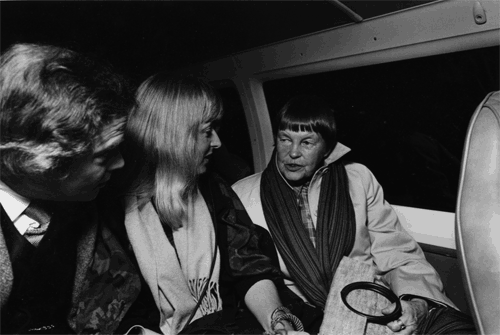
(From May Swenson: Collected Poems, Langdon Hammer, editor (The Library of America, 2013) © The Literary Estate of May Swenson. Photo © Larry Fink. Swenson is on the far right, speaking with W.S. and Paula Merwin.)

How To Treat A Literary Lady

Making the rounds in literary circles this week is the 19th-century relic Miss Leslie’s Behavior Book, which features passages on how to treat female writers with civility:

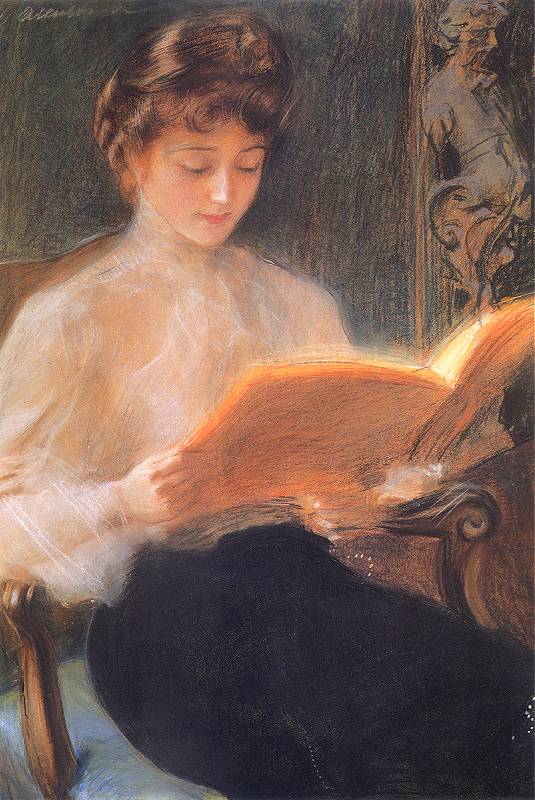
If you chance to find an authoress occupied with her needle, express no astonishment, and refrain from exclaiming, “What! can you sew?” or, “I never supposed a literary lady could even hem a handkerchief!” This is dish_womanreadingfalse, and if expressed in words, an insulting idea. A large number of literary females are excellent needle-women, and good housewives; and there is no reason why they should not be.

If, when admitted into her study, you should find her writing-table in what appears to you like great confusion, recollect that there is really no wit in a remark too common on such occasions,–“Why, you look quite literry,”–a poor play on the words literary and litter. In all probability, she knows precisely where to lay her hand upon every paper on the table: having in reality placed them exactly to suit her convenience.

If you find your literary friend in déshabille, and she apologizes for it –(she had best not apologize)– tell her not that “authoresses are privileged persons, and are never expected to pay any attention to dress.”  Now, literary slatterns are not more frequent than slatterns who are not literary. It is true that women of enlarged minds, and really good taste, do not think it necessary to follow closely all the changes and follies of fashion, and to wear things that are inconvenient, uncomfortable, and unbecoming, merely because milliners, dress-makers, &c. have pronounced them “the last new style.”

(Image: Reading, by Teodor Axentowicz, 1899, via Wikimedia Commons. Hat tip: Sadie Stein)

The Jane Austen Internet

Olivia Rosane reviews the Lizzie Bennet Diariesa popular web series adaptation of Pride and Prejudice:

Watching a story that has survived two centuries play out over new media is an assurance that something of our humanity remains constant between the world of quills and parchment and the world of styluses and screens. We will still judge each other based on first impressions. We will still have embarrassing families. A combination of money and reserve will make you seem like a huge jerk to everyone who doesn’t know you well. But more than that, watching a serialized adaptation of a story we all know takes the edge off our suspense. No matter how disturbing some developments may be, (Spoiler alert: in this version, in stead of running off with Lydia under the false pretense of an elopement, Wickham plans to publish a sex tape of Lydia online without her consent) we know the end is happy. We keep watching not to know what will happen, but how it will.

She adds:

Jane Austen’s internet success isn’t so surprising. She is, after all, one of those few authors who live on as both a pop-cultural phenomenon and a dissertation topic. In fact, given her talent for snarky dialogue, Austen and the internet seem like a perfect match. For what do we use social media, after all, but to make sport for our neighbors, and laugh at them in our turn?

Previous Dish on Jane Austen here.

Living Only In The Moment

From a review of Permanent Present Tense, Suzanne Corkin’s account of the fascinating life of Henry Molaison, perhaps the most famous amnesiac:

When he was 27, a disastrous brain operation destroyed his ability to form new memories, and he lived for the next 55 years in a rolling thirty-second loop of awareness, a ‘permanent present tense’. During this time he was subjected to thousands of hours of tests, of which naturally he had no recall; he provided data for hundreds of scientific papers, and became the subject of a book (Memory’s Ghost by Philip Hilts) and a staple of popular science journalism; by the 1990s digital images of his uniquely disfigured hippocampus featured in almost every standard work on the neuroscience of memory.

Henry, of course, did not comprehend his condition:

His short span of consciousness led to repetitive behaviour – making the same henrymolaisonobservation repeatedly, or mechanically eating two lunches in a row – but his conversation was characterised by a gentle wit and quizzical, punning exchanges that seemed to test every statement for possible meanings. … In many respects he displayed the serenity and detachment promised by the Buddhist ideal of living in the now, freed from regrets about the past or anxieties for the future. He was certainly more content than his most extreme opposite, Solomon Shereshevsky, the subject of A.R. Luria’s The Mind of a Mnemonist. Shereshevsky’s inability to forget became a life-destroying torment. ‘The trail of memory can feel like a heavy chain,’ Corkin observes, ‘keeping us locked into the identities we have created for ourselves.’ Henry was, by contrast, ‘free from the moorings that keep us anchored in time…’
Jenni Ogden, who worked with Henry, observes his lasting impact on science:

The last chapter, ‘Henry’s Legacy’, recounting the dramatic final journey of the most famous brain in the world, is a page turner as exciting—more exciting— than the best thriller, and takes us into the future; a future more mind-boggling than any science fiction book. After nine hours of in situ MRI brain scanning in Boston, followed by a delicate autopsy to remove the brain from the skull, followed by more scanning, Henry’s carefully protected brain had its own seat for the flight across America to the University of California, San Diego. There it was cut into 2,401 very thin slices, each one photographed. Now there is more work to do as the slices are stained and mounted on large glass slides, and the digital images used to create a 3-dimensional, stunningly detailed model of Henry’s brain that will be freely available on the internet. In the epilogue of her book, Dr. Corkin reminds us of the lovely man Henry was, as the people who cared for him and worked with him say their goodbyes, and reminisce about the good times they shared with the man who never remembered them.

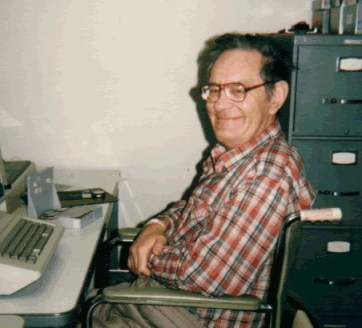
(Photo: Henry Molaison at aged 60, 1986, taken at MIT by Jenni Ogden, author of Trouble In Mind: Stories from a neuropsychologist’s casebook, OUP, 2012.)
Bukowski On Being Censored

In 1985, the Public Library of Nijmegen, Netherlands pulled from its shelves Charles Bukowski’s Tales of Ordinary Madness, calling the book “very sadistic, occasionally fascist and discriminatory against certain groups (including homosexuals).” Bukowski reacted in a letter to journalist Hans van den Broek:

If I write badly about blacks, homosexuals and women it is because of these who I met were that. There are many “bads”—bad dogs, bad censorship; there are even “bad” white males. Only when you write about “bad” white males they don’t complain about it. And need I say that there are “good” blacks, “good” homosexuals and “good” women?

In my work, as a writer, I only photograph, in words, what I see. If I write of “sadism” it is because it exists, I didn’t invent it, and if some terrible act occurs in my work it is because such things happen in our lives. I am not on the side of evil, if such a thing as evil abounds. In my writing I do not always agree with what occurs, nor do I linger in the mud for the sheer sake of it. Also, it is curious that the people who rail against my work seem to overlook the sections of it which entail joy and love and hope, and there are such sections. My days, my years, my life has seen up and downs, lights and darknesses. If I wrote only and continually of the “light” and never mentioned the other, then as an artist I would be a liar.

Censorship is the tool of those who have the need to hide actualities from themselves and from others. Their fear is only their inability to face what is real, and I can’t vent any anger against them. I only feel this appalling sadness. Somewhere, in their upbringing, they were shielded against the total facts of our existence. They were only taught to look one way when many ways exist.

(Video: Tom Waits reads Bukowski)

Face Of The Day

dish_FOTD2

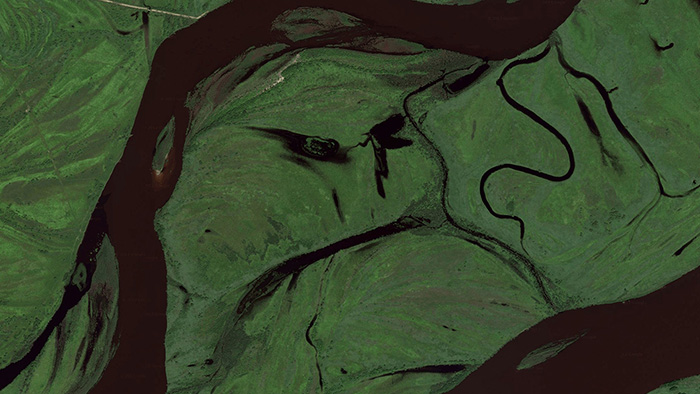
The artists’ group onformative combines facial recognition software with satellite images from Google Maps to reveal the planet’s “GoogleFaces.”  Explain the artists:

Our Facetracker already circumnavigated the world a couple of times and astonished us with quite versatile results. As it continues to travel the world within the upcoming months, it continuously zooms into the earth. This process decreases the step-size for each iteration and therefore increases the amount of images and travel time exponentially. Some of the detected images aren’t usable at all, as we are not able to recognize any face-like patterns within the detected images. Other satellite images, on the other hand, inspired our imagination in a tremendous, yet funny way.

An interactive version of the project is here.

(Hat tip: ANIMAL)

Dürer’s Demons

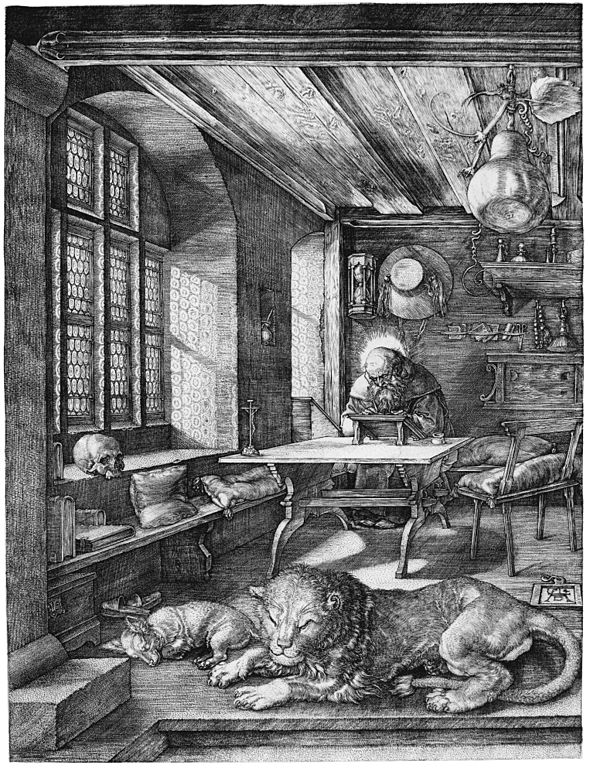
The great German artist Albrecht Dürer inured himself to the melancholy of his time by embracing religion:

Like so many of his contemporaries, Dürer was haunted by death and guilt and the fear of damnation. He had good reason to be. Death was everywhere. Dürer had seventeen siblings, and only two made it to adulthood. dish_durerBoth his trips across the Alps to Italy—in 1494 and 1505–1507—were partly inspired by the desire to flee outbreaks of the plague in his home town, Nuremberg. “Anyone who is among us today,” Dürer wrote in one poem, “may be buried tomorrow.” This was not a poetic conceit. It was the brutal truth. …

To overcome the inborn tendency to evil, Dürer appears to have believed there were three things you could do, if you received the grace to do them. One was to mortify the flesh. It may sound morbid to us, but mortification was a common part of religious practice then. It is even recommended in the third of Luther’s Ninety-Five Theses: “penitence is null unless it produces outward signs in various mortifications of the flesh.”

We do not know for a fact that Dürer also practiced this discipline, but his sense of its attractions is evident in his art. … If the artist did not actually practice self-flagellation, he surely understood why someone would and sympathized with the impulse.

The second was to throw yourself onto the mercy of God. His writings are full of sayings such as “Always seek grace, as if you might die any moment” and “No help could have reached us save through the incarnation of the son of God.”

The third was to work without ceasing. Never stop. … Work was a form of prayer and art was a form of praise. Dürer wrote, “[Painting] is useful because God is thereby honored.” But if you ever stopped, you would lose your way and fall into error, like the idle genius in Melencolia I. To quote [Martin Luther’s spiritual advisor Johann von] Staupitz once more, “The first sign of true faith is the battle against the demons.”

(Image: St. Jerome in His Study, Albrecht Dürer, 1514, via Wikimedia Commons)

The View From Your Window Contest

Screen Shot 2013-05-24 at 6.18.25 PM

You have until noon on Tuesday to guess it. City and/or state first, then country. Please put the location in the subject heading, along with any description within the email. If no one guesses the exact location, proximity counts.  Be sure to email entries to contest@andrewsullivan.com. Winner gets a free The View From Your Window book. Have at it.

Poseur Alert

“The animated GIF, meanwhile—whose origins go back to the antediluvian age of dial-up modems and whose natural home is the resolutely non-artistic bottom-feed of Internet image production—rudely interrupts the unbroken sheen of all the slick shit, since to GIF an image is not only to create a loop, but—in very literal terms pertaining to the effects of LZW compression—to apply a verfremdungseffekt, or distancing effect. The shiny mirror finish of HD video is dithered to dust, dots and dashes, and all the smoothing of Photoshop reduced to a crude cartography of color. The v-effekt was one of political playwright Brecht’s theatrical techniques to ensure an audience never get too comfortable: a device to make the abstract immediate and the political relatable. Here, the distancing effect allows the moving image to circulate widely on low-bandwidth connections, bringing it closer to home. To GIF is to reduce a picture to the “poor image” defended by Hito Steyerl; the conditions of its own circulation made visible. ‘The poor image is no longer about the real thing—the originary original. Instead, it is about its own real conditions of existence: about swarm circulation, digital dispersion, fractured and flexible temporalities… In short: it is about reality.’

The animated GIF is a Brechtian medium not only in the distancing effects of image compression, but also in that the repetition of a single gesture ad infinitum constitutes a sort of gestus—a symbolic moment that is amplified in context to represent a whole paradigm of existence,” – Jesse Darling.

(Hat tip: Cyborgology)