Gearing Up For The Green Movement

Mohsen Milani walks through the Ayatollah’s plan to prevent another uprising this election season, which includes preempting dissent and ensuring voter turnout:

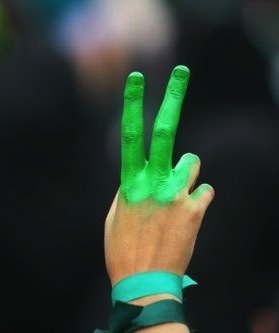
green-peace[Supreme Leader Ali] Khamenei has made a concerted effort this time around to discredit potential protesters before they take to the streets. The Revolutionary Guards and security forceshave launched a propaganda campaign to link any interruption on election day or after to the United States and its purported plans to destabilize the regime. For example, Yadollah Javani, the head of the political bureau of the Revolutionary Guards, has warned that the slogan “free and fair election” is a U.S. code word for sedition. …

If anything, 2009 taught many voters, especially urban ones, that voting was pointless. The government has real fears that they simply won’t show up this June. To make sure that doesn’t happen and that at least as many Iranians as usual (60 to 65 percent) turn out, the regime scheduled the presidential election to take place simultaneously with the elections for the local councils. In those, which occur at the city, town, and village level, hundreds of thousands of candidates from every corner of the country will compete for thousands of seats. And the candidates will be of all stripes, since they do not have to be vetted by the regime. As those in the past, these races will likely boost voter participation this time.

Recent Dish coverage on the Iranian election here.

(Photo by Getty Images)

Links Through Their Lives

Tom Shone previews Richard Linklater’s new film Before Midnight, a follow-up to Before Sunrise (1995) and Before Sunset (2004), a trilogy that tracks one couple’s relationship every nine years:

The release of Before Midnight has been greeted with the sort of enthusiasm that normally precedes Oscar campaigns—the R.S.V.P.’s to the first screening were returned within hours, the publicist tells me. “That never happens.” At the risk of spoilers—the first ten minutes are close to pure bliss for fans—the film finds Celine and Jesse, the lovers of the first two films, on holiday in Greece, where they walk and talk and argue and flirt, as they have always done, the ancient backdrop only serving to underline the real subject of the films, a ménage-à-trois between the couple and a third, as-yet-unbilled character: Time.

Put like that, the films’ achievement suddenly seems very grand indeed—a ringing confirmation of those critics who compared Linklater’s experiments in real-time dramaturgy to Satyajit Ray’s Apu trilogy and Truffaut’s Antoine Doinel films. …

[Linklater] pauses, looking momentarily panicked, as if I am about to start talking about his themes or oeuvre. “I’m fascinated with that relation, which we all have, with our previous selves. We all have that, that’s all we have, our whole life—who you were as a kid, who you were at 20—the great thing about getting older is you can reference yourself. But I’m equally sure that if we really could meet ourselves, we’d be surprised. Because we’ve re-characterized ourselves so many times to fit our current needs: ‘Oh, I was an idiot then, but now I’m smart.’ Not giving yourself enough credit, or giving yourself too much. It’s a fascinating relationship. That’s what these films have become about.”

(Video: The official trailer to Before Midnight. Here is a fan trailer combining clips from the first two films.)

Another Look At Nuclear

Barry Brook and Ben Heard make the case for more nuclear power:

[W]hat we really want is the product of the power plant, not the plant itself: that is, dependable electricity. Here, nuclear excels, delivering electricity at an excellent price, with capacity factors now exceeding 90% in the U.S. and South Korea. Perhaps even more importantly, this price will be reliable. Thanks to negligible fuel costs and no carbon emissions in the generation, nuclear power is almost completely insulated from two of the biggest incoming pressures on power prices: carbon prices and fuel scarcity. When we are building expensive infrastructure with a long life, such considerations matter a great deal.

So where does that leave us? Real-world experience tells us that nuclear can provide well-priced and reliable electricity. In capital terms, nuclear is the best-value form of zero-carbon generation, with miles of daylight to the competition. That may be a surprise, but this industry has learned. New designs are predominantly more standardized in design, and more reliant on passive, rather than engineered safety systems, and come in a range of sizes. All of this brings cost down.

The View From Your Refugee Camp

A reader writes:

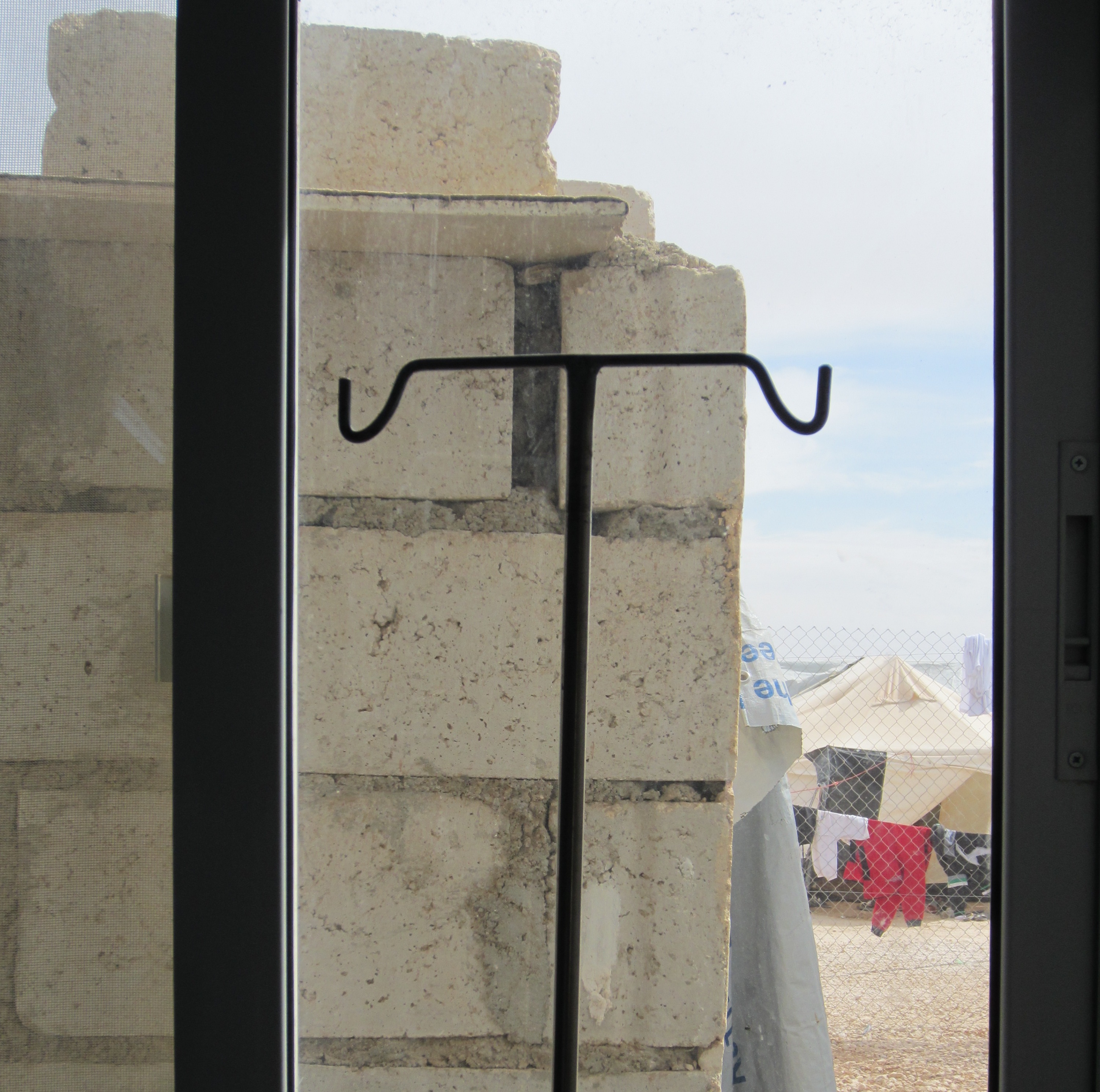
I’m no fan of John McCain, and am not in favor of arming the Syrian rebels, but I just got back from two months of volunteering in Amman to aid Syrian refugees. I worked as a physician in Za’atari refugee camp, worked with an NGO treating refugees outside the camps, and syriavolunteered in various injury centers, seeing patients with various battle injuries.

When people talk about the rebels, it’s not just one group. Jabhat al Nusra is one that is mostly active in certain pockets in the north. All of the rebel held areas that Elizabeth O’Bagly visited are likely in the North. Currently the North is the only place foreigners are going because it’s the only place in Syria that is relatively safe. So the slice of fighters they’re seeing and talking to is geographically biased.

This vastly exaggerates the Islamist influence and reach. More of the fighters fall in the “Free Syrian Army” (which doesn’t really exist) category. These ragtag bunches are not well organized and fly under the radar of many international groups, especially those Free Syrian Army battalions that are in areas still under control of the government.

I met a few hundred injured soldiers. All of them were fighting in the south before they were hurt, in regions American officials and NGOs aren’t getting to because it’s too dangerous. While there were some Jabhat al Nusra sympathizers, none had had any contact with JN, and they were a clear minority. Based on my experience on the Southern side the idea that those that want an Islamic state are a majority strikes me as farcical. Granted, the only soldiers I met were those who had gotten injured, which may be a biased slice. Maybe the Islamists are such great fighters they aren’t getting injured.

There are many reasons not to want to arm the rebels, but mischaracterizing their composition only fuels irrational anti-Islamist fears in the West.

Using YouTube To Terrorize

Jon Lee Anderson puts recent videos from Syria in context:

Such videos have increasingly come to represent a new weapon in modern wars-by-terror. The phenomenon is not unique to Syria. One recent, much-commented-on video depicts the decapitation-by-chainsaw of a Mexican gang member by rival narcos. Violent networks around the world seem to have taken inspiration from Al Qaeda in their efforts to terrorize captive societies by filming, and broadcasting, the executions of their enemies. This began, to my knowledge, when Al Qaeda filmed Daniel Pearl’s decapitation, in 2002, and was followed, during the Iraq War, with a raft of real-life snuff videos courtesy of Al Qaeda and its allies: Margaret Hassan, a kidnapped British relief worker; the young American Nicholas Berg; many who got less attention because they were not Westerners.

He continues:

It’s sobering to acknowledge that, for a previous generation of television viewers—not so long ago—the most terrifying thing they had ever seen (and for many it induced enduring fears) was the shower scene in “Psycho.” That’s so much “Captain Kangaroo” compared to what we can watch today, and if there were ever any question that what one sees on a screen has before-and-after consequences, consider these videos from the world’s killing grounds. If you want to see what someone looks like as he is stabbed, as he is told he is about to die, as he is beaten to death, or cut into pieces, it is all just a click away.

Noonan Just Loses It

Her column today is simply unhinged from the first sentence:

We are in the midst of the worst Washington scandal since Watergate.

Can she actually believe this? Has this president broken the law, lied under oath, or authorized war crimes? Has he traded arms for hostages with Iran? Has he knowingly sent his cabinet out to tell lies about his sex life? Has he sat by idly as an American city was destroyed by a hurricane? Has he started a war with no planning for an occupation? Has he started a war based on a lie, and destroyed the US’ credibility and moral standing while he was at it, leaving nothing but a smoldering and now rekindled civil sectarian war?

So far as I can tell, this president has done nothing illegal, unethical or even wrong.

You have to bend yourself into several pretzels to even understand what the Benghazi thing is about. All the emails Obama And Turkish PM Erdogan Meet At The White Housereleased show what amounts to a classic inter-agency conflict, resolved dispassionately by Ben Rhodes, in a period of considerable confusion. For the half-baked talking points, someone has been already fired. On the DOJ’s aggressive pursuit of a leaker who might have endangered national security, I thought Republicans like Noonan approved of that. But not when it’s Obama, when it suddenly becomes an “assault”.
The IRS story is a different matter and an entirely legitimate scandal at a lower level. I want those responsible to be fired or prosecuted.  But there is no proof whatever of any connection to the president, his campaign or anyone near the administration itself.  Sarah Hall Ingram, who was in charge of the office scrutinizing 501 (c) 4s has no business still working in the IRS, let alone on healthcare reform. She should be fired as well as her then-deputy, who is out the door June 3.

But how exactly is all this a crippling scandal for the president? He is not involved in any of these issues directly. In fact, it would be highly inappropriate for the president to be micro-managing the IRS or, for that matter, the DOJ. If he were, Noonan would be calling him Carter. At some very distant level, he is formally responsible – but not in the way that Reagan was directly responsible for Iran-Contra, or Clinton for lying under oath about his sex life, or Bush for making brutal torture his central strategy in the war on terror. That’s what makes a scandal a real scandal: the political involvement of a president or a key member of his administration in a cover-up or criminal offense or lie. That simply isn’t here – with the caveat that something may emerge later.

So what on earth is she banging on about? She cannot connect the president directly to this scandal – the first in his four and a half years in office (which must be a record). So she simply assigns blame to him because he is the president. Or this higher bullshit:

A president sets a mood, a tone. He establishes an atmosphere. If he is arrogant, arrogance spreads. If he is to too partisan, too disrespecting of political adversaries, that spreads too. Presidents always undo themselves and then blame it on the third guy in the last row in the sleepy agency across town.

I would say, especially after the catastrophic consequences of the last president, and the continuous siege of the Clinton White House, Obama’s record is extraordinarily clean and remains so. And this president is not partisan, as many Democrats will tell you. He’d love to do a deal with the GOP – if only they were capable of compromise.

I guess what I’m saying is that my own confidence in this president’s integrity and abilities is completely unfazed by these unconnected stories. I have seen no evidence of his involvement in any of them. Noonan hasn’t either. She just invents a conspiracy to audit conservatives with two anecdotes. She writes that “it is not even remotely possible that only one IRS office was involved,” even though we have no evidence that any other one was. The Washington response, moreover, was to tell Cincinnati to cut it out. She then writes:

And why — in the matters of the Associated Press and Benghazi too — does no one in this administration ever take responsibility?

How about this on the DOJ’s leak investigation from today from the president:

“I make no apologies and I don’t think the American people would expect me as commander-in-chief not to be concerned about information that might compromise their missions or might get them killed.”

Yes this is no ordinary scandal, Peggy. Because, as far as the president is concerned, there is as yet no scandal at all.

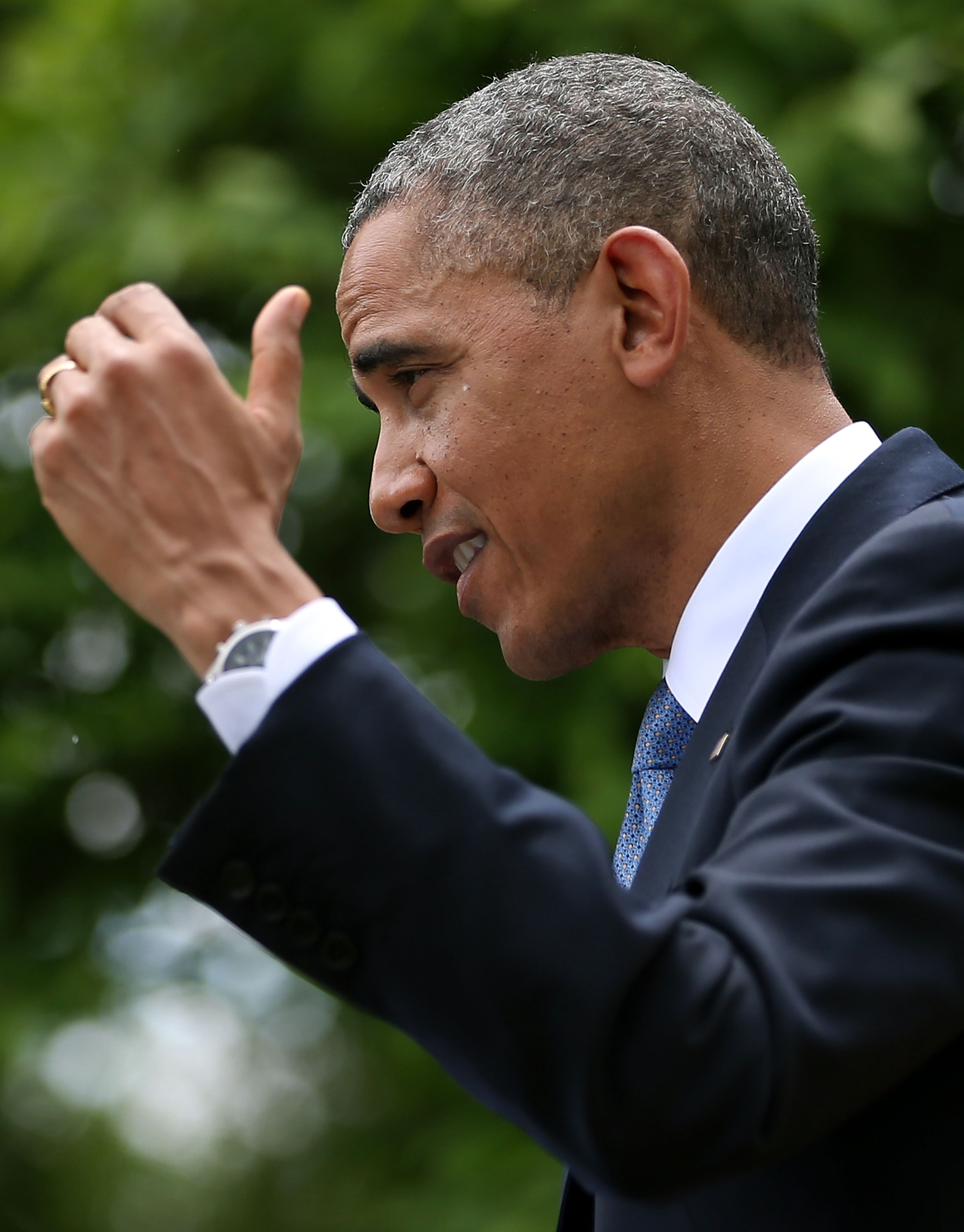
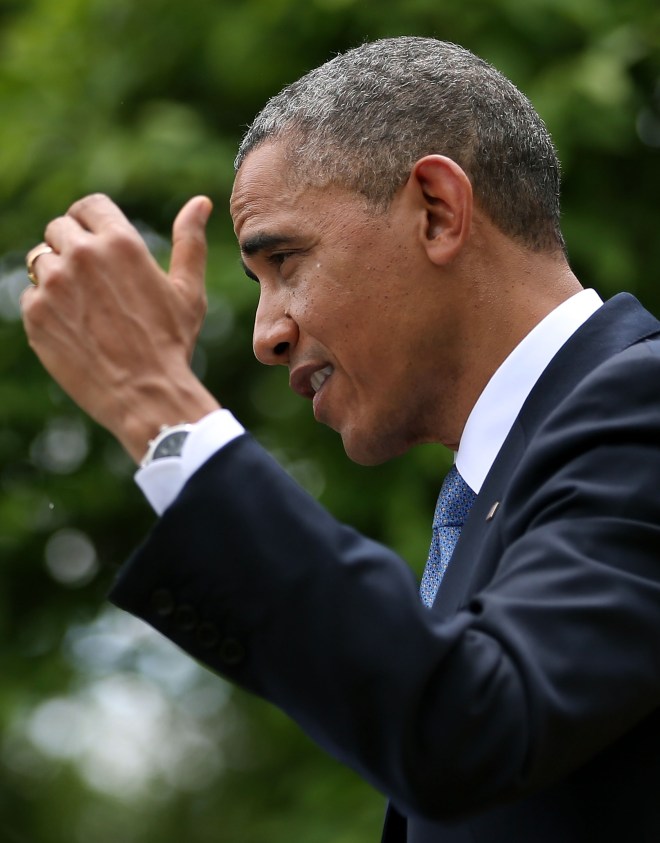
(Photo: Obama today by Mark Wilson/Getty Images.)

The Daily Wrap

Today on the Dish, Andrew attempted to parse the tax policy details of the IRS scandal, pondered the implications of attempts to tie Obama to the current array of scandals, and clarified his thoughts on genetics and race, Elsewhere, he digested a recent study on worldwide intolerance while one of his dogs showed him almost cat-like disdain.

In political news and views, the Beltway made mountains out of molehills as Kelsey Atherton explained why the courts should take another look at phone records and DOJ surveillance took a real toll on journalists. The IRA scandal brought paranoia back, we weighed the IRS director’s culpability as the scandal claimed his scalp, and the Daily Caller flailed in its attempts to hang it around Obama’s neck. Waldman tired of the semantic arguments over Benghazi and Daniel Klaidman previewed Obama’s upcoming speech on counterterrorism.

Friedersdorf picked apart proposals to tie immigration to IQ, Stephanie Mencimer uncovered the empty coffers of the anti-equality movement, and Casey Mulligan wondered which employers would be the first to drop coverage under the ACA. Overseas, Haj Kadour sacrificed his art for the rebel cause in Syria, Michael Knights blamed turmoil in Iraq on a slow slide back to authoritarianism, we checked in on the results of Pakistan’s recent election, countries struggled to reintegrate detainees,

In assorted coverage, Benjamin Wittes and Stephanie Leutert bashed Wikipedia’s distrust of blogs as the New Yorker eased the stress of blowing the whistle. Drones took to the fields to increase yields and RoboCrow took flight, while readers contributed their thoughts on the military’s sexual assault problem and spoke to both sides of the fracking debate.

Meanwhile, Naomi Alderman panned 21st century mindsets in historical fiction, network TV freed writers by constraining them, and cinema consumed conspicuously. Sue Halpern shared her thoughts on end-of-life happiness, a star-studded cast compiled a heart-wrenching lip-dub for a dying teenager, and Manet and Picasso experimented with product placement. Baths depressed a cat-sized dog in the MHB, Obama checked the skies in the FOTD, and night fell over Denver in the VFYW.

– D.A.

The New Face Of Iraqi Authoritarianism

IRAQ-POLITICS-DEMO

Michael Knights frames the increasing violence and fragility in Iraq as a crisis driven by Maliki’s ever-expanding power grab:

[S]tarting in 2008, Maliki re-centralized power, leaning on an increasingly narrow circle of Shia opponents of the previous dictatorship. And like all successful revolutionaries, this clique is paranoid about counterrevolution and has set about rebuilding a version of the authoritarian system it sought for decades to overthrow. Maliki’s inner circle dominates the selection of military commanders down to brigade level, controls the federal court, and has seized control of the central bank. The executive branch is rapidly eclipsing all checks and balances that were put in place to guarantee a new autocracy did not emerge.

The root of Iraq’s violence is thus not ancient hatreds between Sunni and Shia or Kurd and Arab, but between decentralizers and recentralizers — and between those who wish to put Iraq’s violent past behind them, and those determined to continually refight it.

Recent Dish on Iraq’s instability here.

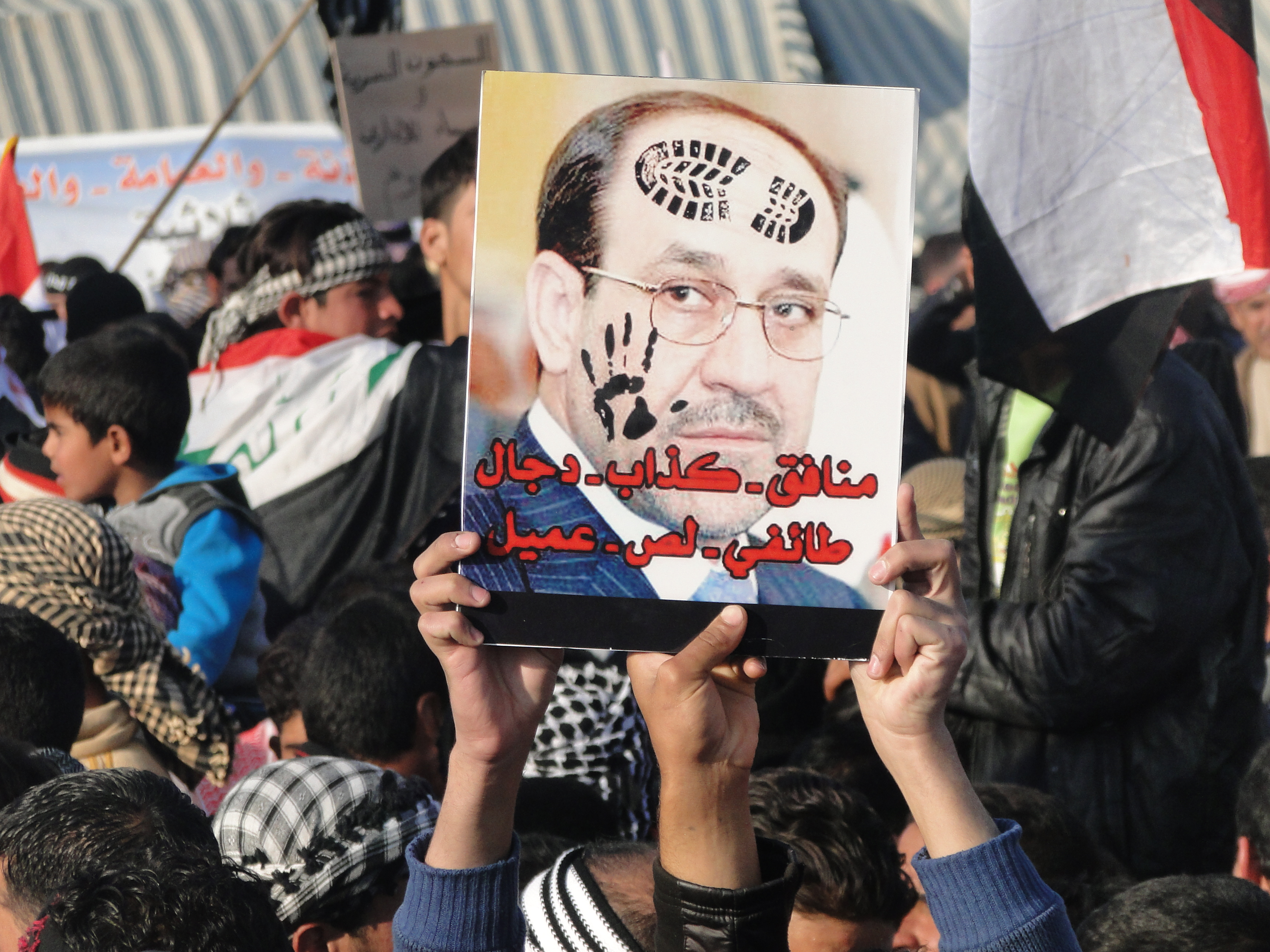
(Photo: Iraqi Sunni protestors hold up a portrait of Prime Minister Nuri al-Maliki with slogans reading in Arabic, “liar…sectarian, thief, collaborator” during a protest against him on the main highway to Syria and Jordan near Ramadi, Anbar’s provincial capital west of Baghdad. By Azher Shallal/AFP/Getty Images)

Consumption In Cinema

Joe Pinsker compares Luhrmann’s glitzy Gatsby to Spring Breakers:

Luhrmann’s approach to filmmaking resembles a carousal. Gatsby was made in the absence of inhibition, with every impulse indulged. Should we gratuitously use massive, swooping shots to set every scene? Let’s do it. Should we depict the death of Myrtle Wilson, in all of its slow-motion, 30-feet-in-the-air glory, not once, but twice? I can’t see why we wouldn’t. Oh, and can we just take all of that and, you know, make it 3-D? I’m one step ahead of you.

[In Spring Breakers] it becomes clear that there is such a thing as too much — too much skin, too much alcohol, too much pleasure. Breasts appear so often in the movie that they become props. Luhrmann’s party sequences can be alluring because they remain tasteful, but Korine lets his party scenes surge far beyond desirability. That the film’s hedonistic scenes are punctuated with moments of real tension and grit — at one point, Alien tends one girl’s gunshot wound — only further suggests that Korine is aware of what he’s doing.

Joshua Rothman thinks Luhrmann is aware too:

I can’t help but feel that the film’s flatness is a deliberate choice; that what seems like a failure of Luhrmann’s imagination is actually a faithfulness to Fitzgerald’s. The characters are like that in the novel, too; that’s why Lionel Trilling, in “The Liberal Imagination,” compared them to “ideographs.” Flatness, after all, is the state to which all of Fitzgerald’s characters aspire. Even Gatsby, whose life thrums with secret ambition and desire, manages to be the cool man in the pink suit. “You always look so cool,” Daisy tells him. In a moment of admiration, she says that he resembles “an advertisement” of a man.

Face Of The Day

Obama And Turkish PM Erdogan Meet At The White House

U.S. President Barack Obama looks to see if it stopped raining as a U.S. Marine holds an umbrella for him, during a news conference with Prime Minister Recep Tayyip Erdogan of Turkey in the Rose Garden on May 16, 2013. President Obama also answered questions on the IRS Justice Department investigation. By Mark Wilson/Getty Images.