Why Are Academic Papers So Pricey?

In 2012, Harvard Library blamed the “efforts of certain publishers (called “providers”) to acquire, bundle, and increase the pricing on journals.” Alex Mayyasi explains further:

The most famous of these providers is Elsevier. It is a behemoth. Every year it publishes 250,000 articles in 2,000 journals. Its 2012 revenues reached $2.7 billion. Its profits of over $1 billion account for 45% of the Reed Elsevier Group – its parent company which is the Journal Economics495th largest company in the world in terms of market capitalization.
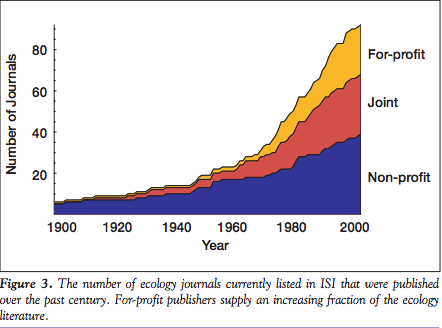
Companies like Elsevier developed in the 1960s and 1970s. They bought academic journals from the non-profits and academic societies that ran them, successfully betting that they could raise prices without losing customers. Today just three publishers, Elsevier, Springer and Wiley, account for roughly 42% of all articles published in the $19 billion plus academic publishing market for science, technology, engineering, and medical topics. University libraries account for 80% of their customers. Since every article is published in only one journal and researchers ideally want access to every article in their field, libraries bought subscriptions no matter the price. From 1984 to 2002, for example, the price of science journals increased nearly 600%. One estimate puts Elsevier’s prices at 642% higher than industry-wide averages.

Isolation And Illness

Judith Shulevitz examines how loneliness changes the actual genetic makeup of individuals:

[Primatologist Steve] Suomi raises his monkeys in three groups, one group confined entirely to the company of peers (a chaotic, Lord of the Flies kind of childhood); another group left alone with terry-cloth mother-surrogates, except when released for a couple of hours a day to scamper with fellow babies; and the third raised by their mothers. What he found is that, in monkeys separated from their mothers in the first four months of life, some important immunity-related genes show a different pattern of expression. Among these were genes that help make the protein that inflames tissue and genes that tell the body to ward off viruses and other microbes.

“The very fact that something outside the organism can affect the genes like that—it’s huge,” Suomi says. “It changes the way one thinks about development.” I didn’t need genetics, though, to see how defective the peer-raised monkeys’ development had been. Suomi took me outside to watch them. They huddled in nervous groups at the back of the cage, holding tight to each another. Sometimes, he said, they invite aggression by cowering; at other times, they fail to recognize and kowtow to the alpha monkeys, so they get picked on even more. The most perturbed monkeys might rock, clutch at themselves, and pull out their own hair, looking for all the world like children with severe autism.

Her Breasts, Her Choice

Women in the World Summit 2013

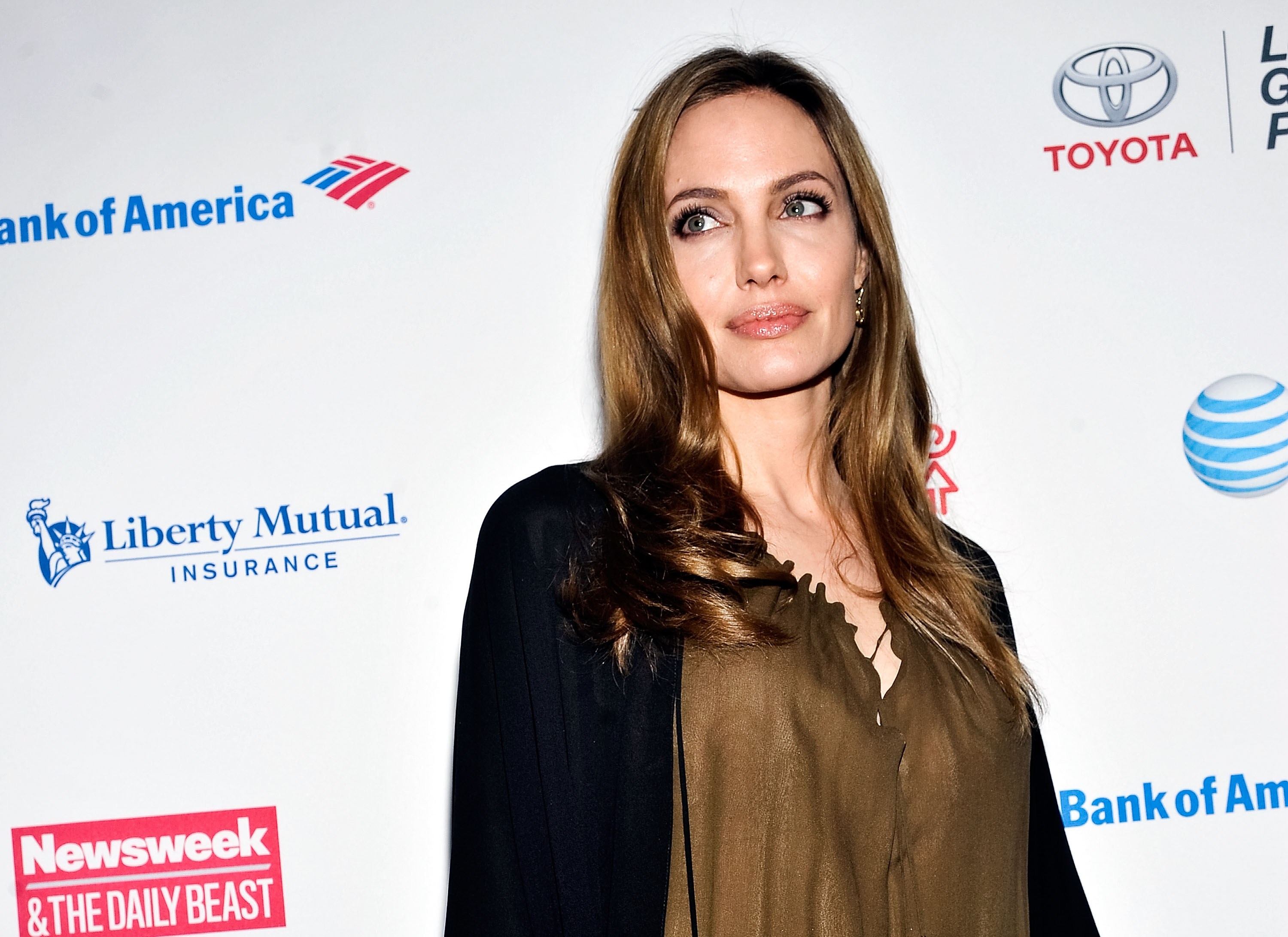
Yesterday, Angelina Jolie revealed that she had a preventive double mastectomy. A genetic test found that she carries a BRCA gene, which greatly increases the chances of breast cancer:

I wanted to write this to tell other women that the decision to have a mastectomy was not easy. But it is one I am very happy that I made. My chances of developing breast cancer have dropped from 87 percent to under 5 percent. I can tell my children that they don’t need to fear they will lose me to breast cancer.

Rebecca Mead applauds:

Jolie’s medical decision says again what shouldn’t need re-saying: that a woman’s body is hers, that breasts are for something other than ogling, and that hard choices are made for strong reasons. Her decision to make her choice public is bold and brave and admirable. It is what celebrity is for.

Aaron Carroll emphasizes that these types of medical decisions are highly personal:

[E]ven a preventive mastectomy is not a guarantee against cancer. Studies show that it’s about 90% effective in preventing breast cancer in moderate and high-risk women. That still leaves a 10% chance of developing cancer in the chest wall, armpit or even in the abdomen. That’s because it’s pretty much impossible for even the best surgeon to remove all breast tissue from a woman.

Because of this, some women choose not to have the procedure done, even when they are at high risk. Just a few weeks ago, Peggy Orenstein wrote a compelling account of her decision not to undergo the procedure after her first brush with breast cancer. Her reasons are just as valid and important as Jolie’s but may not make the same splash in our national discussion.

Elaine Schattner is on the same page:

I know physi­cians who’ve chosen, as did the celebrity, to have mas­tec­tomies upon finding out they carry BRCA muta­tions.

And I’ve known “ordinary” women—moms, home­makers, librarians (that’s fig­u­rative, I’m just pulling a stereotype) who’ve elected to keep their breasts and take their chances with close monitoring. I’ve known some women who have, perhaps rashly, chosen to ignore their risk and do nothing at all. At that opposite extreme, a woman might be so afraid, ter­rified, of finding cancer that she won’t even go to a doctor for a check-​​up, no less be tested, examined, or screened.

What’s great about this piece, and what’s wrong about it, is that it comes from an indi­vidual woman. Whether she’s made the right or wrong decision, neither I nor anyone can say for sure. Jolie’s essay reflects the dilemma of any person making a medical choice based on their cir­cum­stances, values, test results, and what information they’ve been given or oth­erwise found and interpreted.

Sarah Kliff notes that the BRCA test isn’t recommended for everyone:

The [U.S. Preventive Services Task Force (USPSTF)] recommended against widespread BRCA screening in 2005 and reiterated that stance in draft recommendations made last month. The task force gave widespread screenings a “D” grade, meaning that it would expect “no net benefit.”

“For women whose family history is not associated with an increased risk for potentially harmful mutations in the BRCA1 or BRCA2 genes,” the task force wrote, “there is moderate certainty that the net benefit of testing for potentially harmful mutations in the BRCA1 or BRCA2 genes and early intervention ranges from minimal to potentially harmful.”

Florence Williams explains why she didn’t get tested for BRCA:

Both my counselor and I thought I should get tested for the BRCA genes, but my insurance carrier firmly disagreed. At over $3,000, Myriad’s test is too expensive for me and most other women to get, regardless of what they and their doctors may think.

So why didn’t I just cough up the money? Isn’t my health and life worth it? A couple of reasons. For one thing, I learned that our fear of breast cancer is clouded by misconceptions. We tend to think of breast cancer as a heritable disease, but in the vast majority of cases, it’s not. Straight hereditary factors only account for about 10 percent of all breast cancers. And while the BRCA genes are the well-known poster children of risk,  they get more credit than they deserve. In families with histories of breast and ovarian cancer, about half do not have BRCA mutations at all.

Claudia Wallis shares her experience with the BRCA test:

The news was good: I did not carry the mutation. I wept with relief. But then the counselor told me that I should not give too much weight to the finding.

My negative result “would be more meaningful,” she told me, if one or more first-degree relatives (a sister, mother, first cousin) tested positive for one of the BRCAs. Then I would have evidence that the familial cancer pattern was due to this particular genetic mutation. Without that knowledge, it could be that my family’s crazy burden of breast cancer was due to another gene defect—either a less common one that’s known to researchers or one that has yet to be discovered. Sigh.

This was in some ways the hardest news to deal with. How would I tell my two sisters that I wanted them to get tested, too—and that, if they turned out to be BRCA carriers, it would be bad for them but good for me?

Amanda Hess defends Jolie against misogynists:

Said one commenter on a Jezebel post about the op-ed, “How many guys stopped reading as soon as they realized Angelina Jolie has no breasts—she’s dead to me!”

I’d like to dismiss these commenters as trolls, but their attitudes are unfortunately pervasive in our culture, and they don’t just represent a personal affront to Angelina Jolie, a veteran of such inappropriate body commentary. These comments affect every woman who has undergone a similar procedure—every woman who has overcome the pain, the fear, and the constant and casual reminders that her breasts are more valuable than her life. Really, these comments affect all women who have seen their bodies reduced to mere objects for others to consume. As scholar of the stars Anne Helen Petersen says, “Remember: What we talk about when we talk about celebrities is, as ever, ourselves.” Some of us are not speaking very highly of the women in our lives today.

Alyssa hopes that Jolie won’t shy away from nude scenes in the future:

If Jolie has decided that she’s done with nude scenes or with sex scenes, that’s entirely her decision, and all of us should respect that. But if she does accept such roles in the future, I hope that she, and the writers and directors she works with, see her scars as a feature of her body, rather that some sort of grotesquerie to be hidden by shot angles or erased in post-production. Mastectomy scars should be treated like a physical characteristic that could inflect characters Jolie plays in the future without requiring major plot alterations or commentary. And it would be good for audiences, particularly of the kind that snarked on Jolie today for her brave revelation, to see that they don’t make her any less stunningly gorgeous.

And Michelle Cottle, who also recently had a double mastectomy, praises Jolie’s courage:

Whatever her acting gifts, Jolie would not have become the megastar/tabloid darling she is if she were not damn near every man’s fantasy. … By discussing her mammary travails so openly, Jolie runs the risk of messing with the fantasy. And for this reason, her willingness to go public with her surgeries strikes me as a genuine act of bravery—and one that will hopefully provide comfort and even inspiration to many women out there facing similar challenges.

After all, if Jolie can boldly and publicly trade-in such prime assets, what are the rest of us so anxious about?

(Photo: by Daniel Zuchnik/Getty Images)

Failed States

After examining Ukraine’s depopulation, Edward Hugh asks “whether it is not possible that some countries will actually die, in the sense of becoming totally unsustainable, and whether or not the international community doesn’t need to start thinking about a country resolution mechanism somewhat along the lines of the one which has been so recently debated in Europe for dealing with failed banks.” Joshua Keating ponders this:

I suspect that even in the bleakest, Children of Men-style population scenarios, most countries would fight to the bitter end before surrendering their sovereignty. The exception might be places like Ukraine that have a relatively recent experience as part of a larger geopolitical entity and a large ethnic population with ties to a neighboring country.

A country couldn’t be liquidated quite as neatly as a company — even if the state goes away, there’s still a chunk of land and some people living on it to deal with. The main obstacle to countries being “dissolved” may be that other countries may not want to take on the responsibility of dealing with them — what country really wants to take on a new sparsely populated, economically stagnant region?

McArdle looks at similar problems closer to home. Why Detroit is in trouble:

The problem is that the old infrastructure is still there, and still needs to be maintained. Detroit might have the makings of a nice 50 square mile city within its population. But it has to maintain 139 square miles of water and sewer, electric, police and fire coverage, transportation, and so forth. It also needs to maintain legacy pension costs that were incurred when the city was more prosperous. For the last five or six years, Detroit has made up the mismatch between taxes and spending by borrowing money and deferring its pension contributions. But this only means bigger bills in the future, when Detroit may be even less able to pay.

The Daily Wrap

Today on the Dish, Andrew called for accountability at the IRS while the government took a credibility hit, wondered at the media’s silence on the recent New Orleans shootings, worried about intellectual freedom in research on race and IQ. Elsewhere, he cringed at Kessler’s assessment of the Benghazi scandal and remained unconvinced about its import while believers struggled to place it on a map. He pushed back against Greenwald’s view of world violence and digested cross-national perceptions in the “utopian project” that is the EU. In lighter fare, he defended dogs against Ryan Kearney and celebrated our 26,000th subscriber for the new Dish.

In political potpourri, readers pointed to Minnesota’s strong Lutheran as instrumental for marriage equality, Steve Stockman earned an Yglesias nod for his comments on abortion, and Jon Cohn probed Obamacare’s weaknesses. In scandal-mania coverage, the DOJ landed in hot water for collecting phone records and Nick Confessore got right to the heart of the IRS scandal. Kevin Drum predicted short-term upheaval as robots continue to enter the workforce and Ritchie King tabulated pot taxes in Colorado. In international coverage, we compared American economic growth to that in Europe as the US turned a blind eye to poppy production in Afghanistan.

In assorted coverage, honeybee populations plummeted while Priscilla Long found a familiar culprit responsible for the demise of the Neanderthal, and 1927 London brightened up. Ann Friedman embraced journalism’s new chaos, journals were the Twitter of the 19th century, Jessica Helfand listed the pros and cons of lists, and book bans left prison libraries with slim pickings. While Yglesias and Kevin Roose debated Gatsby’s credit score, David Haglund pondered fake reality entertainment and Sue Halpern cured doggie ennui with therapy training,

Meanwhile, Twitter mapped out hate, Bloomberg journalists crossed the line, college students navigated porn in the classroom, and The Economist traced our language patterns back to the 1066 Norman Invasion. Maple Leafs fell in the FOTD, we enjoyed a beautiful evening on the Oregon coast in the VFYW and cruised the tropics in the contest, and romance novels hit the dance floor in the MHB.

D.A.

Race And IQ. Again.

[Re-posted from earlier today]

I should know better than to bring this up again. But the effective firing of a researcher, Heritage’s Jason Richwine, because of his Harvard dissertation should immediately send up red flags about intellectual freedom. I am not defending the Heritage report on immigration because I think it’s a loaded piece of agitprop. And I am emphatically not defending everything that Richwine has said and done (not least his disturbing willingness to be published in white supremacist magazines).

What I do want to insist is that the premise behind almost all the attacks – that there is no empirical evidence of IQ differences between broad racial categories – is not true. It is true (pdf), if you accept the broad racial categories Americans use as shorthand for a bewilderingly complex DNA salad (a big if, of course). There’s no serious debate about that. The serious debate is about what importance to assign to the concept of “IQ” and about the possible reasons for the enduring discrepancies: environment, nurture, culture, or genes – or some variation of them all?

For my part, I’ve come to doubt the existence of something called “g” or general intelligence, as the research has gathered over the years. I believe IQ is an artificial construct created to predict how well a random person is likely to do in an advanced post-industrial society. And that’s all it is. It certainly shouldn’t be conflated with some Platonic idea of “intelligence.” I don’t think it carries any moral weight at all, either, and I don’t think it should be used in any way in immigration policy. In fact, any public policy that rests on this kind of data is anathema to me. It’s far too close to eugenics, and to the morally repugnant idea that smarter people are somehow better in any meaningful sense.

But Richwine’s dissertation was mainly a quant-job. He comes across in this Byron York interview as a bit clueless – suspiciously so, I’d say – in extrapolating policy conclusions from IQ data in the context of immigration. But the core point about any dissertation is a simple one: does it hold up under scholarly scrutiny? Richard Zeckhauser, the Frank P. Ramsey Professor of Political Economy at Harvard, is on record as saying that “Jason’s empirical work was careful. Moreover, my view is that none of his advisors would have accepted his thesis had he thought that his empirical work was tilted or in error.” One of those advisors was the very serious and very liberal scholar Christopher Jencks.

I haven’t had time to read the thing, and some have cast aspersions on it after a browse. But it is abhorrent to tar someone researching data as a racist and hound him out of a job simply because of his results, honestly discovered and analyzed. One particularly disturbing statement came from 23 separate student groups at Harvard:

Central to his claim is the idea that certain groups are genetically predisposed to be more intelligent than others. In his troubling worldview Asians are generally at the top, with whites in the middle, Hispanics follow, and African Americans at the bottom. To justify his assertions he cites largely discredited sources such as J. Philippe Rushton whose work enshrines the idea that there are genetically-rooted differences in cognitive ability between racial groups.

We condemn in unequivocal terms these racist claims as unfit for Harvard Kennedy School and Harvard University as a whole. Granting permission for such a dissertation to be published debases all of our degrees and hurts the University’s reputation … Even if such claims had merit, the Kennedy School cannot ethically stand by this dissertation whose end result can only be furthering discrimination under the guise of academic discourse.

My italics. They are, of course, caricaturing the argument – I know of no scholar who believes that genes are entirely responsible for the racial differences. Here’s another caricature of it:

Human beings have not existed long enough to be divided into separate and distinct racial “species.”

Of course not. We remain the same species, just as a poodle and a beagle are of the same species. But poodles, in general, are smarter than beagles, and beagles have a much better sense of smell. We bred those traits into them, of course, fast-forwarding evolution. But the idea that natural selection and environmental adaptation stopped among human beings the minute we emerged in the planet 200,000 years ago – and that there are no genetic markers for geographical origin or destination – is bizarre. It would be deeply strange if Homo sapiens were the only species on earth that did not adapt to different climates, diseases, landscapes, and experiences over hundreds of millennia. We see such adaptation happening very quickly in the animal kingdom. Our skin color alone – clearly a genetic adaptation to climate – is, well, right in front of one’s nose.

But what the Harvard students are saying is worse than creating a straw man. They are saying that even if it is true that there are resilient differences in IQ in broad racial groupings, such things should not be studied at Harvard because their “end result can only be furthering discrimination.” You can’t have a more explicit attack on intellectual freedom than that. They even seem to want the PhD to be withdrawn.

Freddie deBoer and Reihan Salam have two good posts about this. Freddie:

Racism thrives on conspiratorial thinking and the self-definition of racists as an oppressed group. When you say things that are true aren’t, and especially when you do so in a way that treats the other point of view as forbidden, you play directly into their hands. I cannot imagine an easier way to give them fuel for their argument than to say that certain test results don’t exist when they do.

That’s my view in a nutshell. What on earth are these “liberals” so terrified of, if not the truth? Instead of going on racist witch-hunts, why don’t they question what IQ means, how great the cultural and environmental impact can be (very considerable), whether such tests should guide public policy at all, or examine how “race” as a social construct does not always correlate to specific variations in human DNA. Note how the terms “race” and “historical ethnicity” are not the same things, as Reihan does. Or do what the scholar Dana Goldstein has done – criticize Richwine’s dismissal of education and poverty as factors affecting IQ in his dissertation.

But please don’t say truly stupid things like race has no biological element to it or that there is no data on racial differences in IQ (even though those differences are mild compared with overwhelming similarity). Denying empirical reality is not a good thing in any circumstance. In a university context, it is an embrace of illiberalism at its most pernicious and seductive: because its motives are good.

(Thumbnail image: DNA molecule display at the Oxford University Natural History Museum. By Flickr user net_efekt)

London In Living Color

In 1927:

Kottke adds:

This footage was taken from the British Film Institute’s YouTube channel and it turns out there’s tons of color footage Friese-Greene shot around Britain in the 1920s. Like farm laborers in Devon in 1924a busking family in Scotland in 1926the docks in Cardiff in 1926, and much more. (via @magnakai)

Where Online Shows Shine

Alyssa lists the ways:

Amazon and Netflix don’t have to sell advertising, meaning that they can greenlight shows based on the extensive proprietary data they already have about what their viewers like in scripted programming, without having to try to triage the interests of both viewers and advertisers. Hulu, which sells both advertising and subscriptions, can balance what they think will bring in passionate viewers, and what will attract advertisers. Additionally, Hulu’s interactive tool, which lets viewers tell the service whether ads are relevant to them or not, can help advertisers place spots more effectively than the networks.

Alternative outlets also aren’t restricted by the tyranny of timeslots. They can order as much or as little programming as they like without worrying that picking one show means not going forward with another, or without anxiety about how their shows will fare in specific timeslots, flow together with their existing programming, or play against programming on other networks. The elimination of those restrictions gives alternative outlets enormous freedom that’s unavailable to network television—and an enormous comparative advantage when it comes to attracting the kind of talent who can make subscribers decide to pony up for a service.

Ignoring Afghanistan’s Poppy Culture

US policy towards the crop is back to a laissez faire approach:

“I promise you we’re not here to destroy your field,” [1st Lt. Christopher] Gackstatter tells the men. He asks about their backgrounds and their families. He repeats his promise that he’s not here to eradicate any poppies. “We understand you’re just trying to earn a living.” It’s several minutes before Gackstatter gets around to asking about the Taliban. Have insurgents been coming around to the fields? No, says Khan Mohammad, one of the brothers. Are the men planning on selling their paste to the Taliban or another buyer? Mohammad says he’s not sure yet who they’ll sell to.

This intelligence-gathering mission seems to be going nowhere. But after half an hour or so Mohammad grows more comfortable and expansive. He explains that today’s poppy prices are down compared to the golden years of the late 1990s, when the Taliban was in charge, there was no eradication — token or otherwise — and U.S. troops weren’t hanging around trying to figure out how they felt about the crop. “People are still dreaming of the boom years,” he says.

True, the Americans might finally have figured out, after 12 years of war, that it’s best to leave poppies alone. But they’ve left behind them a patchwork legacy of eradication. In short, for millions of Afghans who rely on poppies for their livelihoods, the Taliban era was simpler.

The Neanderthals’ Handicaps

Priscilla Long presents some theories as to what led to the demise of our evolutionary cousins – shorter lifespans and climate change among them:

Because they had bigger bodies, they required more calories to survive than we do. They may have lacked sewing skills. Neither Neandertals nor Homo sapiens lived long (the rare 30-year-old Neandertal was old), but at some point, for reasons not really understood, the life spans of Homo sapiens began to increase. More longevity provided a grandparent generation to impart knowledge, skills, and more resources to the group.

Another discovery bearing on the subject are the extreme climate fluctuations that occurred between 65,000 and 25,000 years ago. The Neandertals had bodies and cultures adapted to ice and snow. This time of fluctuation involved such rapid climate change that in one lifetime “all the plants and animals that a person had grown up with could vanish and be replaced with unfamiliar flora and fauna,” writes Wong. The environmental stress may have decimated their ranks to below zero population growth.