Should We Kill Cursive? Ctd

Another twist on the popular thread:

I have a perspective on cursive that may be shared by a sizable minority: left-handers.

It’s hard enough for us lefties to print, let alone to write in an “artistic” cursive style. In elementary school, handwriting lessons were downright traumatic for me. I had such a hard time following the precise loops and whorls, and connecting every letter in one continuous line was just impossible. Handwriting was the only subject I ever failed in school, and I failed it every single year in elementary school. To this day, I can concentrate hard enough to write maybe two words in cursive before I devolve into the hybrid chicken scratch that is my personal handwriting style.

What’s worse, I see this trauma being passed down through the generations in my family. My leftie father always wrote in block letters because he couldn’t write one word in cursive. Now I see my four-year-old, left-handed daughter struggling with printing and I worry about how she’ll deal with cursive.

I understand the readers who would miss the beauty of cursive, and feel that children shouldn’t learn only instrumental skills. But I would say this: We may want children to learn about and appreciate art, but it would be impractical and somewhat cruel to force every child to be able to paint a realistic, recognizable portrait. I second your previous reader: “Hell yeah, kill cursive.”

Accidental Fan Fiction

Sam Allingham observes a difficulty that many writers face:

All of us write towards the books we’ve read; something in a novel obsesses us, and we reach for it in our own language, hoping to replicate the feelings it evoked. A great deal of literary fiction is really fan fiction, in the sense that it bears the unmistakable traces of the books we’re grappling with. Not all fans are writers, but all writers are fans; I think that’s a tricky statement. All writers start out as fans, and many of us bear visible traces of that fandom our entire lives. That’s what drove Proust to write his endless parodies of other writers’ styles, to get it all out of his system. You build a structure out of your influences, but eventually that structure becomes a cage.

A Liberator Of Doubt

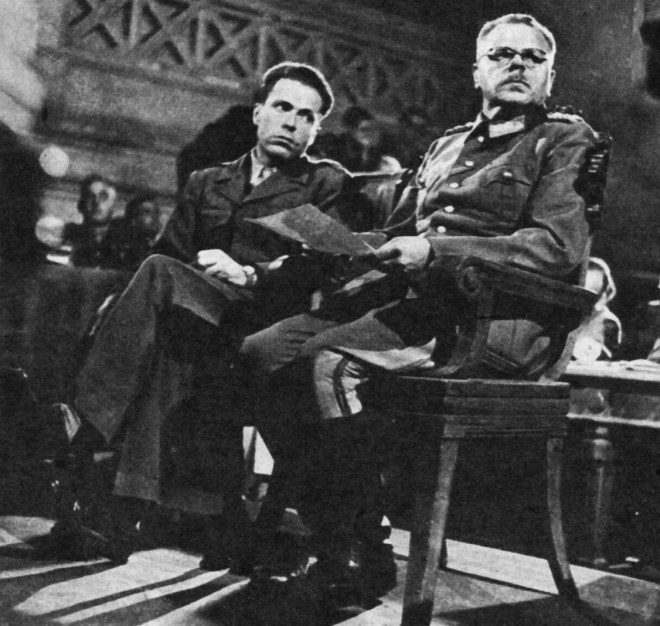
hirschman

Reviewing Worldly Philosopher: The Odyssey of Albert O. Hirschman, Cass Sunstein underscores the remarkable life of the German-born writer and thinker, whose works include The Rhetoric of Reaction and Exit, Voice, and Loyalty:

In dealing with events during the difficult period between 1935 and 1938, Hirschman showed a great deal of resilience and bravery. He decided to fight in the Spanish civil war against Franco with the very first Italian and German volunteers, some of whom were killed on the battlefield. For the rest of his life, Hirschman remained entirely silent about this experience, even with his wife, though “the scars on his neck and leg made it impossible for her to forget.” Returning from the war, he worked closely with the anti-Fascist Italian underground, carrying secret letters and documents back and forth from Paris.

As war loomed between France and Germany, Hirschman became a soldier for a second time, ready to fight for the French in what many people expected to be a prolonged battle. After the French defense quickly collapsed, Hirschman lived under German occupation and engaged in what was probably the most courageous and hazardous work of his life. Along with Varian Fry, a classicist from Harvard, he labored successfully to get stateless refugees out of France. In 1939 and 1940, they created a network that would enable more than two thousand refugees to exit. As Adelman writes, the “list of the saved reads like a who’s who.” It included Hannah Arendt, André Breton, Marc Chagall, Marcel Duchamp, and Max Ernst.

And like his hero Montaigne, doubt was essential to Hirschman’s thinking:

Hirschman sought, in his early twenties and long before becoming a writer, to “prove Hamlet wrong.”

In Shakespeare’s account, Hamlet is immobilized and defeated by doubt. Hirschman was a great believer in doubt—he never doubted it—and he certainly doubted his own convictions. At a conference designed to celebrate the thirtieth anniversary of his first book, who else would take the opportunity to show that one of his own central arguments was wrong? Who else would publish an essay in TheAmerican Economic Review exploring the “overproduction of opinionated opinion,” questioning the value of having strong opinions, and emphasizing the importance of doubting one’s opinions and even one’s tastes? Hirschman thought that strong opinions, as such, “might be dangerous to the health of our democracy,” because they are an obstacle to mutual understanding and constructive problem-solving. Writing in 1989, he was not speaking of the current political culture, but he might as well have been.

In seeking to prove Hamlet wrong, Hirschman was suggesting that doubt could be a source not of paralysis and death but of creativity and self-renewal. One of his last books, published when he was about eighty, is called A Propensity to Self-Subversion. In the title essay, Hirschman celebrates skepticism about his own theories and ideas, and he captures not only the insight but also the pleasure, even the joy, that can come from learning that one had it wrong.

(Photo of Hirschman, on the left, in 1945, serving as a translator during the war crimes trial of German Anton Dostler, via Wikimedia Commons)
A Poem For Sunday

kcpoem2

Another poem from Killarney Clary:

I want a solution. So, “God,” I pray, “finish this one un-
wavering note, at any cost, song or silence.”  I’m afraid
I don’t care; afraid someone might find out even in my
sore the wrinkle continues, the same future.  God’s familiar
with my tricks—precise requests, then total surrender–,
familiar with tomorrow, too, and my billion dreams.  He
will forgive me them, but forgiveness  is an added step.

I want to see the air itself dissolve, the colored powders
which are you or me scatter and fade, and no, I don’t care
for another try. It is kindness that puts the world in my
hands for me to hate; fortune that opens the surface which
is, after all, beauty.

I’m sure there are endless reasons and answers, methods
by which I might change. Give them to someone who deserves
them along with my good luck and what “science”
can put to use.

(From Who Whispered Near Me © 2013 by Killarney Clary. Used by kind permission of Tavern Books, Portland, Oregon. Photo by Flickr user T1m0thy77)

Face Of The Day

Peter_Lipton_2

This little guy has reason to keep his head down:

Amsterdam-based photographer Peter Lipton’s recent project is based around a research and conservation program at the Catholic University of Quito that was created in 2005 to address the growing number of endangered amphibians due to the country’s increases in logging, oil exploration, agriculture and climate change. Named ‘Balsa de los sapos’—Spanish for ‘Life raft of the frogs’—the program aims to collect, reproduce, and return endangered amphibians to their natural habitat. Lipton creates an exquisite showcase of these unique creatures, many of which are sadly the last known specimens.

To Be Sure

Daniel Dennett offers a tip for assessing arguments:

When you’re reading or skimming argumentative essays, especially by philosophers, here is a quick trick that may save you much time and effort, especially in this age of simple searching by computer: look for “surely” in the document, and check each occurrence. Not always, not even most of the time, but often the word “surely” is as good as a blinking light locating a weak point in the argument. Why? Because it marks the very edge of what the author is actually sure about and hopes readers will also be sure about. (If the author were really sure all the readers would agree, it wouldn’t be worth mentioning.) Being at the edge, the author has had to make a judgment call about whether or not to attempt to demonstrate the point at issue, or provide evidence for it, and—because life is short—has decided in favor of bald assertion, with the presumably well-grounded anticipation of agreement. Just the sort of place to find an ill-examined “truism” that isn’t true!

Dennett has a new book out, Intuition Pumps And Other Tools for Thinking. He discusses it and related topics with The Mind Report’s Tamar Gendler here.

The Cold Cradle Of The Internet

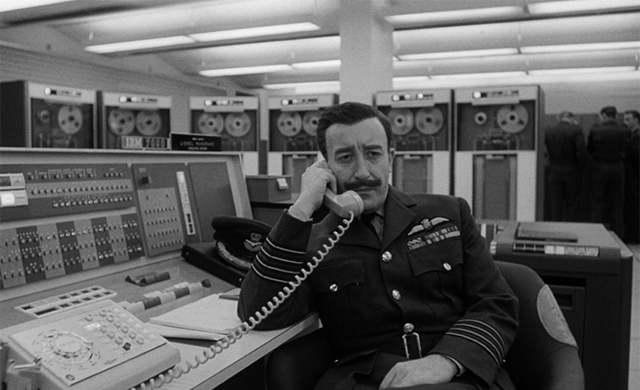
dish_dr-strangelove_large_verge_medium_landscape

David Banks describes how the ethos of the Internet is rooted in the rivalry between the US and USSR:

The Cold War is usually associated with big, hulking organizations that rely on strategic planning and mathematical theory: Historical accounts are replete with continental super powers strutting along each others’ borders with military technologies that are, themselves, highly centralized and ordered entities. Both sides tried to out-maneuver the other by decentralizing resources and populations. In America, it meant spending lots of defense money on building the first peer-to-peer computer networks and the nation’s first interstate highways. Decentralization and redundancy is the best defense against centralized power. [T]he decision to decentralize cities and computer systems was a political (not to mention military) decision.

Perhaps the Cold War logic that birthed the Internet has such a tenuous bearing on how we currently use the Internet, that it barely warrants mentioning.

The intentions of the early Internet’s designers probably do not factor into my choice of Tumblr theme, or the Instagram filter I put on a photo of my houseplants. But intentions aren’t even half the story. Technologies live and act beyond their creators’ intentions and quite often produce unintended consequences. Think about all of the decentralized, rhizomatic organizations and social movements that have been earmarked or popularly associated with the digital technologies they used so well: the Arab Spring, Occupy Wall Street, Anonymous, and the BART protests have all out-maneuvered (at least for a time) the state and corporate bureaucracies that sought to shut them down. The Internet doesn’t unilaterally impose or determine certain political organizations, but it does assist and afford their continued existence.

(Photo: Peter Sellers as Group Capt. Lionel Mandrake with the IBM 7090, from Dr. Strangelove, 1964)

The Wisdom Of Great Writers

Maria Popova compiles a remarkably eclectic “reading list” of all the advice on writing from famous authors she’s featured on Brain Pickings over the years, ranging from 19th century figures like Herbert Spencer to contemporary writers such as Mary Karr. Here’s an aphorism she includes from Kurt Vonnegut:

Write to please just one person. If you open a window and make love to the world, so to speak, your story will get pneumonia.

Choose Your Own Conclusion

S. Hope Mills spots a provocative passage from a recent Tim Parks essay about not finishing books:

To put a novel down before the end, then, is simply to acknowledge that for me its shape, its aesthetic quality, is in the weave of the plot and, with the best novels, in the meshing of the writing style with that weave. Style and plot, overall vision and local detail, fascinate together, in a perfect tangle. Once the structure has been set up and the narrative ball is rolling, the need for an end is just an unfortunate burden, an embarrassment, a deplorable closure of so much possibility.

Mills comments:

The idea of an ending as an “unfortunate burden” may be a bit dramatic, but the other idea, that a novel’s possibility doesn’t rest solely on the ending, is an interesting one. Engaging a good story, isn’t—and can’t be—a highly controlled experience. While we writers would like for readers to feel our sentences, interpret our characters and move through the story exactly as we intended, we can’t talk them through the experience page by page. We have to leave quite a lot in their hands. And frankly, when we’re on the other side, as readers, those are the stories we love best, the ones where we’re equipped and then trusted to figure things out for ourselves.

When I think about what I’ve long loved about reading, it’s the different worlds that scoop me up, my senses fully engaged. The writer, of course, is my guide, but I still have a role to play, too—I’m interacting with the information that’s been given to me. That’s what makes the deepest reading experience. And because this is my story now, too, I might be ready for closure sooner than another reader, sooner even than the author.