My take on the latest Republican attack on Hillary Clinton over Benghazi.
Month: May 2013
The View From Your Window

Lossiemouth, Scotland, 2 pm
Personal Assistant Wanted: Deadline Monday
A final reminder that the Dish is seeking a PA – full details here. All applications are due by Monday, May 13.
Battling Over Burials, Ctd
It was an act of Christian charity that found the elder Tsarnaev brother a burial site:
Martha Mullen, 48, of Richmond, said she was dismayed [by] reports of protests outside of Graham Putnam & Mahoney Funeral Parlors in Worcester that she heard on National Public Radio. “It portrayed America at its worst,” she said in an interview with the Globe this morning. “The fact that people were picketing this poor man who was just trying to help [funeral director Peter Stefan] really upset me.”
Mullen, a licensed professional counselor who has lived in Richmond for most of her life, said she was sitting in a Starbucks Tuesday when it hit her: She could be the one to end the controversy. “Jesus says [to] love our enemies,” said Mullen, who holds a degree from United Theological Seminary in Dayton, Ohio. “So I was sitting in Starbucks and thought, maybe I’m the one person who needs to do something.”
After searching the Web for proper Muslim burial traditions and requirements, she turned her search to any local organizations or cemeteries that might be able to facilitate the burial.
I find this deeply moving – and hopeful.
It’s A Dog’s World
After encountering a doberman at his gym, Farhad Manjoo throws up his hands:
Sometime in the last decade, dogs achieved dominion over urban America. They are everywhere now, allowed in places that used to belong exclusively to humans, and sometimes only to human adults: the office, restaurants, museums, buses, trains, malls, supermarkets, barber shops, banks, post offices. Even at the park and other places where dogs belong, they’ve been given free rein. Dogs are frequently allowed to wander off leash, to run toward you and around you, to run across the baseball field or basketball court, to get up in your grill. Even worse than the dogs are the owners, who seem never to consider whether there may be people in the gym/office/restaurant/museum who do not care to be in close proximity to their dogs. After all, what kind of monster would have a problem with a poor innocent widdle doggie?
As a dog-lover, I think he’s actually right about the owners. In all urban public situations, outside a dog park, you should have a leash on your dog. Where we now live – the West Village – feels at times like a very expensive dog complex. And that’s where the difficulty comes in. For many passers-by, greeting and cooing over the beagle and basset-mutt is one extreme of the problem. There, the trouble comes from humans, not dogs. But every owner should know the temperament of their dogs, keep them away from strangers if they are “unfriendly”, and make sure that any stranger feels comfortable. It’s called manners. Like cyclists who routinely violate traffic rules, these dog-owners make the rest of us look bad.
Manjoo compares his feelings about dogs to how some people feel about kids:
I realize that, although [my two-year old is] impossibly cute, it’s possible he might aggravate some people. For this reason, whenever I go into public spaces with my toddler, I treat him as if I were handling nuclear waste or a dangerous animal. I keep him confined. I shush him. If he does anything out of turn—screams, touches people—I make a show of telling him to quit it and I apologize profusely. And, finally, there are some places that are completely off-limits to my son: nice restaurants, contemplative adult spaces like grown-up museums and coffee shops, the gym, and the office. Especially the office.
I couldn’t agree more.
Depression, Illustrated

The brilliant cartoonist and writer Allie Brosh is back, still battling clinical depression and as insightful about the condition as ever:
At first, I’d try to explain that it’s not really negativity or sadness anymore, it’s more just this detached, meaningless fog where you can’t feel anything about anything — even the things you love, even fun things — and you’re horribly bored and lonely, but since you’ve lost your ability to connect with any of the things that would normally make you feel less bored and lonely, you’re stuck in the boring, lonely, meaningless void without anything to distract you from how boring, lonely, and meaningless it is.
But people want to help. So they try harder to make you feel hopeful and positive about the situation. You explain it again, hoping they’ll try a less hope-centric approach, but re-explaining your total inability to experience joy inevitably sounds kind of negative; like maybe you WANT to be depressed. The positivity starts coming out in a spray — a giant, desperate happiness sprinkler pointed directly at your face. And it keeps going like that until you’re having this weird argument where you’re trying to convince the person that you are far too hopeless for hope just so they’ll give up on their optimism crusade and let you go back to feeling bored and lonely by yourself.
She prefaced her latest creation by explaining how it took about a year to complete, “partly because I wanted to get it exactly right, and partly because I was still experiencing it while attempting to explain it, which made things weird.” To see Allie interviewed a few years ago, head here.
Poseur Red Alert
The wrong way to write a cover letter:
I was pleased to discover, through my clandestine Alaskan network, that you have not finalized a new law clerk for the upcoming year. I hope you find this letter portentously post facto rather than unskillfully delinquent. I wish to spare you the unleavened hardtack of your sensible, standard cover letter and instead appeal to your irrational masculine avatar through a reflective vignette.
I grew up in suburban Kansas City in a perfect neighborhood on a perfect street in a perfect house.
My parents afforded me every opportunity and expected results. Laboriously, I molded myself into a surprisingly athletic, covertly academic, role player. The Dalai Lama might even have congratulated me on my stubbornly unconditional perspective. Adorned in a passion for the sciences, I followed the tracks to Lawrence, Kansas. Here, I learned to be a Jayhawk.
Bouquets of regimental red and yellow tulips line the campus boulevard like a million Kansas City Chiefs fans cheering you from class to class. Each sunny spring day in Lawrence, with dudes in shorts and sunglasses and ladies in short skirts, seemed a microcosm for the whole four years. The Kansas Greek scene made for an interesting cocktail, one part social one part societal jockey and only one ice cube to cool it down. I sipped confidently from this hearty libation. Overwhelmed by ubiquitous female beauty, animal instinct to succeed prevailed.
Battling Over Burials, Ctd
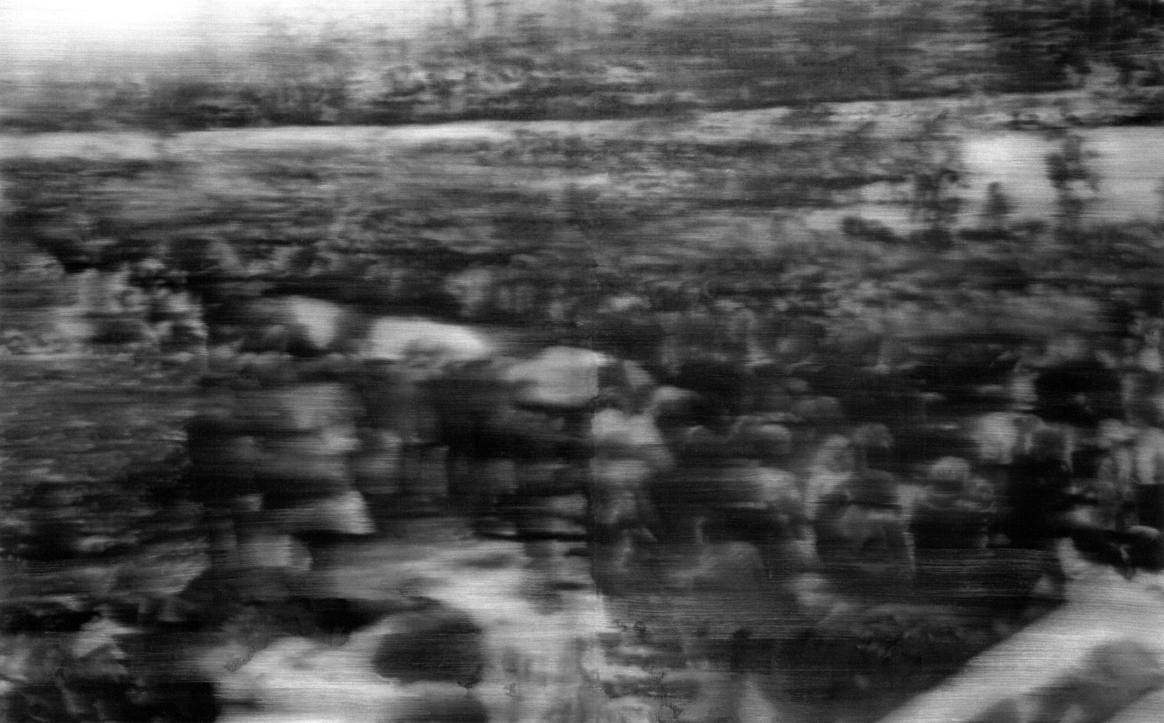
A reader writes:
The issue with the Tsarnaev burial is not whether he should be buried, but whether he should be buried in the community he terrorized. Yvonne Abraham conveniently leaves this out of her predictable screed. I agree that local leaders should have done a better job of locating a burial site outside the metropolitan area, but this is also relatively uncharted waters if I’m not mistaken – burying a domestic terrorist (we never classified Lanza as such) in the weeks following the attack.
The mayors of Cambridge and Boston are absolutely correct in acknowledging that a burial site located within their respective city limits would become a significant distraction and public safety/health issue. Buying Tsarnaev locally would undoubtedly lead to the resting site becoming public. What then? An armed guard patrolling a 50-square foot area from now until forever?
Another:
I want to offer one instructive historical example for burying terrorists. In the fall of 1977, Andreas Baader, Gudrun Ensslin, and Jan-Carl Raspe all committed suicide (though this fact is self is still highly debated) in Stuttgart’s Stammhein Prison.
At the time these were the most notorious terrorists in the world have killed or maimed dozens of Americans and German in their effort to bring about Revolution. Far from being like the Tsarnaev brothers, these folks were more akin to Osama bin Laden in the German public’s mind.
So when they died, all the surrounding cities scrambled to tell the media that there was no way that the terrorists would be buried in their city, in their cemetery. Finally, the mayor of Stuttgart stepped in. A great man (and the son of an even greater man), Manfred Rommel said “Enough! In death all enmity must cease.” And he ordered them buried in a Stuttgart public cemetery.
If you go to New York’s Museum of Modern Art you can see Gerhard Richter’s massive painting depicting their funeral (see above). The gravesite did become a bit of a shrine at first, but that went away. I visited it 10 years ago and no one else was around and it clearly hadn’t been visited much that day at least. Just a quiet little gravesite in the corner of a giant cemetery.
Britain’s Reagan?
Boris is on a roll.
Quote For The Day
“The class which has the power to rob upon a large scale also has the power to control the government to legalize their robbery,” – Eugene V Debs, American socialist, 1918. Full speech here. As Weintraub notes,
Some details of how this works have changed between then and now, but the basic insight remains all too timely.
How corrupt has capitalism become that I’m quoting a fucking socialist and not entirely rolling my eyes?
 The Dish