A Commentary Of Doubt

Tim Kreider embraces the concept:

The one thing no editorialist or commentator in any media is ever supposed to say is I don’t know: that they’re too ignorant about the science of climate change to have an informed opinion; that they frankly have no idea what to do about gun violence in this country; or that they’ve just never quite understood the Israeli-Palestinian conflict and in all honesty they’re sick of hearing about it. To admit to ignorance, uncertainty or ambivalence is to cede your place on the masthead, your slot on the program, and allow all the coveted eyeballs to turn instead to the next hack who’s more than happy to sell them all the answers. …

Real life, in my experience, is not rife with epiphanies, let alone lessons; what little we learn tends to come exactly too late, gets contradicted by the next blunder, or is immediately forgotten and has to be learned all over again. More and more, the only things that seem to me worth writing about are the ones I don’t understand. Sometimes the most honest and helpful thing a writer can do is to acknowledge that some problems are insoluble, that life is hard and there aren’t going to be any answers, that he’s just as screwed-up and clueless as the rest of us. Or I don’t know, maybe it’s just me.

No, Tim. It’s not just you.

A Poem For Sunday

baptism

“Holy Baptisme” by George Herbert (1593-1633):

Since, Lord, to thee
A narrow way and little gate
Is all the passage, on my infancie
Thou didst lay hold, and antedate
My faith in me.

O let me still
Write thee great God, and me a childe;
Let me be soft and supple to thy will,
Small to my self, to others milde,
Behither ill.

Although by stealth
My flesh get on, yet let her sister
My soul bid nothing, but preserve her wealth:
The growth of flesh is but a blister;
Childhood is health.

(Photo by Flickr user auntjojo)

On Having Heroes

Patrick Kurp outgrows his resistance to the question, “Who are your heroes?”:

When young, I was too hip to have heroes, or at least to admit having them. Pride extinguishes natural impulses, including admiration. To admit you have a hero is to suggest they possess something you don’t, that you perhaps envy them – an admission intolerable to our swollen sense of self-importance.

Dr. Johnson writes in The Rambler #180: “Envy, curiosity, and a sense of the imperfection of our present state, incline us to estimate the advantages which are in the possession of others above their real value.” With age ought to come some measure of “down-sizing,” accepting one’s self more realistically and acknowledging that we’re pretty much stuck with who we are. Now I have heroes, all writers, all gifted, all flawed, all admired more deeply for their flaws because the essence of heroism, perhaps, is overcoming them: Swift, Dr. Johnson, Henry James, Chekhov, Whittaker Chambers, Yvor Winters, Beckett.

(Hat tip: Books, Inq.)

“The Chemical Life”

Mason Currey chronicles the great writers and thinkers whose work was spurred by uppers:

The poet W.H. Auden is probably the most famous example. He took a dose of Benzedrine (a brand name of amphetamine introduced in the United States in 1933) each morning the way many people take a daily multivitamin. At night, he used Seconal or another sedative to get to sleep. He continued this routine—“the chemical life,” he called it—for 20 years, until the efficacy of the pills finally wore off. Auden regarded amphetamines as one of the “labor-saving devices” in the “mental kitchen,” alongside alcohol, coffee, and tobacco—although he was well aware that “these mechanisms are very crude, liable to injure the cook, and constantly breaking down.”

Another telling example:

[P]erhaps the most notable case of amphetamine-fueled intellectual activity is Paul Erdös, one of the most brilliant and prolific mathematicians of the 20th century. As Paul Hoffman documents in The Man Who Loved Only Numbers, Erdös was a fanatic workaholic who routinely put in 19-hour days, sleeping only a few hours a night. He owed his phenomenal stamina to espresso shots, caffeine tablets, and amphetamines—he took 10 to 20 milligrams of Benzedrine or Ritalin daily. Worried about his drug use, a friend once bet Erdös that he wouldn’t be able to give up amphetamines for a month. Erdös took the bet, and succeeded in going cold turkey for 30 days. When he came to collect his money, he told his friend, “You’ve showed me I’m not an addict. But I didn’t get any work done. I’d get up in the morning and stare at a blank piece of paper. I’d have no ideas, just like an ordinary person. You’ve set mathematics back a month.” After the bet, Erdös promptly resumed his amphetamine habit.

A Couple Of Words On Niall Ferguson

Oxford Literary Festival

[Re-posted from earlier today]

What he said about Keynes’ sex life, poetry, homosexuality and caring about future generations is stupid, offensive, and absurd. He has now issued an apology:

During a recent question-and-answer session at a conference in California, I made comments about John Maynard Keynes that were as stupid as they were insensitive.

I had been asked to comment on Keynes’s famous observation “In the long run we are all dead.” The point John_Maynard_KeynesI had made in my presentation was that in the long run our children, grandchildren and great-grandchildren are alive, and will have to deal with the consequences of our economic actions.

But I should not have suggested – in an off-the-cuff response that was not part of my presentation – that Keynes was indifferent to the long run because he had no children, nor that he had no children because he was gay. This was doubly stupid. First, it is obvious that people who do not have children also care about future generations. Second, I had forgotten that Keynes’s wife Lydia miscarried.

My disagreements with Keynes’s economic philosophy have never had anything to do with his sexual orientation. It is simply false to suggest, as I did, that his approach to economic policy was inspired by any aspect of his personal life. As those who know me and my work are well aware, I detest all prejudice, sexual or otherwise.

My colleagues, students, and friends – straight and gay – have every right to be disappointed in me, as I am in myself. To them, and to everyone who heard my remarks at the conference or has read them since, I deeply and unreservedly apologize.

I am obviously an interested party to this. I’ve known Niall as a friend since we studied history together at Oxford. This has not deterred me from criticizing his public arguments on the merits, so I’m not a suck-up. But I have known the man closely for many years – even read Corinthians at his recent wedding – and have never seen or heard or felt an iota of homophobia from him. He has supported me in all aspects of my life – and embraced my husband and my marriage. He said a horribly offensive thing – yes, it profoundly offended me – but he has responded swiftly with an unqualified apology. He cannot unsay something ugly. But he has done everything short of that. I am biased, but that closes the matter for me.

And one other small thing: if he really believed gay men had no interest in future generations, why would he have asked me, a gay man with HIV, to be the godfather to one of his sons? And why would I have accepted?
Update: Readers respond here.

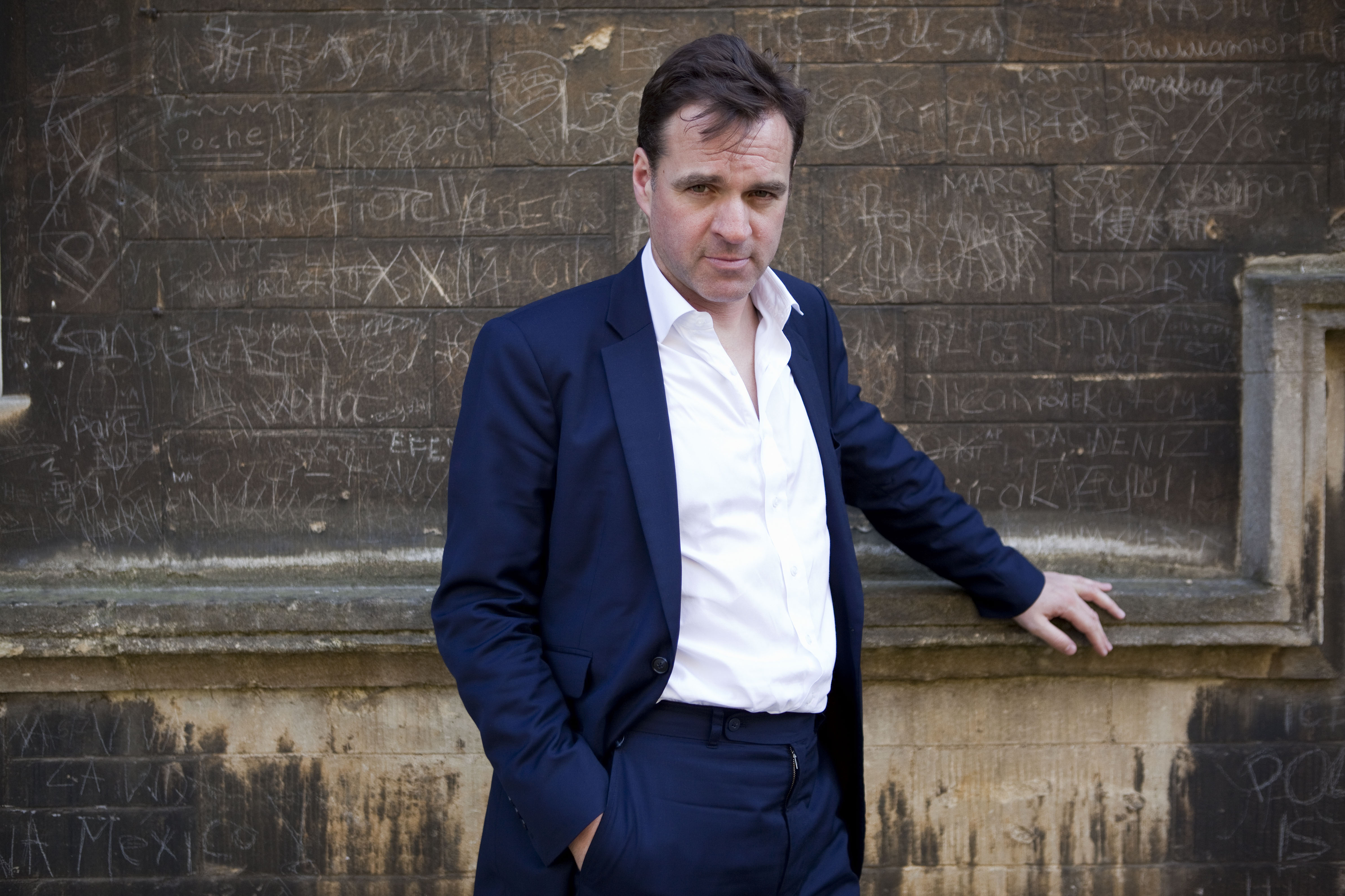
(Photo: Author/historian Niall Ferguson poses for a portrait at the Oxford Literary Festival on April 9, 2011 in Oxford, England. By David Levenson/Getty Images.)

Quotes For The Day

First, Burke on capitalism, via Corey Robin:

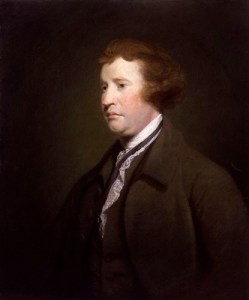
There must be some impulse besides public spirit, to put private interest into motion along with it. Monied men ought to be allowed to set a value on their money; if they did not, there would be no monied NPG 655,Edmund Burke,studio of Sir Joshua Reynoldsmen. This desire of accumulation is a principle without which the means of their service to the State could not exist.
The love of lucre, though sometimes carried to a ridiculous, sometimes to a vicious excess, is the grand cause of prosperity to all States. In this natural, this reasonable, this powerful, this prolific principle, it is for the satirist to expose the ridiculous; it is for the moralist to censure the vicious; it is for the sympathetick heart to reprobate the hard and cruel; it is for the Judge to animadvert on the fraud, the extortion, and the oppression: but it is for the Statesman to employ it as he finds it; with all its concomitant excellencies, with all its imperfections on its head. It is his part, in this case, as it is in all other cases, where he is to make use of the general energies of nature, to take them as he finds them.

And what Keynes actually said about the long term:

The long run is a misleading guide to current affairs. In the long run we are all dead. Economists set themselves too easy, too useless a task if in tempestuous seasons they can only tell us that when the storm is past the ocean is flat again.

One historical note as well that Robin notes: Burke left behind one son who left no others. Keynes did procreate, but his wife miscarried. This, of course, did not make him bisexual, Howie; he was still gay at a time when you could be jailed for it.

I’m also always struck when some American conservatives think of Keynes as some kind of crypto-commie.

He believed in running surpluses in times of growth – and in spending in times of recession. If we had adhered to those two principles in the last 13 years, we’d clearly be better off. And note the real culprit here: George W. Bush’s reckless tax cuts and unfunded wars after inheriting a fragile surplus.

Just for the record, here’s Keynes unloading on Marx:

How can I accept the Communist doctrine, which sets up as its bible, above and beyond criticism, an obsolete textbook which I know not only to be scientifically erroneous but without interest or application to the modern world? How can I adopt a creed which, preferring the mud to the fish, exalts the boorish proletariat above the bourgeoisie and the intelligentsia, who with all their faults, are the quality of life and surely carry the seeds of all human achievement? Even if we need a religion, how can we find it in the turbid rubbish of the red bookshop? It is hard for an educated, decent, intelligent son of Western Europe to find his ideals here, unless he has first suffered some strange and horrid process of conversion which has changed all his values.

I’ll have more to say about homosexuals and future generations tomorrow. It’s actually an important and interesting subject – despite the ugly, stupid remarks that occasioned it.


Lost In A Landscape

Gilded Birds asked Radiohead lead-singer Thom Yorke about his ideal of beauty, captured in a photograph he took of a rock formation in Cornwall:

GB Do you think that nature is a higher form of beauty than man-made things?

TY They are too different to be compared. I reckon some of our ideas of beauty from the man-made world could be too self-referential and do us no favours. Too much time spent in cities you know? Surrounded by our own image, and our own intentions, our edifices to our brilliance. Having said that, the other thing I was going to suggest for a thing of beauty was a sports car.

When you are lost in a landscape mentally and physically your ‘human’ awareness can be wiped clean and you are simply part of your surroundings. A kind of meditation I would say, but your mind is not empty or clear, it is full of what is around you. The landscape is beautiful in the sense that it simply does not require you, it exists in its own right and it is not there wishing to be admired. I guess on the other hand the best art, human made, comes about the same way. It happens, it was like it was always meant to happen.

(Photo: ‘An old giant’s backbone buried in the rocks’ by Thom Yorke)

Putting Yourself In The Scene

In an old interview from 1974, musician Brian Eno expounds on his pornography collection:

One theory is that black-and-white photography is always more sexy than colour photography. The reason for this is provided by Marshall McLuhan, who points out that if a thing is ‘high definition,’ which colour photography is, it provides more information and doesn’t require participation as much as if it is ‘low definition’.” I.e. a horror play on the radio is always very, very frightening because the imagery is always your own. If you’re choosing your own imagery, you’ll always choose the most frightening, or in the case of pornography, the most sexual.