Jobs Report Reax: A Durable, Slow Recovery

Job Losses

Jared Bernstein summarizes today’s jobs report:

Payrolls increased by 165,000 last month and the unemployment rate ticked down to 7.5%, in a jobs report that painted a considerably brighter picture than last month’s version.  In fact, the disappointing 88,000 payroll gain for March was revised up in today’s report to 138,000, and in February, new revisions show a large increase of 332,000 jobs.

That means employers added 114,000 more jobs in February and March than we thought, bringing the monthly average payroll gains over the past three months to a healthy 212,000 per month.  Job growth at that pace, if it persists, should be enough to gradually, albeit slowly, bring down the unemployment rate.  In fact, the decline in the jobless rate from 7.6% in March to 7.5% in April was due not to a shrinking labor force (i.e., people giving up looking for work) but to more people getting jobs.

Neil Irwin’s take on the state of the economy:

This isn’t a good economy. By a lot of measures it’s terrible. Still, we should note what we have achieved: a durable kind of recovery that, if it can go for several more years, will eventually get us out of the muck. But it is also slow enough that the human toll of the crisis will be long and enormous.

Binyamin Appelbaum looks at the percentage of Americans with jobs:

The American economy continues to add jobs in proportion to population growth. Nothing less, nothing more. The share of American adults with jobs has barely changed since 2010, hovering between 58.2 percent and 58.7 percent. This employment-to-population ratio stood at 58.6 percent in April. That is about four percentage points lower than the employment rate before the recession, a difference of roughly 10 million jobs. In other words, the United States economy is not getting any closer to recreating the jobs lost during the recession.

Floyd Norris focuses on the plight of the long-term unemployed:

There are still 4.4 million workers who have been unemployed for at least six months. That is down from the peak of 6.7 million, but it is still very high. And that number does not include people who have given up looking for work.

Bloomberg’s editors also worry about unemployment duration:

The average unemployed person has been out of work for 36.5 weeks. That’s not much better than the December 2011 duration of 40.7 weeks, which was the longest since World War II. Long-term unemployment at the start of the recession in December 2007 was 1.3 million people, and the average duration was 16.6 weeks.

Terrible things happen to people when they are out of work for long periods, numerous studies show. Beyond a sharp drop in income, long-term unemployment is associated with higher rates of suicide, cancer (especially among men) and divorce. The children of the long-term unemployed also show an increased probability of having to repeat a grade in school.

Daniel Gross examines wages:

The jobs growth is good. But wage growth is less impressive. One of the major—and frustrating—features of this recovery has been that capital is beating the living daylights out of labor. Companies have been able to rack up record profits and are demanding that employers work harder and more productively without necessarily paying them more. Why? There’s a lot of slack in the labor force, unions have declined in power, and there’s a pervasive sense among CEOs that they just don’t need to pay more. This trend continued last month. “In April,” BLS noted, “average hourly earnings for all employees on private nonfarm payrolls rose by 4 cents to $23.87. Over the year, average hourly earnings have risen by 45 cents, or 1.9 percent.” That’s weak. And we are nearing a point where we will really need companies to start giving it up if the expansion is going to continue.

Yglesias compares public and private workforces:

The big story of the recovery that continues to be clear and not subject to small revisions is the rebalancing of the American economy out of public-sector employment and into private-sector production. There are 89,000 fewer people employed by the government than there were one year ago, and almost 2.2 million more people employed in the private sector. Given sequestration, I would expect that trend to continue.

Greg Ip is relatively pessimistic:

There is little reason to expect the economy to accelerate in the near term. Barack Obama desperately wants to scrap the sequester, but unless Congressmen heard a groundswell of protest in their districts during this week’s recess, they are unlikely to return to Washington motivated to fix it. The Federal Reserve had expected to start tapering off quantitative easing (QE), under which it buys $85 billion of government bonds a month with newly created money. The March air pocket prompted it to reconsider, and this past week it opened the door to ramping up QE. But the April report does not show the sort of stall that would prompt the Fed to pull the trigger. The year 2013 has so far held less economic drama than 2012, 2011 or  2010, but nor has it given any reason to expect the final result to be different.

And Leonhardt puts the employment numbers in perspective:

For the last year and a half, average 12-month employment growth has hovered around 1.6 percent, precisely where it was in the 12 months ending in April. That’s faster than most of the last 12 years, which included two recessions and a mediocre recovery. But it’s far cry from the growth rates of between 2 percent and 3 percent, and briefly above 3 percent, in the mid- to late 1990s.

Chart from Calculated Risk.

Face Of The Day

Artist Creates Painting Using Jet Engine

Artist Princess Tarinan von Anhalt poses as she works on a piece of art using the air flow coming from the engine of Flexjet’s Learjet 40 XR engine at Signature Flight Support in West Palm Beach, Florida. The artist associated with the Jet Art Group used the help of Flexjet and their plane to spray paint on a canvas to create distinctive paintings to celebrate the 50th anniversary of Learjet. By Joe Raedle/Getty Images.

The NRA: It Gets Worse

The new president of the organization – the son of a previous president – could have been invented by Rachel Maddow:

Alabama lawyer Jim Porter has called U.S. Attorney General Eric Holder “rabidly un-American” and proudly spews the Confederate line on the Civil War.

In a June speech, Porter noted the NRA was “started by some Yankee generals who didn’t like the way my Southern boys had the ability to shoot in what we call the ‘War of Northern Aggression.’ ” “Now y’all might call it the Civil War, but we call it the ‘War of Northern Aggression’ down South,” Porter said to the New York State Rifle & Pistol Association. He also advocates training all U.S. civilians to use standard military firearms so “they’re ready to fight tyranny.”

RPGs for all!

Ask Josh Fox Anything: Safe Fracking?

The filmmaker and environmental activist explains whether or not, with proper regulation and precautions taken, he could support a safer form of hydraulic fracturing:

Michael Coren points out an alternative to liquid-based fracking that may be a climate win-win:

A technique of pumping pressurized carbon dioxide (CO2) into wells to shatter the rock and push out more oil and gas is gaining steam. Researchers in Japan, publishing in Geophysical Research Letters, showed injecting super-critical CO2 into granite blocks creates more extensive fracture patterns and theoretically outperforms conventional water-based techniques. Eliminating the need to truck, pump and process millions of gallons of water, compared to CO2 is a major benefit. But the most promising, if still uncertain, advantage is using shale formations for carbon dioxide storage, potentially removing a major source of warming greenhouse gas emissions (GHG) to the atmosphere while extracting cleaner energy than today’s coal mines. …

But it’s not without costs. Carbon dioxide from wells must be separated out from the natural gas, and CO2 pipelines– 3,900 miles of the infrastructure already exists–will never reach every well. Finally, the economics aren’t always a money maker. For CO2 to gain traction away from existing pipelines, either hydraulic fracking must cost more due to its risks or water scarcity, or the benefits of CO2 from carbon sequestration and lower pollution must be monetized. Still, the potential to tap into cleaner burning energy while slashing carbon emitted into the atmosphere may change the equation for the future of fracking.

Josh Fox’s Gasland Part II will air on HBO this summer. His other Ask Anything answers are here. Full archive here.

The Church In Rhode Island

A nasty piece of divisiveness from Bishop Tobin, after civil marriage equality became law:

At this moment of cultural change, it is important to affirm the teaching of the Church, based on God’s word, that “homosexual acts are intrinsically disordered,” (Catechism of the Catholic Church, #2357) and always sinful. And because “same-sex marriages” are clearly contrary to God’s plan for the human family, and therefore objectively sinful, Catholics should examine their consciences very carefully before deciding whether or not to endorse same-sex relationships or attend same-sex ceremonies, realizing that to do so might harm their relationship with God and cause significant scandal to others.

This is putting a wedge between Catholic family members and their gay brothers, sisters, sons and daughters. It also fails to address any of the questions raised by the marriage equality debate: in particular, what should civil society do with respect to a critical mass of gay citizens? The Church’s answer is: nothing. All they have is calling our orientation “intrinsically disordered” and our families “clearly contrary to God’s plan” in a way they would never use with respect to, say, civilly divorced Catholics or those using contraception. They frame it with this perspective:

As I have emphasized consistently in the past, the Catholic Church has respect, love and pastoral concern for our brothers and sisters who have same-sex attraction. I sincerely pray for God’s blessings upon them, that they will enjoy much health, happiness and peace.

But they are allowed no happiness routinely granted as central to heterosexuals: a loving, stable relationship and home. Take the right to a stable home away, and you do not bring health, happiness and peace. You bring sickness, depression and pain. And the reason some in the hierarchy still do not see this is because they cannot yet see gay people as human beings, with dignity. And that is what is “intrinsically disordered” from a Christian point of view.

The Shirts Off Their Backs

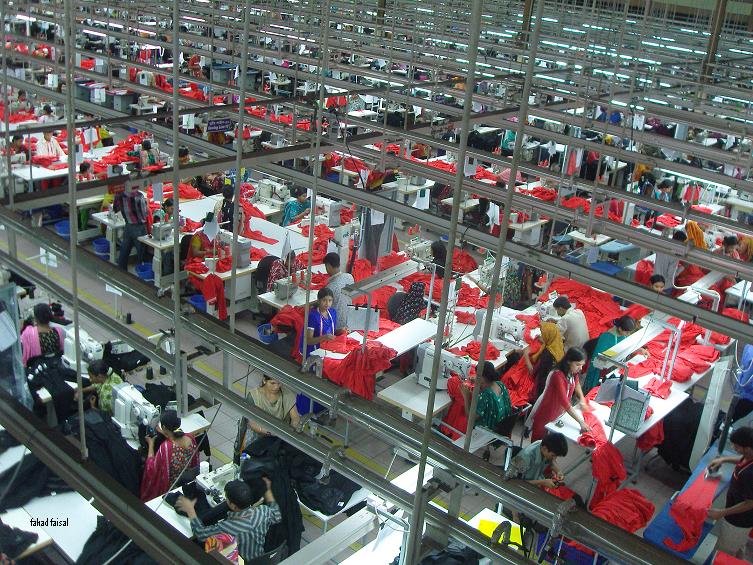
After the recent factory collapse in Bangladesh that killed more than 500, Rosemary Westwood calculates the cost of cheap clothing:

According to a 2011 report by the consulting firm O’Rourke Group Partners, a generic $14 polo shirt sold in Canada and made in Bangladesh actually costs a retailer only $5.67. To get prices that low, workers see just 12 cents a shirt, or two per cent of the wholesale cost. That’s one of the lowest rates in the world—about half of what a worker in a Chinese factory might make—and a major reason for the explosion of Bangladesh’s garment industry, worth $19 billion last year, up from $380 million in 1985. The country’s 5,400 factories employ four million people, mostly women, who cut and stitch shirts and pants that make up 80 per cent of the country’s total exports.

For that $14 shirt, the factory owners can expect to earn 58 cents, almost five times a worker’s wage. Agents who help retailers find factories to make their wares also get a cut, and it costs about $1 per shirt to cover shipping and duties. Fabric and trimmings make up the largest costs—65 per cent of the wholesale price.

Sarah Stillman spoke to Bangladeshi garment worker Sumi Abedin:

Last November, Abedin was sewing clothing for Walmart and other American brands at a factory called Tazreen Fashions, on the outskirts of Dhaka, when she heard a colleague yell, “Fire!” She thought of sprinting toward the stairs when the factory owner said, “He is lying,” and padlocked the doors.

As the air of Tazreen Fashions filled with dark smoke, Abedin told me, “I was running around the factory floor, screaming, crying for help.” After the power went out, she followed the dim light of other workers’ cell phones to the factory’s third production floor, where she saw a man removing the bars from a window. She decided to leap.

“I didn’t jump to save my life,” she told me, much as she has told reporters, students, and anyone who would listen over the past several weeks of touring the country. “I jumped to save my body, because if I stayed inside the factory I would burn to ash, and my family wouldn’t be able to identify my body.” When she landed, she broke her foot and arm. She considers herself lucky; a hundred and twelve of her colleagues died in the Tazreen fire. The parallels to New York’s Triangle Shirtwaist Factory fire, in 1911, where doors were locked and a hundred and forty-six workers died in the space of twenty minutes, are obvious.

(Photo: Garments Factory in Bangladesh by Fahad Faisal from Wikimedia Commons)

Correction Of The Day

“An earlier version of this article referred incorrectly to the products sold at By Brooklyn. The store does not sell dandelion and burdock soda, lovage soda syrup, and Early Bird granola ‘gathered in Brooklyn.’ An earlier version also referred incorrectly to the thoroughfare that contains the thrift shop Vice Versa. It is Bedford Avenue, not Bedford Street, or Bedfoprd Avenue, as stated in an earlier correction,” – NYT, from Henry Alford’s “How I Became a Hipster.

(Hat tip: Mark Liberman)

Warming Up To The Apocalypse

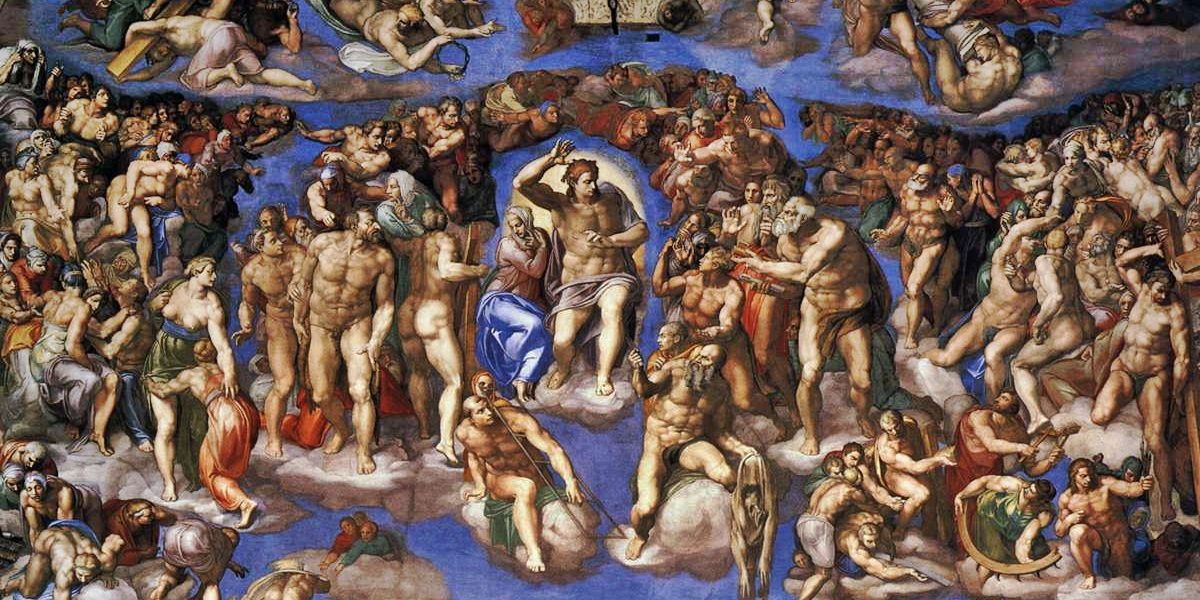
last_judgment

A new study draws a connection between the 76% of Republicans who “profess a belief in the Second Coming” and America’s inaction on climate change:

The study, based on data from the 2007 Cooperative Congressional Election Study, uncovered that belief in the “Second Coming” of Jesus reduced the probability of strongly supporting government action on climate change by 12 percent when controlling for a number of demographic and cultural factors. When the effects of party affiliation, political ideology, and media distrust were removed from the analysis, the belief in the “Second Coming” increased this effect by almost 20 percent.

“[I]t stands to reason that most nonbelievers would support preserving the Earth for future generations, but that end-times believers would rationally perceive such efforts to be ultimately futile, and hence ill-advised,” [David] Barker and Bearce explained. That very sentiment has been expressed by federal legislators. Rep. John Shimkus (R-IL) said in 2010 that he opposed action on climate change because “the Earth will end only when God declares it to be over.” He is the chairman of the Subcommittee on Environment and the Economy.

I recall David Brooks’ comment on my book, The Conservative Soul, where he declaimed that my concern with religious fundamentalism taking over the GOP was a function of bad faith or ignorance. And yet here we have a clear policy position distorted beyond reason by fundamentalist claptrap. Add the support for Israeli settlements to the mix as well. It’s those who refuse to see or downplay religious fanaticism in the current GOP who are either writing in bad faith or have no idea what they are talking about.

(Image from Michaelangelo’s Last Judgment, courtesy Wikimedia)

The Internet Is For Marriage

So claims a recent paper (pdf):

In fact, the study notes, marriage rates are between 13 percent and 30 percent higher than they’d be without the advent of broadband technology. The basic intuition here is that stuff like online dating makes it easier for people to find potential partners — or, as University of Montreal economist Andriana Bellou puts it, the Internet “has the potential to reduce search frictions.” That’s not utterly implausible. Researchers have already noted that the Internet allows us to find jobs and homes more easily. Why not spouses?

Yglesias, who met his wife online, shares his thoughts on digital courtship:

I would say that this is an underrated benefit of recent technological innovation. It has become somewhat fashionable to dismiss the web and digital communication as not all that significant in economic terms. But if you dial back to 1993, you’d find that the U.S. was already a land of material abundance by any realistic standard. Innovations that have helped us build and maintain richer connections with other people are in fact extremely valuable relative to that baseline.