Wendy Paris finds that “the economic and ideological forces that contributed to the breakdown of the extended and the nuclear family model are spreading around the world”:
In Brazil, the divorce rate nearly doubled between 2010 and 2011, after laws changed to make it much easier to divorce. In China, parental control is weakening, arranged child marriages are ending, couples are clamoring for marriages based on romantic love—and the divorce rate is rising. The divorce rate in China doubled between 1990 and 2010; in Beijing, the Chinese divorce capital, it’s nearly 40%. (Caveat: These stats may reflect economic incentives unintentionally encouraging divorce, but still, more Chinese are leaving marriages or staying out of them.) In Japan, people are living together, marrying later and divorcing more often. While the divorce rate is still low compared to the US, it has nearly doubled since 1990.
Globalization is a double-edge cake knife when it comes to marriage. The spread of ideas can also strengthen marriage. As Islamic law has weakened in Egypt, the divorce rate dropped from 25% in 1963 to 14% in the late 1990s.
And I wonder how fulfilling and happy those marriages are – for the women. I believe in marriage – as a way to cement an important bond of mutual responsibility, to create a space to live in that is independent of government, to rear children as well as possible. But if it is merely a prison for women: obviously not-so-much, as Dan Savage and I discussed recently. What we’re seeing is less the decline of marriage than its actual, rather than abstract, remoralization – on the grounds of freedom, equality, communication and love.
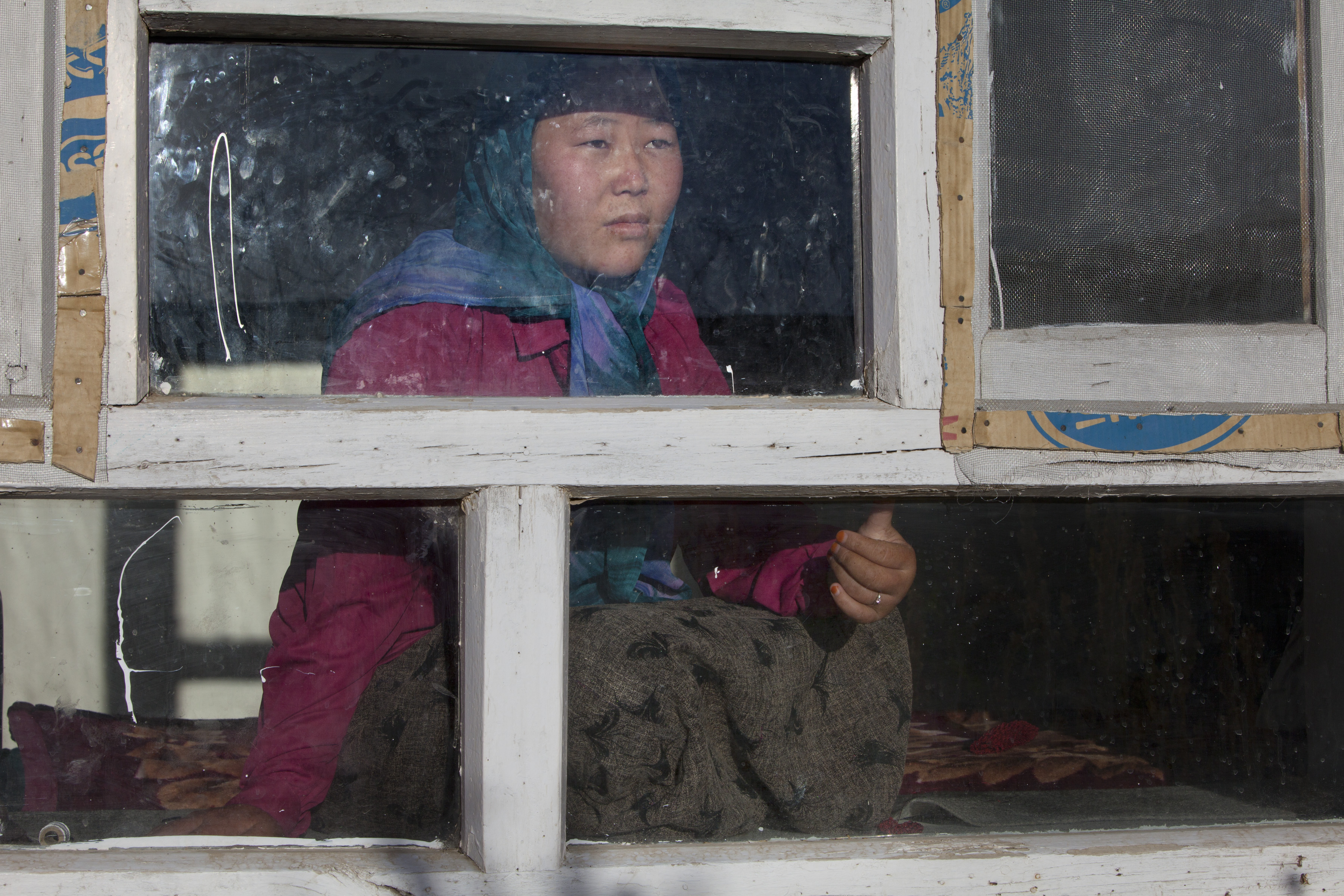
(Photo: A battered 28-year-old Hazara woman hides behind her veil at a women’s shelter October 8, 2010 in Bamiyan, Afghanistan. She came to the shelter after spending five months in prison. She was attempting to divorce her 50-year-old husband. There are 7-10 women currently living at the secret safe house. Until women’s shelters were started, something that was unknown here before 2003, a woman in an abusive marriage usually had no one to go to for protection. The problems many battered and abused women are confronting are deeply ingrained in a culture that has mainly been governed by tribal law. By Paula Bronstein/Getty Images.)
 The Dish