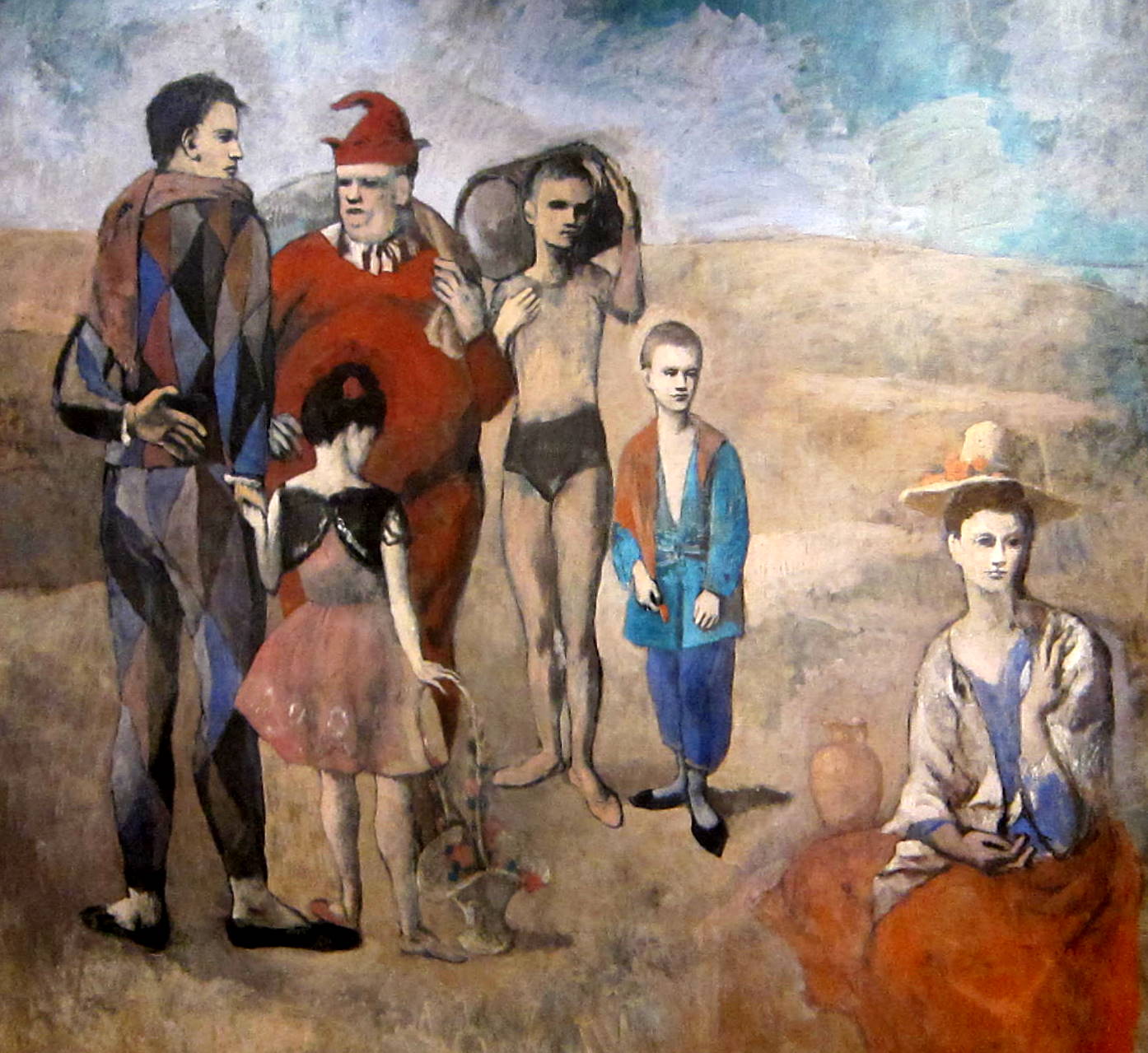
Priscilla Long admires our brain’s capacity for understanding art:
[T]he brain is an artist, creating images out of separate visual components. Maybe our ability to read a curve drawn on a flat surface as a three-dimensional figure is related to our reception of visual data from the world as edges—lines and curves. Maybe when artists draw they are doing with their hand what the brain is doing with its electrical pulses.
Consider, too, our brain’s extensive face-recognition equipment, including the ability to read feeling in facial expression and body language. Our “face patches,” located low in the temporal lobe, along with our emotion-tracking amygdala, light up equally when confronted with a face or a picture of a face. Art is intermingled with biology and inseparable from it. As we are wired to recognize faces, so portraits and self-portraits—images of the human face and body—have proliferated throughout the history of art.
And too, our brain has its “theory of mind”—specific areas steadily assessing what’s going on in the next person’s head. We have our mirror neurons that fire when we move and fire in just the same way when somebody else moves. Our “theory of mind” works in life and in art. When viewing the sad, disconnected, gaze-averting circus figures in Picasso’s painting Family of Saltimbanques, we may feel sad, though we are looking at nothing more than lines and color on a flat surface.
(Picasso’s “Family of Saltimbanques,” dated 1905, via Wikimedia)
 The Dish
