A recent study from Scandinavia makes the case for recruiting Rudolph in the fight against climate change:
Turns out where we let reindeer dine [has] a big impact on the energy balance of the planet. That’s because reindeer (aka caribou) prune dark-colored Arctic vegetation, minimizing solar heat absorption. The study was done by Finnish researchers using satellite data to compare tundra in Norway, where reindeer aren’t allowed to graze in summer, with similar tundra in Finland, where they are. As you might expect, vegetation is shorter and sparser on the Finnish side. In contrast, the taller trees and shrubs of the ungrazed Norwegian side absorb more sunlight—which promotes an earlier snowmelt, increases solar absorption, and accelerates warming. …
[C]arefully managed, reindeer could be used to do what they do best: geoengineer the landscape. Selective summer grazing could be used to delay snowmelt, increase the surface albedo, and reduce ground heating. If wetlands and poorly growing forests could be brought back so that the forests were left sparse and the wetlands returned to a natural state, it would significantly cool the atmosphere,” says [study co-author Lauri] Oksanen.
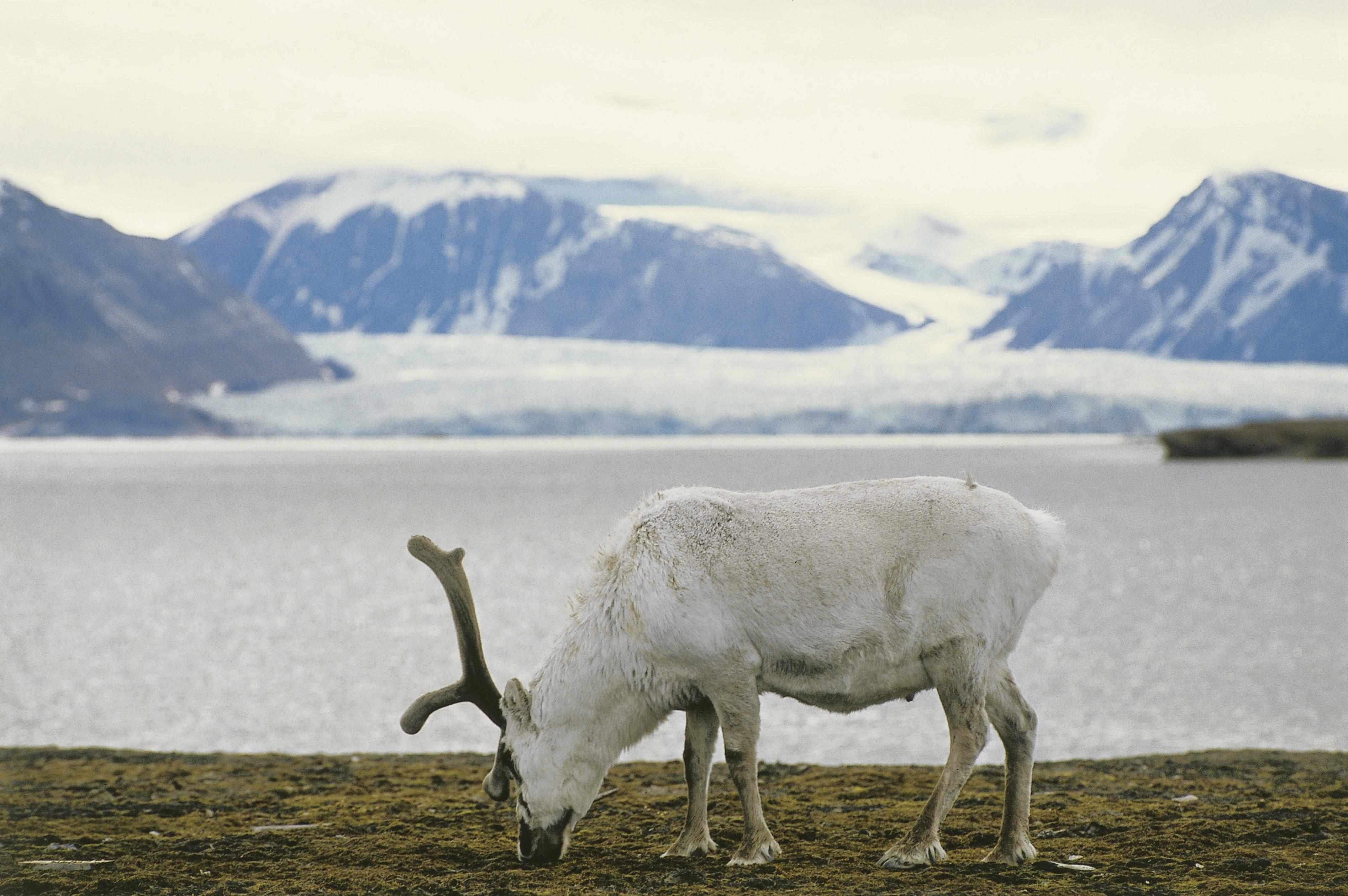
(Photo: Reindeer (Rangifer tarandus) eating grass on the Svalbard islands in Norway. By DEA/C.SAPPA/De Agostini/Getty Images)
 The Dish