Do college kids prefer Monet and Van Gogh to lulzy cats? UVA researchers asked two groups of students to rate five posters (two art posters, three humorous and cartoon- or cat-themed) and pick one to take back to the dorm. The test: how would results between groups differ if only one group of students was asked to reason about their preferences?
This “reasons” group liked the art posters less [than the control group] … and the humorous posters more. … Most of them still chose an art poster to take home, but it was a far lower proportion – 64% [vs 95%] – than the control group. That means people in this group were about seven times more likely to take a humorous poster home compared with the control group.
Here’s the twist. Some time after the tests, at the end of the semester, the researchers rang each of the participants and asked them questions about the poster they’d chosen: Had they put it up in their room? Did they still have it? How did they feel about it? How much would they be willing to sell it for? The “reasons” group were less likely to have put their poster up, less likely to have kept it up, less satisfied with it on average and were willing to part with it for a smaller average amount than the control group. Over time their reasons and feelings had shifted back in line with those of the control group – they didn’t like the humorous posters they had taken home, and so were less happy about their choice.
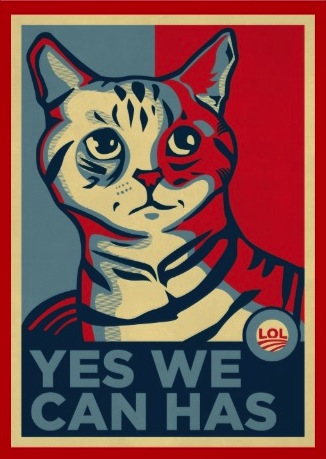
But Tom Stafford insists that “the moral of the story isn’t that intuition is better than reason”:
We all know that in some situations our feelings are misleading and it is better to think about what we’re doing. But this study shows the reverse – in some situations introspection can interfere with using our feelings as a reliable guide to what we should do.
And this has consequences in adulthood, where the notion of expertise can mean struggling to discern when introspection is the best strategy. The researchers who carried out this study suggest that the distorting effect of reason-giving is most likely to occur in situations where people aren’t experts – most of the students who took part in the study didn’t have a lot of experience of thinking or talking about art. When experts are asked to give reasons for their feelings, research has found that their feelings aren’t distorted in the same way – their intuitions and explicit reasoning are in sync.
(Image: Lolcat poster available here)
 The Dish