Let the parsing begin. A legal reader writes:
The Kennedy opinion in Windsor is, I think, deliberately obscure and muddled in its rationale(s), owing to his obvious — and quite laudable — design, namely, to point the way for other states and lower courts, but to ensure that they have, say, five years to work it out, rather than five months. (As an aside, I dare say that that strategy might not have been possible without the standing argument in Perry that the Court largely derived from Walter Dellinger’s brief — an argument that Kennedy himself nominally rejected, but that I’d wager he was relieved to see, for it paved the way for him to do what he did.)
But make no mistake: The writing is on the wall as to what Kennedy is prepared to do when he decides the time is right. The most significant sentence in the Windsor opinion is the very first one in the merits section, which has not received remotely the attention it warrants: “When at first Windsor and Spyer longed to marry, neither New York nor any other State granted them that right.”
“Longed to marry” . . . in a majority opinion of the Supreme Court of the United States!
Of course, one can never be too sure. But as long as Anthony Kennedy remains the pivotal vote on the Court, is there serious doubt about what the Court will do when it finally confronts the core marriage question? Indeed, one might even imagine the eventual opinion of the Court, per Kennedy, channeling your reaction last evening: “Marriage is not a political act; it’s a human one. It is based on love, before it is rooted in law. Same-sex marriages have always existed because the human heart has always existed in complicated, beautiful and strange ways.”
Jeffrey Rosen wonders if other Justices prevented Kennedy from ruling on the merits on Prop 8:
Joined by the unusual lineup of Thomas, Alito, and Sotomayor, he insisted that the challengers of Prop 8 should have their day in Court. But if the liberal justices were confident that Kennedy would join them in striking down Prop 8, wouldn’t they have joined him in finding that the Supreme Court had jurisdiction to hear the case? Please tell me if you disagree, but my surmise is either that the liberal justices weren’t confident that they could get Kennedy’s vote or that he made clear his willingness to uphold Prop 8.
A Kennedy vote against gay marriage would be surprising, and hard to reconcile with his obviously heartfelt and passionate defense of the equal dignity of gays and lesbians in the DOMA case. And yet at the oral argument, he was obviously conflicted about Perry, asking aloud why the Court had taken the case to begin with. Since it takes four votes to hear a case, is it possible that the Court voted to hear Perry over Kennedy’s objection but that, once he faced the need to decide, he wasn’t ready to vote for gay marriage, even on narrow grounds? Once again, that would seem surprising in light of his previous opinions. (Because her vote wasn’t necessary to dismiss the case, Justice Sotomayor was willing to join Kennedy, Thomas and Alito in making clear she would have decided the case on the merits.)
Scott Lemieux weighs in:
The most obvious way of interpreting the vote lineup, which doesn’t map on to the typical preferences of a majority of justices on either standing or equal protection law, is that nobody trusted Kennedy on the merits. I could find no hint in either Kennedy’s majority opinion in Windsor or his dissent in Perry of how he would have ruled if compelled to consider the merits. This question will simply remain open for the time being.
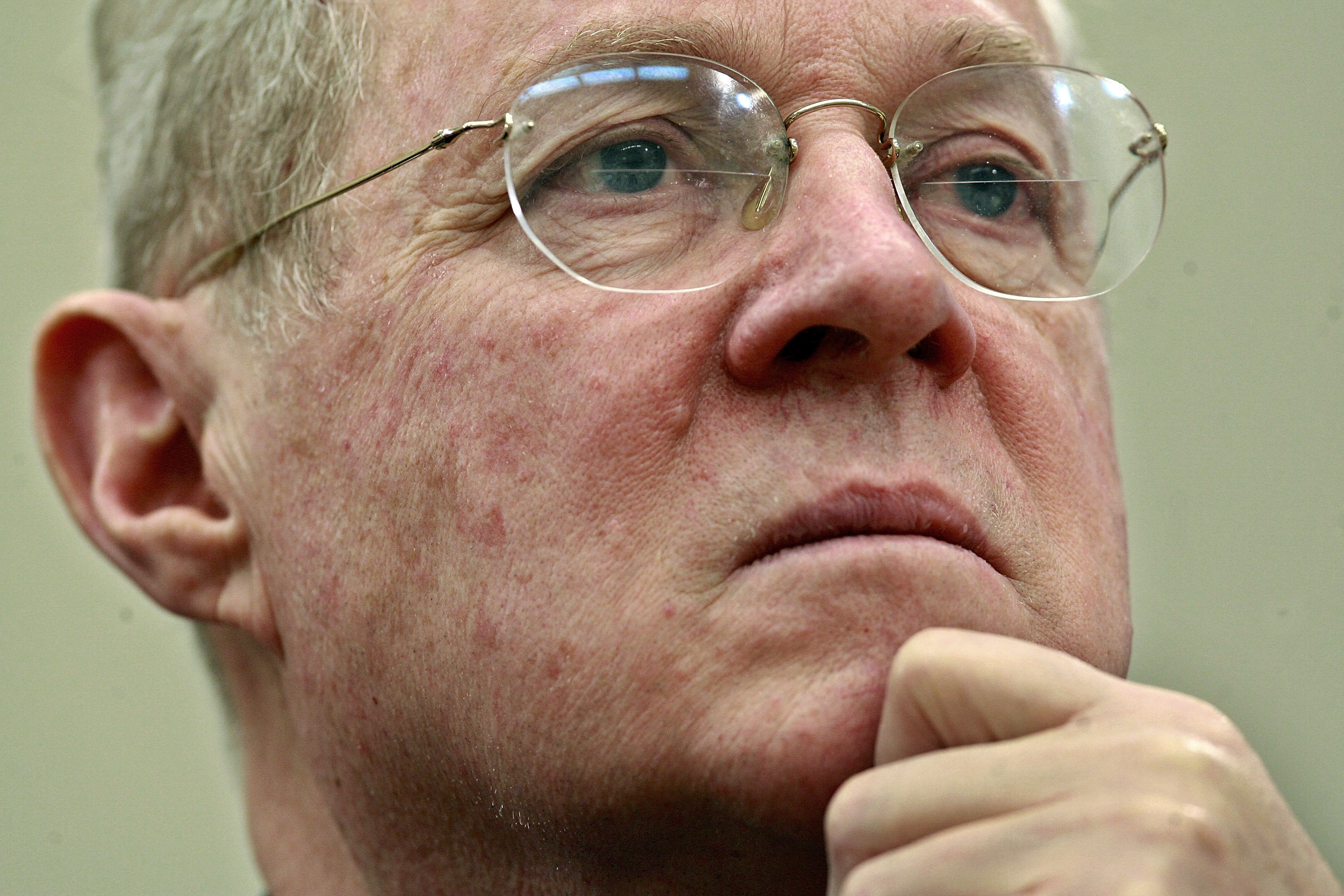
(Photo: Chip Somodevilla/Getty.)
 The Dish