Leon’s Beef With Brief

Leon Wieseltier confirms, once again, that he really doesn’t like blogs:

I have to say that there is not one blog, out of the eight million that must exist, that I read. The thing about blogging is that it is either someone’s first thoughts—which we know by definition are never their best thoughts—so that’s not interesting, or as time goes by they simply repeat themselves. Moreover there isn’t a lot you can say about anything consequential in 300 words. I write the back page of the magazine and I always wish it was three times as long as it is…

Fred Clark pounces:

[H]ere, then, is Wieseltier’s standard for “consequential” writing: Never say in 300 words what you can say, instead, in 1,500. That explains a great deal about why his columns read the way they do. “I have made this letter longer than usual,” Pascal once wrote, “because I lack the time to make it short.” Wieseltier seems to subscribe to the opposite point of view.

He’s also cheating himself. He wishes that his back-page column could be “three times as long as it is” because he has more to say than he can fit into that single page published 20 times a year. Wieseltier doesn’t seem to realize the obvious, common solution to that problem — take the best stuff that doesn’t fit and post it online.

Your Souvenir Barcode

ticket

In 1973, a nine-year-old Paul Lukas went to see a Mets baseball game, keeping the ticket to remember the day – an experience he’s not likely to have again:

I no longer save my tickets like I did when I was a kid. But even if I were still inclined to save such things, the 2013 ticket isn’t a particularly pleasing keepsake. It’s printed on an ordinary sheet of paper, it has no design flourishes other than the Mets logo, and it isn’t very official-seeming. The fact that the Mets felt the need to emblazon it with the words “THIS IS YOUR TICKET” speaks to how un-ticket-like it is. Like every other ticket these days, it’s really just a bar code delivery device. I suppose I might be inclined to save it if something historic had happened at this game — a no-hitter, say, or a single player hitting four home runs—but it still wouldn’t have the satisfying feel of something that could be framed or put in an album.

His broader point – and a counterpoint from a reader:

[T]he real cost of digital ticketing isn’t just the loss of nicely designed physical items. It’s also the loss of documentation, the loss of personal totems that serve as touchstones to past experiences. Of course, digital tickets are documented too, since every ticket purchase and turnstile scan ends up on a hard drive or server as more data to be mined. But that’s not the same as having an envelope full of stubs that you can pull out of the drawer whenever you like.

Update from a reader:

While we no longer have the physical momento of a ticket, we have digital artifacts that can be more powerful. Any photo I take with my phone at a ball game is instantly backed up with date and location information attached. I can instagram the event and pick a filter to match the mood. I can Vine a video or post about it to Google Plus or Facebook. In short, I can curate the moment the way I choose.

(Photo by Jeff Marquis)

Looking Back At A Lost Landscape

Hetch_Hetchy_Valley,_California,_by_Albert_Bierstadt,_undated_-_Museum_of_Fine_Arts,_Springfield,_MA_-_DSC03988

Morgan Meis ponders the connection between Albert Bierstadt’s “Hetch Hetchy Canyon” (seen above) and 19th century Americans’ Emerson-inspired approach to nature:

Emerson had spent his whole life sending the imaginations of American artists out into nature. He’d done it with his famous essay, Nature, written in 1836, and furthered his cause with the stream of essays and lectures that flowed from his pen in the years following. In Nature, Emerson explained that Americans have a special relationship with nature and, thus, a special responsibility to connect with nature’s beauty as it can be found in the American landscape. Painters like Albert Bierstadt took up this task with gusto. They got out there into the wild and they put nature on the canvas just as they thought Emerson had directed them to. And that’s why the folks at Mount Holyoke College started their museum with Albert Bierstadt’s painting. “Hetch Hetchy Canyon” is an example of the first uniquely American movement in painting as it was inspired by the thoughts of Ralph Waldo Emerson.

How the meaning of the painting has changed:

With the obliteration of Hetch Hetchy Canyon the place, “Hetch Hetchy Canyon” the painting is now a cautionary tale in the limits of Emersonian metaphysics. The painting no longer seems to give us a true picture of nature, but nature as we once fantasized it should be.

Quote For The Day

“The difficulty for me in writing—among the difficulties—is to write language that can work quietly on a page for a reader who doesn’t hear anything. Now for that, one has to work very carefully with what is in between the words. What is not said. Which is measure, which is rhythm, and so on. So, it is what you don’t write that frequently gives what you do write its power,” – Toni Morrison.

The Good, Dirty Book

Jamie Quatro discusses her O. Henry prize-winning short story, “Sinkhole” – which, like much of her work, explores “the intersection of faith and sexuality in Judeo-Christian orthodoxy”:

“Sinkhole” is the only story I’ve ever written that came to me as a grand-scale, amorphous idea: to write a combination loss-of-virginity/exorcism scene in which neither person realized what was happening to the other. That was all I had. No image or character, not even a fragment of dialogue…

Growing up, I was flummoxed by the church’s strictures on sexual behavior on the one hand and the rampant scriptural use of sexual image and metaphor on the other. It seems there’s something inherently erotic about the way we’re supposed to think about God (bridegroom) and the way he thinks about us (the return of Christ as Consummation, the church as his Bride, etc). Many (most?) Christians might say the two are mutually exclusive—that sexual love is tied to flesh, love for God to spirit—but I’m convinced they’re very closely aligned.

This spring, Nina Schuyler reviewed Quatro’s collection, I Want To Show You More, and found these themes in abundance:

One of the most prevalent themes is adultery, which is sprinkled throughout the book through a series of stories. The collection opens with “Caught Up,” in which the narrator reveals her affair to her mother. The narrator has spent ten months talking daily to her lover on the phone. The affair never is consummated, but in her mother’s view, it might as well have: “It’s all the same in God’s eyes,” says her mother.

Throughout, Quatro is not cynical about God or Christian beliefs. The narrators (women) in the adultery string of stories grapple with lust, passion, guilt, and God. The adulterous narrator appears again in “Imperfections,” a two-page story in which the man kisses the narrator’s forehead. The kiss makes her right eye burn, “Like you put a seal on my forehead, I wrote to him later, and hot wax dripped down into my eye.” And she returns again in other short pieces, which begin to feel like the heavy, complicated breathing of two lovers held apart.

Larkin’s Literary Afterlife

Reviewing Philip Larkin’s Complete Poems, which contains everything from his most polished publications to scraps from his notebooks, James Fenton confesses his suspicions about such volumes:

It is very strange that a poet whose key work lies in three rather short volumes should have caused such difficulties for his editors and such controversy among his readers. But the readers pay him the tribute of a sort of possessiveness and concern: they want their poet to look his best. And it’s hard for a poet to look good in his Collected Poems, if by “collected” we mean anything like “complete.” Most poets’ collected works will include things that would make the author cringe. Presented in untidied form, such gatherings remind me of nothing so much as those yard sales characteristic of recession America, in which families set out on their front lawns the contents of their closets and dens—the Frisbees, the old scooters, the clothes neither wanted nor needed, the dreadful joke presents—all in the hope of raising a little cash.

Painters are known to curate their oeuvre by means of occasional bonfires of botched canvases, and experience has taught us that the better the painter, the better advised he is to stand over that bonfire and make quite sure that what he wants burnt does indeed go up in smoke, and is not squirreled away by his admirers and assistants, whether through misguided motives of preserving the legacy, or by the thought of providing for their old age.

I touched on Larkin’s poetry last week here. The above audio is of me reading Larkin’s “Whitsun Weddings” at a celebration of his work described here.

A Spiritual Cleansing

Judith Shulevitz sees echoes of religious observance in the juice cleanse craze:

These new cleanses are “religion without theology,” my friend Ruby quipped. But now that I’ve read Junger’s Clean, the best-selling text of the cleansing movement, I’ve decided I don’t agree. Clean is theology all the way down. As in many a devotional text, fasting is presented as a way to embody a purer social order. We live in an age of what William James called “medical materialism,” so instead of fretting about a fallen world, we speak of a poisoned one. … Distrustful of our surroundings, we try to close ourselves off to malign influences and to purge them. It is no accident that Clean dwells obsessively on defecation and elimination. Junger wants us to flush out shit, “toxic waste,” even mucus, which he says has “a dense and sticky quality; it resonates with and attracts dense, toxic thoughts and emotions.”

Stumbling Towards Success

Reviewing Worldly Philosopher: The Odyssey of Albert O. Hirschman, Malcolm Gladwell spots this arresting passage from one of the thinker’s essays:

While we are rather willing and even eager and relieved to agree with a historian’s finding that we stumbled into the more shameful events of history, such as war, we are correspondingly unwilling to concede—in fact we find it intolerable to imagine—that our more lofty achievements, such as economic, social or political progress, could have come about by stumbling rather than through careful planning. . . . Language itself conspires toward this sort of asymmetry: we fall into error, but do not usually speak of falling into truth.

How his embrace of failure, doubt, and the unexpected, spurred heterodox economic ideas:

Hirschman published his first important book, “The Strategy of Economic Development,” in 1958. He had returned from Colombia by then and was at Yale, and the book was an attempt to make sense of his experience of watching a country try to lift itself out of poverty. At the time, he was reading deeply in the literature of psychology and psychoanalysis, and he became fascinated with the functional uses of negative emotions: frustration, aggression, and, in particular, anxiety. Obstacles led to frustration, and frustration to anxiety. No one wanted to be anxious. But wasn’t anxiety the most powerful motivator—the emotion capable of driving even the most reluctant party toward some kind of solution?

In the field of developmental economics, this was heretical. When people from organizations like the World Bank descended on Third World countries, they always tried to remove obstacles to development, to reduce economic anxiety and uncertainty. They wanted to build bridges and roads and airports and dams to insure that businesses and entrepreneurs encountered as few impediments as possible to growth. But, as Hirschman thought about case studies like the Karnaphuli Paper Mills and the Troy-Greenfield folly, he became convinced that his profession had it backward. His profession ought to embrace anxiety, and not seek to remove it.

Recent Dish coverage of Hirschman here.

Face Of The Day

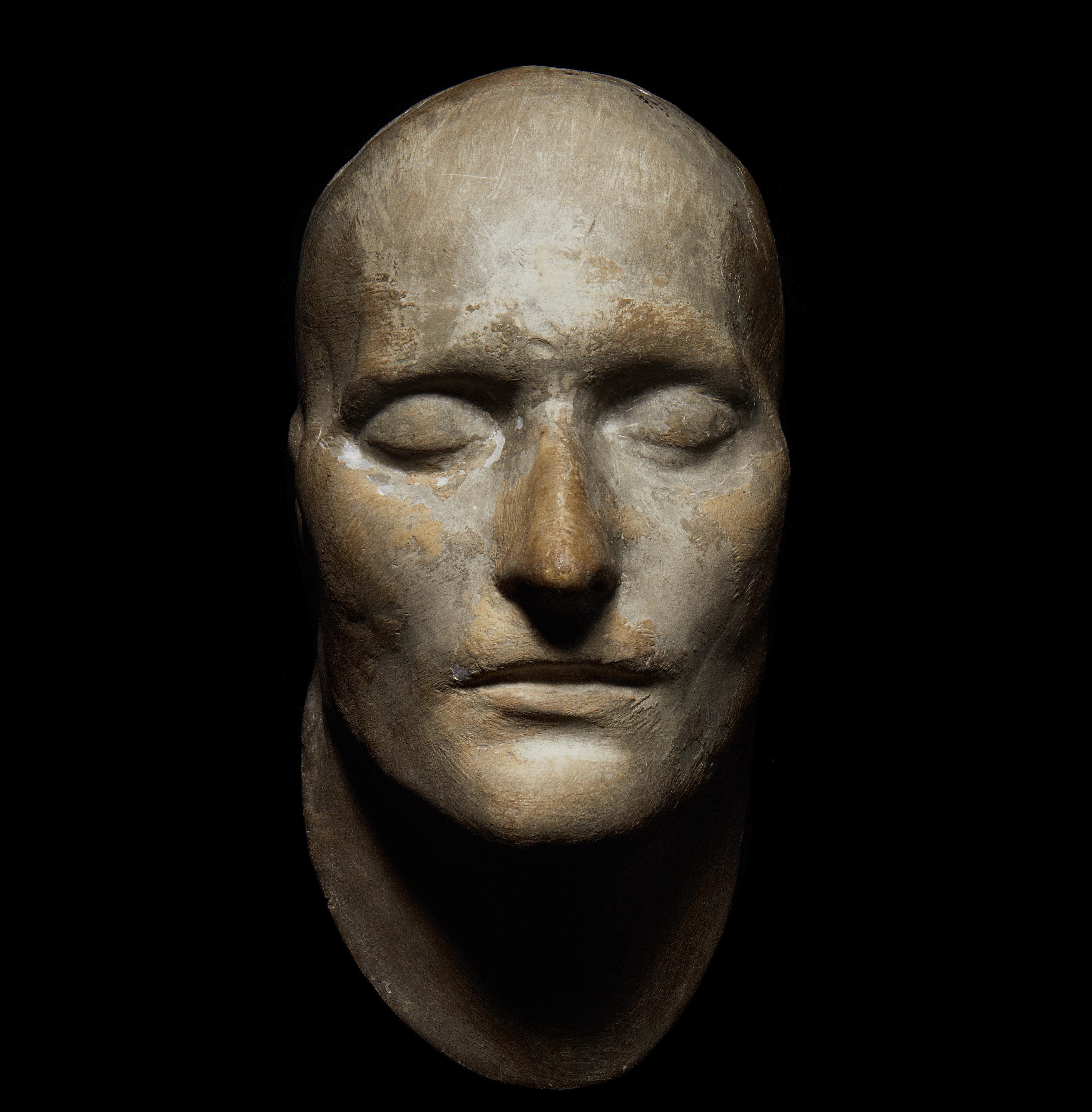
dish_napoleondeathmask

A “death mask” of Napoleon sold last week for £169,250 (about $260,000):

After Napoleon’s death, there was a protracted wrangle over whether his physician, Francesco Antommarchi, or the British doctor, Francis Burton, should make a death mask. Practical difficulties also meant that this was not done until 7 May, two days after the former Emperor had died.

The mask was given to the Rev Richard Boys by the portrait painter, J.W. Rubidge, who assisted Antommarchi in making the mask. Boys received it before Napoleon’s entourage left the island towards the end of May. The mask is inscribed “Rev Mr Boys” on the inside of the cast, and comes with a note by Boys reading: “This Cast was taken from the Face of Napoleon Buonaparte as he lay dead at Longwood St. Helena 7th May 1821 which I do hereby certify/ R. Boys M.A. Sen.r Chaplain/ By Rubidge”.

(Hat tip: Tara McGinley)