Happy Birthday! ©

A music company called Warner/Chappell owns the copyright to the omnipresent ditty that begins “Happy birthday to you”:

A lawsuit filed in federal court last week seeks to change that. The complaint (online here) argues that the copyright to the song, if it ever existed at all, “expired no later than 1921.” Warner/Chappell hasn’t responded to the suit yet …

The story of the song is long and weirdly complex. The short version is: A pair of sisters published a song called “Good Morning to You” in 1893. Over the next few decades, the song morphed into “Happy Birthday to You.” In the 1920s and ’30s, a couple versions of the birthday song were published in copyrighted songbooks. But Happy Birthday to You was in wide circulation for years before it was published and copyrighted, and it’s not clear who wrote that version of the song, according to Mark Rifkin, one of the lawyers who filed the suit.

Jacob Goldstein has a scanned version of the evidence in question, an early “Happy Birthday to You” song from a 1911 “Board of Sunday Schools of the Methodist Episcopal Church” book. He calls it the “one page [that] could end the copyright war.” Previous Dish on the Happy Birthday song here.

The Best Of The Dish Today

dish_ekaterinapanikanova

This is going to have to be a truncated version because I just got back from dinner with high school (Reigate Grammar) friends I haven’t seen in 30 years. And, yes, I have a rule against blogging drunk. So, in brief, Gandolfini reax, Jihadist Syrian rebels, fascinating to and fro on a pill to prevent HIV, and the sweet sounds of silence.

Beard-rub!

An Unconditional Surrender In The Culture War

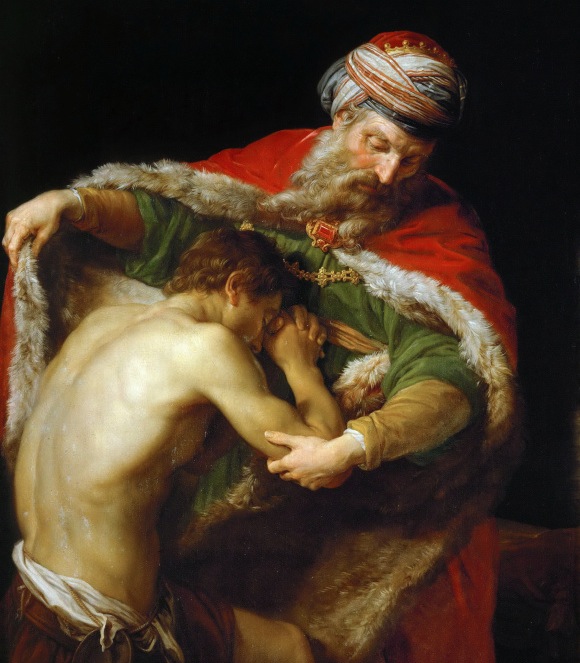
pompeo-batoni

[Re-posted from earlier today]

It’s very rare that one side in a culture war actively renounces its past positions and embraces a new one. That’s particularly true on the Christianist right, where absolutes hold sway, regardless of doubt or charity. So today is a banner day for those of us who have long fought for the equal dignity of homosexuals as children of the same God as heterosexuals, and deserving of no less love and support. Exodus International, the group that championed “reparative therapy” for gays as the only way to live a Christian life, will soon cease to exist and has offered an apology for its past actions. This is quite a statement from Exodus’s president, Alan Chambers:

Exodus is an institution in the conservative Christian world, but we’ve ceased to be a living, breathing organism. For quite some time we’ve been imprisoned in a worldview that’s neither honoring toward our fellow human beings, nor biblical. From a Judeo-Christian perspective, gay, straight or otherwise, we’re all prodigal sons and daughters. Exodus International is the prodigal’s older brother, trying to impose its will on God’s promises, and make judgments on who’s worthy of His Kingdom. God is calling us to be the Father – to welcome everyone, to love unhindered.

Then this personal apology:

Please know that I am deeply sorry. I am sorry for the pain and hurt many of you have experienced. I am sorry that some of you spent years working through the shame and guilt you felt when your attractions didn’t change. I am sorry we promoted sexual orientation change efforts and reparative theories about sexual orientation that stigmatized parents. I am sorry that there were times I didn’t stand up to people publicly “on my side” who called you names like sodomite—or worse. I am sorry that I, knowing some of you so well, failed to share publicly that the gay and lesbian people I know were every bit as capable of being amazing parents as the straight people that I know. I am sorry that when I celebrated a person coming to Christ and surrendering their sexuality to Him that I callously celebrated the end of relationships that broke your heart. I am sorry that I have communicated that you and your families are less than me and mine.

That’s an enormous statement given the recent past and, to me, a sign of God’s grace. That’s why when I say “unconditional surrender,” I hope Exodus won’t regard that as some kind of victory lap. It isn’t. It just springs from a deep appreciation of their grace-filled decision to re-examine their conduct as Christians and see where the world may have led them astray. Anyone in the public sphere who openly and candidly comes to terms with an error of judgment, and owns it, and even seeks forgiveness for it, is contributing to a more humane, honest conversation and dialogue.

I’ve never been one of those campaigning to shut these psychological torments/”therapies” down. If that kind of therapy is what an adult wants, I will not get in the way.

In fact, I examined the actual arguments of reparative therapy in some detail in my book, Love Undetectable. The mind is still mysterious enough and the origins of our emotional and sexual attractions so complex, my view has always been to keep an open mind about what makes one a homosexual, before or after birth. I still don’t know. But what I do know is that homosexuality exists, that we are not a chimera, and that we are not straight people, drawn to wicked things. We are simply human beings, as human as any heterosexual, with all that entails for Christian doctrine.

And the older brother of the prodigal son is a fascinating analogy. The older son is still thinking in terms of rigid categories of worthiness and rule-based morality (and the pride that often comes with them), while the father opens his heart and doors to the younger, feckless son, who long ago abandoned every duty and every moral obligation, but who remains his son. The righteous brother is appalled at the overflow of the father’s love to such a miscreant:

Behold, these many years I have served you, and I never disobeyed a commandment of yours, but you never gave me a goat, that I might celebrate with my friends. But when this, your son, came, who has devoured your living with prostitutes, you killed the fattened calf for him.

But God’s love sees past these categories. The only true virtue for Jesus is love – unconditional love, for anyone, in any situation. The parable is about letting go of those strict and sometimes self-righteous moral codes in order to surrender to the expansive and unknowable force of God’s love. I return again to Augustine’s phrase

In essential things, unity. In doubtful things, liberty. In all things, charity.

Finally, one part of the Christian right has grasped the last part of that equation. They have returned from the barren land of Christianism and control of others and toward the fertile valley of Christianity and love for all.

May others follow in their path – as many in the younger generation already are.

(Painting: The Return Of The Prodigal Son, Pompeo Batoni, 1773)
Being African In America


Parul Sehgal interviews Chimamanda Ngozi Adichie, an author born in Nigeria who has lived in the US off and on since age 19, about how she handled race in her book Americanah:

CNA: Race is, I think, the subject that Americans are most uncomfortable with. (Gender, class, sexual orientation, ethnicity, religion are not as uncomfortable.) This is an American generation raised with the mantra: DO NOT OFFEND. And often honesty about race becomes synonymous with offending someone. …

I wanted very much to write an honest book. … I do realize that there is a certain privilege in my position as an outsider, a foreigner, somebody who is not an American. I am really looking in from the outside. I became fascinated by race when I came to the U.S. I still am. I am fascinated by the many permutations of race, especially of blackness, since that is the identity I was assigned in America.

PS: You give [Americanah character] Ifemelu a similar line: “How many other people had become black in America?” Was it a specific moment for you? Did you resent it? Embrace it?

CNA: At first I resented it. A few weeks into my stay in the U.S., an African American man in Brooklyn called me “sister,” and I recoiled. I did not want to be mistaken for African American. I hadn’t been long in the U.S., but I had already bought into the stereotypes associated with blackness. I didn’t want to be black. I didn’t yet realize that I really didn’t have a choice.

Then my resentment turned to acceptance. I read a lot of African American history. And if I had to choose a group of people whose collective story I most admire today, then it would be African Americans. The resilience and grace that many African Americans brought to a brutal and dehumanizing history is very moving to me. Sometimes race enrages me, sometimes it amuses me, sometimes it puzzles me.

I’m now happily black and now don’t mind being called a sister, but I do think that there are many ways of being black. And when I am in Nigeria, I never think of myself as black.

Adichie’s TED talk, “The Danger of a Single Story”, is seen above.

(Hat tip: Paper Trail)

Highly Classified Capitalism

Drake Bennett and Michael Riley describe the business model of Booz Allen:

Rich contractor salaries create a classic public-private revolving door. They pull people from government intelligence, deplete the ranks, and put more experience and knowledge in the private sector, which makes contractors even more vital to the government. “Now you go into government for two or three years, get a clearance, and migrate to one of the high-paying contractors,” says Steven Aftergood, who heads the Project on Government Secrecy at the Federation of American Scientists. That’s what Snowden did. “You have to have a well-developed sense of patriotism to turn that money down,” Aftergood says.

As a result, says [William] Golden, the headhunter, a common complaint in spy agencies is that “the damn contractors know more than we do.” That could have been a factor in the Snowden leak—his computer proficiency may have allowed him to access information he shouldn’t have been allowed to see. Snowden is an anomaly, though. What he did with that information—copying it, getting it to the press, and publicly identifying himself as the leaker—cost him his job and potentially his freedom, all for what appear so far to be idealistic motives. The more common temptation would be to use knowledge, legally and perhaps not even consciously, to generate more business.

The Painted Page

dish_ekaterinapanikanova

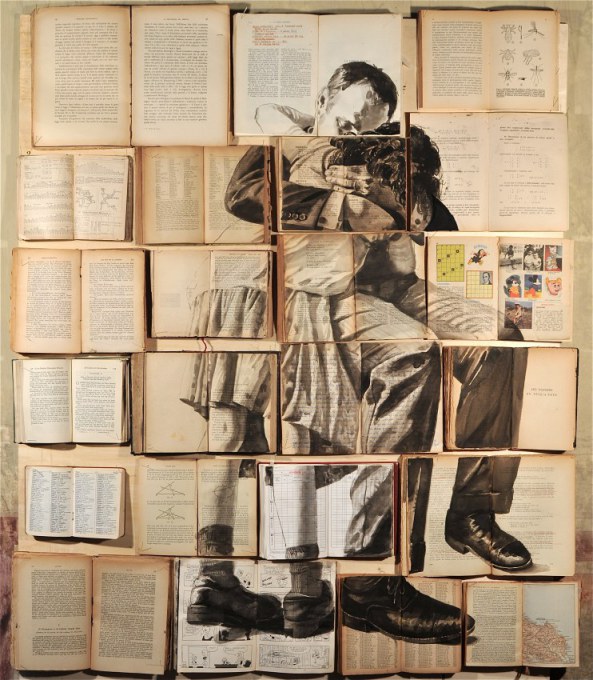
For her series Errata Corrige, artist Ekaterina Panikanova creates a canvas out of old books:

Using old books and various antiquated texts, Panikanova proceeds to apply her dark markings across the multiple volumes of published words and images.

Like a hidden message or puzzle, her works are applied across unspecified pages on each book. Furthermore, with some of her paintings (which are more like installations), there is a puzzling three-dimensionality to them as the pages are not bound down. Instead, they flow freely and add not only layers, but also a sense of texture to the piece.

Recent Dish on visual art crafted from books here.

(Image courtesy of Ekaterina Panikanova)

The World’s Hidden Refugees

In honor of World Refugee Day, Caitlin Dewey calls our attention to internally displaced people (IDP), populations fleeing conflict without crossing borders who are thus “without the benefit of an international sanctuary”:

IDPs aren’t always as visible as refugees, perhaps because their growing numbers don’t swell international camps or burden neighboring countries. But … refugee numbers have mostly stayed stable over the past five years, despite devastating conflicts in Syria, Mali and the Congo. It’s the number of IDPs that continues to grow year-over-year: up to 17.7 million in 2012, from 15.5 million the year before. Some estimates put that number even higher — the International Displacement Monitoring Centre cites 28.8 million IDPs in 2012, its highest ever recorded. …

All displaced people are vulnerable. But internally displaced people can face particular challenges, advocates say, because they often depend primarily on their own government for support, even when that government is the thing displacing them. And international aid groups that work with IDPs often have to go through national governments to get help to the displaced.

Harold Maass adds some perspective:

The number of people around the world who have been forced to flee home due to war or some other life-threatening crisis hit a 19-year high in 2012, according to a new report by the United Nations’ refugee office. In all, 45.2 million people have been displaced by conflict and crisis. “This means one in each 4.1 seconds,” says Antonio Guterres, the U.N. high commissioner for refugees. “So each time you blink, another person is forced to flee.”

Elizabeth Ferris applauds UN efforts, but argues that they won’t be enough:

The United Nations High Commissioner for Refugees (UNHCR) does a wonderful job, by and large, in responding to immediate humanitarian needs of refugees and in many cases of IDPs, but UNHCR alone can’t find solutions for the world’s refugees and IDPs. Concerted action is needed by governments, development actors and private citizens to find solutions for refugees and IDPs. Finding solutions for people who have been displaced for years is hard work and political commitment is needed. World Refugee Day reminds us of the urgent need to redouble efforts to bring an end to displacement wherever possible and as soon as possible. It should be completely unacceptable that today a third generation of refugees is being born in Dadaab refugee camp in Kenya.

How Much Do Helmets Help? Ctd

A reader writes:

I can’t remember if I saw this on the Dish or somewhere else in my RSS feed, but it’s a pretty ingenious product from a Swedish company: An inflatable helmet that triggers based on the occurrence of an accident. Very cool. It’s rated at the same safety standards that the EU requires of traditional helmets. Seems to me that this is the kind of product that may help alleviate the behavioral issues suggested in your post.  You don’t “feel” like you are wearing a helmet.  Drivers don’t “know” you’re wearing a helmet.  But you have the safety without looking like a dweeb (which is why so many people opt out of helmets in the first place). At $600 bucks, it’s not ready for the everyday market, but hopefully they’ll manage to scale up with the financial backing they have received, so it becomes a practical investment.

By the way, in a little “life imitates art” moment, the entire concept was predicted in Snow Crash, the great cyberpunk novel by Neal Stephenson, back in 1992.

The Right Goes Silent On Marriage Equality

Barro studies the right-wing media’s response to Murkowski announcing that she supports marriage equality:

Nothing at National Review, the Weekly Standard, Human Events, the Washington Free Beacon, or the American Spectator. Breitbart.com ran two Associated Press stories. WorldNetDaily ran an NBC News story. The Daily Caller and RedState mentioned Murkowski in pieces about immigration reform, but nothing on gay marriage.

The only conservative outlet I found covering Murkowski was the Washington Examiner, which ran a straightforward news story about her announcement.

Four years ago, it was hard to imagine Republican senators supporting gay marriage. It was even harder to imagine conservative media outlets having no reaction at all to them doing so.

He believes that “the national conservative media is done with engaging on the issue.” Timothy Kincaid likewise notes how the debate over marriage has shifted:

[I]t seems to me that we have entered a phase in which one can be “not ready” or “not convinced” or “not yet evolved” on the issue of marriage equality. That’s simply opinion. But to be actively opposed suggests a character flaw, something with a whiff of nastiness and maybe even vile. The public – right and left – seem to have decided that you can support gay marriage or you can not support gay marriage, but you can’t oppose gay marriage any longer.

So more and more, those who can safely be assumed to favor heterosexual superiority simply choose to say nothing. Instead of defending their God-given moral view, they announce their support for states’ rights, defer to the wisdom of the courts, or just change the subject.