How Much Do Helmets Help? Ctd

A reader writes:

Re: your post on bicycle helmets, it’s much worse than you think. See this article, which pretty conclusively proves that helmets don’t do a damn thing for many kinds of head injuries and the government isn’t doing a damn thing to enact better standards. People are being lulled into a sense of safety with helmets that they just don’t have.

Another differs:

I hate when people cite small studies that do not jibe with meta analyses. Here’s one on bike helmets from NIH. I work in public health, so I obviously have a stake in the game. But even further, my daughter fell off a skateboard two years ago and was med-flighted to Boston Children’s Hospital.  The hospital asked us to bring her helmet, which was completely shattered.  Needless to say, she is completely fine now but would not have been without the helmet, according to hospital physicians.

Wear a helmet; don’t wear a helmet.  I don’t care.  But don’t be so arrogant as to tell others not to by hiding behind one small study.

Another:

As someone whose life was saved by his bicycle helmet four years ago, I must object to your post.  The benefits of using a helmet are quite clear, and the study you link to doesn’t change that conclusion. It addresses a narrower question: the benefits of mandatory helmet laws.

Its conclusions are intriguing, but mainly because it sees helmeting laws as introducing factors that nullify the benefits of helmet use, such as discouraging bicycle use, improper use of helmets, or (that handy all-purpose explanation) moral hazard – which I frankly find nonsensical (my head came out OK, but I still had serious leg and neck injuries; why would anyone increase their risk of those just because they’re wearing ahelmet?).

I might add that helmet use doesn’t appear to be associated with riskier behavior – indeed the contrary, since helmeted cyclists tend to engage in prudent cycling practices generally, like obeying traffic laws, using lights at night, etc.  The big problem (certainly it was mine) isn’t risky cyclist behavior so much as risky motorist behavior (after all, they ride around wrapped in a two-ton, full-body helmet).

Finally, as Eric Jaffe points out in The Atlantic, while the Canadian study makes a good point about helmet laws, it doesn’t make any sort of case against actually using a helmet.  Rather, it makes a case that other measures to improve bike safety are more important, because they reduce the likelihood of accidents in the first place.  A post like this that discourages helmet use is actually a disservice to cyclists, including yourself.

Another helmet booster tells his horror story:

I can’t and won’t question the mentality of those who do or do not wear helmets while riding a bicycle, but I will say for those concerned with protecting their noggin, helmets do help. Back in the ’80s I rode bicycles competitively and while out on a training ride one February day in Boulder, Colorado, and started to climb a hill in the Rocky Flats area known as The Wall. It was a chilly day and I had chosen to wear a hardshell helmet instead of the old style leather-bound “hair net” because it provided some level of warmth. I had just gotten up off the saddle and started to crank up this ridiculously steep hill when my front wheel came off, my mistake for not checking the wheels before I set out.

I crashed and was lucky someone saw it happen who then drove home and called 911 and returned and waited. I had a flight-for-life to a local emergency hospital and was out cold for 20 hours. I awoke to learn I had 450 stitches with 7-layer closures on the right side of my face done by a masterful plastic surgeon on duty. The helmet saved my ear, part of my scalp, and more than likely prevented my skull from cracking. If you could have seen the scrapes on the side of that helmet, you’d wear a helmet too.

Update from the first reader, who elaborates on his point:

The three anecdotes after the quip you posted from me entirely miss the point. The article from Bicycling magazine shows that bike helmets do exactly what your other readers say they did for them – keep your skull from splitting open in a catastrophic crash, and maybe reduce some scrapes and bleeding in a minor one. What they don’t do is prevent concussions, because the hard material does transmit force to your skull – it absorbs enough so that it breaks instead of your head but not enough to keep your brain from getting rattled. The government could set standards for safer helmets – the technology is being developed – but it hasn’t, so nobody has an economic incentive to sell a new kind of helmet that it can’t say is government or privately “safety certified.” But those certifications are hardly based on the latest science.
Not Cutting It

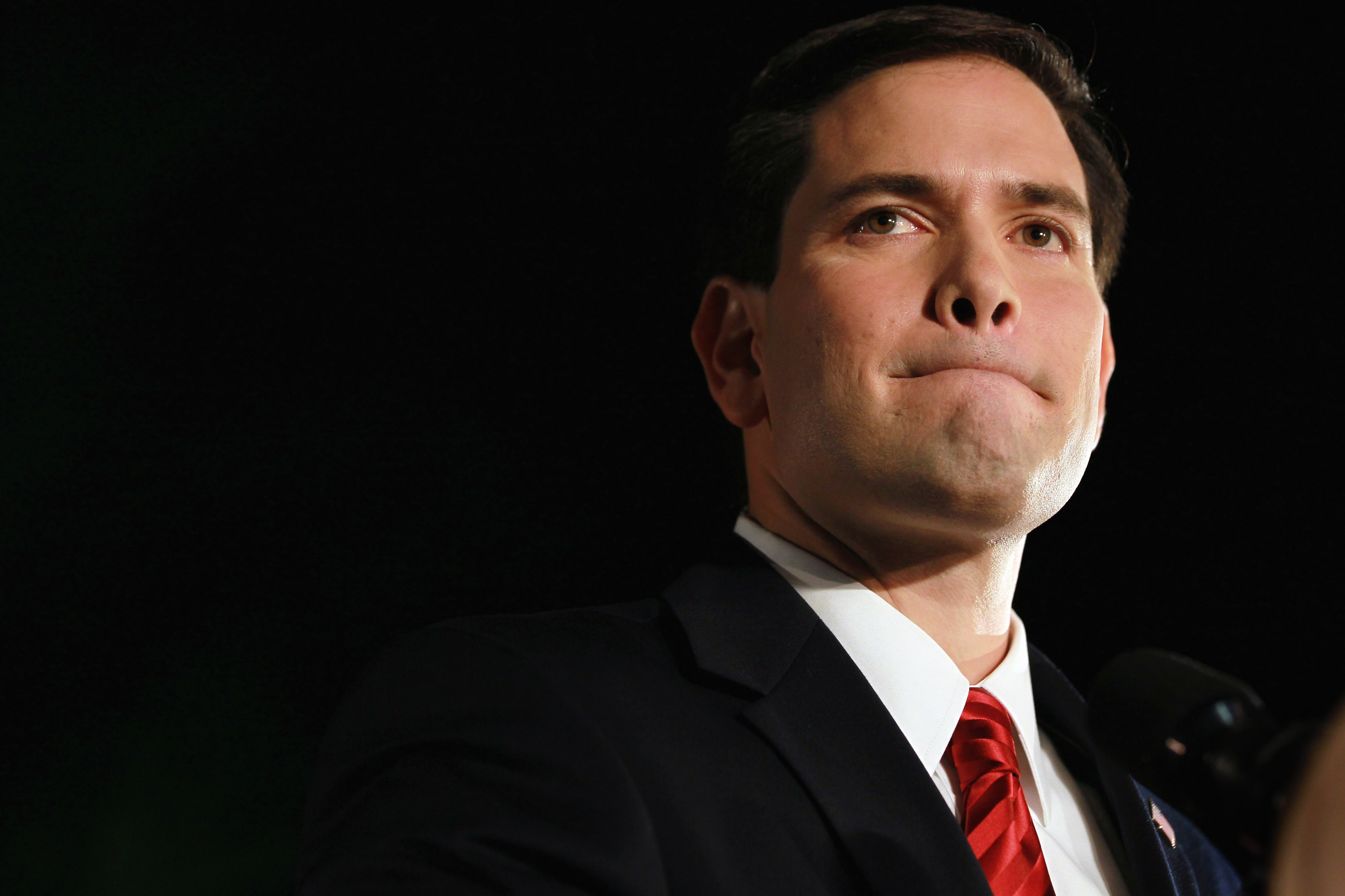
Senate Candidate Marco Rubio Attends Election Night Event

This excerpt of Lizza’s new piece (paywalled) on immigration reform is attracting a lot of attention:

“There are American workers who, for lack of a better term, can’t cut it,” a Rubio aide told me. “There shouldn’t be a presumption that every American worker is a star performer. There are people who just can’t get it, can’t do it, don’t want to do it. And so you can’t obviously discuss that publicly.”

Allahpundit sighs:

Remind me again: Passing the Gang of Eight bill is, theoretically, supposed to increase our chances of winning, right? Is “some of you can’t cut it” a message that sounds like a winner in, say, Ohio or Pennsylvania or any of the other 48 states where middle-class voters are already nervous about competition for jobs turning even fiercer in a high-unemployment economy?

Chait calls the Rubio aide quote “not only a piece of shocking candor, but also the biggest single blunder the pro-reform coalition has committed so far”:

Party elites may nod along when they read it, but there’s a reason nobody in politics ever says anything like this. The quote comes at a precarious moment for immigration reform. Conservatives have formed the most plausible basis for a counterattack against the bill — they are demanding draconian restrictions on the ability of legalized immigrants to obtain any kind of subsidized health insurance, for years to come. If they can successfully frame immigration reform as an expansion, or even a tacit recognition, of the hated Obamacare, they’ll unleash the right-wing fury that has thus far failed to materialize as expected.

Rubio’s defenders are claiming that the aide’s quote has been taken out of context. Lizza has released a partial transcript of the conversation so readers can judge for themselves.

(Photo: Joe Raedle/Getty)

Is Climate Change On Hiatus?

Brad Plumer warns against complacency when interpreting the latest data on global temperature:

We’re still on pace to blow past that 2°C climate target. Intricate arguments about climate sensitivity often bypass a crucial point. Humanity is on pace to do a lot more than simply double the amount of carbon in the atmosphere by the end of the century (compared with pre-industrial levels). Doubling means going up to 560 parts per million. We’re currently at about 400 ppm and rising fast.

Nate Cohn describes how the slowdown in global warming over the last 15 years is improving scientists’ ability to model climate change by forcing them to rethink how heat is stored in oceans, the effects of aerosols, and variations in the sun’s output:

What all of these discoveries hint at is that scientists, at long last, have developed a better understanding of year-to-year climate variations. In a way, you could think of it like the stock market. Watching Wall Street, we see the indices rise and fall, and we know the news that has influenced the swings. Watching annual temperatures, scientists could see the fluctuations but, until recently, knew little about the news–even though they were confident that increased carbon dioxide would ensure a bull market over the longer run. With an updated understanding of deep ocean temperatures and stratospheric aerosols, that has changed. [MIT Professor Susan] Solomon thinks “we’ve learned a lot about interdecadal variability” as a result of the hiatus.

He worries, however, about the political implications of this continuing learning process:

[T]he so-called scientific consensus on global warming doesn’t look like much like consensus when scientists are struggling to explain the intricacies of the earth’s climate system, or uttering the word “uncertainty” with striking regularity. … In the current political climate, debates about things like climate change are carried out in broad-brush assertions. The challenge for scientists is that the more they understand the climate system, the more complex it gets, and the harder it gets to model with precision—not to mention making the kinds of sweeping statements the news cycle requires.

Rand Is Already Running

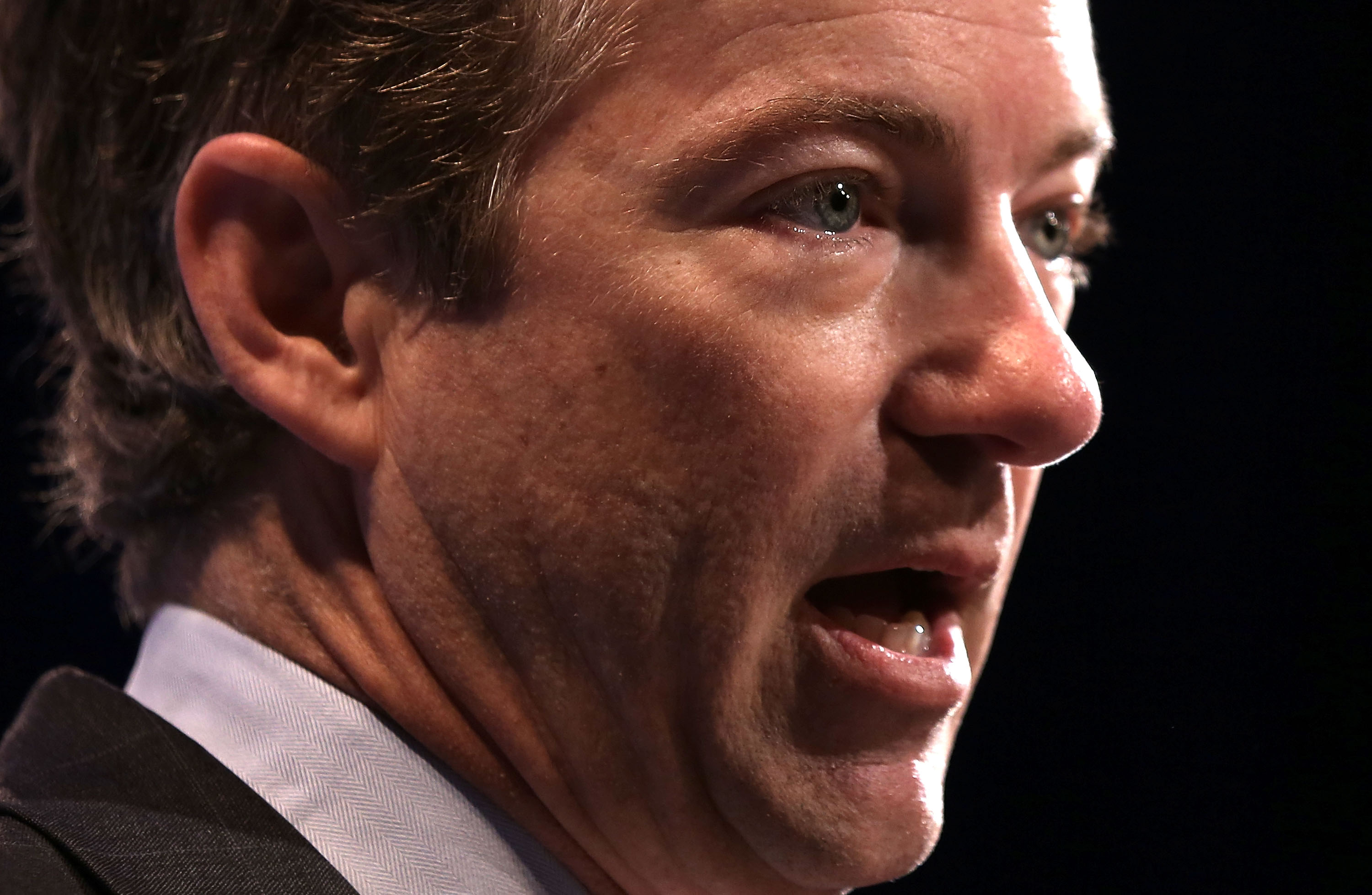
Sen. Rand Paul Delivers Immigration Address Hispanic Chamber Of Commerce Conference

A key part of Julia Ioffe’s profile of Rand Paul:

When Paul launched his political career three years ago, he was viewed in much the same way as his father, or, as Senator John McCain once called him, a “wacko bird.” He was identified with the same marginal issues (drug legalization, neo-isolationism) and the same marginal constituencies (anarchists, goldbugs). But this year, Paul has emerged as a serious candidate. He has started actively campaigning for the nomination earlier than any of the other Republicans mulling a run. Already, he has racked up multiple meet-and-greets, dinners, and coffee gatherings in Iowa, New Hampshire, and South Carolina. While his father may have been an also-ran, national polls show Rand Paul as one of the top contenders for the GOP nomination.

In private, Paul has been meeting with key GOP power brokers, including the Koch brothers, and he has courted techies at Silicon Valley companies like Google, Facebook, and eBay.

“We’re doing something that Ron never did; we’re reaching out to major donors,” says a Paul adviser. “Not everyone is giving us money, but there’s definitely some flirtation going on.” According to this adviser, in the last six months, RAND PAC, Paul’s national political operation, has raised more than a million dollars. “He’s very politically talented,” says a former senior official at the Republican National Committee. “He is absolutely a contender.”

The pandering to Christianists is part of this strategy presumably. So too the support for immigration reform. And the millennial distrust of Obama’s surveillance state could also give him an opening on the liberaltarian side. I wouldn’t under-estimate him at all. Chait chips in two cents:

Paul is far savvier and more pragmatic than his father, shrewdly assessing which rough edges of his ideology need to be sanded off to make himself acceptable to the national party. And yet, Paul retains enough intellectual integrity that he can’t fully let go of his principles. That integrity was why he dodged and weaved for six painful minutes with Rachel Maddow in 2010, not quite embracing his private property opposition to the parts of the 1964 Civil Rights Act that banned segregation in stores, but also refusing to abandon it.

(Photo: U.S. Senator Rand Paul addresses a breakfast meeting of the 2013 Annual Legislative Summit of U.S. Hispanic Chamber of Commerce March 19, 2013 at Capitol Hilton Hotel in Washington, DC. Paul spoke on immigration and he announced his endorsement for a pathway for the 11 million illegal immigrants in the United States to become citizens. By Alex Wong/Getty Images)

The View From Your Window Contest: Winner #158

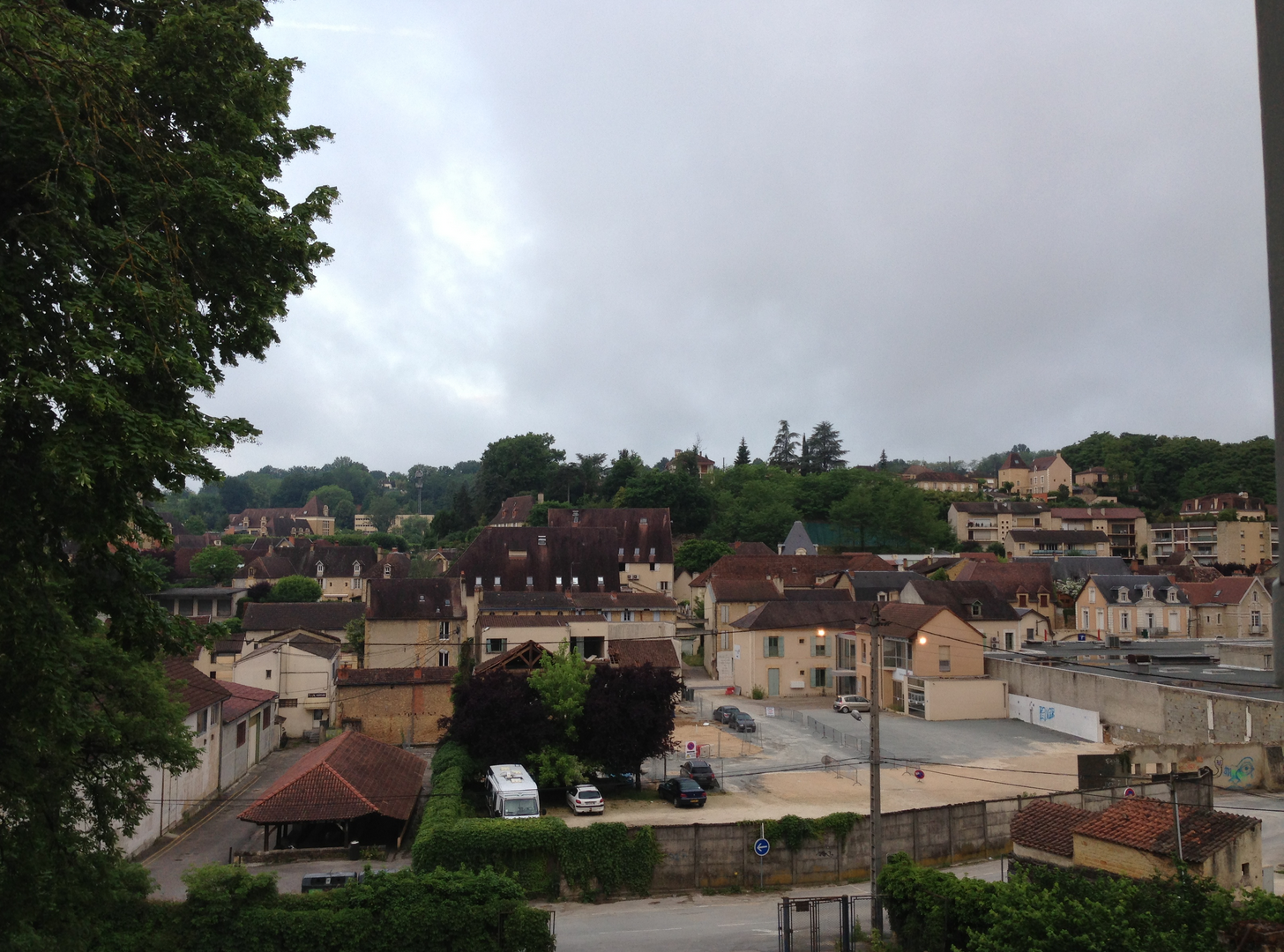
vfyw_6-15

A reader writes:

I’m getting a strong feeling of “Germany” looking at this photo. That blue road sign with an arrow closely resembles examples of German road signs I found online. I suppose it could be France or Estonia, but the architecture keeps me leaning towards Germany – as does the graffiti in the lower-right corner of the frame. I have no idea where in Germany, though, so I’m going to guess somewhere outside Hanover.

Another:

My sister had surgery in the Stanford University hospital ten years ago and when I looked at this week’s contest the red tile roofs and adobe colored buildings yelled out to me that this must be somewhere on the Stanford campus. Maybe student housing – lots of small buildings without too many cars. If I wasn’t six hours away I might even go drive around and try to find the exact location, but I’ll leave Google street view for someone who likes computer time more than I do and go back out to my garden.

Another:

I’m just shooting in the dark, but the architecture seems prosperously Eastern European, as does the signage. Lubljana, Slovenia?

Another:

First off, I was on vacation the first time you had a Luxembourg location, in Differdange (or was it Dudelange?), the famous one that nobody was even close to guessing. Since I had driven down the very street where that picture was taken just a day before leaving on that vacation, it was a bit agonizing to find out about missing the contest that week.

Analysis this week: First, Luxembourg is a tricky location because there is no Google street view, for whatever reason. But the geography and the lush, almost temperate-rain-forest vegetation makes this clearly in the Ardennes region. The EU standard street signs are a somewhat helpful confirmation. The architecture, being a mix of Belgian and French styles, both modern (20th century) and traditional, points strongly to southern Luxembourg. The lack of dominating large 20th century apartment blocks rule out northern Lux, which was heavily rebuilt after WWII, and neighboring areas of France and Belgium, where there are enough large public housing projects that you would not get this scene of predominantly small houses in the traditional red-tile roof style. Also, the southern towns in Lux have working-class neighborhoods like this, with relatively few slate roofs, just seen here on public buildings and those, like the French-style house on the right, with a bit of pretension to them.

There are a lot of American students at the University of Miami campus at Differdange, and I suspect this photo comes from one of them. My guess is of Rodange, looking south toward the hill to Titelberg, a Gallo-Roman site built on a bronze age settlement dating to 2000 BC.

Another:

I’m guessing Bucharest, Romania. I have no idea why, the photo sort of screams Eastern European. It could by Riga as well, who knows.  There’s this time sinkhole called “The View from Your Window” and I got to finish my financial household analysis and don’t have time to root round Google Earth. I’m going to be very impressed if this is gotten by someone who has NEVER, EVER visited this area, wherever the hell it is.

Another gets close:

Based on street signs and the cars’ license plates, I think we’re in France. I couldn’t detect other clues (no May fest brochure visible this time), so I have to make a determination on general grounds. The hills and buildings remind me of the Ardennes region. I wouldn’t be surprised if a fortress or castle was lurking just outside the picture. Sedan being one of the major towns in the area, so that’s my guess.

Below is the only reader to nail the right city:

Man, Dish fans sure do find some pretty places to visit. At first I though that this week’s view was in Eastern Europe based on those odd red roofs, so I spent several hours wandering through Transylvania. But the more I looked, the more things started to nag me, like the turreted windows and the color of the buildings’ walls, not to mention the flashes from the opening scene in “Beauty and the Beast” that kept rolling around at the back of my brain. Fast forward 24 hours, and I indeed found myself in a not-so-poor provincial town:

VFYW Sarlat Bird's Eye Marked - Copy

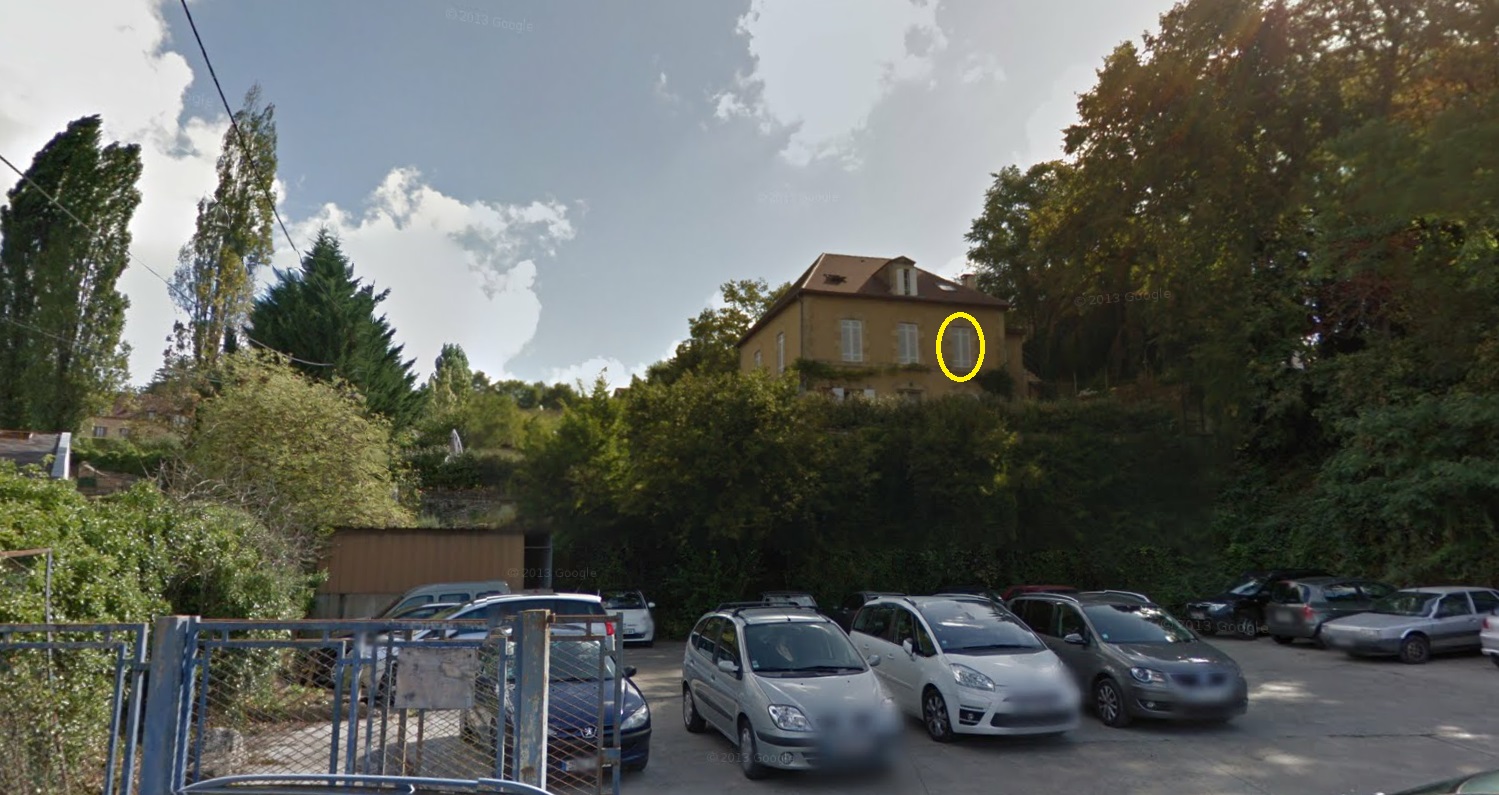
This week’s view comes from picturesque Sarlat-la-Caneda in the Perigord region of southwest France near the famous Lascaux caves. The photo was taken from a bed and breakfast called “Les Trois Jardins” located on the Impasse des Clarisses and looks due west over the southern part of town. For the sake of pseudo-preciseness I’ll guess that it was taken from the Monet bedroom on the second floor, though it might also be the Picasso loft above:

VFYW Salat Actual Window 3 Marked - Copy

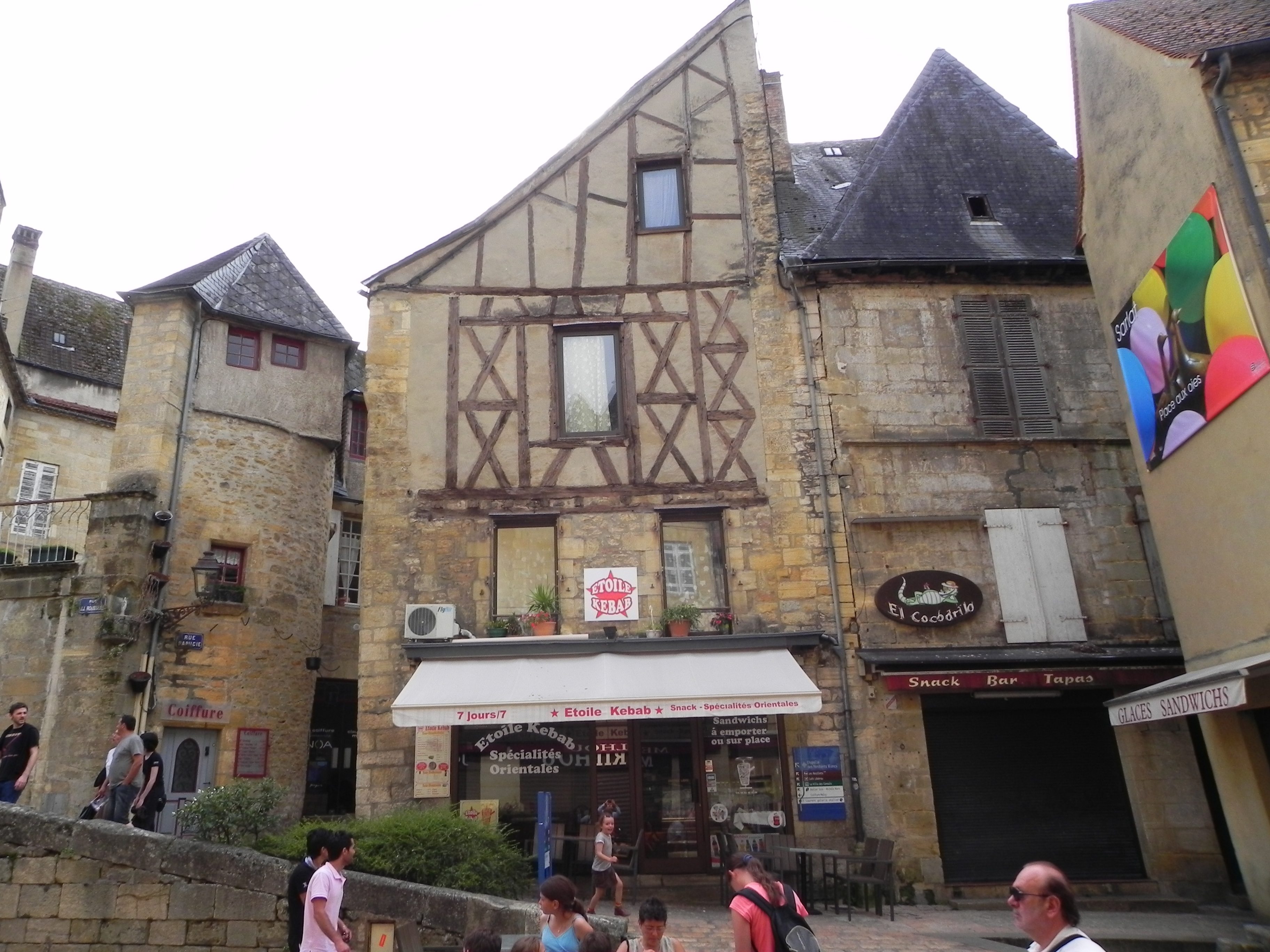
Amusingly, the medieval heart of Sarlat is just out of sight on the right. Were it visible, this would have been a much quicker contest because it’s similar to Mirepoix, a town that was featured in VFYW #136. Attached are pictures of the actual window, a bird’s eye view, and a shot of the ancient architecture in the town’s center:

Sarlat Town Center - Copy

More details on the town from Wikipedia:

Sarlat is one of the most attractive and alluring towns in southwestern France. It’s a medieval town that developed around a large Benedictine abbey of Carolingian origin. The medieval Sarlat Cathedral is dedicated to Saint Sacerdos. Because modern history has largely passed it by, Sarlat has remained preserved and one of the towns most representative of 14th century France. It owes its current status on France’s Tentative List for future nomination as a UNESCO World Heritage site to the enthusiasm of writer, resistance fighter and politician André Malraux, who, as Minister of Culture (1960–1969), restored the town and many other sites of historic significance throughout France. The centre of the old town consists of impeccably restored stone buildings and is largely car-free.

However, that reader has already won a contest before (and is most likely our all-time best player), so we have to go with proximity this week. The closest town to Sarlat-la-Caneda guessed by a reader is Beynac:

This was even tougher than last week.  I quickly settled on some town in France, but which one?? It probably isn’t Beynac, but there were a number of buildings with similar architecture there that I suspect is somewhere in the western interior of France like the Aquitaine region.  If anyone gets this I’ll be very impressed.

But that reader is also a previous winner, so we have to go with the second closest city:

Beziers, France? In honor of the curves.

Short and sweet, enough for a win. The submitter writes:

I’m thrilled to see my picture as the View From Your Window contest.  So, a little bit about this.  It was taken from the Monet room on the first (US second) floor of Les Trois Jardins, an inn run by a British couple in Sarlat-la-Caneda, in the Dordogne region of France.  You can’t see the gardens that surround the house – it’s slightly set off from the center, though quite close.  My room looked west, immediately over the rue JP Delpeyrat.  The medieval city is to the north.   The avenue du Gal Leclerc, the main street northbound one street over to the west, is under construction, and I’m not sure how much that’s affected the parking area behind.  A few hours later, and there would not have been a parking space in sight, as the crowds descended on Sarlat’s impressive Saturday market, filled with fois gras, mushrooms, local cheeses and nuts, (and local foods more generally) as well as arts and crafts; there’s also the usual stuff – household, clothing, bags: anything you might want.

I can’t wait to see what people make of this, but I wouldn’t ever get close!

(Archive)

Quote For The Day

“‘Hey, we’re sick of getting caught doing crimes. Could you do us a favor and criminalize catching us?'” – Amanda Hitt of the Government Accountability Project on Big Ag’s legislative efforts to prevent any whistle-blowing by employees on animal cruelty.

The kind of horrifying abuse of pigs we’re talking about is shown in a PETA secret video after the jump. It is one of the most gruesome things I’ve ever seen done to animals who are, one should remember, as intelligent and as feeling as dogs. The idea that these companies are seeking not to end the torture but to cover it up is so callous it boggles the mind:

Do Millennials Give A Damn About PRISM? Ctd

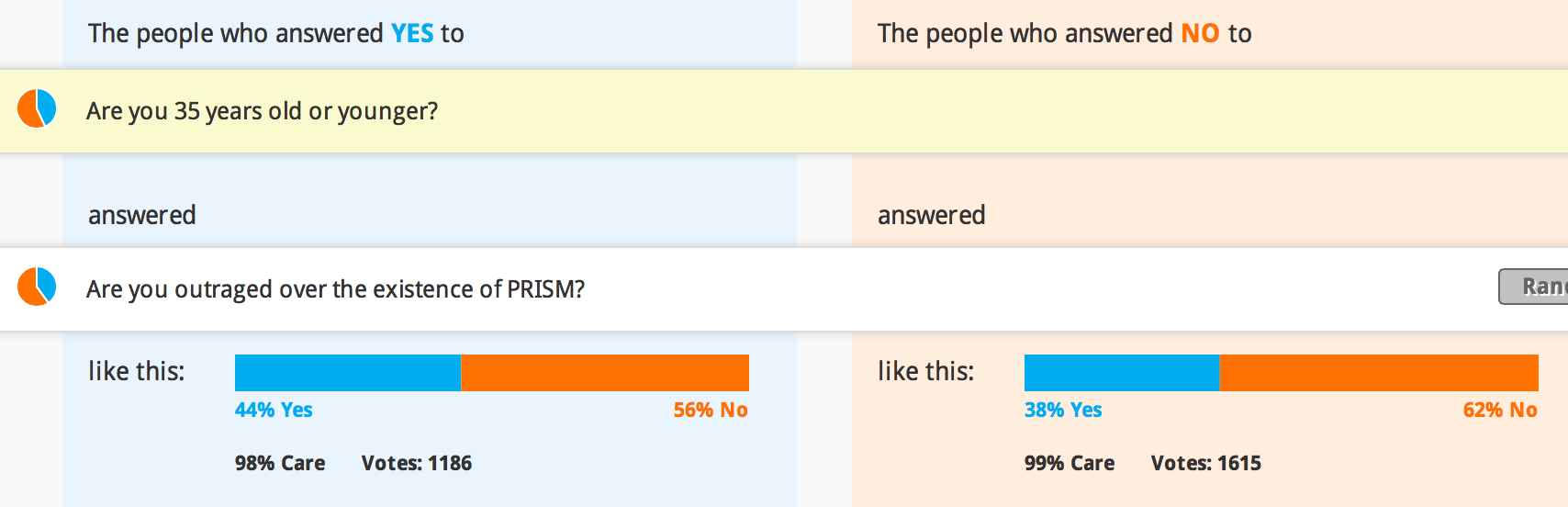
According to the Urtak survey we ran last week, on a range of questions related to surveillance, it appears millennials do in fact give a damn:

Screen Shot 2013-06-18 at 2.36.58 AM

Translated: 44 percent of polled millennial readers are outraged over the NSA program while only 38 percent of older readers are outraged. There are similar results to the question, “Should PRISM be shut down immediately?” – 43 percent of millennials said yes, compared to only 37 percent of non-millennials. Read all of the results here. Our results – obviously not scientific as to millennials as a whole – are nonetheless backed up the latest CNN poll on Obama. The younger generation appears to be among the angriest about the surveillance state and the president has seen his approval drop like a coastal shelf:

Last month, nearly two-thirds of those in the 18-29 age group gave the president a thumbs up. His approval rating among that bracket fell 17 points in Monday’s poll and now stands at 48%.

One outraged millennial writes:

I do give a damn about PRISM. I’m not as concerned with the government tracking my moves. I get ads related to everything I visit on the web – some helpful, some annoying. I have accounts with sites I use for a day, and then move on. I can deal with that.

What I am most worried about is not the actions of the government, but rather, the cloak of secrecy surrounding it. If the government decides it is in our best interests to hack our computers, that’s fine – just tell me. The PATRIOT Act was conceived before I was of voting age. I have never had a chance to truly “vote” on it. It was done without my consent. Yet it is the millennial age that lives our lives online. Now that I can vote, and now that millions of millennials can now vote, we deserve a say. If the people decide that they are willing to be hacked so that attacks can be prevented, I will live with that. But as government becomes even more secretive, even more of the same old ‘just trust us’ then millennials will start to get frustrated.

Let us have a say.

Another says:

I always imagined that personal information was something you compartmentalized among different places. Your doctor had your medical information, your accountant knew something about your finances, and your friends knew your daily adventures. This seems like a pretty common thing: we disperse information about ourselves in a way that a complete picture can’t be drawn, or at least some sensitive information stays hidden.

This is what is so disturbing about this surveillance program..

It combines what we want to be disparate pieces of information into something that you can know about me without me wanting you to know. The Electronic Frontier Foundation pointed out the dangers with metadata being gathered about you. You have reason to worry about the police weaving the threads of your life together.

How does this apply to millennials? Even in the age of Facebook, Twitter, and Foursquare, we still curate what gets shared. We don’t share every thought as a status or upload everything we capture on film. We are still concerned with what people can know about us, even if it’s just to make us seem like the most fun party animal you’ll ever meet.

So it should scare my generation that information that you had the choice to “upload” is no longer under your control. It belongs to our national security. It’s disturbing that the police collect information on me when I do nothing wrong. And it should disturb everyone.

Another:

The accusation typically thrown out is that Millennials have a sense of entitlement. When it comes to web services, we certainly do, because so much IS free. Google lets me store 20,000 mp3 files, have a calendar, email account, office documents, and 15 gigs of storage on any computer I log into, AND on my smartphone. The tradeoff is that they get to read my email.

That’s the social (and legal) contract. When I bought my newest smartphone, I made a conscious decision to get an Android (Google) phone over an iPhone (Apple), based on the services provided and their respective track records of privacy. When I install an application on my phone, I read the permissions it requests. I think carefully about what pictures and posts about life I’m giving Facebook, Twitter, etc (not to mention the data going out to friends and family …).

When it comes to my data (phone, web, etc), however, the differences between Google and the Federal Government are enormous and important:

– I can quit Google. I have no opt-out of federal “monitoring”, even if I’ve done nothing wrong.

– Google is not an executive arm of government. If Google mined my data and decided something was bad, they could only bring a civil suit against me. The government, on the other hand, can bring a criminal case against me. I can go to jail based on what the government decides to do with my data.

– Google has to let me know when they chance their privacy policies. The US Government, on the other hand, has made their interpretation of the Patriot Act secret – I have no idea if data collection policies have changed, or really, if I’m breaking the law in any way.

Andrew, for the first time, I want my money back. I’m disappointed in your view of the NSA situation. I understand that you’ve been “monitored” your whole life, and that government supervision is different in Britain, but you’re missing the big picture. The NSA has built one of the largest data centers in the world in Utah, and they’re building another one in Maryland. It’s likely they’re downloading all of the traffic on the Internet, by installing splitters in primary datacenters. This can include phone traffic, since most phone calls are no longer analog, but digital (VoIP).

Apple, Samsung, and HTC smartphones have all had monitoring software installed by default and without notification to the user. The software recorded keyboard input, but could easily have recorded audio and video without the user knowing.

We are well past the point of living in a surveillance state, and with the militarization of police departments and formation of a “Department of Homeland Security,” we are only a tea bag away from becoming a police state.

Previous thoughts from readers here and here.

In Defense Of Obama On Syria

A Republican reader writes:

Once again, you have put me in the awkward position of defending the President. Though I wanted to laugh out loud when he said this wasn’t a new policy and “consistent with the policy I have had all along,” I have to say that he came off to me as US-POLITICS-OBAMA-LGBTprincipled. His principles are not my own. His stated objectives are a winged unicorn. He is for me far too cautious and far too existential about unforeseen ramifications; yes it’s complicated. We have to do it anyway, so says me. Because, in the words of Clarence Darrow “If you want to predict the future, you need to have a hand it its creation.”

But it is just as clear that for him the US to enter into a Sunni war with Shi’ism is not in the US interest. Period. He doesn’t see it as helping allies or not helping them – he is perfectly willing to shore up Jordan for instance – but he’s not going to yoke himself to Qatar-Saudi plowshares. His manner and body language on “another war in the Middle East” was quite telling – it is clearly the last thing he is going to let happen – he is going to fight escalation tooth and nail and is signaling that to his public, his liberal interventionists (Rice, Power,) and his generals exactly that. This is all frankly quite presidential. He is showing his own decided pattern of measured, thoughtful, leadership-from-behind.

Not what I want personally – I voted for Romney – but it’s a perfectly valid and reasoned response, even courageous when seen in the light of what I am sure he’s getting from all sides.

His “for example” on being in the situation room is already being pilloried for its “trust me, I know more than you” thing, and it plays into perceptions of his aloof arrogance – but in reality what he actually said is a very important insight into his thinking: he plays the tape to the end.

He is looking at each option all the way through to its consequences. Which is actually why our policy is so hesitant, because there are no good options and no clear results. Syrian teleology doesn’t exist. But there are times when you have to act to achieve clarity. Sometimes you have to poke the sleeping monster with a stick and see what happens – this is often in the presidential wheelhouse.

This president does not want to go into Syria in any inextricable way. He’s going to consistently resist escalation, and I think in some potentially interesting ways this will give him clout with the generals and European allies as not rushing into something we will most assuredly not control. He will ask questions that a President Bush would not. And his measured response allows a broader view. Indeed, getting bogged down in Syria obscures the real threat to Middle East stability: Iran’s nuclear program.

Right now, with French and British support beforehand, I would crater the runways, destroy every aircraft Assad has, and remove his armor from the earth and do all of it in a single afternoon. This would terrify and likely topple Assad, hobble Russia, and shock the Iranians to the core, perhaps even changing their nuclear calculus. It would impress the Saudis and Qataris – making them more amenable to ceasing support for the al-Qaeda groups. The Syria opposition would coalesce around non-Islamists as the rest are frozen out of aid. It would almost overnight restore American initiative, and put the U.S. military back on a take-the-war-to-the-enemy footing psychologically (where it belongs). Even Morsi and Erdogan would take note and likely fall in line. Our enemies need to be afraid of what we can do – right now the only world leaders afraid of US resolve are our allies.

But I’m not the president and I could be wrong about all of it. Assad could respond with chem/bio against Aleppo, or US targets, or Israel. The Syria opposition collapses. Two million more refugees walk to the Jordanian border, only to be refused entry. Iran could launch hundreds of Fateh 110s and Shehabs and Yakhonts against carrier groups. Egypt, Iraq and Jordan crumble into Islamist-exploited civil disorder. Hezbollah could fire 60,000 rockets at Israel.  Latin America Hezbollah units could cross over into Texas and bomb the Galleria in Houston. Russia could announce Syria is under their nuclear umbrella.

President Obama has picked his path through this minefield. It’s not my path and perhaps not yours, but that’s his job. He’s President of the United States and has to decide each day what is the true scope of US interests under his executive administration. I don’t think he’s “caved” to either of us.

It’s Not Civil Disobedience If You Run Away

Joel Brenner takes issue with Rand Paul’s description of Snowden’s leaks as an act of “civil disobedience”:

From Socrates through Thoreau, Gandhi, and King, the great theorists and practitioners of this form of resistance to law have told us in words and actions that civil disobedience requires the disobedient citizen to suffer the legal consequences of his or her unlawful act. In Socrates’s case, the consequence was death at the hands of the Athenian authorities. For Thoreau, Ghandi, and King, the consequence was jail. Through their suffering and example, they sought to undermine the moral position of law they found objectionable. Because unless the disobedient citizen takes the legal consequences of his unlawful action – he’s nothing but a criminal or a rebel.

Snowden has fled the country. And where has he gone? To Hong Kong, a Chinese dependency that is far from being a bastion of free expression he foolishly says it is, and as people who know it better than he does will tell you, a place whose security apparatus is controlled by the People’s Republic of China. … You tell me, dear reader, how young Mr. Snowden measures up to Socrates, Thoreau, Ghandi, and King.