The Best Of The Dish Today

Today, the full impact of Iran’s election began to sink in. The dumb decision to get involved in the Syrian civil war didn’t look any less dumb a few days later, although some were actually hoping for mission creep. The New Yorker was caught doing sponsored content … in 1941.

If you’re a pop musician, luck plays a huge part in whether you can make a living and, as with so many other industries, the higher and higher rewards are increasingly going to fewer and fewer artists. If you’re a Syrian Christian, you’re probably rooting for Assad to hang in. If you’re Sarah Palin, you get to praise your own speech on Fox News as a host of a morning show. And if you’re Donald Trump, you can get Bill Clinton to show up for your third wedding. Oh, and welcome to the next Antarctica.

The most popular posts of the day were your reactions to Obama’s decision to join a new Middle East war; and my observation of how resilient the Christianist grip still is on the GOP, whatever the wonks are trying to tell you.

I spent a large part of the day at my old high school, debating with students, getting misty-eyed at sudden memories, and catching up with former teachers – of Latin and French. I’m a little too bewildered to write anything about it today …

… so I’ll see you in the morning.

Awe

What other reaction can one have to this short film capturing a supercell near Booker, Texas?

It’s brought to us by Mike Olbinksi:

It took four years but I finally got it. A rotating supercell. And not just a rotating supercell, but one with insane structure and amazing movement. I’ve been visiting the Central Plains since 2010. Usually it’s just for a day, or three, or two … but it took until the fourth attempt to actually find what I’d been looking for. And boy did we find it.

We chased this storm from the wrong side (north) and it took us going through hail and torrential rains to burst through on the south side. And when we did … this monster cloud was hanging over Texas and rotating like something out of Close Encounters.

Update from a reader:

Other than awe? Fear and dread. Those storms can take their beautifully ominous selves elsewhere, thank you very much.

-Oklahoma City

The Beliefs Of The Non-Believers

Larry Alex Taunton, who has engaged college students for years on matters of faith, delves into the reasons the self-proclaimed atheists among them embrace unbelief. Some aspects of the “composite sketch” he’s gleaned from countless conversations:

They had attended church

Most of our participants had not chosen their worldview from ideologically neutral positions at all, but in reaction to Christianity. Not Islam. Not Buddhism. Christianity. …

They felt their churches offered superficial answers to life’s difficult questions

When our participants were asked what they found unconvincing about the Christian faith, they spoke of evolution vs. creation, sexuality, the reliability of the biblical text, Jesus as the only way, etc. Some had gone to church hoping to find answers to these questions. Others hoped to find answers to questions of personal significance, purpose, and ethics. Serious-minded, they often concluded that church services were largely shallow, harmless, and ultimately irrelevant. As Ben, an engineering major at the University of Texas, so bluntly put it: “I really started to get bored with church.” …

The decision to embrace unbelief was often an emotional one

With few exceptions, students would begin by telling us that they had become atheists for exclusively rational reasons. But as we listened it became clear that, for most, this was a deeply emotional transition as well. This phenomenon was most powerfully exhibited in Meredith. She explained in detail how her study of anthropology had led her to atheism. When the conversation turned to her family, however, she spoke of an emotionally abusive father: “It was when he died that I became an atheist,” she said.

Dreher nods:

“Shallow, harmless, and ultimately irrelevant” — as a description of what I thought of church during my teenage years, does that ever strike a resonant chord within me.

It was only when I got to college and understood that Christianity was so much more than I had ever imagined — that it could captivate the minds and gain the allegiance of men like Kierkegaard, Thomas Merton, Dostoevsky, the designers of Chartres cathedral, and so on — that I began to take it seriously. Kierkegaard in particular revealed to me why I had no use for Christianity as I understood it till then: I thought being a Christian was a feature of being a good middle-class American, and nothing more. If that’s all it is, then, to borrow a phrase from Flannery O’Connor, to hell with it.

I can understand why a bright college student would find atheism more compelling than Christianity, if that’s the only kind of Christianity he had seen.

“Ask Experience”

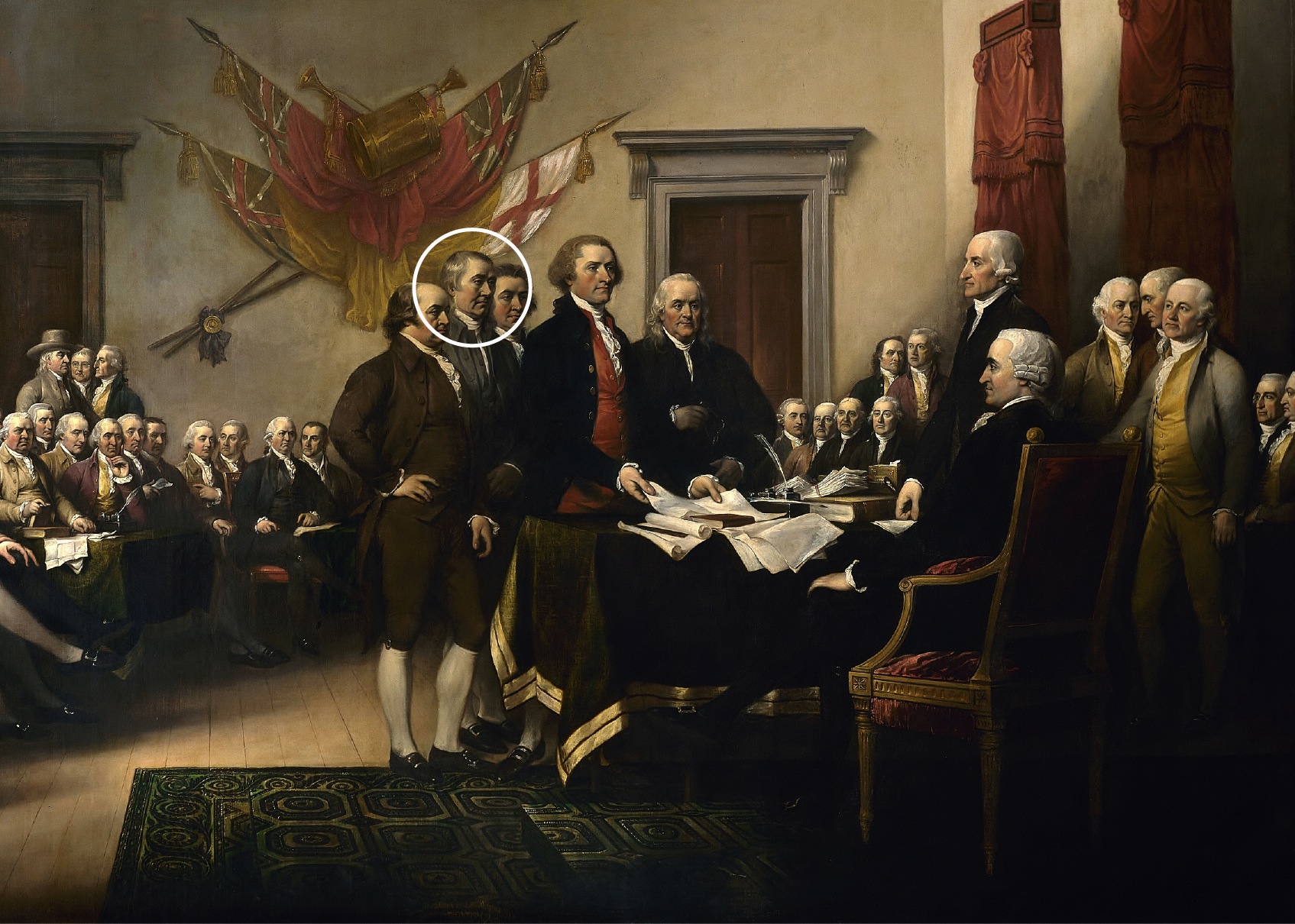
Reviewing Mark David Hall’s recent book Roger Sherman and the Creation of the American Republic, Kevin Gutzman uses the Calvinist Connecticut statesman to scuttle the way we typically understand the Founding:

As Hall puts it, “I am not arguing that Calvinism was the only influence on Sherman and his colleagues, simply that it was a very important influence that needs to be taken more seriously if we are to appreciate the political theory and actions of many of America’s founders.”

… Hall decries the tendency to write as if George Washington, Thomas Jefferson, James Madison, Ben Franklin, Alexander Hamilton, and John Adams (a group disproportionately composed of deists and marginally committed Christians) were the entirety of the Revolutionary generation, and then to deduce the meaning of America’s original commitment to religious freedom from the ideas of those men. One illustration of this tendency is that, by Hall’s calculation, Supreme Court justices writing opinions about the First Amendment’s religion clauses have referred to Thomas Jefferson 112 times and to Sherman only three, even though Sherman helped write the First Amendment and Jefferson was away on diplomatic business in France at the time…

One reason that the more famous Revolutionaries draw so much attention is that, with the exception of George Washington, they were all so eloquent. Sherman was not. Yet his wisdom does occasionally come through. Thus, for example, in one of his newspaper essays advocating ratification of the Constitution, Sherman counseled, “Philosophy may mislead you. Ask experience.” Here one hears echoes of a more famous statement by Patrick Henry, that prominent Virginia Episcopalian orator. As was typical of Americans, Sherman disliked speculation.

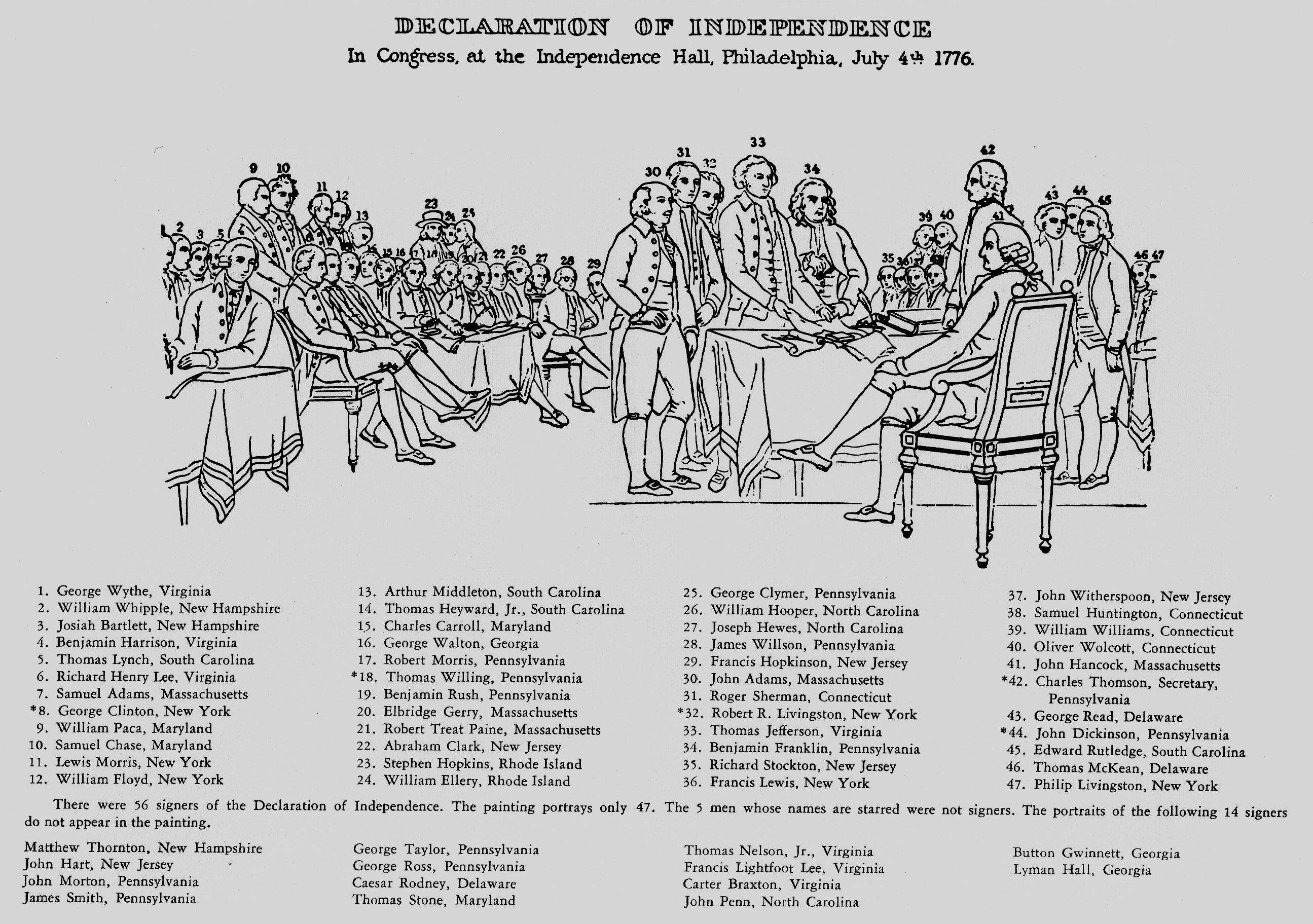
(Above: A Dish-modified illustration identifying Roger Sherman in Declaration Of Independence by John Trumbull, 1819 from Wikimedia Commons. A key for others depicted in the painting here.)

Hoping They Choose The Right Path

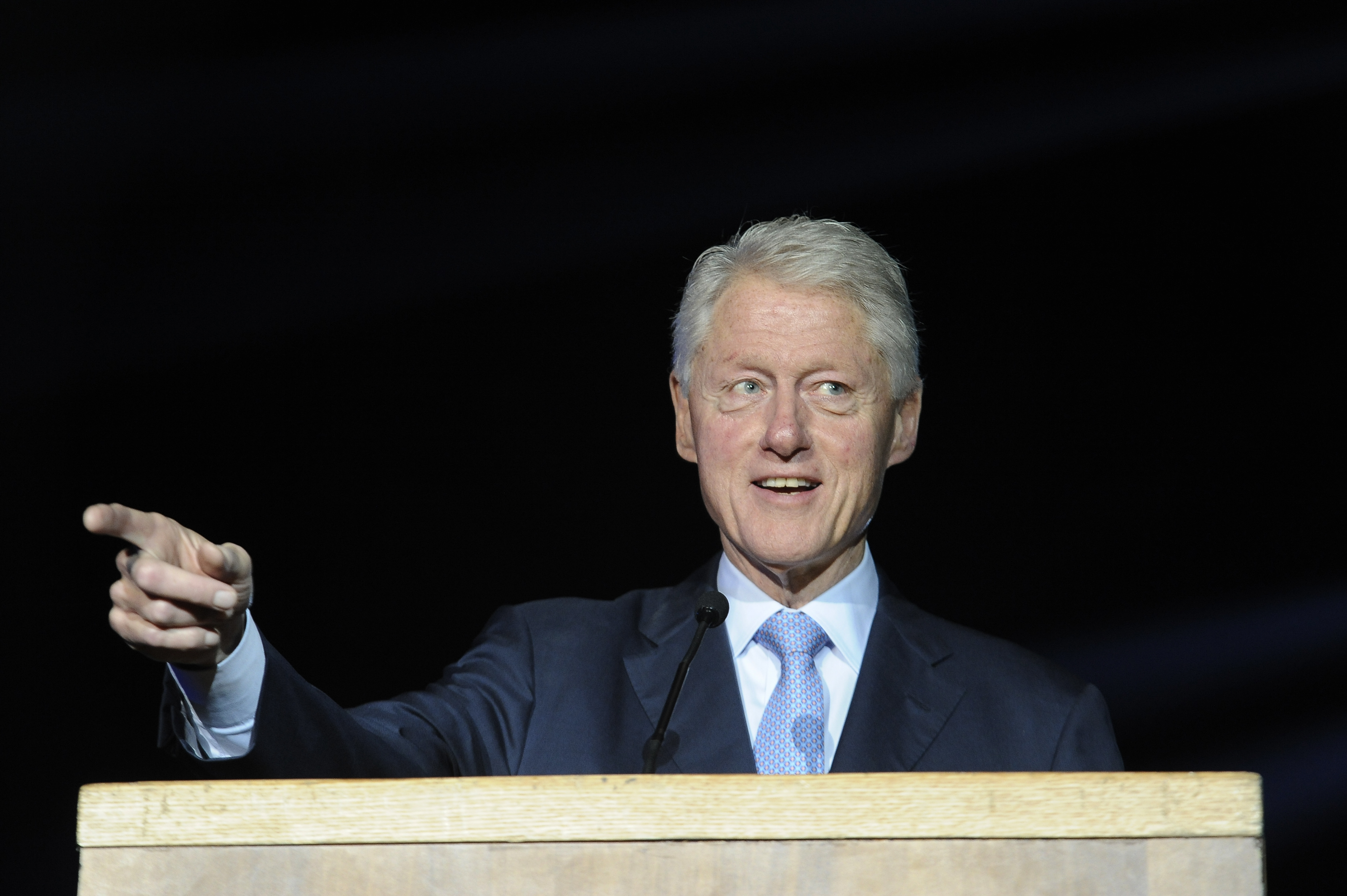
ISRAEL-US-PERES-CLINTON

Cowen is fascinated by a new memoir, Confessions of a Sociopath: A Life Spent Hiding in Plain Sight:

The author argues that sociopaths are often very smart, have a lot of natural cognitive advantages in manipulating data, and are frequently sought out as friends for their ability to appeal to others.  It is claimed that, ceteris paribus, we will stick with the sociopath buddies, as we are quite ready to use sociopaths to suit our own ends, justly or not. It is claimed that for all of their flaws, many but not all sociopaths are capable of understanding what is in essence the contractarian case for being moral — rational self-interest — and sticking with it.  Citing some research in the area (pdf), the author speculates that sociopaths may have an “attention bottleneck,” so they do not receive the cognitive emotional and moral feedback which others do, unless they decide very consciously to focus on a potential emotion.  For sociopaths, top down processing of emotions is not automatic.

We even learn that (supposedly) sociopaths are often infovores.  It seems many but not all sociopaths are relatively conscientious, and the author of this book (supposedly) teaches Sunday school and tithes ten percent to the church.  It just so happens sociopaths sometimes think about killing or destroying other people, without feeling much in the way of remorse.

(Photo: Former US President Bill Clinton speaks on June 17, 2013 at the Peres Academic Center (EAC) in Rehovot, Israel. By David Buimovitch/Getty).

The Rising Costs Of Flooding

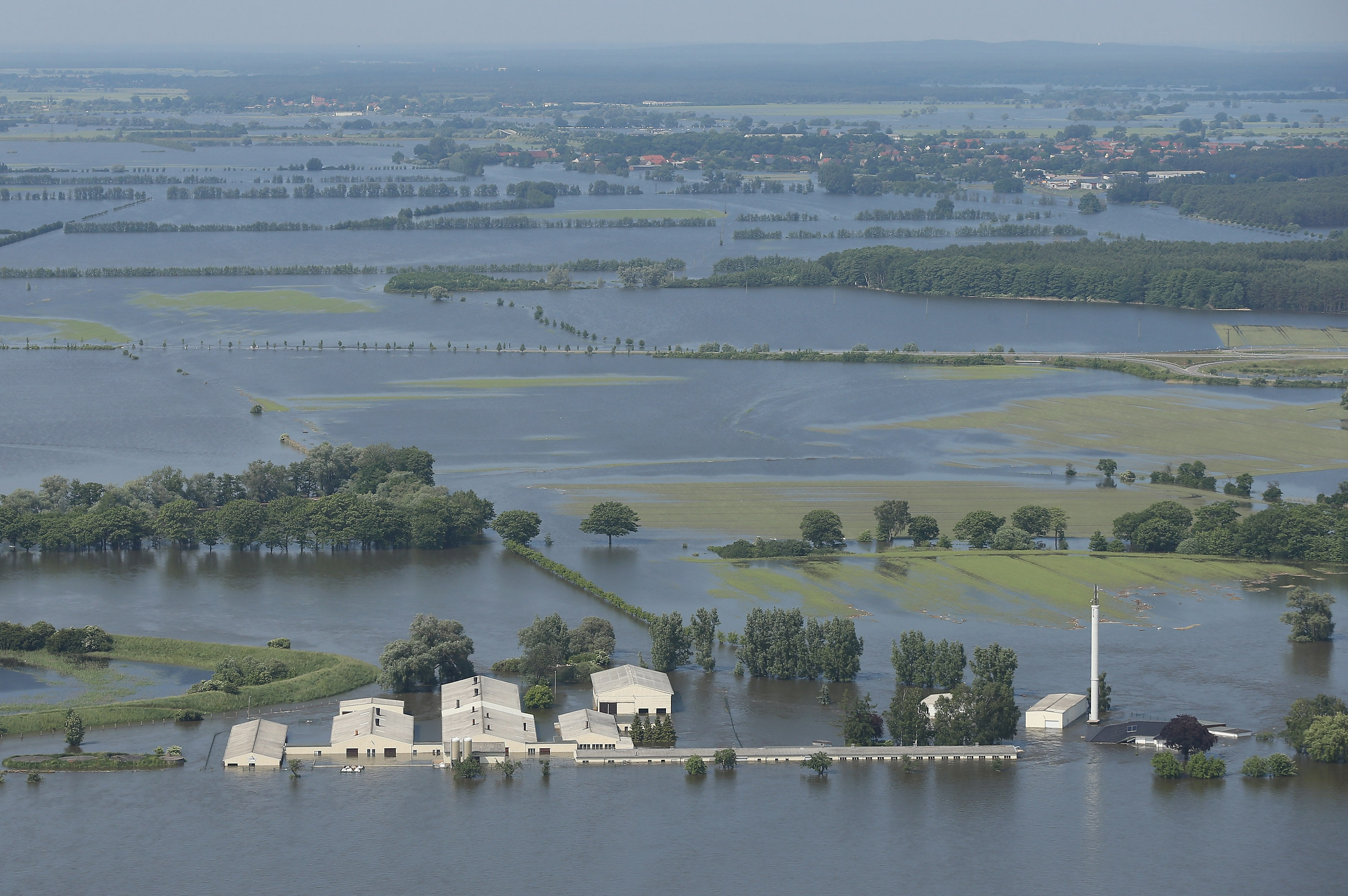
Floods Hit Germany: Northern Elbe River Region

Kate Shepard and James West flag a new FEMA report warning of increased flooding due to climate change, as well as its likely strain on the agency’s budget and individual insurance holders:

Like previous government reports, it anticipates that sea levels will rise an average of four feet by the end of the century. But this is what’s new: The portion of the US at risk for flooding, including coastal regions and areas along rivers, will grow between 40 and 45 percent by the end of the century. That shift will hammer the flood insurance program. Premiums paid into the program totaled $3.2 billion in 2009, but that figure could grow to $5.4 billion by 2040 and up to $11.2 billion by the year 2100, the report found.  …

Right now, a number of homeowners who get their flood insurance from the federal government pay subsidized rates. But for the program to stay solvent, the average price of policies would need to increase by as much as 70 percent to offset projected losses, according to the FEMA report. That means individual policyholders who now pay an average rate of $560 per year could have to pay as much as $952 per year by 2100.

Ron Bailey pushes back on the piece:

In its rush to declare a crisis that only benevolent government bureaucrats can solve, [Mother Jones] characteristically overlooks the fact that there should be no National Flood Insurance Program in the first place. If private insurers think it’s too risky for someone to build a house on a plot of land due to the high probability of inundation, then why should taxpayers subsidize their folly? Second, assuming that the U.S. government does not manage to stop modest economic growth for the next 90 years that would mean that today’s per capita GDP of $43,000 growing at 2 percent annually would rise to $255,000 by 2100. It is not unreasonable to think that Americans who would be six times richer in 2100 might be able to afford to pay double for their flood insurance.

Meanwhile, in light of NYC’s recently unveiled $20 billion plan to build flood walls, Dana Milbank thinks Bloomberg is doing a solid job on the climate front:

Obama created an “Interagency Climate Change Adaptation Task Force” in 2009 to examine everything from agriculture to sewer system failures and public-health consequences, but much of the work remains theoretical. Bloomberg’s new plan, with 250 specific recommendations and a hefty price tag, puts climate-change adaptation into a more concrete realm. The businessman-mayor called it “a battle that may well define our future for generations to come” and outlined changes to building standards, telecommunications, transportation and a dozen other areas. … Bloomberg spoke confidently, as if he were a general laying out a military plan. But he was really talking about limiting casualties.

But Marc Tracy encourages the mayor to do much more:

Bloomberg is right about guns and, when he has at other times treated climate change as the political issue it is, he is right about global warming, too. But his emphases are all wrong. While Bloomberg has plenty of actual capital (he is worth some $25 billion and has said he intends to give it all away), he is investing his finite national political capital in a watered-down bill addressing an issue that … is nowhere near as important, by virtually any measure, as climate change is. The scourge of guns, the more than 30,000 American deaths they help cause each year, the gruesome mass shootings they enable: Bloomberg is right to hope they go away. But climate change is an existential threat, to everyone. It is probably not accidental that climate change is the reason Bloomberg gave for endorsing Barack Obama over Mitt Romney.

(Photo: In this aerial view, a farm stands partially submerged in floodwaters from the Elbe river on June 12, 2013 in Fischbeck, Germany. The swollen Elbe is continuing to endanger communities along its northern route in Saxony-Anhalt and Brandenburg states, though the bursting of a dyke near Fischbeck has relieved some pressure from towns farther north. Floods have ravaged portions of southern and eastern Germany in the last week, leaving at least eight people dead and forcing tens of thousands to evacuate their homes. By Sean Gallup/Getty Images)

The Value Of A Tweet

A recent attempt to calculate it:

So, you’ve decided to set up a Twitter account for your brand. How much return can you expect on that first tweet of the day? The answer: about $25.62. That’s the conclusion that SumAll, a data visualization and analytics company, reached after a review of over 900 of its customer’s social media efforts. Retweets, they found, diminished revenue a bit – each retweet only garnered around $20.37.

The company also found that the first tweet is the one that generates the most return. After that, it takes about 6-8 tweets a day to double the revenue earned. Overall, though, the company estimates that a successful Twitter marketing strategy could add about 1-2% of revenue to a business annually. The optimal number of tweets per day for a business seems to be about 6. Of course, as a spokesperson for the company told me via email, that’s “highly variable from business to business.”

Face Of The Day

IRAN-POLITICS-ROWHANI

Iranian president-elect Hassan Rowhani speaks during a press conference in Tehran on June 17, 2013. Rowhani expressed hope that Iran can reach a new agreement with major powers over its disputed nuclear program, saying a deal should be reached through more transparency and mutual trust. By Behrouz Mehri/AFP/Getty Images.

Amazoning Everything

Derek Thompson considers the implications of Amazon Prime Fresh, which allows members to “order fresh food from their couch from Amazon and expect to pick up groceries at the door in a matter of hours”:

A $300 subscription to Amazon Prime Fresh doesn’t just buy access; it also binds shoppers to Amazon as their overwhelming source of all Internet shopping. “It will help to make Amazon the starting point for online purchases — more than it already was — and give consumers even less of a reason to shop anywhere else,” Morningstar equity analyst R.J. Hottovy said. Being the starting point for online purchases is everything: Google’s biggest source of online advertising comes from searches with a shopping intent. Why look anywhere else when only Amazon will get it to you today?

He compares Amazon’s dominance in cloud and e-retail services to the “quasi-monopolies” enjoyed by cable companies:

Laying cable is hella-expensive for both legal and material reasons (Verizon abandoned its nationwide projects after covering less than 20 percent of the country), cable companies can charge such a mark-up on the communications bundle because they have a massive infrastructure advantage in a high-barrier industry.

Ditto Amazon, which is building a bundle of its own. Fresh Prime offers a unique package of services that takes advantage of the company’s lead in digital and physical infrastructure: infinite books, fast shipping, fresh groceries, free streaming. Who in the world would try to build a competitor to this strange amalgam of hugely expensive and hardly profitable services? No one. And, for [Amazon CEO Jeff] Bezos, that is precisely the point.

Dissents Of The Day

A reader writes:

You surprised me when you wrote, “Every doctor who treats a sexually active gay man should put him on a daily retroviral in the Tenofovirsame way you might prescribe a daily anti-cholesterol drug for someone with high cholesterol.” Aside from the cost, prophylactic HIV medications do have side effects, don’t they? In light of the cost and the side effects, do prophylactic HIV medications make sense for gay men who are in monogamous relationships, who always use condoms, or who never have anal sex?

If my doctor recommended that I take prophylactic HIV medications based solely on the fact that I’m a sexually active gay man, and without knowing anything more specific about my sexual practices, my first thought would be, “This doctor is a bigot. I need to find another doctor, pronto.”

A doctor is not a bigot in recommending a preventive pill just in case for an at-risk population (and gay men remain disproportionately at risk for HIV infection). The costs are minor compared with those of combination therapy in perpetuity. And the side effects of just one Tenofovir or Truvada pill a day are also usually not a big deal – but I probably went too far in thinking this should be over the counter. A doctor should monitor your blood for any reactions or toxicity. But no more so than for countless other prescription drugs.

Of course, it’s your call. I’m not arguing for mandatory prophylaxis, for Pete’s sake. But trusting another man’s monogamy is not a great HIV prevention tool, and condoms fail. Anal sex is also not the only way to contract HIV, even if it is overwhelmingly the most risky behavior. I know that from personal experience. Another reader is more blunt than the first:

You are not seriously suggesting that every gay man take anti-retrovirals in perpetuity?

Not just sex workers, not just the extremely promiscuous, not just intravenous drug users – every single gay man? For his whole sexually active life? And to make them available over-the-counter and unmonitored by doctors? That sounds shockingly irresponsible, and besides being unmanageable and hugely expensive, these are toxic drugs with serious side effects.

And besides the practical considerations, what better way to connect gay sex to terror and and disease than to suggest that everyone having it take medicine every day?

One Truvada a day is not hugely expensive or unmanageable. And the rhetoric my reader uses – segregating HIV risk for only the “extremely promiscuous” or sex workers – is far more stigmatizing than a simple preventive medicine. Yes, more sexual partners will increase your risk of contracting HIV; but just one partner can give it to you; and we’re all human. I’m no more connecting gay sex to terror when used to lower the chances of infection than I would be recommending an anti-cholesterol drug to ward against a heart attack. Another reader:

I was put on PEP for a month after a potential exposure, and while I remain HIV negative, just four weeks of drugs knocked me on my ass. Taking those drugs daily is not an option, and while I have managed to remain negative for decades (I’m 47), my behavior in taking care of myself required neither “fear” nor “shaming” in keeping me HIV-free.

That’s a different case: after possible infection, my reader was probably treated with a powerful combination therapy to knock the virus silly. But this could be avoided with one pill that drastically lowers the chance of being infected in the first place. One more reader:

Just one tiny correction on the Plan B analogy: Plan B doesn’t work if you are already pregnant; it prevents ovulation and thus pregnancy.  So PrEP is not like Plan B for pregnant women, but rather like Plan B for a woman who recently had unprotected sex and is at risk.  Perhaps a small thing, but correcting the idea that Plan B can end a pregnancy/cause an abortion has been a long (and continuing) struggle for those of us working to increase access.