Email Of The Day

An Iranian reader writes:

What happened in the last 72 hours of this campaign is one for history books. It was as if the sleeping beauty woke up at the last minute. Over 20 million Iranians have a voted for a guy who Screen Shot 2013-06-15 at 3.00.06 PMwas the last man standing. He is not a Mousavi, but he is the one they knew voting for would be interpreted as a message of disapproval for the Supreme Leader – a big “no”, if you will. The humiliating third place for Jalili, the chief nuclear negotiator, was also a direct rejection of the handling of the nuclear file and the foreign policy of the leader and AhamdiNejad.

Until three days ago, no one would have guessed that we could have a centrist/reformist president with the full backing of former presidents Khatami and Hashemi, who will make the freedom of Mousavi and Karoubi very likely, who will bring back the experienced technocrats into the management of the government and insert some sanity into our foreign policy and day-to-day managing of the economy. But here we are.

Rouhani needs the boost that Khatami never got from the West and the neocons. Flexibility, lifting of sanctions and ultimate normalization of relations will now directly help a president that has to fight the hardliners and the massive economic problems all at the same time. Let’s hope Washington realizes that and doesn’t listen to likes of Josh Block who is already attacking the newly elected president and saying he is not “moderate” by AIPAC’s standard. Those guys will miss AhmadiNejad. It won’t be easy to use Rouhani for fear mongering.

Iranians know hope.

(Photo by Instagrammer nene_negin)

Face Of The Day

IRAN-VOTE-ROWHANI

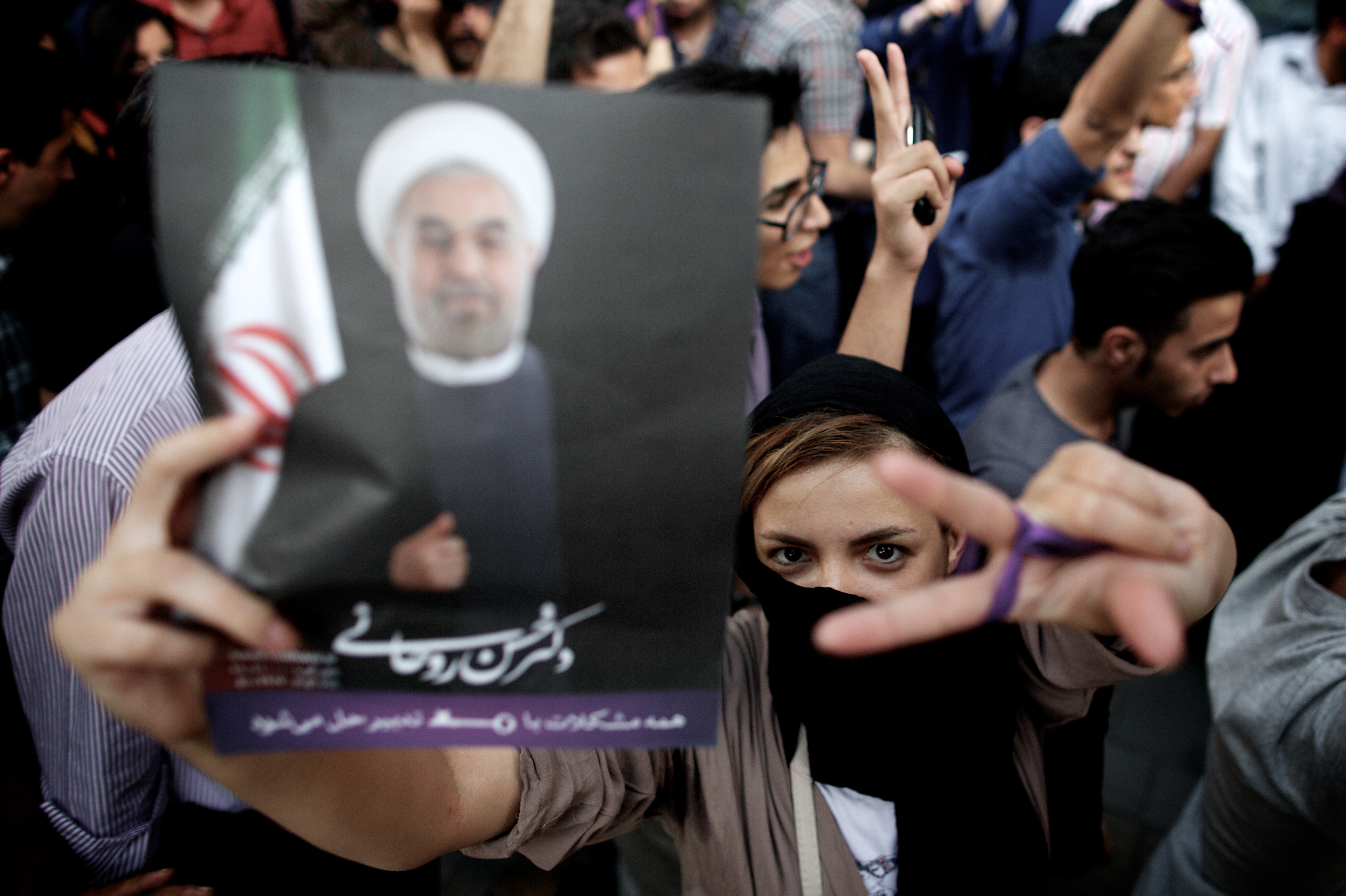
An Iranian woman holds her purple scarf, the campaign color of moderate presidential candidate Hassan Rowhani, as she celebrates along Valiasr street after he was elected as president on June 15, 2013, in the capital Tehran. Rowhani, the cleric who won Iran’s presidential election, has pledged to engage more with world powers in hopes of easing crippling economic sanctions. By Behrouz Mehri/AFP/Getty Images.

Iran Votes For Change: Tweet Reax

https://twitter.com/SaeedKD/status/345939930280775680

https://twitter.com/PoliticallyAff/status/345941018874617858

https://twitter.com/iShahrzad/status/345934533142671360

https://twitter.com/Omid_M/status/345940487913496577

https://twitter.com/Max_Fisher/status/345945322570252289

https://twitter.com/PoliticallyAff/status/345942146194493440

Iran Votes For Change: Blog Reax

IRAN-VOTE-ROWHANI-WIN

Among Juan Cole’s initial observations:

Those who believed that Khamenei would try to fix this election for Jalili as he is accused by the Green movement of doing four years ago were mistaken. Either the Leader feels that he has sufficient control of the country to risk a mildly reformist candidate like Hasan Rouhani winning, or the turmoil the country faced in 2009 chastened him and he decided to let the public blow off steam by giving him a president he isn’t entirely happy with.

Suzanne Maloney believes that Rouhani could improve relations with the West:

Today, despite the campaign antics, Rouhani is an ideal candidate to spearhead a new initiative to wrest Iran from its debilitating battle with the international community over the nuclear issue. His credentials for this assignment are clear: as a member of the religious class, he offers the prospect of clerical continuity; as a long-time consigliore of Khamenei, he harbors no intentions of pushing the constraints on the presidency; and as the author of Iran’s previous dabbling in nuclear concessions, he can be the fall guy, yet again, for a deal that the Leader wishes to disavow. Rouhani is tested and nothing if not pragmatic. Though his supporters have crashed the gates of theocratic restrictions on debate, Rouhani has remained mostly cautious in his own statements, his campaign embodying its slogan of prudence as well as hope.

Bob Dreyfuss is optimistic:

[A] former nuclear negotiator for Iran under President Khatami, and as President Rafsanjani’s top national security adviser before that, Rouhani will have a chance to “reset” relations with the United States. Just as important, the emergence of Rouhani as president of Iran gives President Obama a tremendous opportunity to re-start talks with Iran on a new basis, and the fact that Iran’s next president won’t be named Ahmadinejad means that all of the efforts by hawks, neoconservatives and the Israel Lobby to demonize Ahmadinejad are now for naught.

Before the election, NIAC’s Trita Parsi predicted what a Rouhani win would mean:

First, it’s not just about Rouhani; it’s about the personnel that would follow him into government and populate key ministries and institutions and reconfigure the political makeup of the regime’s decision-making table. When Mahmoud Ahmadinejad came to power, within months he fired 80 of Iran’s most experienced ambassadors and foreign policy profiles. Many of these were Iran’s most pragmatic and competent foreign policy hands, often key players in Iran’s more conciliatory decisions, such as the collaboration with the United States in Afghanistan and the suspension of enrichment in 2004. They were replaced by inexperienced ideologues hired not for their capabilities but their loyalty to Mr. Ahmadinejad. A reversal of this trend can prove quite valuable.

Second, Mr. Rouhani and his entourage hold a different world view than those close to Mr. Ahmadinejad and the supreme leader. While still suspicious and distrustful of the West, and while still committed to Iran’s bottom line on the nuclear issue, the elite that associates with Mr. Rouhani does not see the world in Manichean black and white. The outside world may be seen as hostile, but common interests can still be found. Collaboration is still possible. Rather than emphasizing ideology and resistance, they pride themselves on being pragmatic and results-oriented (of course, within the context of the political spectrum of the Islamic republic).

Parsi believes both the West and Iran should now take this opportunity for a reset.

(Photo: An Iranian woman flashes the sign for victory as she holds a portrait of moderate presidential candidate Hassan Rowhani during celebrations for his victory in the Islamic Republic’s presidential elections in downtown Tehran on June 15, 2013. Iranian Interior Minister Mohammad Mostafa Najjar said Rowhani won outright with 18.6 million votes, or 50.68 percent. By Behrouz Mehri/AFP/Getty Images)

The View From Your Window Contest

vfyw_6-15

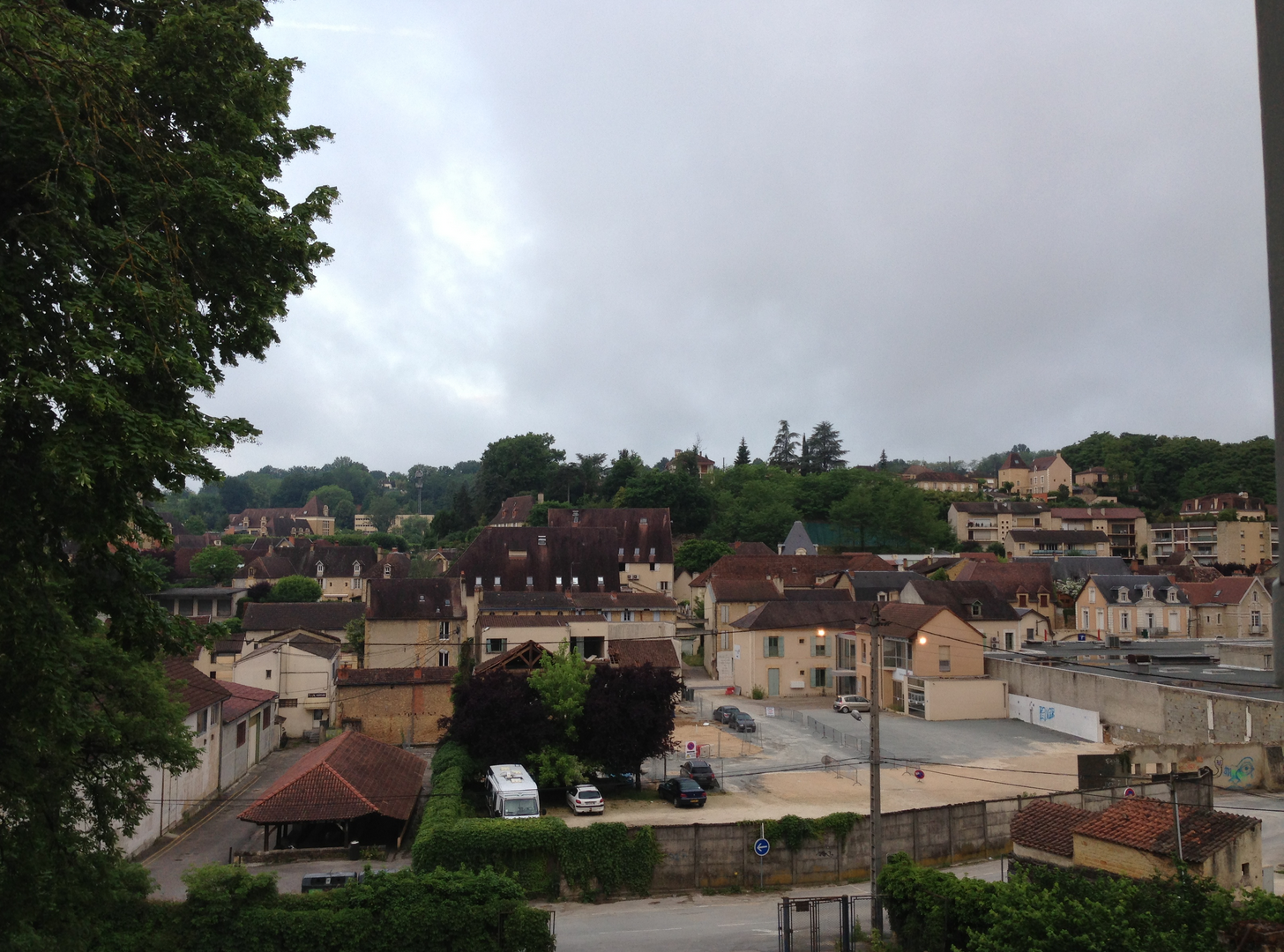
You have until noon on Tuesday to guess it. City and/or state first, then country. Please put the location in the subject heading, along with any description within the email. If no one guesses the exact location, proximity counts.  Be sure to email entries to contest@andrewsullivan.com. Winner gets a free The View From Your Window book. Have at it.

Iran’s Election Surprise?

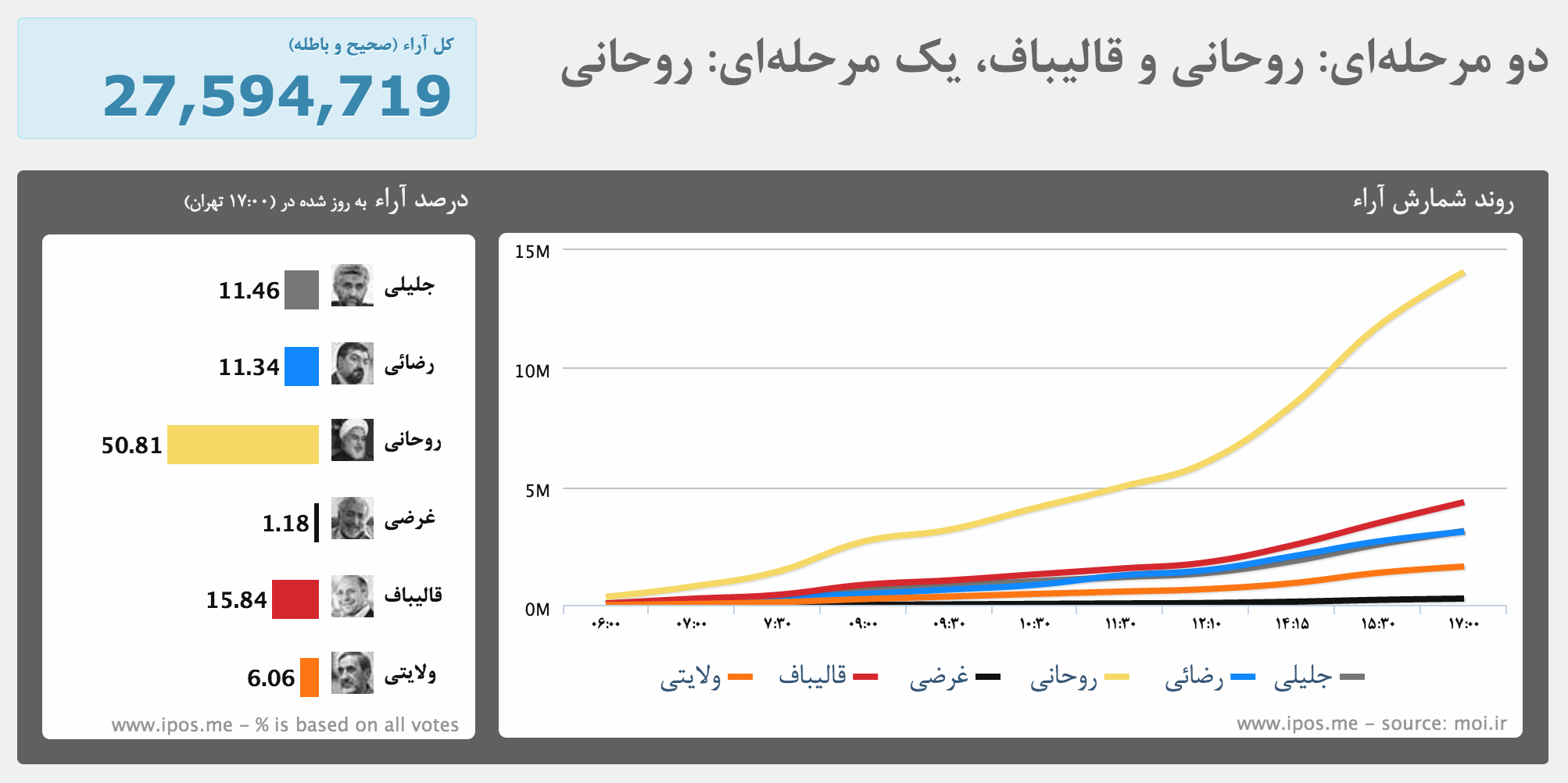
Here are the voting results as of 5 pm Tehran time, as tracked by Ipos.me:

ipos-iranelection-results

With the votes still be counted, reformist-backed candidate Hassan Rouhani is currently winning yesterday’s election in a landslide. We’ll have reax soon but in the meantime here’s a selection of tweets following the news as the results trickled out over the past 12+ hours:

https://twitter.com/thekarami/status/345670534509514752

https://twitter.com/SaeedKD/status/345711846042505217

https://twitter.com/Omid_M/status/345735721799278592

https://twitter.com/IranBlogger/status/345694591137230850

https://twitter.com/ianbremmer/status/346018038782521345

https://twitter.com/Najmeh_Tehran/status/345805085328158720

https://twitter.com/SaeedKD/status/345844909758099456

https://twitter.com/Najmeh_Tehran/status/345845437233762305

https://twitter.com/thekarami/status/345769771641475075

https://twitter.com/Najmeh_Tehran/status/345886784162500609

https://twitter.com/Omid_M/status/345882361784848384

https://twitter.com/thekarami/status/345882338527432705

https://twitter.com/shashj/status/345887742716157952

A Cutting-Edge Comedienne

Rebecca Onion at Slate‘s new history blog, The Vault, features the above performance by Jean Carroll, one of the first female stand-ups:

At a time when many moms on television were paragons of domesticity, Carroll’s act lampooned that image. In this clip, she’s dressed in a party dress, a choker, and heels. (She often wore fancy clothes to perform.) Working contrary to her prim-and-proper appearance, many of her jokes skewered suburban life, child-rearing, and marriage. Here’s Carroll on her new life in the suburbs:

In the country everything is done in groups. Two women meet up on the street, “Oh Agnes, I’m going to have a baby!” “Oh, so am I!” “Isn’t that wonderful! Who else can we get?”

Carroll’s material, which she wrote herself, still resonates after all these years. But the most charming aspect of this clip is Carroll’s small reactions to the big laughs she gets after delivering each punchline—a comical roll of the eyes, a little giggle, but nothing to interrupt the rapid flow of her delivery.

The Rubber Duck Menace

dish_rubberduck3

Rubber Duck was devised by Dutch artist Florentijn Hofman:

While something of a behemoth – measuring 10 metres wide, 11 long and 13 tall – the duck is friendly in appearance and has been stationed against the skylines of numerous cities since it first hatched from Hofman’s studio, with Auckland, Sydney and Sao Paulo among those to have enjoyed its company. It is currently bobbing around in Hong Kong’s Victoria Harbour.

Illegal copies of the art piece have been surfacing in other Chinese cities, rankling the state:

The fakes have been greeted with a dismayed editorial in newspaper the People’s Daily, which is generally held to be the press wing of the Chinese Communist Party. According to the column, the fake ducks provide the wider world with a poor impression of China’s efforts to create its own, original works. ‘The more yellow ducks are there, the further we are from Hofman’s anti-commercialisation spirit, and the more obvious is our weak creativity,’ the paper said. ‘It’s good that the rubber duck is popular, but it’s sad to see the innovation of our country go down. We often talk about awareness and confidence in our own culture, but where do they come from? Definitely not from following new trends.’ Fakery on this scale ‘will ruin our creativity and our future and lead to the loss of imagination’, it added.

More photo adventures with Rubber Duck here.

(Photo by Flickr user onebigfish)

(Hat tip: Core77)

A Poem For Saturday

Wigwam

“Medicine Song of an Indian Lover,” from the Ojibwa tribe:

1.

Who, maiden, makes this river flow?
The Spirit—he makes its ripples glow—
But I have a charm that can make thee, dear,
Steal o’er the wave to thy lover here.

2.

Who, maiden, makes this river flow?
The Spirit—he makes its ripples glow—
Yet every blush that my love would hide,
Is mirror’d for me in the tell-tale tide.

3.

And though thou shouldst sleep on the farthest isle,
Round which these dimpling waters smile—
Yet I have a charm that can make thee, dear,
Steal over the wave to thy lover here.

(From Wild Scenes in the Forest and Prairie, Charles Fenno Hoffman, 1839. Reproduced in American Poetry: The Nineteenth Century,Volume Two: Herman Melville to Trumbull Stickney, American Indian Poetry, Folk Songs and Spirituals, edited by John Hollander, published by The Library of America, 1993. Image: Details of Ojibwe Wigwam at Grand Portage by Eastman Johnson, c. 1906, via Wikimedia Commons)