A Scientist And A Gentleman

Charles Darwin, notes David Askew in a review of Paul Johnson’s Darwin: Portrait of a Genius, was not insensitive to the mores of his time:

Darwin’s mechanism [of natural selection] was self-regulating: it could explain the birth of new and the death of old species without having to turn to supernatural causes. It constituted a thorough rejection of the dominant natural theology of the day. Rather than publishing his ideas on the origin of species and the theory of natural selection, however, he sat on them – and maintained a public silence for two decades. This is not surprising. Evolution, [biographers Adrian] Desmond and [James] Moore remind us, was seen by the gentry to be “morally filthy and politically foul”, and Darwin himself acknowledged that to admit to the belief that species are mutable was akin to “confessing a murder”. Desmond and Moore also notice that he was happier “hunting with the urban gentry, rather than running with the radical hounds”.

Darwin did not seek publication until another researcher threatened to eclipse his own findings:

On June 18th, 1858, potential disaster struck. Another reader of [scholar T.R.] Malthus, Alfred Russel Wallace, submitted to Darwin a manuscript describing what Darwin thought was his theory of natural selection: “if Wallace had my M.S. sketch written out in 1842 he could not have made a better short abstract!” he moaned in a letter to Lyell. If published, it threatened to deprive him of any claim to originality. He turned to his friends for advice. Lyell proposed a joint publication of Wallace’s paper and extracts from Darwin’s work: both men would share the honour of priority. Darwin himself was reluctant to act dishonourably, but was persuaded that this was a gentlemanly solution. The papers were presented to the Linnean Society in July 1858, and met with silence: as Desmond and Moore say, “no fireworks exploded, only a damp squib”. …

Darwin became serious about publicising his theory: Wallace had finally goaded him into print. [On] The Origin [Of Species], an abstract of the ideas he had been pursuing at leisure, was published by John Murray in November 1859. In many ways the book marks the beginning of a new era in Western history. His ideas had been anathema in Victorian Britain but by the time he died were mainstream opinion: he had transformed long-accepted notions about nature and humanity. One of the remarkable aspects of the Origin is not only how revolutionary the work was, but how quickly its ideas about natural selection and evolution were accepted: here, we see a true paradigm shift. This acceptance is symbolised in the decision to bury the agnostic Darwin in Westminster Abbey.

A Floating Forest

dish_SSayrfield

The SS Ayrfield is an industrial relic transformed by new growth:

Homebush Bay in Sydney, Australia is home to the remnants of a ship-breaking yard that operated during the mid 20th-century. Large watercraft that outlived their usefulness were towed to Homebush Bay and dismantled to salvage any components that could be reused or sold for scrap.

One such ship was the SS Ayrfield, a 1,140-tonne behemoth built in 1911 as a steam collier that was later used during WWII as a transport ship. In 1972 it was brought to Homebush Bay to be dismantled, but fate would decide differently. Operations at the ship-breaking yard subsequently ceased and parts of several large vessels including the Ayrfield were left behind, the largest objects in an area now infamous for decades of chemical dumping and pollution. But only this century-old transport ship would be transformed by time into a floating forest, a peculiar home for trees and other vegetation that have since sprouted over the last few decades. …

As the forest has grown inside the SS Ayrfield, the bay is now a popular place for photographers who wish to capture the uncanny sight of this strangely beautiful relic of the bay’s industrial past, not to mention nature’s resiliency.

(Photo: Flickr user Bruce Hood)

Something Is Happening In Iran?

https://twitter.com/jetpack/status/345074584078405632

An Iranian reader writes in with an argument as to why the Green Movement should get out the vote tomorrow:

I’m trying to convince absolutely everyone I know to vote. I know there is a lot of discouragement and people think their vote won’t make any difference, but I think that’s the wrong mentality. First off, every one of the more than 20 million of us who voted for Mousavi in 2009 should be equally committed to voting again, as the reasons why we voted in 2009 remain just as important today: we don’t want our country in the hands of some clown who embarrasses us all, we still hate Khamenei, and we still want Iran to be free. We must think logically and keep trying in every way we can until we have finished what we started. The worst thing we can do is nothing.

Furthermore, if more than 20 million of us vote for a single candidate like [reformist Hassan] Rouhani, there is only one way the regime can win: to cheat ever bigger and dirtier than they did the last time. It’s unlikely that this is even possible as there isn’t as much solidarity in the regime as there was in 2009, nor are they as organized as they were then when the President was one of the candidates. Even Khamenei doesn’t seem like he has the energy or courage to pull off that big of a cheat. He says he’s not for any of the candidates; I think that means he’s afraid to say who he is for, in case they don’t end up winning.

Support may indeed be surging for Rowhani, who now has the backing of the reformists and centrists:

[Rouhani’s campaign] received a boost on Tuesday when Mohammad Reza Aref, Khatami’s senior vice-president, bowed out of the race. Later in the day Rouhani received explicit endorsements from both Khatami and Rafsanjani. Of the popular mood swing that followed, the Tehran journalist said, “I never saw this coming. Everyone was so without hope and talking about not ever voting again, and this morning things have changed 180 degrees. It’s like someone put something in the water last night and this morning people are just different.” According to another source in Tehran, “The atmosphere just completely changed after Khatami and Hashemi put their support behind Rouhani. People are really excited. Wherever Rouhani speaks there’s a frenzy. Today in Mashhad it was like four years ago with the appearance of Mousavi.” [a video of that rally is embedded above]

Looking at the rest of the field, it still seems as though Tehran mayor Mohammad Bagher Ghalibaf is attracting significant support.  Meanwhile, Thomas Erdbrink notes (NYT) a major difference between 2009 and now:

Wary of the raucous street demonstrations that erupted [four years ago], the government decreed that this year’s presidential campaign would consist of rallies in predetermined spaces and a series of tedious, four-hour debates that many Iranians dismissed as more like a pointless quiz show than a discussion of real issues. “Where are all the leaflets, the posters?” asked Roghaye Heydari, 55, who had come to the capital from her hometown, Dowlatabad, where most people see voting as a national duty. “Why are they not trying to create a proper atmosphere?”

Now, instead of election posters coloring the streets, plainclothes police officers hang around at major crossings, making sure there are no spontaneous gatherings. “I have never seen so much secret police in my life,” a shopper could be overheard telling her friend near the central Haft-e Tir Square on Saturday, nodding at groups of men wearing fashionable clothes that did not suit them.

Iranwire points out how important the rural vote may be:

Hossein, a photographer who travels frequently around the country for work, says that outside Tehran few know Rowhani well at all, and is skpetical of his chances. “[Ghalibaf] has the vote in towns and provincial cities, the villagers will vote for Jalili,” he says.

Voter participation in Iran’s provinces is likely to be high, given the presidential vote being held simultaneously with city council elections, which traditionally draw voters keen to influence local matters. Saeed, a civil servant who has just visited his hometown in northeastern Iran, says turnout will be high in the provinces for the city council vote. He himself says he doesn’t plan to vote. “They have already decided who will be the president,” he says. “I need to make sure we have a friendly mayor, though”. As for Rowhani, he does not have high expectations “Yes, the urban middle class might want him, but he does not have the majority of vote where people have the highest participation rate”.

Zooming out, don’t expect the same kind of foreign media access that we saw in 2009:

Reporters Without Borders, a Paris-based organisation, said on Wednesday that the Iranian authorities had not issued visas to the vast majority of foreign journalists who requested them. Iranian media were subject to “harassment, restrictions and censorship”. Journalists who have obtained visas have been prevented from moving freely in Tehran, banned from meetings of candidates supported by reformers and from contacting government opponents or the families of political prisoners, RWB added.

Yasmin Alem pushes back on the predictions of many observers that hardliner Saeed Jalili is the favorite to win:

[I]t may well be more that Jalili has been successful in portraying himself as the Supreme Leader’s ideal candidate, rather than Khamenei singling out Jalili. After all, Jalili has fashioned his campaign platform around Khamenei’s preferred topic of “resistance.” … [Also,] traditional and moderate conservatives actually dislike Jalili. Indeed, prominent members of parliament have been openly critical of Jalili, accusing him of inexperience and dogmatism.

She nonetheless cautions:

[D]espite the odds being against him, Jalili could still come out on top. He is unlikely to be able to muster enough votes in the first round, but he might be able to triumph in a run-off (especially if a little election “engineering” takes place). Frontrunner or not, a Jalili victory would have important implications for the course of politics in the Islamic Republic. By propping up Jalili, the Supreme Leader would inevitably alienate traditional conservatives and even some segments of the revolutionary guards who support Mohammed Baqer Qalibaf, leaving Khamenei even lonelier at the top. But Jalili winning would also signal that loyalty to the Supreme Leader would trump competence.

Finally, Saeed Kamali Dehghan reminds us that the anticipation of violence, as well as the spectre of of Neda Agha-Soltan, loom large over this week’s vote:

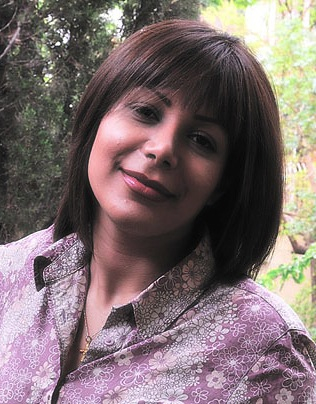
“These days, her image keeps coming back to my mind,” a Tehrani citizen said via online chat on Facebook. “Am I betraying her if I neda-agha-soltanvote? I don’t know, but many of my friends are saying we won’t achieve anything by simply boycotting the election.”

To vote or not to vote for Hassan Rouhani, the sole reformist-backed candidate standing in the race, is the dilemma shared by hundreds of thousands of people who lost faith in the fairness of Iranian polls. For families who lost loved ones in the aftermath of the 2009 election, the buildup to the vote is adding salt to the wounds. At least 100 protesters are believed to have been killed in the protests.

Face Of The Day

TURKEY-UNREST-POLITICS

An anti-government protester looks at Turkish riot policemen position at Taksim Gezi park in Istanbul on June 13, 2013. Today the Turkish government urged thousands of protesters to evacuate an Istanbul park, repeating plans to hold a referendum to decide on the park’s future in its first major concession in nearly two weeks of anti-government unrest. After heavy police crackdown against protesters earlier in the week, the mood was subdued and peaceful in central Taksim Square while demonstrators in the capital Ankara were dispersed in the early hours of the day with tear gas and water cannons. By Bulent Kilic/AFP/Getty Images.

Creativity Through Constraints

Adam Richardson pushes back against the idea that “the best way to boost a team’s creativity is to unshackle them from constraints”:

Constraints have a Goldilocks quality: too many and you will indeed suffocate in stale thinking, too few and you risk a rambling vision quest. The key to spurring creativity isn’t the removal of all constraints. Ideally you should impose only those constraints (beyond the truly non-negotiable ones) that move you toward clarity of purpose.

If a constraint enhances your understanding of the problem scope and why you’re doing what you’re doing, leave it in. Insights into user needs, for example, are great because they provide focus and rationale. If the constraint confuses or overly narrows scope without good reason, remove or replace it. Don’t be afraid to experiment with different combinations of constraints; it’s not always easy to tell ahead of time what the right mix will be for a particular project or circumstance. Beautiful, brutal clarity is your goal.

Lie For The Day

6a00d83451c45669e2017d3e4986c2970c-550wi2

“We knew that a fair and balanced news channel could succeed, as long as no views were rejected and conservative views were allowed to be heard,” – Roger Ailes, propagandist with a blacklist of forbidden guests, whose actual names are even airbrushed out of screen shots.

He also launched a tirade against ignorance of American history:

America is losing its historic literacy. Recently some 556 seniors surveyed at 55 of the nation’s top colleges — only 60 percent placed the American Civil War in the correct half of the 19th century. Only 34 percent identified George Washington as the American general at the Battle of Yorktown. Thirty-four percent thought it was Ulysses S. Grant.

The next day, he announced he was hiring this historical expert:

Do you think she’s ever even heard of the Battle of Yorktown, let alone who was the US general there? But she just got a reward from the man who pretends to be anguished about American culture, even as he does his level best to destroy it.

Your Genes Aren’t For Sale

SCOTUS ruled today that naturally occurring human genes can’t be patented. Lyle Denniston summarizes:

The Supreme Court long ago ruled that an inventor who discovers a phenomenon in nature, or figures out a “law of nature,” cannot get an exclusive right to use or sell that by obtaining a patent from the federal government.  Natural phenomena are the basic tools with which every would-be inventor starts, so locking up the right to use them in a monopoly held by a specific patent owner will frustrate others who might want to look for new ways to interpret that phenomena, the Court has said.

The exclusion of natural substances from eligibility for patents was the theory on which the Court relied Thursday in its unanimous ruling that a company cannot get a patent monopoly on the use and study of human genes that it isolates in the bloodstream, and then takes them out — without changing their natural character — for research.

In a later post, Denniston considers the real-world consequences of the case:

The decision was a major blow to a company that believed it had a right to be the sole user and analyst of two human genes, mutations in which show a high risk, for women found to have them in their blood, of breast and ovarian cancer.  But the ruling will give medical and scientific researchers, and family doctors, greater opportunity to help women patients discover their potential vulnerability to those types of cancer.

In a way, the ruling was a silent tribute to screen actress Angelina Jolie, who recently gained huge notoriety not for her acting but for voluntarily having her breasts surgically removed after discovering that she had the threatening mutations in her body.  She, of course, was able to pay the high cost of that test; now, women of less means will be able to afford it, and that was a key motivation for challenging Myriad’s patent rights.

McArdle frets that SCOTUS “just outlawed the business model of companies like Myriad,” which “spends about $50 million a year on R&D.” She wonders how best to encourage innovation going forward:

One way, of course, is to simply throw more federal money into research grants. Or we could investigate prizes: millions of dollars for anyone who identifies a gene that helps us target a specific disease process. The problem is with setting the value of the rewards—what constitutes a disease process worth targeting, and how do we know when we’ve found a worthwhile connection? Companies have an easy answer to that: “Someone will pay me to test for it.” Governments have to consult more nebulous standards. Investors may not be willing to waste money on those standards—or they may be too willing, because we’ve set the price too high. Or we may simply spend a lot of money on stuff that turns out to not be all that useful.

And, finally, Joshua Keating wonders whether other countries will follow the US’s lead:

In fact, Australia’s Federal Court ruled in favor of Myriad in February after a very similar suit was brought by a cancer foundation there. In that case, the justices ruled that “the two genes, isolated from their natural cells in which they were found, constituted a “manner of manufacture” and could therefore be patented.” That decision is currently being appealed and the government is considering legislation to limit genetic patents.

In Europe, the patentability of genetic materially is legally protected by the EU’s Biotech Directive, which holds that “biological material which is isolated from its natural environment or produced by means of a technical process” may be patentable “even if it previously occurred in nature.”

Earlier Dish on the case here.

Where Conspiracy Theories Come From

Jesse Walker discusses his forthcoming book on conspiracy theories, The United States Of Paranoia:

A point I try to stress in the book is that even a conspiracy theory that says absolutely nothing true about the external world does say something true about the anxieties and experiences of the people who believe it. One example that I mention in the book is the claim that white doctors were deliberately injecting black babies with AIDS. There’s no evidence for that. But while investigating that theory, you can’t stop there. You have to go on to ask, “Why did people believe this was true?”

And in fact, there is this long history of the secretive medical mistreatment of black people, which includes the Tuskegee experiment and all sorts of other things. There were these rumors about night doctors [who would supposedly secretly experiment on African Americans] and it’s really unclear to what extent those were true. Historians who look at this are very cautious, because it’s entirely possible that hospitals were seriously abusing the rights of people from the underclass. We’re trying to piece it together from such incomplete evidence that there’s always going to be question marks. There’s a spectrum that on one end has stuff that’s accepted as historical fact and on the other contains weird fantasies. But these aren’t completely separate categories because there’s this whole realm of possibilities in between.

Addicted To Wanting

Derek Thompson encourages compulsive shoppers to window-shop their way to happiness:

[I]n three separate studies, materialists reported significantly more happiness thinking about their purchase beforehand than they did from actually owning the thing they wanted. … The finding that paying for something is less satisfying than wanting it shouldn’t be confused with the idea that buying things makes us sad. It’s hard to find a study showing that “retail therapy” (i.e.: shopping your way out of a bad mood) doesn’t work; most research suggests that a well-timed excursion to the mall can lift one’s spirits. But if [Daniel] Gilbert and [Marsha] Richins are right, then the bulk of the therapy provided by shopping is everything that happens before the check-out counter. You don’t have to go into debt to achieve nearly the same emotional gains from materialism.