The Government Isn’t Out To Get You

Joe Klein calls the NSA leaks a “non-scandal”:

Far too many people get their notions of what our government is all about from Hollywood; the paranoid thrilled is a wonderful form of entertainment, but it’s a fantasy. The idea that our government is some sort of conspiracy, that it’s a somehow foreign body intent on robbing us of our freedoms, is corrosive and dangerous to our democracy. This remains, and always will be, an extremely libertarian country; it’s encoded in our DNA. We now face a constant, low-level terrorist threat that needs to be monitored. A great many lives are potentially at stake…and our national security is more important than any marginal–indeed, mythical–rights that we may have conceded in the Patriot Act legislation. In the end, the slippery slope, all or nothing, arguments advanced by extreme civil libertarians bear an uncomfortable resemblance to the slippery slope, all or nothing, arguments advanced by the National Rifle Association.

There were moments in Snowden’s explanation for his actions when I thought: uh-oh. Much of it seemed sincere; but some of it – an “architecture of oppression” – seemed a little paranoid to me.

Look: I understand the paranoia. For twenty years, I lived on a visa which could have been revoked at any moment because of my health; I had to report my address regularly; I eventually had to give them my blood; I was an object of the immigration security state. At least every three years, I went before nameless officials who could go through any and every aspect of my life and health records and decide whether I should keep my current life in America or lose it. It remains grueling. Even now, I am taken aside and interrogated every time I enter the US where I am now a legal permanent resident. But was anyone as such out to get me? Nah. Just a system based on a false analysis of what HIV is – an analysis originally made by Jesse Helms. In that sense, someone was, I suppose, out to get me. But that was from 1987, as that bigot triumphed over science and the first, humane, Bush administration. What was in place since was just a system staffed by people doing their jobs following rules constitutionally and legally applied.

You have to let go of the idea that this is some architecture of oppression – which suggests an active agency of persecution – and a system of laws (misguided or not) that we the people have endorsed through our representatives. And could repeal at any time. You have to let go of it for one reason alone: it simply is not true.

(Thumbnail photo by Flickr user ctj71081)
About That Huge Public Outcry

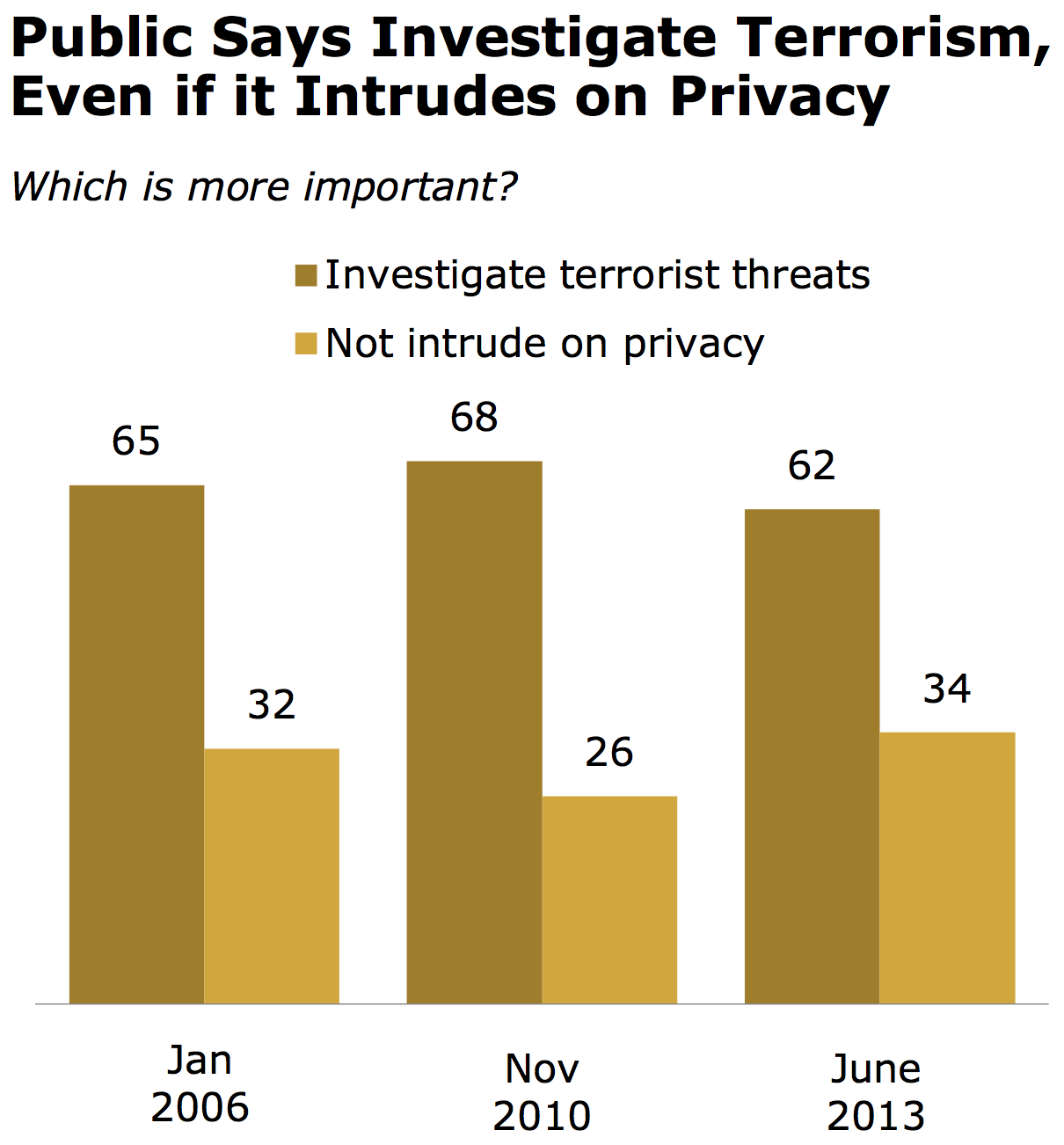
Pew finds widespread support for the NSA’s program:

NSA Public Opinion

Josh Barro parses the poll:

One interesting aspect of these poll results is the partisan hypocrisy: Having a Democratic president has made Democrats more inclined toward surveillance and Republicans less so. But the more important finding is simply that public support for intrusive surveillance is high, under both Republican and Democratic presidents.

Allahpundit’s related thoughts:

I’m surprised anyone is surprised. What’s truly noteworthy about this poll, I think, is how many people felt comfortable telling a pollster that they support surveillance of phone records and e-mails. I figured every poll on this subject would be more in line with Rasmussen’s result this morning, in which 59 percent of likely voters said they oppose government collecting phone records. That’s the answer many people will sense they’re “supposed” to give when a stranger’s pressing them on their tolerance of governmental invasions of privacy. And yet here’s Pew finding 56 percent willing to tell them okay on phone records and 45 percent on e-mails. If that’s what people are willing to say out loud, how much more are they secretly willing to accept? And even if, somehow, those numbers accurately reflect opinion, how likely is it that significant policy changes will happen on a 50/50-ish issue? Not much to be happy about here if you’re a civil libertarian.

Alas, no. Unless you believe, as I do, that this kind of meta-data gathering is actually preferable to the traditional wire-tapping techniques as a first option and can get you information that minimizes the risk to innocent third parties. And I just want to say that this was not something I objected to under Bush either, when I objected to a lot. This is not partisan on my part.

The Great White Loanshark?

types of debt[1]

Malcolm Harris remains unsatisfied by the administration’s latest effort to address the rising student debt crisis:

President Obama, Senator Warren (D-MA), and Congressional Republicans have offered different plans that tinker with rates and/or tie them to the Treasury’s borrowing costs. These solutions might depress the embarrassing government profit and save borrowers a few here or there, but none of them even begin to address the root causes of the student debt crisis. They’re Band-Aids on broken limbs, and any answer that includes former students—it’s important to remember not everyone who takes out debt graduates with a degree—paying back the entire trillion-dollar outstanding total is downright cruel. And until policymakers start talking about forgiving existing debt and actively reducing higher education costs, anything else is simply a distraction.

David Dayen emphasizes that student loans aren’t even loans in the traditional sense:

Students currently paying high interest rates should be able to refinance, and reap the rewards of the Federal Reserve’s quantitative easing that asset-holders have enjoyed for so long. Sen. Kirsten Gillibrand’s bill would mandate refinancing on all federal student loans into fixed 4 percent loans, which would benefit 90 percent of all current loans, and save 37 million borrowers around $14.5 billion in the first year alone. The Consumer Financial Protection Bureau has proposed a similar refinancing scheme for private student loans, which the government backstops anyway. The president constantly talks up the glories of refinancing for homeowners to reduce payments; students deserve the same lifeline.

Drum hightlights the above chart from Maggie Severns:

My generation got a cheap college education when we were young, and we’re getting good retirement benefits now that we’re old. Pretty nice. But now we’re turning around and telling today’s 20-somethings that they should pay through the nose for college, keep paying taxes for our retirements, and oh by the way, when it comes time for you to retire your benefits are going to have to be cut. So sorry. And all this despite the fact that the country is richer than it was 50 years ago.

Filling Out Form 420

Howard Gleckman believes that the federal government should reconsider their taxation of medical marijuana, given its widespread legality:

Firms can legally sell medical marijuana in 19 states and the District of Columbia and recreational weed in two. They must pay federal income taxes, but unlike all other businesses they are prohibited from reducing their taxable income by deducting business expenses. It is, to say the least, an odd state of affairs. Almost all firms are taxed on their income, that is, revenues minus expenses. But not businesses that sell drugs such as marijuana. In effect, they must pay a gross receipts tax, not an income tax. The loss of those deductions is a big deal.

How this came about:

Congress passed the law explicitly barring deductions for drug sellers back in 1982. According to a nice summary by Stephen Fishman at nolo.com, this happened after the Tax Court ruled that a cocaine dealer could reduce his taxable income by subtracting the wholesale cost of the drugs he peddled. It even let him take a home office deduction for his illicit activities. Curiously, the law (Sec. 280E, if you are keeping score) applies only to firms that sell illegal drugs. As Fishman notes, a professional hit man can deduct his cost of doing business. So can a prostitute. But a drug seller cannot.

What We Get Wrong About Female Sexuality

Ann Friedman read Daniel Bergner’s new book, What Do Women Want?: Adventures in the Science of Female Desire. Among her takeaways:

Women want sex, and in particular, they want sex with people who really want them. But socially, many straight men still find it a turnoff when women are sexual aggressors. Which means that, for women, aggressively pursuing the thing they want actually leads to them not getting it. I suspect this is the source of much sexual dissatisfaction of the modern single lady, who’s so horny she’s running across the street to Walgreens to buy more batteries twice a week, but is unable to pick up men despite social conventions that men are “easy” to bed and women have to be coaxed into casual sex. The thing women are told they can access any time is, maddeningly, often just out of reach.

Amanda Hess’s perspective :

Lately, whenever I write about social stigma against women who sleep around—from social media shaming in the wake of Steubenville to the science on the social barriers that hold women back from pursuing casual sex—I hear from men who tell me, “Men don’t slut-shame women. We’d love for women to have more casual sex with us.” But liking the fact that a woman wants to have sex doesn’t translate to actually liking the woman herself—especially if she’s mostly interested in doing it with another guy …

In an interview, Bergner addresses other aspects of his book on female desire:

For a long time, we have as a society told ourselves a kind of fairytale about male and female desire, that males are programmed for spreading cheap seed around, for promiscuity, and females desire relationships, with some exceptions. We’re speaking in generalities here, but on average, we’re told that women are sexually programmed to seek out one good man and thus more suited to monogamy. That seems so convenient and comforting to men and so soothing to society, that we can rely on women as a kind of social glue.

That is one of many things we need to look beyond because the evidence for that is thin at best.

Relatedly, Ronnie Koenig, a former Playgirl editor, talks about female desire:

Whether it’s Daniel Craig emerging from the ocean in a cock-revealing bathing suit, Brad Pitt in Fight Club or Adam from Girls with his shirt off (yes, please) women desire visual stimulation just as much as the next guy. Women may not be turned on by a full-page picture of a penis the way men might like to look at close-ups of vaginas in porn, but what we’re discovering is that male and female sexual desire is more alike than different.

What Is PRISM, Exactly? Ctd

A reader writes:

After reading Marc Ambinder’s summary, I am hoping people aren’t making the same mistake about PRISM that I once made about Gmail. When Gmail first came out, I was working in the California legislature, and a co-worker and I thought it was a terrible idea for Google to, in effect, “read” everyone’s mail and provide ads targeted to them.  Our boss introduced a bill to prohibit Google from doing this.

I was assigned to defend the bill at a tech conference, and let’s say I had some misconceptions firmly and uniformly corrected.

No one at Google reads (or could read) anyone’s email.  That would be (a) impossible, given the volume of email, and (b) a pretty stupid thing for a company to try to do.  Google has pretty sophisticated algorithms that can scan millions of texts for words and phrases that advertisers believe would be relevant to a particular commercial purpose.  Ads matching those terms are posted next to the email, and no human (except the recipient) has ever seen anything.

I’m not sure if any actual humans ever see any Facebook postings, but my guess is that the first pass of PRISM works like Gmail.  Someone has developed algorithms for potentially dangerous words and phrases, and the millions or billions of Facebook posts are scanned for those.  The algorithm’s bar would have to be fairly high, since the number of posts would be astronomical, I would imagine.

Posts that make it over the bar (still not having been viewed by any human being) would then be collected into some output that IS more closely examined, and this may be the stage where humans might be involved.  Again, I don’t have any special knowledge here, but I honestly can’t imagine how this could work any other way.  The only things that are ever actually seen by human eyes are those that have some markers of potential serious threats.

I can see how some people might still find little comfort in that, and I’m sure there would have to be many false positives in a system like this.  But I think it’s far more consistent with your intuition about why this isn’t such a horrible invasion of privacy – an intuition that it seems a lot of us share.

That difference between technological review of data and human eyes viewing (and possibly abusing) communication is an important distinction.  If PRISM is more like Gmail than like J. Edgar Hoover’s private FBI files, then this has less to do with privacy than some people might fear. I, for one, got over my concerns about Gmail, and happily got one of its first accounts, which I use to this day.

A Losing Smile

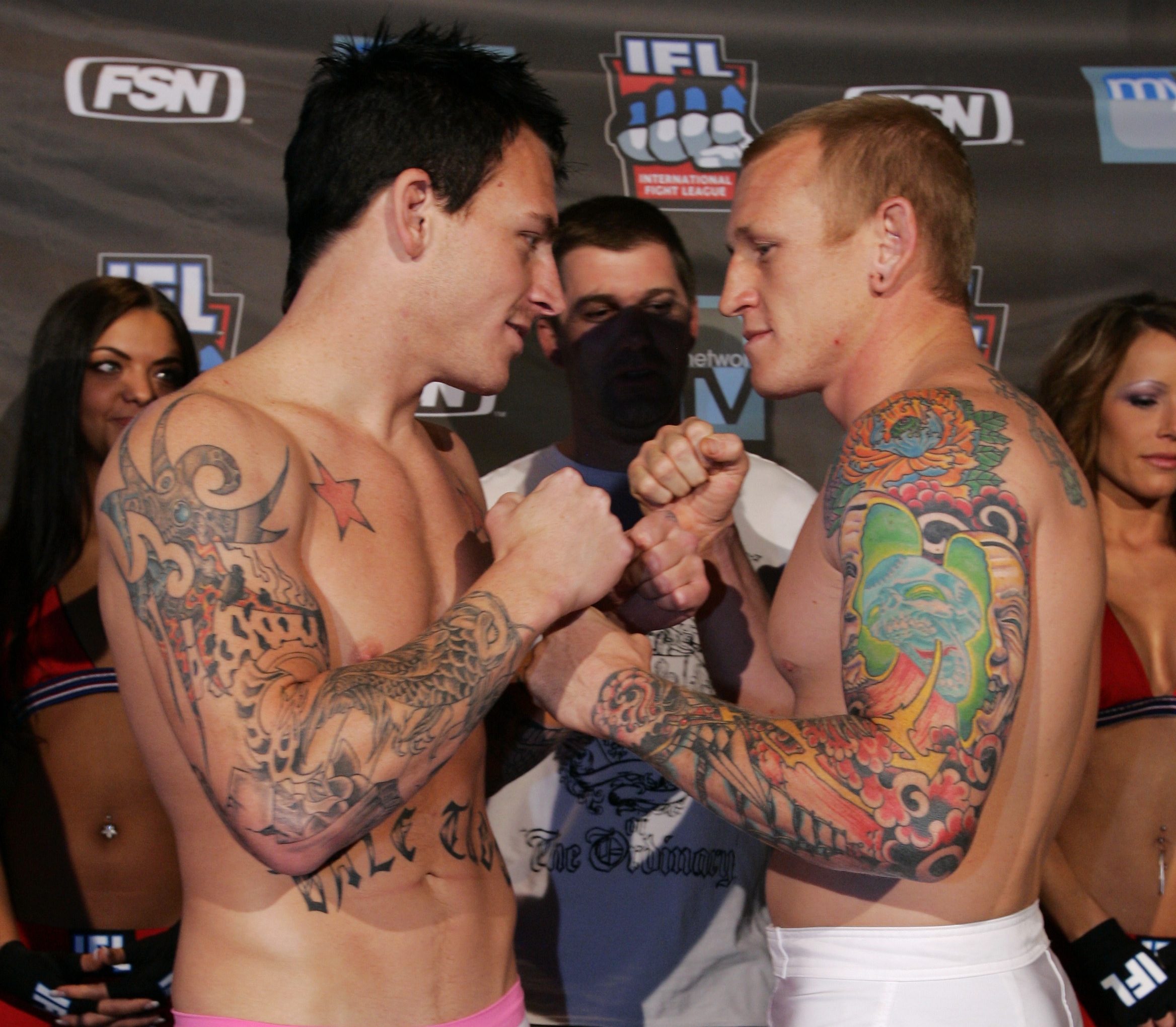
IFL Chicago Weigh-In

Researchers examined (pdf) whether martial arts fighters who smile prior to a fight, which is an unconscious expression of submission, are more likely to lose:

As expected, smile intensity predicted both the outcomes of fights as well as the more detailed measures of in-fight hostility. Interestingly, the smiles predicted both reduced hostility from the smiler as well as increased hostility from his opponent. In other words, it seemed both fighters were attuned to the information being communicated in the pre-fight smile. These results held even when controlling for existing differences in skill (i.e. the betting odds of the fight) and strength (height and weight). Though don’t go drastically altering your gambling strategy just yet -the betting line still did a better job overall in predicting fights compared to just smile intensity. …

You might interpret this as a kind of “nice guys finish last” effect. But that’s not quite right.

The authors also looked at whether smile intensity in the pre-fight photos predicted dominance and outcomes in other future fights. If the smiles are just helping us separate the gentle from the aggressive, then the nice guys should be performing consistently worse than their more hostile counterparts. This was not the case. These smiles are context-specific; they reveal something about the power dynamics between only these two fighters, not something enduring about the kinds of people that these fighters are. A fighter, smiling against opponent A because he knows he is outmatched, might be stone-faced when up against the weaker opponent B (who, by extension, would in that circumstance be reduced to a grinning fool).

(Photo: Justin Levens of the Southern California Condors (L) and Brian Foster of the San Jose Razorclaws (R) face off during the International Fight League weigh-in for the fights between the Condors versus the Razorclaws and the Red Bears versus Silverbacks at Buffalo Wild Wings on May 18, 2007 in Hoffman Estates, Illinois. By Brian Bahr/Getty Images for IFL)

How The West Was Wrung Dry

Aviva Shen explains how water management plans in the Western states are backfiring:

Increasingly severe droughts and record low rainfall have forced farmers to rely more heavily on groundwater supplies. But without changing current farming practices, these reserves will run out rapidly. Climate change will make droughts longer and hotter, while rain will only come in harsh storms that will flood crops and erode valuable topsoil without much of it making it down to the groundwater.

The conservation subsidy under the Environmental Quality Incentives Program (EQIP) was meant to help farmers employ more environmentally friendly practices. However, research shows the program prompted many farmers to expand their acreage using the water that was supposed to be conserved. Two recent studies discovered that farmers receiving conservation payments in Kansas, Colorado and New Mexico used some of their water savings to expand irrigation or grow thirstier crops, effectively defeating the purpose. The new efficient irrigation equipment has actually shrunk groundwater supplies at an even faster pace, researchers found.

Barack And Jinping, Ctd

Richard C. Bush was impressed with the summit, as a first step:

On specific issues, Obama and Xi appear to have had the most agreement on North Korea: on the strategic dangers posed by Pyongyang’s nuclear ambitions, and on the need to fully enforce the US-CHINA-DIPLOMACY-OBAMA-XIresolutions of the UN Security Council to create pressure on the North to choose between nuclear weapons and a normal relationship with the international community. President Obama discussed the problem of cyber-theft targeting public and private American entities. He also urged restraint by all parties to disputes in the East and South China Seas. President Xi reportedly (and not unexpectedly) raised the issue of U.S. arms sales to Taiwan and Obama reportedly reiterated the long-standing U.S. position. Xi also asked for more information on regarding the multilateral trade negotiations on the Trans-Pacific Partnership, and Obama pledged to provide that transparency.

Thus, the Sunnylands Summit did not resolve the issues in the U.S.-China relationship, but that was never its objective. Instead, the goal was to create a more effective platform for addressing those issues in the future by deepening the Xi-Obama personal relationship and by making explicit the reality that the success of each will affect the success of the other. This was a good beginning, but it is just a beginning.

No reports indicate that the two discussed Edward Snowden hiding out in Hong Kong. But this was a great tweet:

Elizabeth C. Economy thinks the two leaders forged a good rapport:

At the heart of the summit, however, was President Xi’s desire to be treated with respect and to have China and the United States forge a “new relationship among major powers.” President Xi got half of his wish.

Certainly President Obama treated President Xi with respect; however he resisted Chinese efforts to elevate the U.S.-China relationship beyond that of the United States’ relations with its allies. While President Obama acknowledged that the two countries needed to have a “new model of cooperation,” he carefully avoided the Chinese phraseology of a “new model of major country relationships.”

While perhaps not the best outcome for President Xi, President Obama has it right. A special partnership of the sort that China seeks can only arise after the two countries have achieved a series of policy successes premised on common values and approaches. Until then, the leaders and people of both countries should be pleased that the summit was good enough: it brought a new more positive energy to the bilateral relationship, stressed cooperation as opposed to conflict, and offered a few of the win-wins that have been so scarce in recent years.

Walter Mead calls it a snapshot of the new global politics:

[N]ote just how unlike this summit was from the gatherings that characterized high politics in the 20th century. It was not just that no Europeans were present, but that neither of the leaders has deep personal roots in the Atlantic community. This is a glimpse at what could well become the diplomacy of the 21st century (unless Europe figures out how to organize both its economy and its political system more effectively). The Pacific Century is here.

Previous Dish coverage of the summit here. A reader notes of it:

Your post is titled “Barack and Xi, but Xi is actually the Chinese president’s surname. His first name is Jinping (meaning progress and peace). So a more symmetrical title should be Obama and Xi. The confusion may come from the way Chinese names are structured with surname at the front.

(Photo: US President Barack Obama and Chinese President Xi Jinping take a walk at the Annenberg Retreat at Sunnylands in Rancho Mirage, California, on June 8, 2013. Obama and Xi wrap up their debut summit Saturday, grasping for a personal understanding that could ease often prickly US-China relations. Skipping the usual summit pageantry, Obama and Xi went without neckties, in a departure from the stifling formality that marked Obama’s halting interactions with China’s ex-president Hu Jintao. By Jewel Samad/AFP/Getty Images)

Polluting Across State Lines

Danny Hayes examines research (pdf) on it:

The facilities that release the most toxic emissions (measured by number of pounds) are the most likely to locate near a downwind border. So what’s leading polluters to make these decisions? The authors acknowledge that their data can’t say anything about the process that brings pollution facilities to downwind borders. But they suggest two possibilities.

One is that state policy makers encourage it. For instance, Texas would surely want the economic development and tax revenue that would come from a new manufacturing plant. But the state could probably do without the resulting toxic emissions. So one option would be to encourage a manufacturer to locate on Texas’ northern border, where the wind tends to blow across the Red River into Oklahoma.

Alternatively, companies might decide on their own to build a facility in a location where pollution would be carried across state lines. Doing so might reduce the effectiveness of NIMBY, or not-in-my-backyard, activism.