The Best Of The Dish Today

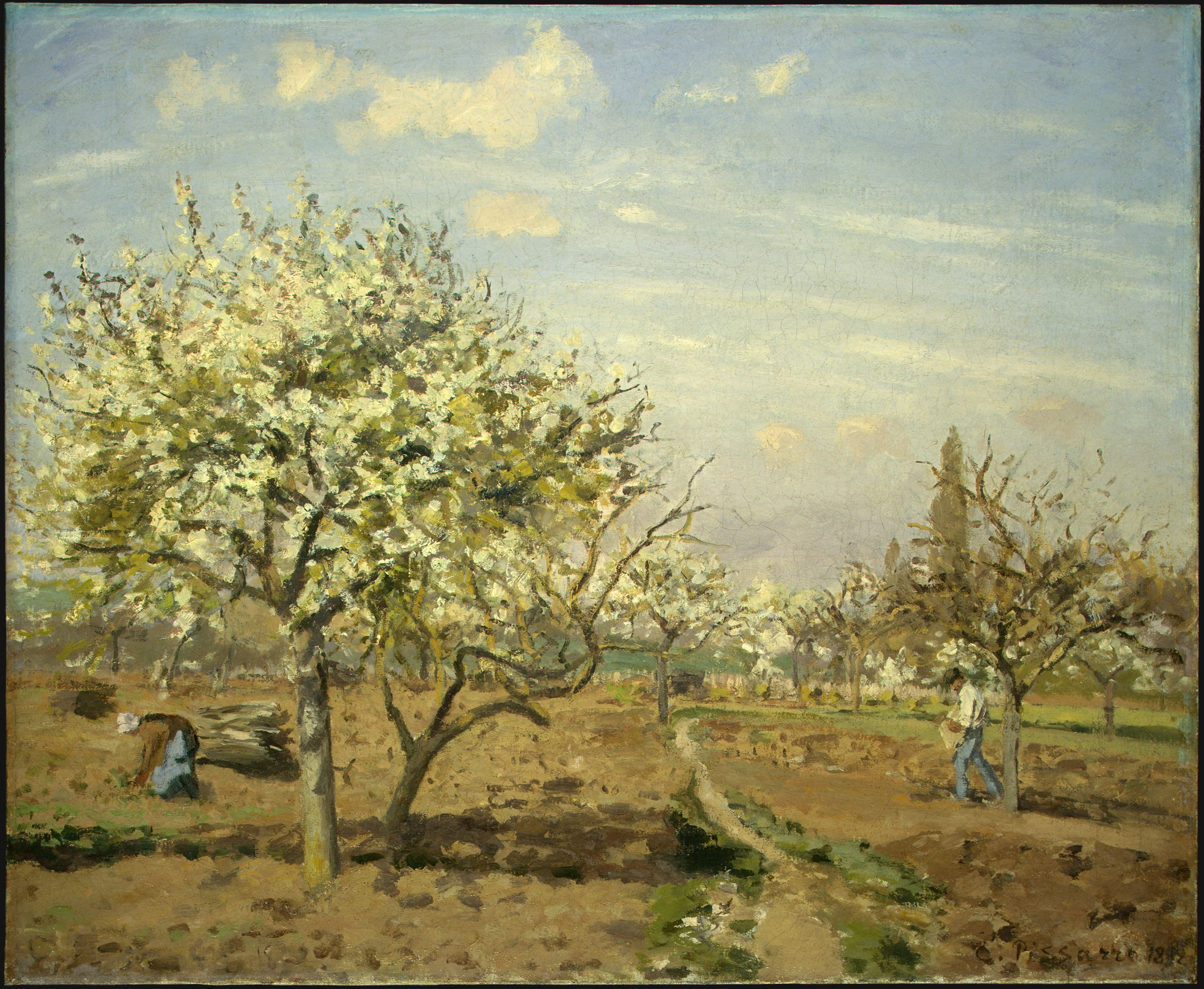
Camille_Pissarro,_Le_verger_(The_Orchard),_1872

I defer to David Simon’s take on the Snowden affair; Conor moved the debate along; and the term “media martyr” seemed more apropos than “whistle-blower”. Pissaro’s work (almost as magnificent as his beard) was given a second look (see Orchard in Bloom, Louveciennes above); and we toasted the poet, Marie Ponsot. Hound love here; Paul Wolfowitz as a velociraptor here.

The most popular post? Enter The Media Martyr. Second? This Is Bullshit. And the sectarian flames licked the Middle East some more.

See you in the morning.

Faces Of The Day

Purple Heart Ceremony Held At Historical Home Of George Washington

Two-year-old Yoselin Lopez, held by her mother Jennifer Lopez, inspects a Purple Heart awarded to her father, U.S. Army Specialist Arael Lopez-Lopez, following a Purple Heart ceremony in Mount Vernon, Virginia on June 10, 2013. The U.S. Army celebrated its 238th birthday at the home of George Washington with a ceremony that included the awarding of the Purple Heart for three soldiers wounded in Afghanistan. Lopez received his injuries from an RPG explosion followed by a dismounted IED in Wardak Province on August 8, 2012. By Win McNamee/Getty Images.

Life In The Inner Pity

Mona Simpson ponders why readers keep returning to Henry James’ Washington Square, a novel exploring “the terrible condition of being unable to love”:

We don’t read James for his stories. Despite their formal symmetries, they feel jerry-rigged. He borrows from melodrama, but lops off that genre’s gratifications, going realist on us at exactly the wrong moment. If Americans want a tragedy with a happy ending, Henry James delivers something more like a comedy with a haunting close.
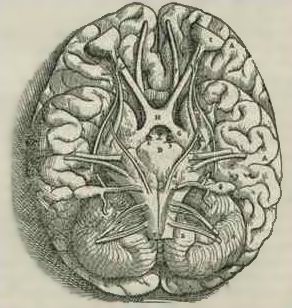
1543,AndreasVesalius'Fabrica,BaseOfTheBrainWe don’t return to James for his characters, either. It’s not quite possible to love them the way one may love Leopold Bloom or Mrs. Dalloway or even Lily Briscoe. They don’t feel real, exactly, though they’re the opposite of cardboard—a term suggesting characters made of appearances. James’s characters are all soul; they’re closer to ideas than to bodies. We know their sensibilities but not their details. …

We read James not for his stories or for his characters but for the one thing that can’t be adapted: his mind. We know it, in its arguments with itself, its endlessly refining discernment, its flickering shifts and glints of wisdom. We know those details the way we know Bloom’s love of organ meats and Mrs. Ramsay’s tendency to slough off her beauty with haphazard clothes.

No one else has given such fine attention to personal life as it’s thought, that wave and flutter in consciousness. Our stray wishes, our abiding hopes, our shame and constant fears—James attends to all the component parts of what we loosely call love, if only to show his characters coming up against their limitations.

(Illustration: From the 1543 book in the collection in National Institute of Medicine. Andreas Vesalius’ Fabrica, showing the Base Of The Brain, including the cerebellum, olfactory bulbs, and optic nerve.)

Selling A City’s Status Symbols

Virginia Postrel supports Detroit’s museum parting with some of its artworks:

[G]reat artworks shouldn’t be held hostage by a relatively unpopular museum in a declining region. The cause of art would be better served if they were sold to institutions in growing cities where museum attendance is more substantial and the visual arts are more appreciated than they’ve ever been in Detroit. Art lovers should stop equating the public good with the status quo.

Tyler Cowen adds:

We easily can imagine that more people would see those artworks if they were located in Los Angeles or other larger and growing cities.  Nonetheless I believe such a sale would set off alarm bells for conservatives, related to Arnold Kling’s “civilization vs. barbarism” axis.  Detroit would be sending a signal that it will never even try to go back to what it was, much as if a university spent down most of its endowment and relied on borrowing.  Still, perhaps that is where we are at with Detroit.

A Need For Weeds

184237410_8a0c127587_b

Ian Winstanley insists that “weeds are our most successful cultivated plants”:

[F]or those who are still unconvinced about their provenance, there is a story from wartime London. After the Blitz, bomb sites were colonised by an extraordinary array of weeds: 126 species in all, according to the then director of the Royal Botanic Gardens at Kew, Edward Salisbury. They included the now famous “bombweed”, rosebay willowherb; bracken carpeting the flooded nave of St James’s, Piccadilly; ragwort on London Wall; and nettles, docks, buttercups and daisies everywhere.

The fascinating thing is that 75 years earlier, a well had been dug in Tottenham Court Road to serve a new brewery, just a couple of miles from what would become the epicentre of the bomb damage. And from rock layers dating from 250,000 years ago, long before the invention of either war or gardening, botanists identified the remains of just the same weeds as flourished in London after the Blitz. These palaeolithic pests were doing their best to green over another broken landscape, shattered by glaciers and herds of rootling mammoths.

I find it oddly cheering that there should be a category of plants which undertake this essential repair role. We need to deal with weeds when they directly obstruct our human affairs. But that shouldn’t stop us respecting their role as nature’s catch-crop, part of its fabled abhorrence of a vacuum, components of a kind of vegetable immune system which does its best to repel the forces of entropy and development that create barrenness. And to do this they must be smart, nimble, adaptive and mobile. … To those who would truly prefer lifeless brown earth to these opportunist green settlers, I can only suggest they book tickets for the first passenger flight to Mars.

A photo gallery is here.

(Photo of “bombweed” by David Wright)

A New Doctor

Well, Helen Mirren was worth a dream. Update from a reader:

BBC just posted a denial that Kinnear is the new Doctor.

They’ve also said that they’ll be taking a couple of months to decide. But if you really want fun Doctor news, here’s a 2000-person poll done last week asking who the favorite Doctor, least favorite Doctor, and how much certain attributes of the Doctor (British, white, male, young) matter to people, broken down by political affiliation, age, etc. Humorously, Eccleston’s incarnation of the Doctor (“every planet has a north”) was proportionately least popular in the north of Britain.

The Jihad Against Assad

Gregory Harms sees cleric Yusuf al-Qaradawi’s call for jihad against Assad and Hezbollah in Syria as evidence of increasing sectarianism:

The influential Egyptian Islamist cleric Yusuf al-Qaradawi recently issued a fatwa, or religious proclamation, with regard to Syria. The sheik called for Sunni Muslims throughout the Middle East to join the rebels in their fight against the regime in Damascus. Formerly an advocate of improved relations between the Sunni and Shiite sects, including the Lebanese Shiite guerrilla organization Hizballah, Qaradawi’s decree further points to sectarian relations moving in the opposite direction. A week earlier, Hizballah leader Hassan Nasrallah openly declared involvement in the civil war on the side of Damascus and promised victory. Sectarian lines – within Syria and across the greater region – are growing sharper by the minute.

Marc Lynch, who is troubled by al-Qaradawi’s declaration, puts it in context:

Qaradawi can no longer claim to speak to a broadly unified Arab public because such a creature no longer exists. Indeed, it is worth asking whether anyone will again occupy his previously central position: The proliferation of media outlets and assertive new voices that define the new Arab public sphere tend to undermine any efforts to claim the center ground. So does the political polarization and the increasingly fierce power struggles which dominate regional politics. It just may be that nobody can fill Qaradawi’s old shoes — not even Qaradawi. All of this makes the Islamist cleric’s latest intervention even more profoundly depressing. Qaradawi has opted to join the bandwagon rather than try to pull Sunni-Shiite relations back toward coexistence. He clearly calculates that anti-Shiite sectarianism in support of the Syrian insurgency is both strategically useful and a political winner.  And those in the Gulf and in the West eager for any opportunity to hurt Iran seem happy to go along.

With the decentralization of political authority and the likelihood of a long Syrian civil war, expect the competition among “Sunnis” to adopt the most extreme stances to accelerate. By the time more responsible figures realize the destructive forces they’ve unleashed — or Qaradawi attempts his standard pivot towards reconciliation — it may be too late.

The Cruelty In Cuteness

In her new book Our Aesthetic Categories, English professor Sianne Ngai finds that “the pleasure we take in cuteness contains more than a grain of sadism”:

“Cute” is a much more ambivalent description than social niceties will allow us to admit. When we snatch up something cute in an embrace, we pantomime the act of defending our protein-rich and defenseless little pal from an imaginary threat, but the rigid urgency of our embrace, and the concomitant ‘devouring-in-kisses’ suggests that what we’re protecting the cute thing from is ourselves. Consider how often the ejaculation of a phrase like “aren’t you cute!” is followed and intensified by “I could just eat you!”

Or, consider Ngai’s example of a bath sponge in the shape of a frog. Its cute big eyes, its cute blobby form, its winsomely wounded expression—everything about the bath-frog’s design culminates in a single purpose: for it to be held against the body and “squished in a way guaranteed to repeatedly crush and deform its already somewhat formless face.”

For the longest time, I was offended by being called “cute” in America. I was told that the word has a different connotation in the US than in England – where it is much more emasculating – and I should accept the compliment. It was hard nonetheless. Why am I called “cute” and not “hot,” I wondered? Because I was exactly that – cute as an object of affection and inspection rather than lust (which is obviously what I preferred). So if you’re wondering what deep psychological roots my beard obsession comes from … well, I worked through that a long time ago.

And doesn’t part of you want the above video not to end well? I confess that part of me does. Too cute.

No Hero

Jeff Toobin takes Edward Snowden down a few notches. Money quote:

These were legally authorized programs; in the case of Verizon Business’s phone records, Snowden certainly knew this, because he leaked the very court order that approved the continuation of the project. So he wasn’t blowing the whistle on anything illegal; he was exposing something that failed to meet his own standards of propriety. The question, of course, is whether the government can function when all of its employees (and contractors) can take it upon themselves to sabotage the programs they don’t like. That’s what Snowden has done.

A Second Chance For A First Impressionist

Camille_Pissarro_023

In an interview about a new exhibit of Camille Pissarro’s paintings at the Thyssen-Bornemisza Museum in Madrid, Guillermo Solana explains the distinctive style of the frequently overshadowed Impressionist:

We are used to this image of Impressionism as linked to water. The surface of water is a perfect metaphor for that which an Impressionist painter wants to get onto the canvas. He wants to mimic that moving surface of broken colour reflections. Monet, Renoir, Sisley, all of them pretty much focused on the water. Water is everywhere in Monet’s painting, with the River Seine, the coast, the sea at Normandy, etc.

Pissarro is basically a painter of earth, of the hills, of the fields. That’s an aspect of Impressionism we were not aware of. Pissarro is a strange, almost a unique case, because he was not interested in water until his last years when he went to Normandy to paint harbour landscapes.

We are also used to identifying Impressionism with Monet’s personality. Monet was a painter focused on la vie parisienne, on bourgeois people, ladies and gentlemen walking around, strolling through the gardens and parks or the countryside. Pissarro on the other hand was a painter focused on the peasantry, the life of country people. He had this different approach to the country and to the landscape, not just as a leisure space but as a space for hard labour.

(Image: Pissarro’s “Landscape at Pontoise,” 1874, via Wikimedia Commons)