Selfie-Centered

[tweet https://twitter.com/jack/status/329808390714966016 ]

The selfie is here to stay:

By the time Facebook surpassed MySpace’s traffic, in 2009, selfies seemed doomed to marginalization. But a key technological advance occurred a year later: a front-facing camera was built into the iPhone 4. These cameras are now embedded in the face of practically every smartphone and tablet, which means that you can take a self-portrait while looking at the screen, allowing for perfect framing and focus. These days, selfies can look as polished and crisp as posed group shots, and no longer require a mirror or an awkwardly contorted hand.

New apps have also played a role:

The newest, most popular modern form of mobile representation is Vine, an application from Twitter that allows users to record and post six-second video montages on an infinite loop. These clips are long enough to depict motion, but too short to reveal much beyond the video’s central subject. A new version of Vine, launched this past April, included a self-facing video setting. It was heavily promoted by the Twitter founder Jack Dorsey’s first Vine selfies, which have become a semi-iconic, persistent series. In Dorsey’s videos, he stands still while the world moves behind him, captured in infinite loop. Wearing sunglasses and headphones, he appears at once immediately present, filling half the frame, and distant, absorbed in filming, like an auteur in control of the picture.

Dorsey’s Vines suggest that the selfie has come full circle, from a sign of the subject’s marginality to a sign of his or her social-media importance. In these videos, Dorsey is the center of the universe. Isn’t that, perhaps, what social media has been saying to us all along?

The Beauty Of The Bar

The new documentary Hey Bartender takes a serious, if not sober, look at bartending as craft:

Throughout the movie, [filmmaker Douglas] Tirola keeps the spotlight on the objets d’art of his movie, the subtle beauty of a coupe glass and the citrus finish of a Mata Hari cocktail shaken by Zaric. Tirola shows audiences that light plays an important role in the finished cocktail, temperature even more so. He reveals the psychology of the curving EO [Employees Only] bar, constructed so every customer can see every other customer. The whack of a large wooden mallet onto a block of artisanal ice brings extra drama to the storytelling. We learn the bartender routine of up all night, sleep all day and repeat, a nightcrawler model that many artists can understand.

How Paper Got Rolling

dish_rollingpaperbooklet3

Ben Marks walks us through an “unfiltered history” of rolling papers:

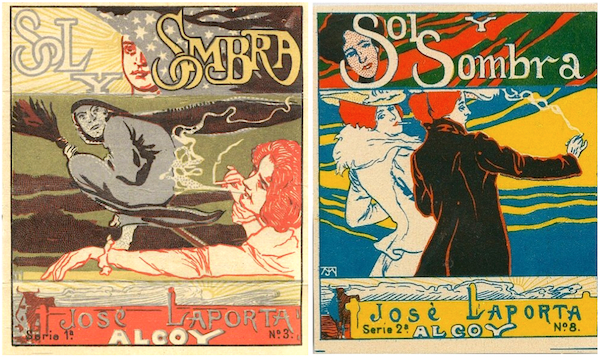
After tobacco was introduced to Spain from the New World in the 1500s, a tobacco trade developed in Europe in the 1600s. The aristocrats smoked Tommy Chong-size cigars, rolled in palm and tobacco leaves. When they were done smoking these enormous stogies, they would toss the butts on the ground, where peasants would pick them up, take them apart, and reroll what was left in small scraps of newspaper.

“There was probably green smoke and sparks coming off of them,” [company founder Josh] Kesselman says of these early rolling papers. “It wouldn’t have been like they were smoking a new New York Times. They were smoking paper that had lead and cadmium and God only knows what in that ink, which would have been running all over their hands.

”By the time the custom of smoking made its way to Alcoy [Spain], Kesselman says, the papermakers there recognized the need for a special paper made just for smoking tobacco, so they produced a clean-burning, white, rolling paper, which they advertised by promoting its hygienic properties.

(Image: Rolling paper booklets from 1902 and 1904, Collectors Weekly)

A Poem For Saturday

“Three Graces” by William Carlos Williams:

dish_Rippl_Woman_in_Paris_with_Purple_ScarfWe have the picture of you in mind,
when you were young, posturing
(for a photographer) in scarves
(if you could have done it) but now,
for none of you is immortal, ninety-
three, the three, ninety and three,
Mary, Ellen, and Emily, what
beauty is it clings still about you?
Undying? Magical? For here is still
no answer, why we live or why
you will not live longer than I
or that there should be an answer why
any should live and whatever other
should die. Yet you live. You live
and all that can be said is that
you live, time cannot alter it–
and as I write this Mary has died.

(Image: Woman in Paris with Purple Scarf, József Rippl-Rónai, via Wikimedia Commons)

The Internet Is For Marriage, Ctd

A new study suggests that meeting online is eclipsing more traditional matchmaking methods, and it’s even associated with a higher likelihood of staying together:

About 35% [of study participants] reported that they had met their spouse online, more than through introductions by friends, work and school combined. The study revealed that people who used this method to meet their spouses were slightly older, wealthier, more educated and more likely to be employed than those who went with tradition. But only about 45% of these online meetings took place on a dating site; the rest occurred through social networks such as Facebook and MySpace, as well as chat rooms, online communities, virtual worlds, multi-player games, blogs and discussion boards. …

About 94% of marriages that had started online lasted at least until the time of the survey in 2012, compared with about 92% of those in the offline group. The difference was still statistically significant after controlling for other demographics such as age, race, religion and income.

And something to consider while choosing an online dating service:

[T[he study examined differences between 18 individual dating sites, including eHarmony, Match, Plenty of Fish and Yahoo Personal. After controlling for demographic factors, they found no significant differences in the number of reported break-ups by people using the various services. But there were notable differences in marital satisfaction between users of different sites. For example, those who married a spouse they met on eHarmony rated their marriages more highly than did those who met on Match, who were in turn more satisfied than those who met their spouse on Yahoo Personals.

Previous Dish on marriages forged online here and here.

The Political Plath

April Bernard regrets that Sylvia Plath died before exploring “political themes nascent in her final work, which many readers ignore or misread as only ‘personal'”:

Take “Daddy,” a key example of how, in her last poems, Plath’s politics began to emerge more clearly. Of course many will already have its catchy thumping iambs imbedded in their minds—“You do not do, you do not do…” Here’s a stanza from later in the poem:

I have always been scared of you,
With your Luftwaffe, your gobbledygoo.
With your neat mustache
And your Aryan eye, bright blue.
Panzer-man, panzer-man, O You—

Plath can cause embarrassment through overstatement—going a little too far is her signature move. (One line from “Elm,” another late poem, that best captures her veer towards overstatement is, “I have suffered the atrocity of sunsets.”) But if we consider embarrassment as an aesthetic strategy rather than as a mistake, we begin to see how funny Plath often is. I confess I had read and admired Plath for several years before her humor struck me full-force—the first time I heard a now-famous BBC radio recording in which she reads “Daddy” with a discernible wave of laughter in her voice. (And yes, there is also rage, and profound sorrow.) I re-read the poem, and realized for the first time that her exaggerations and preposterous claims, which link the Holocaust with an American middle-class “family romance,” were meant to be an elaborate joke, one in extreme bad taste, right on the edge of kitsch. …

At the time of the poem’s writing, in the early 1960s, the first psychoanalytic studies of Hitler’s childhood were appearing in print; and this poem also has to do with how the Teutonic, rigidly patriarchal, model of the family affects the culture at large. When Plath says, “I may be a bit of a Jew,” she may indeed, as some critics have said, be speculating about her own origins; but more likely she is asserting that, for the purposes of her family, she contains the seeds of the “other” that must be eradicated. In the comic-grotesque scenario of “Daddy,” the bullying father is Hitler, the at-last rebelling daughter a Jew who is deciding, after all, not to be wiped out in the threatened genocide. “Daddy, Daddy, you bastard, I’m through,” as the final line ringingly announces, is a political rejection of patriarchal bullying at least as much as it is adolescent foot-stomping.

Previous Dish on Plath here, here, and here.

Penpals In Poetry

David C. Ward honors the friendship of mid-20th century poets Robert Lowell and Elizabeth Bishop:

Both Lowell and Bishop were extraordinary correspondents. Does anyone write letters anymore? But Lowell and Bishop were among the last of the generations that considered letter writing an art form. Composing experiences and thoughts in a way that was coherent and reflective, Lowell and Bishop viewed letters as minor works of art, as well as a way to keep the mind alert to writing poetry. … [T]he other great thing about Bishop and Lowell: they wrote poems in response to each other. Their letters were private communications but the poems were a public dialogue carried out in counterpoint.

Their call-and-response verse exchange includes Bishop’s “The Armadillo,” to which Lowell replied with “Skunk Hour.” Then it was Bishop’s turn:

Lowell never read Bishop’s response: it came in a memorial poem called “North Haven,” a poem like “Skunk Hour” about the seacoast. It’s a lovely tribute, full of rueful knowledge of Lowell’s character: “(‘Fun’—it always seemed leave you at a loss. . .)” and ends with

bishop-lowellYou left North Haven, anchored in its rock,
afloat in mystic blue. . .And now – you’ve left
for good. You can’t derange, or rearrange,
your poems again. (But the sparrows can their song.)
The words won’t change again. Sad friend, you cannot change.

It’s uneasy to cite sadness or depression as a cause of artistic creativity; most depressives aren’t great poets. Both Lowell and Bishop were sad in their various ways. Poetry, Robert Frost wrote, provides a “momentary stay against confusion.” But that’s not all it does. Indeed, in the case of Bishop and Lowell it could be argued that it was the letters that provided a structure of meaning and feeling for both poets that helped them make sense and order their experience. The poems themselves are something else entirely: expressions of feeling and self-knowledge that appear as art.

For more on their poetic back-and-forth, head here.

How Not To Write About Africa

Anthony Sattin reviews The Last Train to Zona, Paul Theroux’s account of his final trip to Africa:

This [book] has some of the same faults as Dark Star Safari, including the sweeping overstatements (Cape Town is not the only city in Africa to aspire to grandeur) and generalisations about Africa and Africans: imagine how annoying it would be to read a book set in England where the natives are constantly referred to as Europeans. And yet it is hard to put down The Last Train to Zona Verde, for no other reason than for its core of brutal honesty, about the author himself as much as about the places he visits.

Far less forgiving is Hedley Twidle, an instructor at the University of Cape Town, who dresses down Theroux from a local perspective:

Theroux is unwilling to let go of his African fantasies. … As Theroux-watchers will know, his sub- Saharan travelogues read as if he had taken Binyavanga Wainaina’s sarcastic instructions on “How to Write About Africa” literally. He is, as the sharp-eyed blog Africa Is a Country remarks, “so reliable that way”. He mints generalisations and insults at such a clip that they soon begin to outstrip even the most gifted parodist. Africa “can be fierce”, we are told, but “in general … turns no one away”. Game animals have all but disappeared from war-torn Angola but human specimens substitute, “many of them, in their destitution, taking the place of wildlife”. He is told to avoid eye contact with hustlers at the border, which proves “strangely prescient” – “Animal behaviourists agree: stare at a chimp and he is likely to attack you.” …

The rhetoric is so offensive and plain bizarre to anyone making her or his life in “Africa” that I had no option but to pretend that we were in a different genre, to keep imagining the book as a comic novel with a deliberately unlikeable narrator.

The final verdict?

Bankrupt in more ways than one, then, this is a book I would recommend only as a teaching aid or to someone interested in tracking the final sub-Conradian wreckage of a genre, rusting away like the hulks of tanks that so fascinate the narrator along the roads in Angola. It is imbued not just with the narrator’s old age but the senescence of an entire genre.

David Anderson rounds up the latest reviews here.

(Hat tip: 3QD)