GMO-phobia

US-AGRICULTURE-GMO-MONSANTO-PROTEST

Kevin Bonham criticizes the Union of Concerned Scientists for their opposition to genetically modified organisms (GMOs) and genetic engineering (GE) of produce:

I should be clear that I support UCS generally, and their work on agriculture specifically. Their roadmap for healthy farm policy is a wonderful and succinct explanation for what’s wrong with the way we currently grow food, and policy proposals to make it better. But GE is a technology (among others) that can help us make it better. Yes, they should be regulated, but so should new varieties produced by techniques like mutation breeding. Yes, we need to move away from monoculture and industrial farming practices, but that’s true of GE and organic farming alike. Genetic engineering, like any other technology can be used for good and for ill. It can be helpful and it can be dangerous. New regulations and policies should be technology-neutral, and focus on outcomes.

PZ Myers similarly downplays concerns about GMOs:

[T]here is established policy in many countries and states to prohibit use of GMO crops. When a small patch of GMO wheat was found in Oregon, Japan responded by shutting down all wheat imports from Oregon. That’s nothing but fear based in ignorance. All of our crops, everyone’s crops, are heavily modified genetically. Wild strawberries are tiny little things. Corn is a hybrid monster shaped by centuries of selection, twisted from a seedy little grass into this weird elaborate conglomeration. Wheat and barley and rye are the product of thousands of years of genetic reshuffling and selection. Walk into the produce section of your grocery store — do you really think all those fruits and vegetables are unshaped by human hands?

This strange unfounded fear of GMOs is unfortunately most strongly expressed in the political left. It’s embarrassing that political progressives are being made to look bad by raging superstition and unscientific claims. … Sometimes I wonder if the GMO controversy isn’t just a giant red herring thrown into the debate about the future of agriculture just to distract us from what should be real concerns.

(Photo: People hold signs during a demonstration against agribusiness giant Monsanto and genetically modified organisms (GMO) in front of the White House in Washington on May 25, 2013. By Nicholas Kamm/AFP/Getty Images)

Collecting Evidence On Cold Cases

Lyle Denniston recaps yesterday’s SCOTUS ruling:

Treating the solution of unsolved crimes as a legitimate part of routine police station “booking” procedures, a divided Supreme Court on Monday upheld the power of government at all levels to take DNA samples from every person legally arrested for a “serious” new crime.  What a suspect may have done in the past, the Court majority ruled, is a part of the profile that police may constitutionally begin to assemble at the time of arrest for a separate offense.

Justice Anthony M. Kennedy, writing for a five-four majority, insisted that the ruling in the case of Maryland v. King (docket 12-207) involved little more than what happens when police take a suspect’s fingerprints or mug shot.  But Justice Antonin Scalia, writing for the dissenters, said the Court had validated the use of scientific evidence taken without a warrant not to make an identification but to gather evidence to solve cold cases — something he said the Court has never allowed before.

Lauren Kirchnem wonders, “Is the DNA-fingerprint comparison an accurate one?”:

 In an age when an artist can pick up an old piece of chewing gum from the sidewalk and create a 3-D model of the gum-chewer’s face, it sounds a bit naïve.

Orin Kerr’s perspective:

It’s hugely important as a practical matter, but it’s not very interesting from a theoretical or academic standpoint. The difference between the two opinions largely hinges on how you characterize the purpose of the search. For the majority, per Justice Kennedy, taking and analyzing DNA samples upon arrest is okay because taking DNA is generally about identifying the person under arrest, which is a very important government interest and renders the search constitutional. For the dissent, per Justice Scalia, taking DNA isn’t okay in this case because it really had nothing to do with identifying the person and was just about collecting evidence of other crimes.

Doug Mataconis is uncertain about the wisdom of the ruling:

As the dissent notes, some 23,000,000 people will be arrested or one reason or another before their mid-20s. In many cases, they will be completely innocent of the charges they are arrested for. Under the Court’s logic, every single one of these people will now be required to give up a DNA sample regardless of whether there was probable cause to ask for such evidence or not.

Noah Feldman is less conflicted:

If DNA sampling was actually like fingerprinting, this argument might be convincing. But of course it isn’t. Fingerprints are a phenotype that reveals nothing except a random pattern that no two individuals share. DNA, however, is your genotype: the blueprint for your entire physical person. If the government has my fingerprints, it’s like they have my randomly assigned Social Security number. If it has my DNA, it’s like they have the entire operating system.

The Brain Of The Beholder

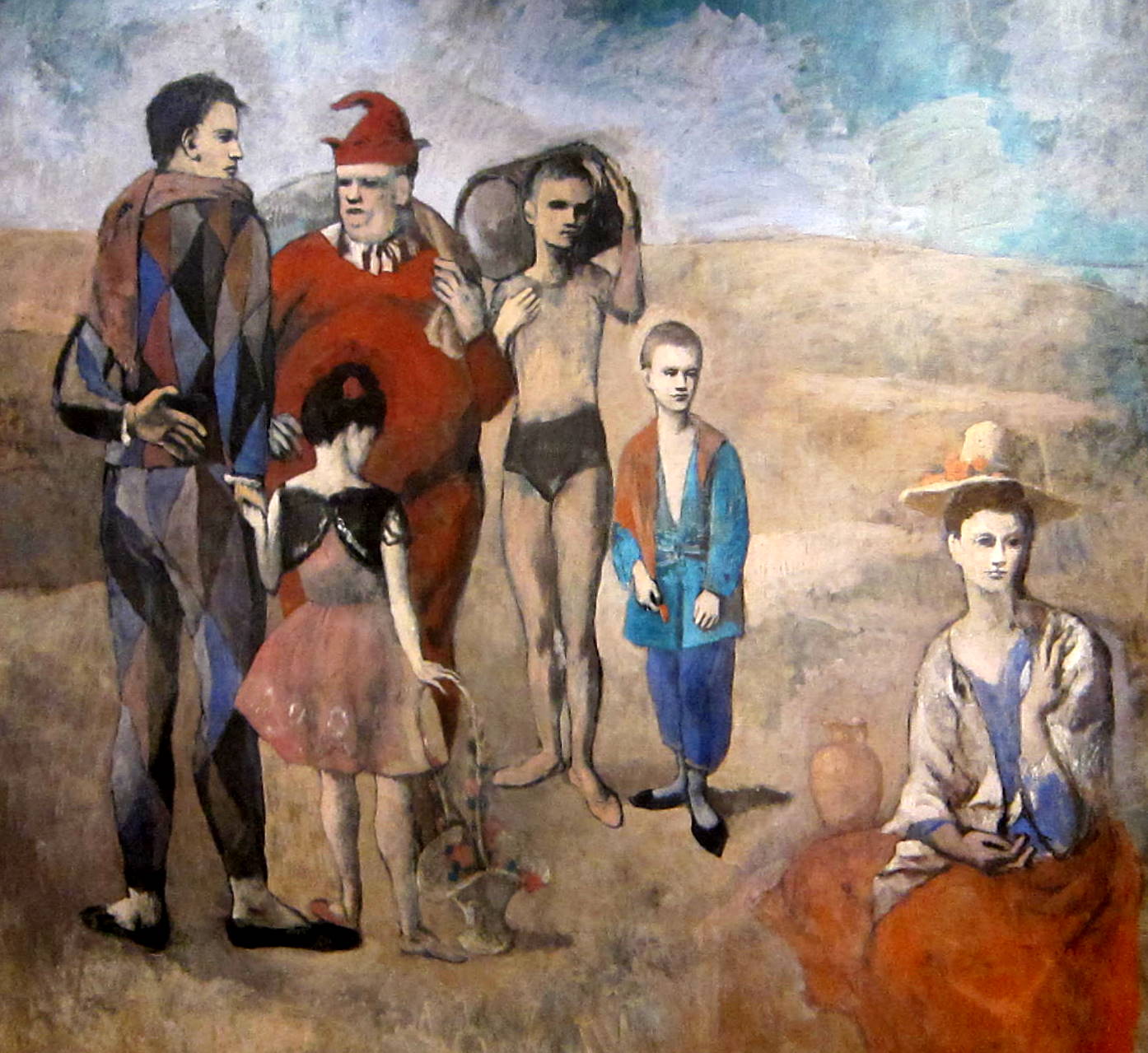
Family_of_Saltimbanques

Priscilla Long admires our brain’s capacity for understanding art:

[T]he brain is an artist, creating images out of separate visual components. Maybe our ability to read a curve drawn on a flat surface as a three-dimensional figure is related to our reception of visual data from the world as edges—lines and curves. Maybe when artists draw they are doing with their hand what the brain is doing with its electrical pulses.

Consider, too, our brain’s extensive face-recognition equipment, including the ability to read feeling in facial expression and body language. Our “face patches,” located low in the temporal lobe, along with our emotion-tracking amygdala, light up equally when confronted with a face or a picture of a face. Art is intermingled with biology and inseparable from it. As we are wired to recognize faces, so portraits and self-portraits—images of the human face and body—have proliferated throughout the history of art.

And too, our brain has its “theory of mind”—specific areas steadily assessing what’s going on in the next person’s head. We have our mirror neurons that fire when we move and fire in just the same way when somebody else moves. Our “theory of mind” works in life and in art. When viewing the sad, disconnected, gaze-averting circus figures in Picasso’s painting Family of Saltimbanques, we may feel sad, though we are looking at nothing more than lines and color on a flat surface.

(Picasso’s “Family of Saltimbanques,” dated 1905, via Wikimedia)

So, You Want To Be A Writer

Freddie dumps a bucket of cold water on Alyssa’s advice to writers:

Writing rivals sprinting or ballet in its inegalitarianism. Many people simply do not have it. You can work your ass off every day and still be terrible. More likely, you will work your ass off every day and be serviceable, while some pretentious jerk with half your dedication can toss off something in 15 minutes that blows your shit away. Yes, you need to read a lot. Yes, you need to write a lot. Yes, you need to practice your craft. You can do all of that religiously and still suck. That’s life. It’s like Bad News Bears: you can love it, but it doesn’t have to love you back. Sift around in your mind for awhile and find every spare concept like “unfair” or “should” or “deserves” and toss them on the fire. Those are liar’s words. They have nothing to do with adult life and nothing, nothing, nothing to do with writing. I don’t care what Malcolm Gladwell says; 10,000 hours of practice might be better spent playing Snood. That’s the gamble.

An Investment That Wasn’t A Lemon, Ctd

After Tesla’s early repayment of their DoE loan recently, CEO Elon Musk posted the above tweet arguing against government subsidies for low-carbon or carbon-free technologies. Michael Shellenberger and Ted Nordhaus argue that he shouldn’t be so quick to disparage a program that benefited Tesla so much:

The argument for a carbon tax is that it corrects distortions in the market due to the externalized costs of emitting carbon, which in turn would allow companies that produce zero-emission vehicles, like Tesla, to compete on a level playing field without further public assistance. This argument allows Musk to elide just how dependent his companies—both those that offer low carbon benefits and those, like SpaceX, that don’t—have been on direct public support for the development and commercialization of the technologies upon which they were built.

While a carbon tax might have provided some benefit to Tesla or Musk’s residential solar company, Solar City, there is no imaginable carbon tax that would begin to approximate the value of the $7,500 tax credit that the federal government offers to buyers of electric cars. Or the $2.4 billion dollars that the federal government invested in battery manufacturing through the 2009 stimulus. Or the half-billion dollar loan that financed the factory in which Tesla manufactures the Model S. Or the 20 years of funding from the American and Japanese governments that have resulted in dramatic advances in the lithium batteries that power the Model S.

Christopher Koopman describes how the subsidies Shellenberger and Nordhaus reference were instrumental in Tesla’s success in recent years:

These subsidies have become so central to Tesla’s business model that it advertises them to customers as a way to cover the cost of a down payment. And for states that do not yet offer subsidies for electric cars? Tesla’s website provides links to help consumers encourage state and local legislators to subsidize the purchase of such vehicles. The company’s site even goes so far as to recommend consulting a tax professional.

Even with the support of federal and state politicians, Tesla would still be reporting losses were it not for its ability to profit off of other auto manufacturers in California. In the first quarter of 2013, Tesla reported its first-ever quarterly profit by using special credits from California’s Air Resources Board, which rewards auto manufacturers for the production of “zero-emission” vehicles. So far this year, Tesla was able to turn what would have been a $57 million loss into an $11 million gain by selling $68 million worth of these credits to other auto manufacturers in California.

Recent Dish on Tesla’s early loan repayment here.

Malkin Award Nominee

“I believe that the Obama administration is conducting psychological warfare on conservative Americans. Not only that but it is also waging this war on all Americans who previously viewed themselves, their country, their Constitution and their overwhelming belief in God as a force for good in the world … Seen through the lens of psychological warfare, the failure to defend our embassy in Benghazi need not be understood simply as a screw-up. It could reflect an actual strategy on the part of the administration to reinforce the notion that homicidal violence born of hatred toward America is understandable—even condonable—because we have generated it ourselves and are reaping the harvest of ill will we have sown. In other words, we should take our punishment,” – Dr Keith Ablow, Fox News.

Dr Ablow is a psychiatrist. Yes, you read that right.

When Rape Triggers An Orgasm, Ctd

It happens. In no way does it suggest consent. A reader shares her experience:

This happened to me. I was 14 and raped by two boys about 17 or 18 years of age.  It was also the first time I had an orgasm.  It is well known that rape survivors commonly deal with deep shame that can scar for many years to come.  I can attest to that.  Shame reached nearly every crevice of my being at one time or another throughout my life since that awful night.  No longer.

Just two months ago, in a segway discussion about the Steubenville rape, I shared with someone else the complete details of what happened for the first time in my life (thank you, therapist!).  I am 40 years old. And I am finally free.

What’s In A Bigot?

RUSSIA-SOCIAL-GAY-PARADE-PROTEST

A reader disagrees with me:

Andrew, you may not like calling opponents of same-sex marriage “bigots” – and doing so may not be in the best interests of gay marriage – but it doesn’t change the reality: they are bigots. If your goal is advocacy or politics or politeness, then I can understand avoiding the word, “bigot” to describe them. But if your goal is truth, then I think it is unavoidable.

They believe their relationships are better than ours – deserving of special recognition. That means they must also believe that THEY are better than us. Why? Because they have that special something that allows them to get married in the first place. We don’t, because we are gay. Once married, they are nurtured in their relationships, growing in ways that they believe are unavailable to us. We are not allowed marriage because we are lesser. Having been denied the benefits of marriage, we fall even further behind. They may not wish to admit that they hold these beliefs. We must force them to do so.

Being a bigot doesn’t make you a monster, but it does put you on the wrong side of history. You don’t have the right to imagine that you would have hid runaway slaves in 1860 or marched with Dr. King a hundred years later. That’s because you are standing with the bigots today. That’s because you are one.

I think it’s possible to be merely leery of change in such an important social institution – a small-c conservative predisposition that is not interchangeable with bigotry. But as the years go by and the actual benefits of this reform deepen and the negative impact proves to be a chimera, then you do find a residue of bigotry that is indeed bigotry. Think of the evolution of an honest, decent man like David Blankenhorn and the rigid, permanent anti-gay agenda of Robbie George. Abroad, the pure hatred is much more visible (see above).

But even then, for purely strategic reasons, I prefer not to cast out heretics with that word, and work on persuading them to be converts. I once described the goal of Virtually Normal – written at a time when marriage equality was still a joke to many – as getting past the dynamic of one side yelling perverts and the other side yelling bigots. That has some emotional satisfaction for both sides, but it achieves nothing, and closes dialogue, rather than opening it. And dialogue is what supporters of marriage equality should always want – because our arguments are so much better. Another reader backs me up:

I have a lot of sympathy for the idea that not every opponent of gay marriage is a bigot. The problem is that I don’t think there is a simple binary between good people who respect gay people and therefore accept marriage equality and evil people who wish to take away the fundamental right of a loving couple to marry.

While I don’t detect animus – a required component in my own personal definition of “bigotry” – in every argument opposing gay marriage, I do detect a certain condescension, and more often than not, an inability to understand the subject at hand. Is Maggie Gallagher a bigot for opposing gay marriage? No. I do think she has certain prejudices that prevent her from seeing the fundamental equality between male-male love, female-female love, and male-female love. Is Ben Carson a bigot for opposing gay marriage? Not necessarily for that reason. But the guy did compare homosexuality to pedophilia and bestiality in one sentence. I had no problem with Johns Hopkins disinviting him from speaking at graduation.

Of course, this says nothing of the many casual bigots, the dudes who can’t stand a fag, who also happen to support gay marriage. It was possible to think or even say the word “nigger” and still support desegregation.

People are usually much more complicated that one word “bigot” can convey.

(Photo: Unknown anti-gay activist hits Russia’s gay and LGBT rights activist Nikolai Alexeyev (C) during unauthorized gay rights activists rally in cental Moscow on May 25, 2013. Moscow city authorities on May 15 turned down demands for a gay rights rally, but Alexeyev said he would fight a ban in court. By Andrey Svitailo/AFP/Getty.)

Quote For The Day

“Everybody knows everything in this business; everyone knew about this project [the biopic of Liberace, Behind the Candelabra] [and] if someone wanted to make it, it would’ve been made. Calls would go out when the movie became available, from the agencies repping the thing…They all came back with ‘not interested’ or with no call returned … It’s all economics. The point I was trying to make was not that anyone in Hollywood is anti-gay. It was that economic forces make it difficult, if not impossible, for people to think outside of the box … If audiences were going in great numbers to see stuff that was not down the middle, then everyone would be doing that … [Hollywood is] merely responding to what people are telling them they want to see!” – Steven Soderbergh, explaining partly why he’s done with movie-making.

That’s why I watch TV these days. I’m an adult.