In a commencement address at Brandeis University, Leon Wieseltier calls a commitment to the humanities “nothing less than an act of intellectual defiance, of cultural dissidence.” How he valorizes those who study the liberal arts:
[T]here is no task more urgent in American intellectual life at this hour than to offer some resistance to the twin imperialisms of science and technology, and to recover the old distinction — once bitterly contested, then generally accepted, now almost completely forgotten – between the study of nature and the study of man. As Bernard Williams once remarked, “’humanity’ is a name not merely for a species but also for a quality.” You who have elected to devote yourselves to the study of literature and languages and art and music and philosophy and religion and history — you are the stewards of that quality. You are the resistance. You have had the effrontery to choose interpretation over calculation, and to recognize that calculation cannot provide an accurate picture, or a profound picture, or a whole picture, of self-interpreting beings such as ourselves; and I commend you for it.
Do not believe the rumors of the obsolescence of your path. If Proust was a neuroscientist, then you have no urgent need of neuroscience, because you have Proust. If Jane Austen was a game theorist, then you have no reason to defect to game theory, because you have Austen. There is no greater bulwark against the twittering acceleration of American consciousness than the encounter with a work of art, and the experience of a text or an image. You are the representatives, the saving remnants, of that encounter and that experience, and of the serious study of that encounter and that experience – which is to say, you are the counterculture. Perhaps culture is now the counterculture.
Science and technology are not the enemies of learning but the means to greater knowledge and understanding; and from the days of The Enlightenment until the present, a rational, objective analysis of the world in which we live has always provided new insights into human nature and behavior and has always provided the basis on which moral, ethical, and religious discourse has been built.
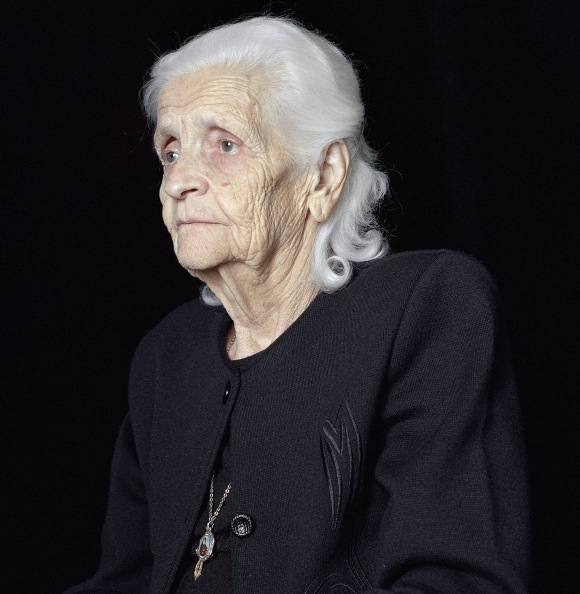
The Mourners is a series of portraits documenting the ritual of wearing black as a signifier of perpetual mourning. In remembrance of those they have lost, all that sit for a portrait in the series wear black every day for the rest of their lives.
(Photo: Untitled #28 (2010-11), archival inkjet print, Georgia Metaxas. Courtesy the artist and Fehily Contemporary)
Tim Parks, in the throes of translating the Italian writer Giacomo Leopardi, muses on how to get it right:
Fifteen years of diary entries. From 1817 to 1832. Some just a couple of lines. Some maybe a thousand words. At a rhythm ranging from two or three a day to one a month, or even less frequent. Suddenly, translating Giacomo Leopardi’s Zibaldone, it occurs to me that if it were written today, it would most likely be a blog. Immediately, the thought threatens to affect the way I am translating the work.
I am imagining the great diary as the Ziblogone—launched from some eccentric little website in the hills of central Italy. I’m wondering if I should suggest to the publisher (Yale University Press) that they might put the entries up one a day on their site; they could use Leopardi’s own system of cross-referencing his ideas to create a series of links. Fantastic! Perhaps I could start embedding the links as I work. Why not?
No, stop. I have to take a deep breath and remember my job description: faithful, accurate translation true to the tone of the original.
But it is impossible to translate a work from the past and not be influenced by what has happened since. Or at least to feel that influence, if only to resist it. I translated Machiavelli’s The Prince during the Iraq war. States invading distant foreign countries with authoritarian governments, Machiavelli warned, should think twice about disbanding the army and bureaucracy that opposed them, since they may offer the best opportunity of maintaining law and order after the war is over. I remember wanting to translate this observation in such a way that even the obtuse Mr Bush simply could not miss the point. If I could have sneaked in the word “Iraq”—or perhaps more feasibly “shock” and “awe”—I would have.
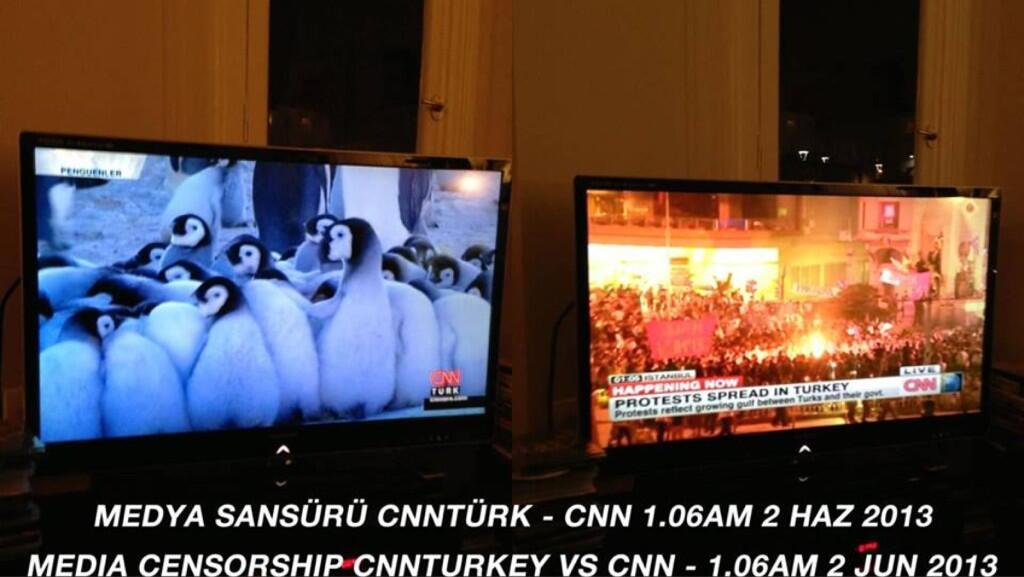
A comparison of the Turkish vs international coverage of Saturday’s protests:
Juan Cole defends Erdogan’s democratic mandate and record:
[His government] was last elected in June, 2011, at which time [his AKP party] received about half the votes in the country (an improvement on past performances). The elections appear to be on the up and up, and [AKP] seems genuinely popular in the countryside and in many urban districts. The economy has grown enormously in the past decade under Erdogan’s rule, Turkey is now the world’s 17th largest economy (by nominal gdp) according to the IMF. It has been averaging 5 percent growth per year at a time when neighbors in the EU like Greece and Spain are basket cases. It has a huge tourism sector that has benefited from the troubles in Egypt, Tunisia and Lebanon. The economy will likely only grow 3% this year, but that is still a good number given Europe’s doldrums.
However, Cole also links the fate of the country’s democracy to the Erdogan government’s exceptionally poor treatment of dissent and the press:
The protests were not mainly about the environment or retaining green parks but about police brutality. Turkey’s political tradition has never been particularly tolerant of dissent, and unfortunately the AKP is continuing in a tradition of crackdowns on political speech it doesn’t like. Reporters without Borders ranks the country 154 for press freedom, and it has 76 journalists in jail, and “at least 61 of those were imprisoned as a direct result of their work.” Observers are astonished to find that Saturday morning’s newspapers in Turkey are virtually silent about the protests. Editors have clearly been intimidated into keeping quiet about these events.
… By preventing peaceful assembly and deploying disproportionate force, and by an apparent imposed news blackout on the protests, the Turkish government is raising questions about how democratic the country really is.
Elsewhere, Aaron Stein surveys the makeup of those who support Turkey’s ruling AKP party:
[T]he dynamics of the protests now reflect many of the fundamental antagonisms in Turkey’s imperfect democracy. Erdogan’s divisive rhetoric and his penchant for authoritarian rule have steadily eroded the party’s support from small constituencies that it could once count on. While the AKP’s voter base is often simplistically assumed to be religious conservatives, the truth of the matter is that AKP supporters include a small number of liberals eager to do away with the undemocratic constitution, a business sector happy with the party’s handling of the economy, nationalists who are pleased with what they perceive as Turkey’s re-emergence as a global power, Turkish Islamists obsessed with the proliferation of Ottomania (a growing desire among the Turkish population to reconnect and reacquaint themselves with the country’s imperial past), and some members of Turkey’s Kurdish minority who are pleased with AKP’s democratic reforms. …
[D]uring the early years of Erdogan’s rule, which were characterized by a sustained push to reform Turkish laws along European Union standards, the ruling party was able to co-opt some parts of the more liberal segments of the population. Lots of people that did not compromise part of the AKP’s core constituency, for example, would lambast Erdogan publicly but would quietly vote for him because he was handling the economy well and they were pleased with the growing liberal freedoms. This dynamic has ended.
Taking another angle, Peter Beaumont zooms in on the rampant corruption that makes people so suspicious of the government development plans like the ones that started last week’s protests:
As Transparency International made clear in a recent survey of Turkey, while its elections largely have been free and fair, corruption, especially linked to the construction industry, has been a growing problem. In April, for the first time ever, two officials in Turkey’s public housing administration – which enjoys a virtually unopposed monopoly to redevelop private and public land, including a 20-year, $400bn urban renewal budget – were charged with extorting bribes and abuse of power. Indeed those who have benefited from recent large projects have allegedly included key players in Turkish society, including members of Erdogan’s own party, a company run by Erdogan’s son-in-law and the Turkish armed forces.
The perception in Turkey that barely regulated development is being driven for the economic benefit of entrenched interests with links to party politics, rather than in the public interest, has been fuelled by the hard data about some of the most controversial developments, including Gezi Park. As a recent article in Hurriyet Daily News made clear, Turkey, and Istanbul in particular, hardly needs more malls. Istanbul already has so many that 11 in the city have been forced to close down.
In an interview about his recent book, Imagining the Kingdom, James K.A. Smith explicates why you can’t think your way to God:
Human beings are at their core defined by what they worship rather than primarily by what they think, know, or believe. That is bound up with the central Augustinian claim that we are what we love. Taking Augustine’s teaching that what you love is what you worship and what you worship is what you love, I tried to come up with a model of the human person that appreciates the centrality of love. That propelled me to see that we are ritual, liturgical creatures whose loves are shaped and aimed by the fundamentally forming practices that we are immersed in…The core of the person is what he or she loves, and that is bound up with what they worship—that insight recalibrates the radar for cultural analysis. The rituals and practices that form our loves spill out well beyond the sanctuary.
Tens of thousands of protesters have taken to the streets in more than a dozen cities this weekend following a brutal police crackdown on an Occupy-style sit-in aimed at preventing a popular Istanbul park from being bulldozed:
Protesters lit fires and scuffled with police in parts of Istanbul and Ankara early on Sunday, but the streets were generally quieter after two days of Turkey’s fiercest anti-government demonstrations for years. Hundreds of protesters set fires in the Tunali district of the capital Ankara, while riot police fired tear gas and pepper spray to hold back groups of stone-throwing youths near Prime Minister Tayyip Erdogan’s office in Istanbul.
Istanbul’s central Taksim Square, where the protests have been focused, was quieter after riot police pulled back their armored trucks late on Saturday. Demonstrators lit bonfires among overturned vehicles, broken glass and rocks and played cat-and-mouse on side streets with riot police, who fired occasional volleys of tear gas.
The unrest was triggered by protests against government plans to [demolish Gezi Park and] build a replica Ottoman-era barracks to house shops or apartments in Taksim, long a venue for political protest. But it has widened into a broader show of defiance against Erdogan and his Islamist-rooted Justice and Development Party (AKP).
As of this morning, more than 900 protesters have been arrested and more than 1,000 injured across at least 90 protests throughout the country. Taksim Square remains occupied, although with a smaller group than yesterday. Considering how quickly the demonstrations materialized, Zeynep Tufekci highlights the extensive role social media has played, also noting that while Turkey is no stranger to political protests, she has never seen one this large or spontaneous before. Elif Bauman makes a related point about Turkey’s vibrant protest culture, and why this one seems different:
The feeling of unreality and disconnect is at the heart of the Gezi [Park] demonstrations. Istanbul loves to demonstrate; I can’t remember ever walking through Taksim without seeing at least one march or parade or sit-in, and on weekends there are usually several going on at the same time. Usually, they are small, peaceful, and self-contained, and the police just stand there. For some time now, the demonstrations have had a strangely existential feel. Again and again, people have protested the destruction of some historical building or the construction of some new shopping center. Again and again, the historical building has been destroyed, and the shopping center constructed.
Nearly every slogan chanted on the streets right now addresses Erdogan by name, and Erdogan hasn’t been talking back much. On Wednesday, he told protesters, “Even if hell breaks loose, those trees will be uprooted”; on Saturday, he issued a statement accusing the demonstrators of manipulating environmentalist concerns for their own ideological agendas. It’s hard to argue with him there; there’s little doubt that the demonstrations are less about [Gezi Park’s] six hundred and six trees than about a spreading perception that Erdogan refuses to hear what people are trying to tell him.
In addition, Erdogan and the AKP recently rushed through a law to limit alcohol sales and even targeted kissing in public, moves widely perceived to be theocratically motivated. Regarding the government’s ongoing development plans for Istanbul, Firat Demir explains the outrage:
With no public consultation or discussion, the Erdogan government decided earlier this month to approve a project that would transform Taksim Square into a shopping center, rerouting the traffic that now passes through this vital hub on the European side of Istanbul through tunnels underneath. The news of the project has generated a flood of angry responses from the public, all of which the government has uniformly ignored. Among other things, the proposed redevelopment plan will wipe out one of the few remaining greenspaces in the densely packed area — the latest in a long series of similarly insensitive urban design schemes.
The Taksim plan follows another controversial plan to build a gigantic and spectacularly ugly new bridge on the current site of the Galata Bridge, one of Istanbul’s longest-standing architectural landmarks. The bridge project is the brainchild of Istanbul’s Islamist mayor, an Erdogan ally, who designed it himself. If built, the bridge will completely transform the silhouette of the old city. Apart from the fact that this is the mayor’s sole attempt to dabble in architecture, the complete absence of any public consultation or competition for the project has confirmed, for many Turks, Erdogan’s seeming aspiration to crown himself as the new sultan of Turkey. The ruling party’s misguided ambitions for Galata and Taksim come after a series of demolitions of 500-year-old Istanbul neighborhoods such as Sulukule, Tarlabasi, or Balat that have fed public discontent — particularly since many of those who benefited also appear to have unseemly links with the ruling Islamists. Just to make matters worse, last month the government also finalized a contract for a new nuclear power point despite mass public opposition to nuclear power throughout the country.
The prospective bridge [across the northern Bosphorus] was given the name of Sultan Selim the Grim, the cruellest adversary of Alevis and Shiites in Ottoman history. Conqueror of Egypt, the powerful sultan is known for the massacres of tens of thousands of Anatolian Alevis prior to and after his war against Iran. The bridge might have well been named after Rumi, the great Sufi thinker who spread the teaching of universal tolerance from Anatolia, or any other Islamic humanist. It is not hard to guess how offensive the choice of Selim’s name is for the Alevi community – who form about 10% of the population and are still awaiting an official acknowledgement of their religious identity and worship rights.
Stepping back, Murat Yetkin isn’t sure what the unrest will ultimately lead to, but at the very least the protests mark the first public defeat Erdogan has faced as prime minister, and that his rigid refusal to compromise could cost him still further:
To call this a “Turkish Spring” would be over-dramatizing it. It could be, if there were opposition forces in Turkey that could move in to stop the one man show of a mighty power holder. But it can easily be said that the Taksim brinkmanship marked a turning point in the almighty image of Erdoğan.
Issandr El Amrani similarly wonders if this weekend’s uprising will burst the “much-inflated Erdogan bubble that [has] thrived pretty much unchallenged for the last decade.” Meanwhile, Amberin Zaman offers some key analysis:
My overall impression, and it’s commonly shared, is that the Taksim Park project has morphed into a vehicle for popular resentment against Erdogan’s increasingly dismissive and authoritarian ways. Under a decade of AKP rule, Turkey has become the world’s top jailer of journalists. Its interventionist policy in Syria is causing alarm. The systematic and disproportionate use of force against the slightest display of dissent obscures that the AKP was democratically elected and remains the most popular government in modern Turkish history. Yet, egged on by the slavishly self-censoring Turkish media, Erdogan seems increasingly out of touch.
Zaman adds that next year’s nationwide local elections now loom larger than ever:
Erdogan’s political fortunes hinge on how the government handles the crisis. Pulling back the police and allowing the crowds to gather on the second day was a step in the right direction.
Turkey is not on the brink of a revolution. A Turkish Spring is not afoot. Erdogan is no dictator. He is a democratically elected leader who has been acting in an increasingly undemocratic way. And as Erdogan himself acknowledged, his fate will be decided at the ballot box, not in the streets.
A protester-made video compilation of Friday’s violence in Istanbul is here. To go through a raw feed of photographs of the protests, check out this Tumblr. Reuters has put together an extensive gallery as well, including this photo of a woman being pepper sprayed in the face which many are citing as a major catalyst for the outrage. Update from an expat reader in Istanbul:
Just a quick correction to begin with, you mentioned the name of the replacement of the Galata bridge would be the Selim. This is not true – while there are plans to replace the Galata bridge, I do not believe that there are plans to change the name (although I may be wrong about this point). The Selim bridge is not by Galata (over the Golden Horn), but is in fact the planned third bridge to cross the Bosphorus at the northern end of the straits. It will be the third bridge to do so and has caused immense uproar not just for its name (which your post addressed), but also because of ecological and urban density concerns.
Its construction and the construction of the requisite new and improved roads to it will cause incredible amounts of damage to the forest in the northern portion of the Istanbul metropolitan area. Another issue is the heavy-handed, highly-centralized and authoritarian nature of the bridge’s approval. Erdogan rushed it through without an adequate environmental study and with no input from the local community (a fact shared with the Gezi park and Tarlabasi plans). Two additional mega projects that have caused widespread anger are the third airport, planned to be built to the northwest, and a canal to the west of Istanbul connecting the Marmara to the Black Sea. These two plans are similarly highly desired by ‘King’ Erdogan, but have caused a lot of public anger.
While the relative cost/benefit analysis for any of these projects can be argued (and I personally think the 3rd bridge and a new or heavily expanded current airport are necessary), it is Erdogan’s conduct that is the biggest issue. Whatever he decides is right, he rushes through with little opposition internally in the AKP (everyone is terrified of him, except for those protected by President Gul, who has his own faction within the AKP) and no opposition nationally or locally is allowed.
Erdogan’s dialogue since the protests began has ventured into the absurd, calling the protesters marauders, terrorists, extremists. It has frankly been a fairly diverse and peaceful group. There was certainly violence perpetrated yesterday in particular by a small portion of the protesters (my roommates reported reckless destruction of major brandname stores on Istiklal street), most protesters have been peaceful in spite of massive police brutality and the use of CS and CR gas. I have attached some pictures and videos from the protests in the Kadikoy neighborhood from Friday night/saturday morning (taken at 2:30-3:00am). These are not terrorists or thugs, but ordinary citizens.
No one knows where things will go from here, but if Erdogan loses a bit of his luster, it will certainly help.
Megan Hodder articulates the backdrop to her youthful atheism:
Faith is something my generation is meant to be casting aside, not taking up. I was raised without any religion and was eight when 9/11 took place. Religion was irrelevant in my personal life and had provided my formative years with a rolling-news backdrop of violence and extremism. I avidly read Dawkins, Harris and Hitchens, whose ideas were sufficiently similar to mine that I could push any uncertainties I had to the back of my mind. After all, what alternative was there to atheism?
What she found when she began reading intelligent Catholic theology:
I started by reading Pope Benedict’s Regensburg address, aware that it had generated controversy at the time and was some sort of attempt –futile, of course – to reconcile faith and reason. I also read the shortest book of his I could find, On Conscience. I expected – and wanted – to find bigotry and illogicality that would vindicate my atheism. Instead, I was presented with a God who was the Logos: not a supernatural dictator crushing human reason, but the self-expressing standard of goodness and objective truth towards which our reason is oriented, and in which it is fulfilled, an entity that does not robotically control our morality, but is rather the source of our capacity for moral perception, a perception that requires development and formation through the conscientious exercise of free will.
It was a far more subtle, humane and, yes, credible perception of faith than I had expected.
Christy Wampole champions the essay, using the word “essayism” for “what happens when [the essay] cannot be contained by its generic borders, leaking outside the short prose form into other formats such as the essayistic novel, the essay-film, the photo-essay, and life itself”:
Essayism consists in a self-absorbed subject feeling around life, exercising what Theodor Adorno called the “essay’s groping intention,” approaching everything tentatively and with short attention, drawing analogies between the particular and the universal. Banal, everyday phenomena — what we eat, things upon which we stumble, things that Pinterest us — rub elbows implicitly with the Big Questions: What are the implications of the human experience? What is the meaning of life? Why something rather than nothing? Like the Father of the Essay, we let the mind and body flit from thing to thing, clicking around from mental hyperlink to mental hyperlink: if Montaigne were alive today, maybe he too would be diagnosed with A.D.H.D.
Why we need to cultivate the more thoughtful, meditative aspects of these tendencies:
Essayism, as an expressive mode and as a way of life, accommodates our insecurities, our self-absorption, our simple pleasures, our unnerving questions and the need to compare and share our experiences with other humans. I would argue that the weakest component in today’s nontextual essayism is its meditative deficiency. Without the meditative aspect, essayism tends toward empty egotism and an unwillingness or incapacity to commit, a timid deferral of the moment of choice. Our often unreflective quickness means that little time is spent interrogating things we’ve touched upon. The experiences are simply had and then abandoned. The true essayist prefers a more cumulative approach; nothing is ever really left behind, only put aside temporarily until her digressive mind summons it up again, turning it this way and that in a different light, seeing what sense it makes. She offers a model of humanism that isn’t about profit or progress and does not propose a solution to life but rather puts endless questions to it.
We need a cogent response to the renewed dogmatism of today’s political and social landscape and our intuitive attraction to the essay could be pointing us toward this genre and its spirit as a provisional solution. Today’s essayistic tendency — a series of often superficial attempts relatively devoid of thought — doesn’t live up to this potential in its current iteration, but a more meditative and measured version à la Montaigne would nudge us toward a calm taking into account of life without the knee-jerk reflex to be unshakeably right. The essayification of everything means turning life itself into a protracted attempt.
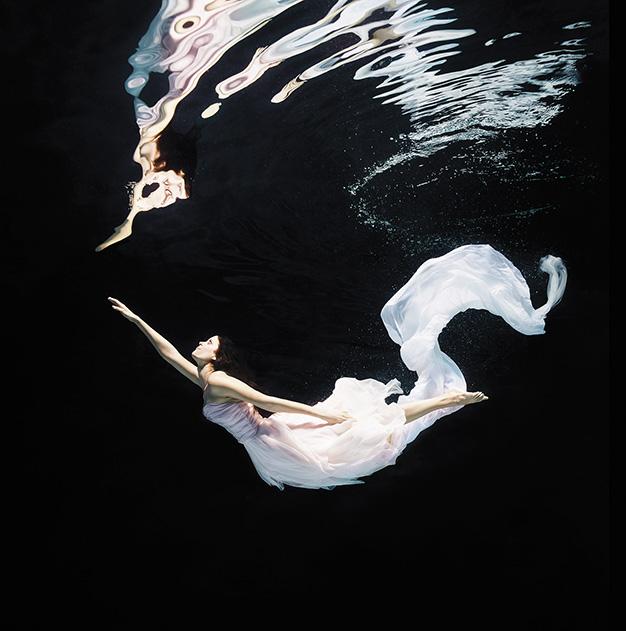
Photographer Henrik Sorensen snaps beautiful shots from underwater:
He slips into pools with fully clothed dancers, soccer players, skateboarders and others to make portraits of people in a kind of suspended animation. Buoyancy allows for gravity-defying poses, while the water’s resistance, seen as ripples and bubbles, renders movement itself visible—a nifty feat for a “still” photo. The result feels timeless. “Everything is slow motion,” says Sorensen, who lives in Copenhagen. To limit excess bubbles that might spoil a scene, he doesn’t use a diving tank but instead holds his breath, like his subjects. Still, a little turbulence, he says, is “like a gift for the picture.”
Here is a video that shows the process of working underwater.
 The Dish