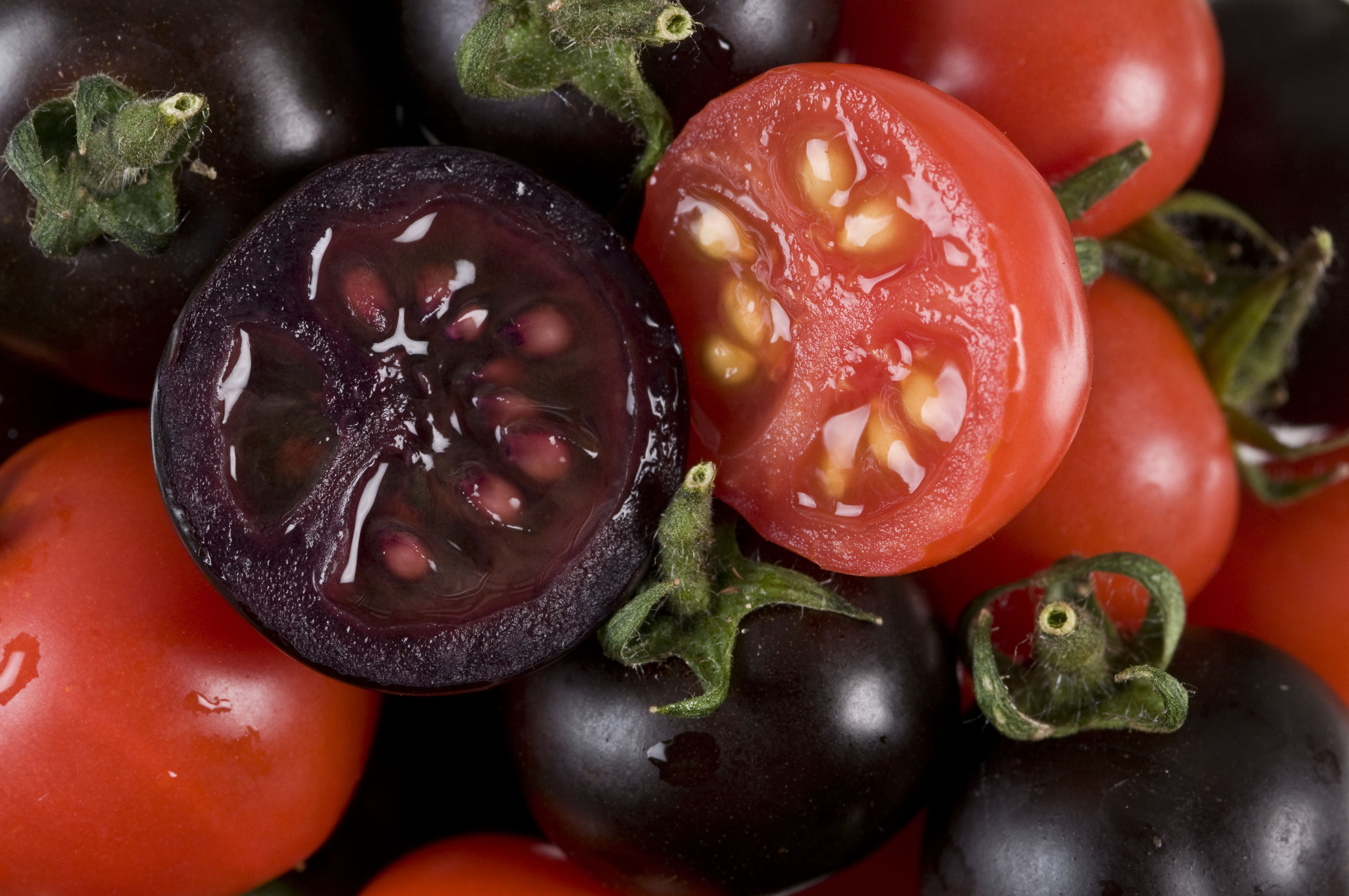
Consider the “purple tomato,” engineered to preserve the nutrients by splicing “two genes from snapdragon plants into normal red tomatoes”:
Purple tomatoes are not only more nutritious than red ones, but they also have a long shelf life, as researchers recently found. The short shelf life of many fruits and vegetables poses major logistical issues. To get fresh-looking, ripe tomatoes into your local grocery store, tomatoes are harvested while still green, kept in cold storage, and then artificially ripened right before they’re put up for sale. We’re all familiar with the result: pale, tasteless tomatoes that have a lower nutritional value than tomatoes that are allowed to ripen while still on the vine. … The researchers found that purple tomatoes produce lower amounts of these self-destruction enzymes. As a result, purple tomatoes are less susceptible to fungus, and they remain firm more than twice as long as red tomatoes. This means that purple tomatoes could be harvested later, after they’ve ripened naturally.
The article concludes, that, as “the technology to make them improves, GMO foods designed to be healthier could become a bigger part of your diet.” Recent Dish on the benefits of GMOs here and here.
(Photo: Scientists from the John Innes Centre, UK have genetically engineered tomatoes to contain very high levels of the cancer-fighting antioxident ‘anthocyanins’, which as a result have turned the usually red fruit into a deep purple. By John Innes Centre UK/Getty Images)
 The Dish