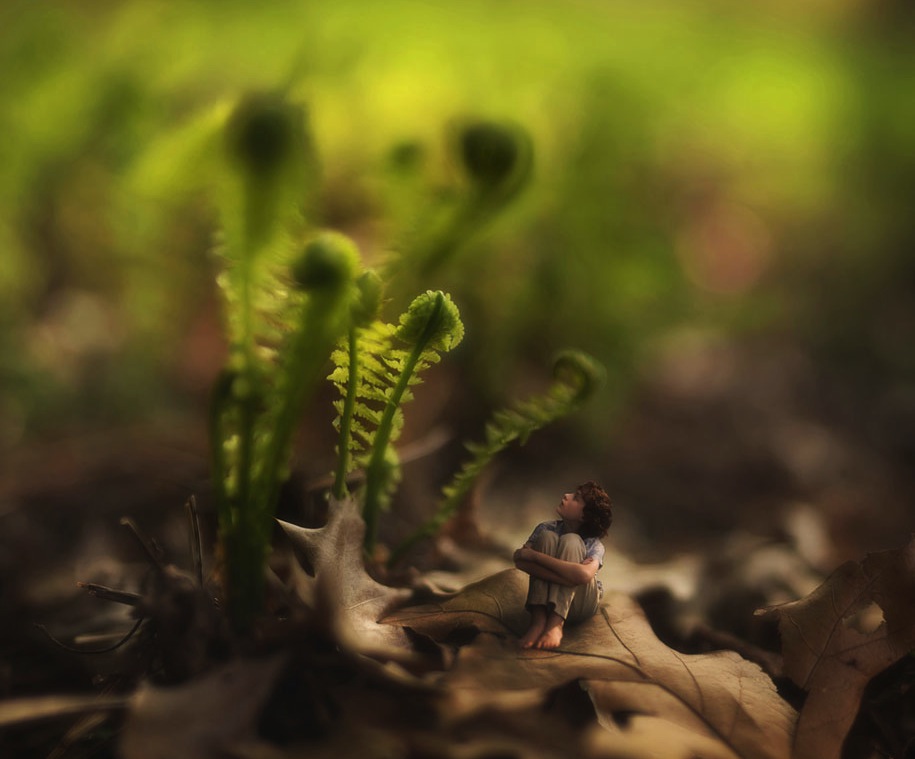
Jesse Prinz traces the “wide-eyed, slack-jawed feeling” through centuries of science, religion, and art:
[L]ike science, religion has a striking capacity to make us feel simultaneously insignificant and elevated. Dacher Keltner, professor of psychology at the University of California, Berkeley, has found that awe, an intense form of wonder, makes people feel physically smaller than they are. It is no accident that places of worship often exaggerate these feelings. Temples have grand, looming columns, dazzling stained glass windows, vaulting ceilings, and intricately decorated surfaces. Rituals use song, dance, smell, and elaborate costumes to engage our senses in ways that are bewildering, overwhelming, and transcendent.
Wonder, then, unites science and religion, two of the greatest human institutions. Let’s bring in a third.
Religion is the first context in which we find art. … Up through the Renaissance, art primarily appeared in churches. When in the Middle Ages Giotto broke free from the constraints of Gothic painting, he did not produce secular art but a deeply spiritual vision, rendering divine personages more accessible by showing them in fleshy verisimilitude. His Scrovegni Chapel in Padua is like a jewel-box, exploding with figures who breathe, battle, weep, writhe, and rise from the dead to meet their God beneath an ethereal cobalt canopy. It is, in short, a wonder.
When art officially parted company from religion in the 18th century, some links remained. Artists began to be described as ‘creative’ individuals, whereas the power of creation had formerly been reserved for God alone. With the rise of the signature, artists could obtain cultlike status. A signature showed that this was no longer the product of an anonymous craftsman, and drew attention to the occult powers of the maker, who converted humble oils and pigments into objects of captivating beauty, and brought imaginary worlds to life. The cult of the signature is a recent phenomenon and yet, by promoting reverence for artists, it preserves an old link between beauty and sanctity.
Go here for a virtual tour of the Scrovegni Chapel. On the image seen above:
14-year-old Zev from Natick, Massachusetts, has taken the photography world by storm with his surreal photo manipulations. Better known by the nickname of ‘fiddle oak’, Zev presents a highly imaginative portfolio of surreal self-portraits, which he created together with his sister Nellie (aged 17). His work seems to mirror the transition from the fairy-tale childhood worlds into those that are way more complicated and still unknown.
Website: fiddleoak.wordpress.com, flickr
 The Dish