Novelist Mikhail Shishkin examines modern Russian history and sees literature and politics long locked in a tense embrace:
The state in Russia fears the poet because, beginning with Pushkin, he (or she) is a power
independent of the state and insubordinate to the state, a power just as sacred—the representative of another country, but one that falls within the borders of the same empire. The resulting duality of power led inevitably to conflict: how can two powers, both appealing to a higher divine authority, coexist in one totalitarian state? This was the ultimate question of Russian literature, to which every generation of Russian writers painfully sought an answer: should the poet be with the czar, or against him?
Previous regimes tried to co-opt poetry, but, according to Shishkin, Putin is unlikely to follow suit:
The new authoritarianism in Russia could not care less about literature; its priority is to control the electorate through television.
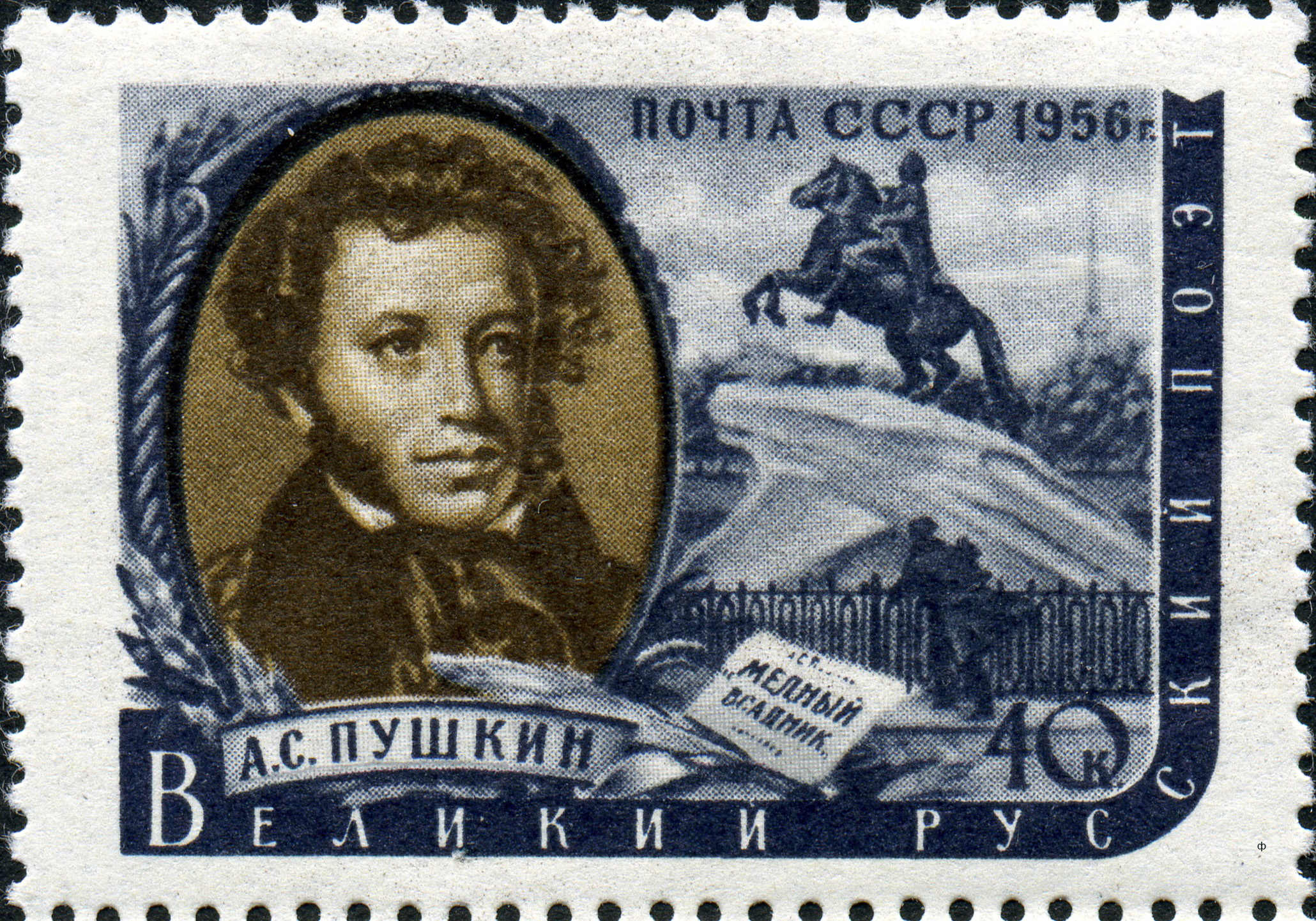
(Image: Soviet stamp with image of Pushkin circa 1956 via Wikimedia Commons)
 The Dish
