K. Annabelle Smith explains the historically erotic appeal of, um, lettuce?
[I]n Ancient Egypt around 2,000 B.C., lettuce was not a popular appetizer, it was an aphrodisiac, a phallic symbol that represented the celebrated food of the Egyptian god of fertility, Min. … The god, often pictured with an erect penis in wall paintings and reliefs was also known as the “great of love” as he is called in a text from Edfu Temple. The plant was believed to help the god “perform the sexual act untiringly.”
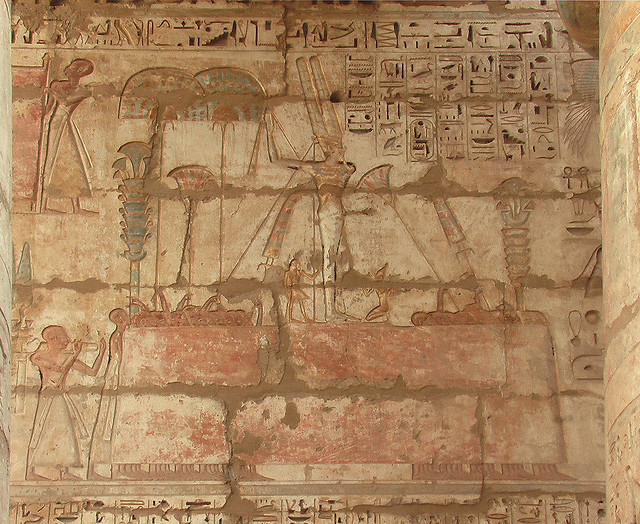
She describes the above image:
This relief, from the funerary temple of Ramses III at Medinet Habu, for example, depicts Min’s harvest festival. At the center is a statue of Min. Behind him, a procession of priests holds a small garden of lettuce. Min is also sometimes depicted wearing a long, red ribbon around his forehead that some say represents sexual energy.
“One of the reasons why [the Egyptians] associated the lettuce with Min was because it grows straight and tall—an obvious phallic symbol,” [Professor Salima] Ikram says. “But if you broke off a leaf it oozed a sort of white-ish, milky substance—basically it looked like semen.”
(Photo by Flickr user kairoinfo4u)
 The Dish