In his new book, Why Hell Stinks of Sulfur: Mythology and Geology of the Underworld, geologist Salomon Kroonenberg seeks out real-life locations responsible for descriptions of the underworld:
It is not until he makes it to Lake Avernus, which Virgil named as the entrance to Hades in the Aeneid, that his research really begin to pay off. Avernus is a crater lake, formed from an
extinct volcano, and though it holds no dangers for birds today, there are nearby sulfur springs that have been renowned for centuries for their abilities to heal everything from scabies to erectile dysfunction. Nearby is the infamous Grotta de Cani, or “Cave of the Dogs” — so named because, while a human standing upright within it can breathe normally, dogs quickly die (as would anyone who stooped to their height). The reason for this strange discrepancy would not be discovered for years: the lower half of the cave consists of pure, heavy carbon dioxide, odorless and fatal, while the upper half is filled with breathable oxygen.
Both gases, as it turns out, are released by subterranean magma hitting limestone, and are common byproducts of volcanic formations such as the caldera that eventually became Lake Avernus. People who lived above large limestone deposits — the people of the Mediterranean included — were thus used to encountering subterranean pits that emitted either deadly carbon dioxide or odiferous sulfur. It is for this reason, Kroonenberg argues, that the stench of sulfur begins to emerge as a key component of the stories such people told about Hell. When water beneath the surface of the earth gradually erodes limestone until it can no longer support its own weight, sinkholes can unexpectedly erupt — yet another frequent “hellish” occurrence for dwellers in the Mediterranean region. To answer the question embedded in Kroonenberg’s title, then: Hell stinks of sulfur because the biblical and classical writers who described it first all lived above limestone.
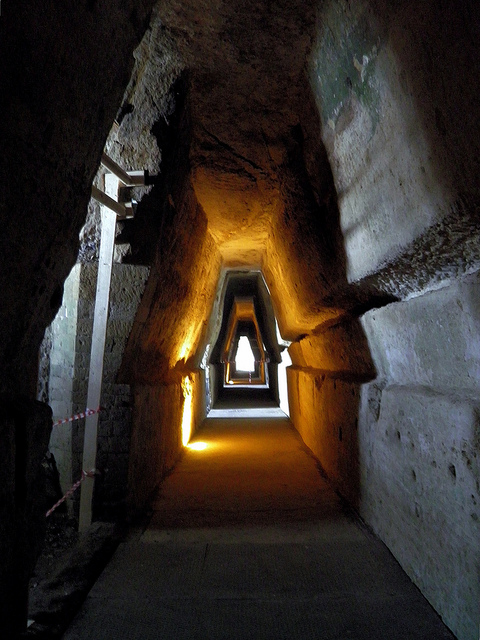
(Photo: Entrance to the Cave of the Sibyl, by Flickr user carolemadge1)
 The Dish