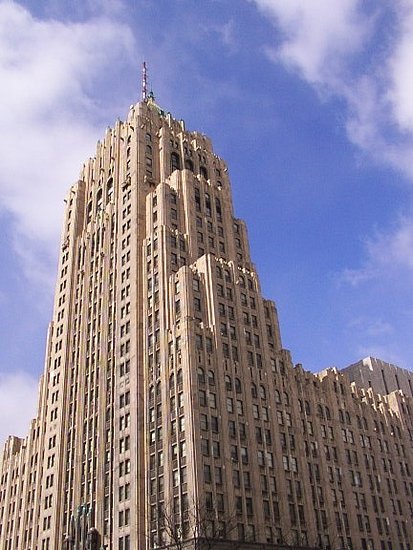
Alec MacGillis is unsure that Detroit has them:
We’ve heard so much about all the vacant buildings in Detroit and the budding return of deal-seeking hipsters that there’s an assumption that the city is just waiting to be discovered by a wave of new residents of the sort that are flooding into Brooklyn and Washington but also, in smaller numbers, parts of Baltimore, Philadelphia and Pittsburgh. What this misses is one of Detroit’s cruel ironies: while it has many, many vacant buildings available for a song, it lacks the sort of housing stock on which urban renaissances are born.
The “urban renewal” wave of the 1950s and ’60s was more disastrous in Detroit than anywhere else—to make room for a web of new expressways (built partly to speed travel among the big auto plants on the periphery), the city knocked down not only a major African-American neighborhood (thus contributing to the racial tensions that spawned the 1967 riots) but also a swath of buildings on the southwest corner of downtown, exactly the sort of warehouses and small factories that have been reborn as loft apartments and condos in other cities. There are also precious few of the brownstones and other rowhouses that are so popular with gentrifiers in other cities. As Jane Jacobs explained years ago, cities thrive on density, but Detroit, for the reasons described above, was always more spread out than other big cities. What is mostly left for housing, with the exception of rejuvenating pockets like the Midtown area around Wayne State and the Detroit Institute of Art, are some breathtakingly handsome Art Deco towers downtown in various stages of vacancy, and a sea of single family homes scattered across the vast expanse, offering less than ideal raw material for the sort of bikes-and-coffee-shop comeback we’ve seen in other cities.
Yglesias notes another handicap Detroit suffers – a lack of major universities:
The overall higher education sector in the United States takes a lot of criticism these days, but in part precisely because of the things that make it seem kind of bloated and inefficient it’s a very valuable urban amenity. Universities both create little neighborhood-level retail clusters around them, and along with medical facilities become the twin pillars of a regional knowledge-based economy. Of course cities can thrive without necessarily playing host to a prestigious private university or a public university flagship campus (San Antonio, for example) but for lots of older cities hit hard by the macroeconomic trends of the 1970s and 1980s the existence of major universities has provided a foundation for rebuilding.
 The Dish