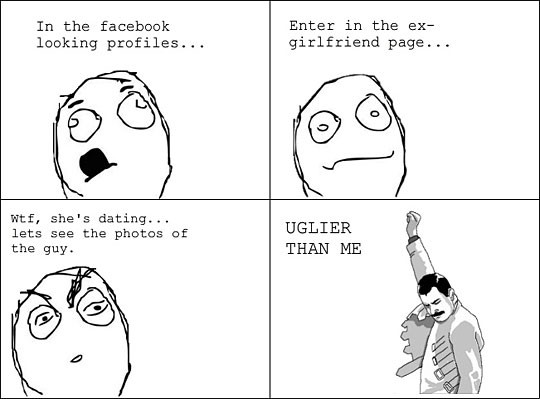
Maureen O’Connor believes that in the era of social media, breakups are an increasingly relative concept:
[M]ore often than not, you will see him again. Like “dialing” a cell phone or “filming” a digital video, “one-night stand” is an anachronism. Even if you only have sex once, you will spend time with your hookup when he finds you on Facebook, appears in a mutual friend’s Instagram, or texts about a weird bump he found on his penis. Older generations didn’t have a word for this kind of thing—they couldn’t have. But these are, in fact, relationships. Even casual dates have expansive biographies to plow through and life narratives you can follow for years.
You hear about their hangovers when you check Twitter for the morning news. You see their new apartments when you browse Facebook at work. They can jump into your pants whenever they want by sending text messages that land in your pocket. Online, you watch your exes’ lives unfold parallel to yours—living, shifting digital portraits of roads not taken with partners you did not keep.
There was also a time, I am told, when staying in touch was difficult. Exes were characters from a foreclosed past, symbols from former and forgone lives. Now they are part of the permanent present. I was a college freshman when Facebook launched. All my exes live online, and so do their exes, and so do their exes, too. I carry the population of a metaphorical Texas in a cell phone on my person at all times. Etiquette can’t keep up with us—not that we would honor it anyway—so ex relationships run on lust and impulse and nosiness and envy alternating with fantasy. It’s a dozen soap operas playing at the same time on a dozen different screens, and you are the star of them all. It’s both as thrilling and as sickening as it sounds.
Previous Dish on social media and exes here.
 The Dish