The Ultimate Hard Drive

dish_dna

Scientists Ewan Birney and Nick Goldman selected five cultural artifacts, including the complete sonnets of Shakespeare in ASCII text and an mp3 of Martin Luther King Jr.’s “I Have a Dream” speech, to encode into DNA. When their approach worked, they began thinking about “a fanciful application: using DNA to apocalypse-proof human culture”:

“I describe this project as being on just this side of crazy,” says Birney. “It works but isn’t commercially feasible now.” The exorbitant cost of making DNA is the biggest hold-up. For the moment, you need $220 to read each megabyte of DNA data but $12,400 to write it in the first place; however, these costs are likely to fall 100-fold within the next decade. They are also one-off investments; once data is written as DNA, it never needs to be re-written into new-fangled formats. Birney and Goldman predict that soon, DNA will be the ideal medium for storing data that you want to keep for a long time but not regularly revisit, such as wedding videos or the archives of huge science projects like the Large Hadron Collider at Cern.

Or, perhaps, all of human knowledge? Besides being universal, dense and easily copied, DNA is also incredibly stable. A recent study showed that DNA has a half-life of 521 years – that’s how long it takes for half the chemical bonds in its double helix to break. This estimate was based on DNA recovered from the 8,000-year-old leg bones of giant extinct birds called moas. But that’s nothing – these bones were preserved at 13C in New Zealand. Under gentler conditions, DNA’s shelf life last can stretch to tens of thousands of years. “For perspective, that’s all of modern human evolution,” says Birney.

(Photo by Flickr user kyz)

Coffee Cartography

dish_starbucks

Chris Kirk developed a nifty quiz:

First World problem: There are four Starbucks locations around my house, and I never know which one to go to because the coffee-deprived slog to each is the same half-mile length. If you get the sense, like I do, that Starbucks is everywhere, it’s because there are 13,279 of them in the U.S. alone, and they’re so crammed into highly trafficked areas that sometimes, as Lewis Black famously bemoaned, there’s a Starbucks directly across the street from a Starbucks. You can recognize a city by its streets or population patterns. Can you recognize it by its Starbucks locations?

Debating Diabetes

A reader writes:

I was so glad to see the letter from your reader who protested the constant equation by the media of “diabetes” with “obesity”. I myself am a 40-year-old Type-1 diabetic, diagnosed at 15 with the highest blood sugar on record at that particular Baltimore hospital (I’d apparently been insulin-deficient for more than a month). The most interesting thing to me about this terminology trend is that it’s pretty recent in the US, coming into regular practice with the obesity epidemic, and, especially, the juvenile obesity epidemic.

I lived in Japan for two years from 1999 to 2001, and I taught English at a language school in Tokyo. We teachers had to do a lot of mundane back-and-forths, and we ended up talking about ourselves a lot, just to get students out of their shells. Whenever I let people know that I was diabetic, all the students – to a person – laughed. Japan is a country of very few diabetics, and the ones it had were, typically, old and fat. So when I – a tall, slender, young American guy in the prime of life, or whatever – divulged that I was diabetic, it was just so absurd to my students on its face that they could only assume I was making a weird joke, like saying “I eat with my feet” or “I’m married to a man.” I remember marveling at how weird that reaction seemed at the time.

Fast-forward to a decade later, and the stereotype of the fat unhealthy diabetic who brought the disease on himself is in full bloom in the US.

This stereotype didn’t exist when I was diagnosed in 1988. If you’d said to me the word “diabetic” before the disease landed on me, I’d have thought, “Oh, that’s that tragic disease that keeps you from eating all the sugar you want and forces you to prick your finger and jab yourself with syringes all day, all night, forever” – not “Oh, that’s that hilarious disease that fat people get after too many deep-fried bacon double cheesesteaks.”

The diabetics I met in the wake of my diagnosis were all plucky kids who put me to shame with their easy, breezy approach to what I saw as a horrific daily regimen of sharp objects, blood, and boring food. And the very first diabetic I ever met, a boy in my second grade class, was one of the best soccer players in my school.

But it feels that, over the last decade – ever since the word “obesity” started being regularly used in teevee news stories – accompanied by the obligatory B-reel of faceless fat people walking – diabetes has become a disease that folks are more comfortable pointing and laughing at. In my formative years as a diabetic, I became very comfortable with being pitied for my disease – “you have to give yourself shot?! Four times a day?! I could never do that!” – but being a joke? Irritating. The letter from your reader reminded me of the good old days.

In conclusion, thanks a lot, Paula Deen.

Your 19th Century LiveJournal, Ctd

Megan Garber perceives early elements of social media in a 130-year old Kentucky gossip column, “Scintillations,” which contained everything from status updates to inside jokes:

Yep, in other words: “Scintillations” was a Facebook news feed, from 1883. Basically.

And what becomes pretty clear from a read of the Scintillations is why an editor and/or a printer in Millersburg, Kentucky in 1883 took the trouble to gather those items, format them to fit within a column, and lay them out for printing, on a semi-weekly basis. The Scintillations are exactly what they claim to be: really, really good conversation fodder. You can imagine a group of Millersburg residents, gathered around a fire or a dinner table, reading about themselves and their neighbors, marveling at Senator Beck’s wealth and discussing the merits of whale milk.

We tend to think of newspapers’ work today as the end point of stories: the reporter learns and learns and learns all she can about a given subject, and when she’s gathered all she can within the time she has, she writes her take, offering it up as the first rough draft of history. She attempts to take the data swirling around in the world and organize it into the sense-making structure of the story. Which will be the final word on that subject until the next story is written. The “Scintillations” did the opposite, though: instead of attempting to bring order to a chaotic world, they reveled in the world’s chaos. They purposely stripped away context. They did, in other words, what Facebook does — and what Twitter and Instagram and similar social networks do — today: they reflected the world as it was, messy and funny and leaving you wanting more. Instead of telling stories, they gave their readers ingredients to tell their own.

More Dish on 19th century harbingers of social media here.

The Best Of The Dish This Weekend

Morsi Supporters Continue Protest One Day After Scores Killed

When Egypt exploded again, the Dish was there. Small signs of incipient sanity among Senate Republicans were gleaned. My other faves: Scorsese on visual literacy; Wendell Berry on the landscape of the Gospels; the need for a Christian defense of the natural world; and this sharp meditation on idolatry inspired by Pope Francis’s first Encyclical.

The most popular post of the weekend was my summary of second thoughts on Anthony Weiner; the second was about the Goths of Nairobi.

Apologies for the lateness of this post. I unwound this weekend and just got back from a late dinner.

See you in the morning.

(Photo: A supporter of deposed Egyptian President Mohammed Morsi prays prior to the ‘iftar’ fast-breaking meal at a sit-in protest at the Rabaa al Adweya Mosque in the Nasr City district on July 28, 2013 in Cairo, Egypt. Morsi supporters continued to protest at the Nasr City sit-in one day after scores of protesters were killed during a violent confrontation with Egyptian security forces near the Rabaa al-Adaweya mosque. The Egyptian Health Ministry reports that 72 people were killed in the violent street fighting early on July 27. By Ed Giles/Getty Images).

Wealth Makes Us Worse

Mike Springer flags the above video, which features controversial research showing that wealthier people are more likely to lie, steal, and break the law:

Perhaps most surprising, as this story by PBS NewsHour economics reporter Paul Solman shows, is that the tendency for unethical behavior appears not only in people who are actually rich, but in those who are manipulated into feeling that they are rich. As UC Berkeley social psychologist Paul Piff says, the results are statistical in nature but the trend is clear. “While having money doesn’t necessarily make anybody anything,” Piff told New York magazine, “the rich are way more likely to exhibit characteristics that we would stereotypically associate with, say, assholes.”

When America Saw Ghosts

Stefany Anne Golberg considers the rise of Spiritualism in the antebellum North:

Spiritualists fit weirdly in the story of America, less because of what Spiritualists believed than who the Spiritualists were: physicians, scientists, writers, politicians, industrialists — white, prominent, educated, wealthy, Protestant. Though men were its primary defenders, women dominated Spiritualism — mediums were mostly female. A medium’s power was more than political; the ghosts made her practically divine. (Divine and also wealthy. Mary Andrews earned $1,000 a week in her séance heyday; her husband was happy to encourage her.) Spiritualism spoke to America’s so-called enlightened, in other words, those in charge of America’s public conscience. …

When Mary Todd Lincoln moved into the White House she said she saw ghosts everywhere. She set up a room in the Presidential home for séances just a year before the Civil War’s start and the transformation of the country was sealed.

By the end of the Civil War in 1865, half of Americans were ghosts, and Spiritualism went mainstream.

Painting By Pixel

Hal Lasko, also known as “Grandpa,” is a 97-year-old graphic artist whose computer creations look “like a collision of pointillism and 8-bit art.” The above short film, The Pixel Painter, documents his process. Christopher Jobson provides background:

Lasko, who is legally blind, served in WWII drafting directional and weather maps for bombing raids and later worked as a typographer (back when everything is done by hand) for clients such as General Tire, Goodyear and The Cleveland Browns before retiring in the 1970s. Decades after his retirement his family introduced him to Microsoft Paint and he never looked back. Approaching a century in age, Lasko is now having his work shown for the first time in an art exhibition and also has prints for sale online.

Caring For God’s Creations

Karen Swallow Prior hopes that animal welfare makes a comeback in Christian communites:

Many Christians accept or ignore the wide-scale suffering of animals under the justification of scientific “progress” or cheap meat (as a meat-eater, I include myself here). This perspective, though, reflects the influence of a modernist worldview more than biblical thinking. After all, it wasn’t the Bible but rather the father of modern philosophy, René Descartes, who helped popularize the idea that animals are mere machines to be put to human service. “Here is my library, from which I take my wisdom,” Descartes told an observer as he dissected a calf. Descartes’ disciples are said to have kicked their dogs and laughed to hear the “creaking of the machine.”

In contrast, while the Bible mandates humans in Genesis 1:28 to rule over animals, other passages make clear that we are to do so with kindness: the Scriptures tell us not to muzzle the ox while it treads the grain and that the righteous one has regard for the life of his beast.

More biblical thinkers than Descartes and his disciples have also taught compassion toward animals. John Calvin said that we are to “handle gently” the animals God placed under our subjection. John Wesley proclaimed in his sermon “The General Deliverance” that the animal kingdom is included in God’s salvation. William Wilberforce, Hannah More, and other 19th-century abolitionists included animal welfare in the reforms they succeeded in bringing to Great Britain.

Notes From The Medieval Muslim Underground

“[T]he criminals produced by medieval Islam seem to have been especially resourceful and ingenious,” writes Mike Dash of the loose association of rogues known as Banu Sasan:

Who were they, then, these criminals of Islam’s golden age? The majority, [historian Clifford] Bosworth says, seem to have been tricksters of one sort or another,

who used the Islamic religion as a cloak for their predatory ways, well aware that the purse-strings of the faithful could easily be loosed by the eloquence of the man who claims to be an ascetic or or mystic, or a worker of miracles and wonders, to be selling relics of the Muslim martyrs and holy men, or to have undergone a spectacular conversion from the purblindness of Christianity or Judaism to the clear light of the faith of Muhammad.

Amira Bennison identifies several adaptable rogues of this type, who could “tell Christian, Jewish or Muslim tales depending on their audience, often aided by dish_manu an assistant in the audience who would ‘oh’ and ‘ah’ at the right moments and collect contributions in return for a share of the profits,” and who thought nothing of singing the praises of both Ali and Abu Bakr—men whose memories were sacred to the Shia and the Sunni sects, respectively. Some members of this group would eventually adopt more legitimate professions—representatives of the Banu Sasan were among the first and greatest promoters of printing in the Islamic world—but for most, their way of life was something they took pride in.  …

Ultimately, however, what strikes one most about the Banu Sasan is their remarkable inclusiveness. At one extreme lie the men of violence; another of Bosworth’s sources, ar-Raghib al-Isfahani, lists five separate categories of thug, from the housebreaker to out-and-out killers such as the sahib ba’j, the “disemboweler and ripper-open of bellies,” and the sahib radkh, the “crusher and pounder” who accompanies lone travelers on their journeys and then, when his victim has prostrated himself in prayer, “creeps up and hits him simultaneously over the head with two smooth stones.” At the other lie the poets, among them the mysterious Al-Ukbari—of whom we are told little more than that he was “the poet of rogues, their elegant exponent and the wittiest of them all.”

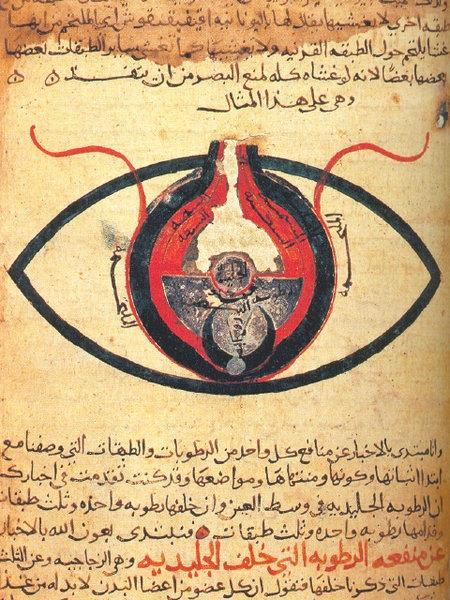
(Image: manuscript dated 1200CE, via Wikimedia Commons)