Why Did Nate Silver Leave The Gray Lady?

No, Margaret Sullivan didn’t chase him away – but she couldn’t have helped. Marc Tracy sees the real logic of Silver’s move from the NYT to ESPN:

[T]he resources and opportunities the Times can offer Silver are probably dwarfed by those that ESPN/ABC/Disney can. … This isn’t just about money—although since ESPN pays mediocrities Skip Bayless and Stephen A. Smith well more than $1 million each year combined, it is not difficult to imagine Silver netting seven figures for himself. But consider the possibilities in terms of resources, branding, and things to cover. ESPN has built a magazine around personality Bill Simmons and is building a late-night show around personality Keith Olbermann. Its stars toggle relatively seamlessly from Web-writing to print writing to television to podcasts to radio. Maybe he would prefer to talk more about baseball and other sports? His book, The Signal and the Noise, spent extremely little time on politics. Silver is a noted poker buff; guess which network airs the World Series of Poker? And so on.

It’s a big blow to the NYT, and another sign of how a few highly visible and talented individuals in media can increasingly set their own terms for which ship to attach themselves to, or, at some point, strike out entirely on their own. It makes a lot of sense for Nate to do sports alongside politics. It’s what he cut his teeth on and what he loves. Josh Marshall notes that, during election years, “Nate will do his politics and polling stuff for ABC News,” which is owned by ESPN parent company Disney. In a later post, Josh sees it pretty much as I do:

Two points that stand out to me. First: Silver’s apparent interest in bringing his statistical/probabilistic approach to news to a whole slew of new venues like weather, economics, education and more. Personally, as a news consumer, I find this fascinating. And I’m eager to see it. Numbers aren’t the be all and end all of news or understanding the world we live in. But the way that Nate has used them in sports and politics is a super important check on commentators’ innumeracy, groupthink, nonsense and subjectivity. It is, to use that overused word, highly disruptive in a very positive way.

It also deepens my suspicion that Nate had started to get a little bored with politics, at least as his exclusive realm.

Walter Hickey calculates that Silver has done relatively few sports stories while at the NYT:

Between February 24, 2008 and August 29, 2010 — the 30 months of its run — Silver wrote 43 posts tagged “sports” at his previous independent site, FiveThirtyEight.com. From August 25 to now — the 35 months he’s spent at the Times — Silver has only been able to write 27 posts tagged “sports,” and many of these were videos discussing his own articles. What this means is that when he was flying solo, Silver penned an average of 1.43 sports posts per month. At the Times, he only wrote 0.77 sports posts per month.

Yglesias thinks Silver’s renewed focus on sports is wise because sports “creates a much steadier stream of audience interest” than politics:

There’s a summer lull, but even that comes at a period that’s actually very well-suited to analytics since it means there’s enough baseball season data to start making meaningful assertions about it. So Silver can plug away at sports coverage, and then every four years pivot back to politics for a few months to capture the huge surge in interest in electoral politics that comes right before a presidential election. That’ll be a huge advantage for ABC News’ political team, but since Silver has basically gotten his poll averaging method down already it’s not necessarily a huge drain on his time to do it.

The South vs Social Mobility

Here’s the map from the NYT today on regions and income mobility. The redder the region the lower the mobility:

Screen Shot 2013-07-22 at 11.20.59 AM

Doesn’t it seem to you that the South stands out with particular starkness? That the most solidly Republican region offers the least equality of opportunity? Among the cities with the least opportunity: Memphis, Charlotte and Atlanta. The most social mobility? San Francisco and New York, along with Salt Lake City. The chances of rising from the bottom fifth to the top is 2.6 percent in Memphis, Tennessee and 2.2 percent in Nome, Alaska. In Seattle and Boston, the odds are five times that. I don’t know why exactly. But so many maps in America still seem to reflect two essentially different countries.

Why Does Marijuana Prevent Diabetes And Obesity?

getty-pot

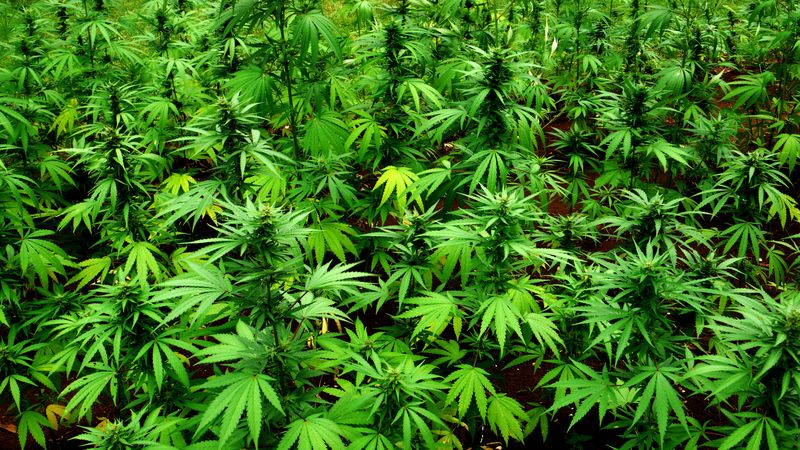
(Photo via Alpa Cannabis)

Is there nothing the plant cannot do? This isn’t a new story but it’s gotten some new attention recently:

The study looked at more than 4,600 people, 12 percent of whom said they were current marijuana users and 42 percent of whom said they had used in the past. Previous research had shown that marijuana users had a lower prevalence for diabetes and obesity, but this was the first study where scientists tried to determine if there was a link between insulin and glucose levels and marijuana usage, Yahoo Shine reported.

There is:

The study concludes: “with the recent trends in legalization of marijuana in the United States, it is likely that physicians will increasingly encounter patients who use marijuana and should therefore be aware of the effects it can have on common disease processes, such as diabetes mellitus. We found that current marijuana use is associated with lower levels of fasting insulin, lower HOMA-IR and smaller waist circumference.”

What we still don’t quite know is why. It works against the hoary stereotype of the munchies, but the data are clear. One possibility:

Some research finds that highly religious people are less likely to take drugs, but more likely to be obese — perhaps because they’re substituting one compulsive behavior (overeating) for the other (smoking marijuana). So, some of the obese people in the national surveys may be religious folk, who might otherwise be heavy marijuana smokers, but are eating too much instead. That could make it look like marijuana is slimming.

Also consider that one of the most popular uses of medical marijuana is to stimulate appetite in people with cancer, AIDS or other diseases. Such patients are significantly less likely to be obese than the general population — so in this case, weight loss would precede or prompt the marijuana smoking.

I’m not buying either argument. Smoking weed is not as compulsive as over-eating. Sugar can have a far stronger grip on a person’s way of life than THC. One possibility is that there is something in marijuana that helps regulate insulin better: “a relationship between cannabinoids and peripheral metabolic processes.” But Prohibition makes it extremely hard to do the research to see if we can make real in-roads against heart disease, diabetes and obesity. Legalizing the plant for research might, after all, cause someone somewhere to experience pleasure – and we know that cannot be countenanced.

Another theory might be that people substitute pot for alcohol. And the more we encourage the move from a highly fattening recreational drug to a far more healthy one, the better. Hence the liquor companies’ strenuous opposition to the end of Prohibition (historical ironies aside).

(Photo: Getty Images.)

The Defuser-In-Chief, Ctd

John McWhorter reflects on Obama’s impromptu Trayvon Martin speech:

[T]he perception of black men as inherently criminal is what most black people really mean by “racism” when they talk about its prevalence. Most can discuss more statistical manifestations on reflection, but what really sits in the gut is cases like Amadou Diallo, Sean Bell, Oscar Grant, and now Martin. Or, the related experiences that black men have that Obama mentioned having had himself, such as being trailed in stores or watching white women tensing up as they pass.

This stuff is real. It’s raw. Testament to this daily kind of racist dismissal of black men is considered an urgent task of public discussion of the black condition. No one who understands this could possibly condone, for example, the vastly overreaching policy on stop-and-frisks in New York City. Should the police pay as much attention to the Upper East Side as Bedford-Stuyvesant? Of course not. But should most brown-skinned adolescents in a neighborhood expect to be stopped by usually surly cops for no reason? Say yes and you have no right to wonder why you get generation after generation of young men who feel alienated from their own society–which in fact makes Obama’s consideration of Ray Kelly to lead the Department of Homeland Security decidedly more ungainly at this point.

Ta-Nehisi applauds the speech:

I have had my criticisms of this president and how he talks about race. But given the mass freak-out that met him last year after making a modest point about Trayvon Martin, it must be said that it took political courage for him to double down on the point and then advance it.

No president has ever done this before. It does not matter that the competition is limited. The impact of the highest official in the country directly feeling your pain, because it is his pain, is real. And it is happening now. And it is significant.

Bouie doubts the speech will change much:

It’s asking Americans to empathize with Martin—to put themselves in the shoes of a black teenager, walking alone, at night, being followed by an older man—and try to see the circumstance as he would have experienced it. Other presidents have spoken frankly about the challenges faced by African Americans—Lyndon Johnson’s speech on the anniversary of Gettysburg (he was vice president at the time), stands as an excellent example—but no president has ever asked Americans to try to imagine the perspective of a black boy. It’s a powerful appeal, and my hope is that the public will take it seriously. My actual expectation, however, is that they won’t.

Ezra notes how Obama’s rhetoric on race has changed:

In 2008, Obama seemed to believe that with the right leadership, America was ready to move forward on race. “We are the ones we have been waiting for,” he said. In 2013, he seemed to believe political leaders might simply make matters worse, and that, on this issue at least, we are not the ones we have been waiting for. The ones we are waiting for, he seemed to say, are still coming.

Chait thinks Obama’s speech was intended for future audiences:

Obama understands that interjecting himself into a racialized controversy carries risks, but he also believes that the electorate of the future is on his side. His remarks are probably aimed not at the present but at posterity.

My thoughts here.

When The Military Gaffes

It’s usually about Israel – and the way in which recently it has truly hurt US foreign policy and interests:

Recently retired US Central Commander General James Mattis warned yesterday that if Secretary of State John Kerry’s attempts to broker a deal between Israel and the Palestinian Authority failed, Israel would be exposed as an apartheid state … Speaking July 20, at the Aspen Institute’s annual Security Forum, Mattis said that as a result of Israeli intransigence and the US special relationship with Israel, he and his troops have “paid a military security price.” His comments echoed those of his predecessor, General David Petraeus, who told the Senate Armed Service Committee in 2010 that “enduring hostilities between Israel and some of its neighbors” had damaged US interests in the region. Petraeus was hammered by pro-Israel forces for his remarks – Abe Foxman called him “dangerous” — and wound up walking them back.

But Mattis wasn’t silenced:

I paid a military security price every day as a commander of CENTCOM because the Americans were seen as biased in support of Israel and that moderates all the moderate Arabs who want to be with us because they can’t come out publicly in support of people who don’t want to show respect for the Arab Palestinians.

Yes, Junkies

Maria Popova digs up Hunter S. Thompson’s warnings about the dangers of being a political junkie:

Not everybody is comfortable with the idea that politics is a guilty addiction. But it is. They are US-TAX REFORM-NORQUIST-ALLENaddicts, and they are guilty and they do lie and cheat and steal — like all junkies. And when they get in a frenzy, they will sacrifice anything and anybody to feedtheir cruel and stupid habit, and there is no cure for it. That is addictive thinking. That is politics — especially in presidential campaigns. That is when the addicts seize the high ground. They care about nothing else. They are salmon, and they must spawn. They are addicts. …

Anything that gets the adrenalin moving like a 440 volt blast in a copper bathtub is good for the reflexes and keeps the veins free of cholesterol … but too many adrenaline rushes in any given time span has the same effect on the nervous system as too many electro-shock treatments are said to have on the brain: after a while you start burning out the circuits. When a jackrabbit gets addicted to road-running, its only a matter of time before he gets smashed — and when a journalist turns into a politics junkie he will sooner or later start raving and babbling in print about things that only a person who has Been There can possibly understand.

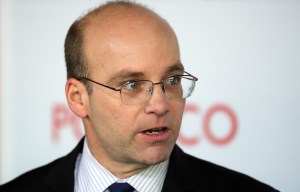
(Photo: Mike Allen of Politico, by Jim Watson/AFP/Getty)

Does Bad Art Grow On You?

James Cutting’s “exposure effect” claims that, through repeated exposure, viewers of inferior art come to rank those works more highly than canonical “great” art. A team of scholars reached a different conclusion:

We reported findings suggesting that increased exposure to art works does not necessarily make DCF 1.0people like them more. Instead, the quality of an art work remains at the heart of its evaluation. We repeatedly exposed study groups to two sets of paintings (by the English Pre-Raphaelite painter John Everett Millais, and the American ‘Painter of Light’ Thomas Kinkade) before asking them to express a degree of liking for them. Although Millais is a well-respected artist, Kinkade’s work has been described as “a kitsch crime against aesthetics” and “so awful it must be seen to be believed.” We found that people liked Kinkade’s paintings less after they had been exposed to them. This was not the case with the Millais paintings. In our view, this suggests that exposure does not work independently of artistic value.

So are these works of art on Tumblr bad?

In one sense, this is a really tricky question. There might be a whole bunch of different reasons someone tags a particular piece as bad art. For example, a work might fail to conform to ordinary expectations about art. Or it might be morally challenging, disturbing, or even ethically questionable. Labelling a picture bad may not be a simple matter; many different kinds of things might be meant by displaying a work as ‘bad’ art. But in another sense, the question is pretty straightforward. Is the picture any good?

A reader sends the above image:

I give you: The Museum of Bad Art. Not only are the pieces classic unto themselves, but the commentary is invaluable:

In this complex narrative, the artist addresses how we perceive and the fear of how we are perceived. The faceless female form hesitates. Terror grips the little dog. His left paw pushes, as if to say “you go first.” The largest figure lurks behind, holding his pet, but not his mate. The choice of spectacles is confirmation that the artist is conflicted at the prospect of emerging. Yet when the hinged door is opened, we find he has nothing to hide.

The MOBA collection of “bad” art isn’t just stick figures and other poorly rendered art; it’s art that aspires to greatness and perhaps achieves it, but not in the way intended. Really, take a minute and stroll through the collection online. It’s definitely worth it.