The Rhetorical Roots Of American Exceptionalism

Reviewing historian Richard Gamble’s In Search of the City on a Hill, Ben Wetzel traces the history of the now-famous phrase:

[Gamble] argues that the phrase “city on a hill” (found in Matthew 5:14) originally described the mission of the church, but that over time the secular state has come to exert a near monopoly over the image.

Gamble begins the book with surprising observations about [Puritan leader John] Winthrop’s famous discourse, A Modell of Christian Charity.  Much is unknown about the circumstances surrounding the sermon’s composition.  Indeed, since no one onboard the Arbella (the ship that transported the Puritans from England to Massachusetts) ever left any record of the message, and since Winthrop himself never mentioned giving the speech in his journal, Gamble concludes that it is possible that the governor never delivered the discourse at all.  In any case, Gamble points out, Winthrop could hardly have been envisioning the United States, whose tenets of toleration, individualism, and democracy the governor would have found appalling.

Proceeding in time, Gamble traces the fate of the “city on a hill” throughout American history.  Jonathan Edwards, for example, used the image in the 1730s to describe his Northampton congregation, but did so usually to chastise his church for failing to uphold true godliness.  When Edwards used the image, however, he was not alluding to Winthrop’s vision, because A Modell of Christian Charity was not published until 1838.  Few observers in the 1830s noted its appearing, and none thought they saw the origins of the American mission in its contents.  Indeed, over the next century, writers who quoted from the document almost never drew attention to the “city on a hill” passage at all.

That changed dramatically by the late 20th century:

[I]t was not an academic but a politician who first used the phrase in a more public setting.  And his name was not Ronald Reagan.  Instead, John F. Kennedy (reading a speech prepared by his aide Ted Sorenson) declared to the Massachusetts state legislature in 1961 that he “had been guided by the standard John Winthrop set before his shipmates on the flagship Arbella three hundred and thirty-one years ago, as they, too, faced the task of building a new government on a perilous frontier.”  And then: “‘We must always consider’ [Winthrop] said, ‘that we shall be as a city upon a hill–the eyes of all people are upon us.'”  Clearly, as Gamble points out, the Irish-Catholic Kennedy’s conception of the “city on a hill” was a far cry from what Winthrop would have envisioned in the seventeenth century, let alone what Jesus was describing in the gospel of Matthew.

It is unclear if Reagan learned of the phrase directly from Kennedy or picked it up elsewhere, but in any case the Great Communicator made the image his own in the last third of the twentieth century.  As with Kennedy, Reagan’s use of the “city on a hill” was largely devoid of any specifically Christian content.  Instead, as the high priest of America’s civil religion, Reagan deployed the image as a stand-in for a vague Americanism.  Although some critics of the president, such as New York governor Mario Cuomo, argued that there was a good bit wrong with the “shining city,” for the most part the phrase had been adopted by both parties and emptied of any prophetic content by the end of the twentieth century.

A Red Menace

Justin Nobel offers a glimpse into the threat posed by fire ants:

Today, if you draw a line from Virginia Beach to Nashville to Abilene in west Texas, you’ll find dish_antsfire ants everywhere below it, as well as in Southern California. The ants’ annual impact on the economy, environment, and quality of life in the United States totals $6 billion, according to entomologists at Texas A&M University. In Texas alone they rack up $1.2 billion each year: $47 million at golf courses; $64 million at cemeteries (the ants love the open and slightly overgrown habitat around tombs); and as much as $255 million in the cattle industry. They cause other problems too. In Virginia Beach, 30-year-old former marine Bradley Johnson was stung by fire ants while working outside—and died of anaphylactic shock. On at least one occasion, fire ants invaded an elementary school in Tennessee to get candy stashed in kids’ lockers. At Greystone Retirement Community in Huntsville, Ala., a staffer found 79-year-old Lucille Devers covered in fire ants, which were crawling from her mouth, nose, ears, and hair: The ants frequently enter nursing homes, attracted by crumbs left in residents’ beds. And scientists anticipate that the ants will keep expanding their range. Climate change and crossbreeding with species more tolerant of cold may enable them to settle farther north.


(Photo by Flickr user shrikant rao)

A Poem For Sunday

sonnet2

Shakespeare’s Sonnet 87:

Farewell! thou art too dear for my possessing,
And like enough thou know’st thy estimate:
The charter of thy worth gives thee releasing;
My bonds in thee are all determinate.
For how do I hold thee but by thy granting?
And for that riches where is my deserving?
The cause of this fair gift in me is wanting,
And so my patent back again is swerving.
Thyself thou gav’st, thy own worth then not knowing,
Or me, to whom thou gav’st it, else mistaking;
So thy great gift, upon misprision growing,
Comes home again, on better judgment making.
Thus have I had thee, as a dream doth flatter,
In sleep a king; but, waking, no such matter.

(Photo by Jan Krömer)

Climbing Out Of The Ivory Tower

Reviewing the latest installment of the political theorist Isaiah Berlin’s letters, John Gray discovers a man cramped by the university life:

For some readers the most surprising revelation to emerge from these absorbing letters may be that Berlin was in no sense a natural academic. He loved Oxford and relished college life. At the same time he loathed the routine responsibilities that go with being a university teacher. Partly this was a matter of temperament. Celebrated as a lecturer, he hated public speaking. He writes of the ‘fearful time-eating occupations’ of the average university day as ‘devouring one’s substance’. (How he would react to the unending bureaucratic chores of the current academic regime can be left to the imagination.)

Berlin’s revulsion from academic life had another source, which was biographical rather than temperamental.

When he returned to Oxford after having worked as a British official in Washington, operating at the epicentre of global events, he found the academy a dispiritingly small world – so much so that for a time, when unsettling self-doubt made him almost a ghost in Oxford, he could hardly imagine how he would make the remainder of his life there. Yet he turned down other careers, opting instead to change his intellectual self-description from philosopher – ‘I couldn’t be another ordinary Oxford philosopher,’ he used to say – to historian of ideas.

He did not actually give up philosophy, but used intellectual history as a vehicle for a philosophy of his own – a liberalism that refused to sacrifice individuals for the sake of grand visions of human progress, whose roots were not in the English life he knew and loved, but sprang, as Berlin wrote to Nicholas Nabokov in June 1970, ‘from the heart of the Russian intelligentsia, like everything else that I believe’. As much as anything else, it was this distinctively Russian liberalism that led him to take up arms in the intellectual battlefield of the Cold War.

John Crace, meanwhile, finds the correspondence evidence of the social climbing that Berlin’s detractors have long noted, writing a mocking imitation of the letters:

Dear Important Person,

Thank you for your illuminating monograph on Tolstoy which perfectly reflects my own anti-existentialist interpretation of his character; one that I iterated some years ago, I recall. I wish I could say more, but I have a busy few decades of intense social-climbing ahead, starting with an irksome but necessary trip to America to have dinner with the new president. It will mean I have to miss Joan Sutherland‘s magnificent Lucia at Covent Garden, but I will be back for Callas.

You ask me for my thoughts on the Cuban question. I regret they are at present unformed as I have spent the past month wrestling with the seating plan for the All Souls Dinner. Freddie will not be happy unless he is at high table. I know I ought to be able to find a way of making this happen, but sometimes the Kantian “ought implies can” is fallible. I have also not had time to commit my apercus on the construction of the Berlin Wall to print; it is, of course, a great honour to have such a landmark named in recognition of one’s achievements, but I am not sure I have done quite enough yet to be worthy of such a legacy…

Devotees can watch a long interview of Berlin by Michael Ignatieff here. Recent Dish coverage of Berlin here and here.

Forgiveness Over Fear

In a long, moving essay on race in America, in which he details his own fraught encounters with the police and prejudice, the black poet Ross Gay reflects on the cumulative force of suspicion and fear in the lives of black Americans:

Isn’t it, for them, for us, a gargantuan task not to imagine that everyone is imagining us as criminal? A nearly impossible task? What a waste, a corruption, of the imagination. Time and again we think the worst of anyone perceiving us: walking through the antique shop; standing in front of the lecture hall; entering the bank; considering whether or not to go camping someplace or another; driving to the hardware store; being pulled over by the police. Or, for the black and brown kids in New York City, simply walking down the street every day of their lives. The imagination, rather than being cultivated for connection or friendship or love, is employed simply for some crude version of survival. This corruption of the imagination afflicts all of us: we’re all violated by it. I certainly know white people who worry, Does he think I think what he thinks I think? And in this way, moments of potential connection are fraught with suspicion and all that comes with it: fear, anger, paralysis, disappointment, despair. We all think the worst of each other and ourselves, and become our worst selves.

He ultimately appeals to mercy and forgiveness as the only way forward:

It seems to me that part of my reason for writing this — for revealing my own fear and sorrow, my own paranoia and self-incrimination and shame — is to say, Look how I’ve been made by this. To have, perhaps, mercy on myself. When we have mercy, deep and abiding change might happen. The corrupt imagination might become visible. Inequalities might become visible. Violence might become visible. Terror might become visible. And the things we’ve been doing to each other, despite the fact that we don’t want to do such things to each other, might become visible.

If we don’t, we will all remain phantoms — and, as it turns out, it’s hard for phantoms to care for one another, let alone love one another. And it’s easy for phantoms to hurt one another. So when the cop and I met that night, how could he possibly have seen the real me for all the stories and fantasies that have been heaped on my body, and the bodies of those like me, for centuries? And how could I see him?

Face Of The Day

dish_kenhermann1

For his series Survivors, photographer Ken Hermann took portraits of people in Bangladesh who have been disfigured by acid attacks. Since 1999, more than 3,100 people in Bangladesh, the majority of them young women, have been victims of such attacks. Hermann worked with the Acid Survivors Foundation in Dhaka for the project. More pictures and background here.

(Photo: Jahanara, Ken Hermann)

To Hell And Back

In his new book, Why Hell Stinks of Sulfur: Mythology and Geology of the Underworld, geologist Salomon Kroonenberg seeks out real-life locations responsible for descriptions of the underworld:

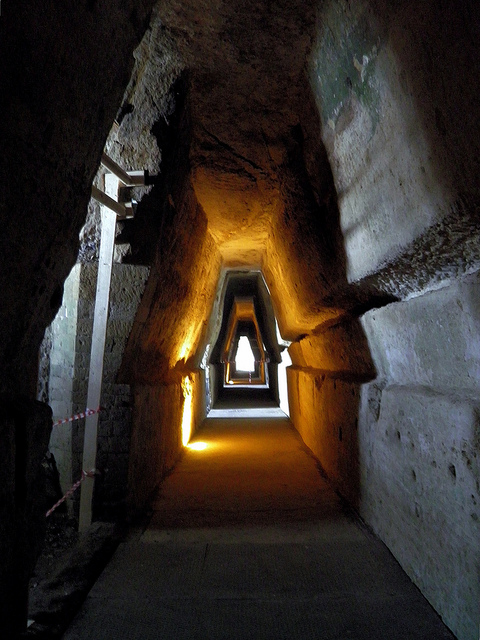
It is not until he makes it to Lake Avernus, which Virgil named as the entrance to Hades in the Aeneid, that his research really begin to pay off. Avernus is a crater lake, formed from an dish_cave1extinct volcano, and though it holds no dangers for birds today, there are nearby sulfur springs that have been renowned for centuries for their abilities to heal everything from scabies to erectile dysfunction. Nearby is the infamous Grotta de Cani, or “Cave of the Dogs” — so named because, while a human standing upright within it can breathe normally, dogs quickly die (as would anyone who stooped to their height). The reason for this strange discrepancy would not be discovered for years: the lower half of the cave consists of pure, heavy carbon dioxide, odorless and fatal, while the upper half is filled with breathable oxygen.

Both gases, as it turns out, are released by subterranean magma hitting limestone, and are common byproducts of volcanic formations such as the caldera that eventually became Lake Avernus. People who lived above large limestone deposits — the people of the Mediterranean included — were thus used to encountering subterranean pits that emitted either deadly carbon dioxide or odiferous sulfur. It is for this reason, Kroonenberg argues, that the stench of sulfur begins to emerge as a key component of the stories such people told about Hell. When water beneath the surface of the earth gradually erodes limestone until it can no longer support its own weight, sinkholes can unexpectedly erupt — yet another frequent “hellish” occurrence for dwellers in the Mediterranean region. To answer the question embedded in Kroonenberg’s title, then: Hell stinks of sulfur because the biblical and classical writers who described it first all lived above limestone.

(Photo: Entrance to the Cave of the Sibyl, by Flickr user carolemadge1)

“Freedom Is My God Now”

http://youtu.be/MYdvjdIFdnI

Samantha Bee recently interviewed Matt Slick, seen above, founder of the Christian Apologetics and Research Ministry. His daughter Rachel, now an atheist, describes what it was like to be raised by such a man, offering a disturbing glimpse into the fundamentalist psyche:

Conversation with him was a daily challenge. He would frequently make blatantly false statements — such as “purple dogs exist” — and force me to disprove him through debate. He would respond to things I said demanding technical accuracy, so that I had to narrow my definitions and my terms to give him the correct response. It was mind-twisting, but it encouraged extreme clarity of thought, critical thinking, and concise use of language. I remember all this beginning around the age of five.

I have two sisters, three and seven years younger than myself, and we were all homeschooled in a highly strict, regulated environment. Our A Beka schoolbooks taught the danger of evolution. Our friends were “good influences” on us, fellow homeschoolers whose mothers thought much alike. Obedience was paramount — if we did not respond immediately to being called, we were spanked ten to fifteen times with a strip of leather cut from the stuff they used to make shoe soles. Bad attitudes, lying, or slow obedience usually warranted the same — the slogan was “All the way, right away, and with a happy spirit.” We were extremely well-behaved children, and my dad would sometimes show us off to people he met in public by issuing commands that we automatically rushed to obey. The training was not just external; God commanded that our feelings and thoughts be pure, and this resulted in high self-discipline.

She goes on to chart her fall from faith, and closes with these striking thoughts:

Someone once asked me if I would trade in my childhood for another, if I had the chance, and my answer was no, not for anything.
 My reason is that, without that childhood, I wouldn’t understand what freedom truly is — freedom from a life centered around obedience and submission, freedom to think anything, freedom from guilt and shame, freedom from the perpetual heavy obligation to keep every thought pure. Nothing I’ve ever encountered in my life has been so breathtakingly beautiful.

Freedom is my God now, and I love this one a thousand times more than I ever loved the last one.

Atheists Aren’t That Angry

Absorbing a new study from the University of Tennessee, Andrew Brown delineates the different ways of being godless:

The largest group (37%) was what I would call “cultural non-believers”, and what they call “academic” or “intellectual atheists”: people who are well-educated, interested in religion, informed about it, but not themselves believers. I call them “cultural” because they are at home in a secular culture which takes as axiomatic that exclusive religious truth claims must be false. Essentially, they are how I imagined the majority readership of Comment is Free’s belief section. They are more than twice as common as the “anti-theists” whose characteristics hardly need spelling out here:

If any subset of our non-belief sample fit the “angry, argumentative, dogmatic” stereotype, it is the anti-theists. This group scored the highest amongst our other typologies on empirical psychometric measures of anger, autonomy, agreeableness, narcissism, and dogmatism while scoring lowest on measures of positive relations with others … the assertive anti-theist both proactively and aggressively asserts their views towards others when appropriate, seeking to educate the theists in the passé nature of belief and theology.

Nonetheless, these people made up only 14% of their sample, and all other research that I know of would place their proportion much lower.

Amanda Marcotte also discusses how the study upends stereotypes:

While atheists have a public image of being dogmatic and belligerent—an image that famous atheists like Bill Maher only end up reinforcing—researchers found that to absolutely not be true. Only 15 percent of non-believers even fit in the category of those who actively seek out religious people to argue with, and the subset that are dogmatic about it are probably even smaller than that. But that doesn’t mean that the majority of non-believers are just sitting around, twiddling their thumbs and not letting atheism affect their worldview. On the contrary, researchers found that the majority of non-believers take some kind of action in the world to promote humanism, atheism or secularism…

While most atheists limit themselves to supporting a more secular society, anti-theists tend to view ending religion as the real goal. While plenty are aggressively angry, researchers point out this isn’t necessarily a bad thing: “For example, many of the Antitheist typology had responded as recently deconverted from religious belief or socially displeased with the status quo, especially in high social tension-based geographies such as the Southeastern United States,” and being combative with believers might help them establish their own sense of self and right to non-belief.