Descartes Was Not A Neuroscientist

Calling mind-brain dualism “so 1641,” Bethany Brookshire worries that the backlash against bad neuroscience reporting has turned into a backlash against neuroscience itself:

Skepticism would encourage us to “question everything”, and as a proud skeptic myself, I agree. But it’s one thing to question, to ask for details of method and context, and another to use the name of “neuroskepticism” to dismiss neuroscience all together. David Brooks, for example, seems to want to use the neuroskepticism to go all the way back to “the brain is not the mind.”

She elaborates:

The media used to overhype neuroscience, and now they overhype neuroskepticism. After all, who doesn’t love to watch a fight? But don’t throw out the brain with the bathwater. Here’s the thing: There is bad neuroscience, because there is bad science, period. Not because there really is mind–brain dualism … Not because everyone who writes about neuroscience spoonfeeds simplistic interpretations twisted to fit a narrative. There is bad neuroscience, just like there is good neuroscience, because we the people are the ones who do the science.

More Dish on neuroscience here, here, and here.

A Long History Of Social Reading

dish_schoolofathens

The shareable commenting features on e-readers may seem like a novelty, but reading has been a “social” activity far longer than it’s been a solo one:

Homeric poetry and other oral genres were recited to crowds for centuries before the notion of reading came around. The most beautiful depiction of learning in Western art may be Raphael’s School of Athens, which shows Socrates speaking as disciples surround him, listening and taking notes.

After writing became more widespread, it was often a prompt for speaking, something one used as an aid in orating, reciting, or declaring to others. When Saint Augustine watched Ambrose read a book without moving his lips or making any sounds, he was shocked: Until about the eighth century, most people read by reading words out loud.

No one was curling up with the large, bulky, vellum-and-wooden books that were kept chained to desks in monasteries. This kind of “social reading” continued throughout most of the Middle Ages, as scribes copying manuscripts assumed readers would enunciate the words they saw on the page. Written texts developed from and aided oral communication, and since there are no commas or capital letters in speech, there were initially no spaces between words, no lower-case letters, and no punctuation in manuscripts, either. THEIRSENTENCESLOOKEDLIKETHIS.

As late as the 19th century, Victorian readers could still often aptly be called “listeners” as they sat in chairs in a circle lit by candlelight, with one person reading out loud the copy of the latest triple-decker installment of, say, a Dickens novel. Even for us moderns, reading can be construed as an inherently social act, not as in “sitting in a room with others” but as in “together, alone.” Reading can be one of the most profound encounters a human can have, revealing the inherently connective tissue that is human consciousness. As David Foster Wallace put it: “Fiction, poetry, music, really deep serious sex, and, in various ways, religion—these are the places (for me) where loneliness is countenanced, stared down, transfigured, treated.”

(Image: The School of Athens by Raffaello Sanzio, 1511, via Wikimedia Commons)

Revisiting Dune

Jon Michaud urges you to read or re-read Frank Herbert’s 1965 sci-fi classic:

With daily reminders of the intensifying effects of global warming, the spectre of a worldwide water shortage, and continued political upheaval in the oil-rich Middle East, it is possible that “Dune” is even more relevant now than when it was first published. If you haven’t read it lately, it’s worth a return visit. If you’ve never read it, you should find time to.

Like the best science-fiction and fantasy novels, “Dune” creates for the reader a complex, fully-realized universe. … This is … a universe of Machiavellian realpolitik, science fiction through the prism of the Cold War. There is little that is cute or cuddly: no furry-footed Hobbits, no teddy-bear-like Ewoks. (In fact, the cutest thing you’ll see in a copy of “Dune” is the author photo: bald, bearded, and smiling, Herbert could pass for one of Tolkien’s dwarves.) Even the hero, young Paul Atreides, stuns his mother with his unsentimental reaction to his father’s death. Instead of grieving, he immediately begins plotting the overthrow of his adversaries. This is terrain that is familiar to readers of George R. R. Martin’s “A Song of Ice and Fire.” Herbert’s scheming, backstabbing villain, the Baron Vladimir Harkonnen, would be perfectly at home among the Lannisters of Westeros.

Michaud guesses why the book lacks obsessive devotees on par with Lord of the Rings or Star Wars:

Perhaps one explanation for “Dune”‘s lack of true fandom among science-fiction fans is the absence from its pages of two staples of the genre: robots and computers. This is not an oversight on Herbert’s part but, rather, a clever authorial decision. Centuries before the events described in the novel, humans revolted and destroyed all thinking machines. “The god of machine-logic was overthrown,” Herbert writes in an appendix, “and a new concept was raised: ‘Man may not be replaced.’ ” This watershed moment, known as the Butlerian Jihad, resulted in a spiritual awakening, which put into place the religious structures that ultimately produce the messiah, Paul Atreides. There is no Internet in Herbert’s universe, no WikiLeaks, no cyber war. This de-emphasis on technology throws the focus back on people. It also allows for the presence of a religious mysticism uncommon in science fiction. It’s a future that some readers may find preferable to our own gadget-obsessed present.

Suicide Leaves Behind Nothing

“Suicide, seen as among the most selfish of acts, pushes a button in us that even murder doesn’t,” according to Clancy Martin:

When I was in treatment for depression, I found that meeting and talking to other people about suicide was profoundly helpful; I saw what a loss it would have been had those people succeeded. A friend once said to me, “Suicide leaves behind nothing but miserable people blaming themselves.”

My psychiatrist, a wise eighty-seven-year-old woman who has been practicing six days a week for more than forty years, told me, “Think of the example it sets. For your children.” That remains the most compelling argument I’ve heard against suicide: it sets an example — for one’s children, of course, but for others too. It isn’t that we want people to “tough it out.” It isn’t that we think the suicide has acted out of moral weakness. It’s that, when we look at the people we knew who committed suicide, they were often the very people we most appreciated having around. We need more of those people, not fewer.

Recent Dish on suicide here and here.

Spellchecking Your Blindspots

Michael Keller ran a bunch of misspelled words through an iPhone simulator to see which topics Apple doesn’t autocorrect:

Our analysis found over 14,000 words that are recognized as words when spelled accurately, but appointment-kathithat won’t be corrected even when they are only slightly misspelled. However, the vast majorityof these words are technical or very rarely used words: “nephrotoxin,” “sempstress,” “sheepshank,” or “Aesopian,” to name a few.

But among this list as well are more frequently used (and sensitive) words such as “abortion,” “abort,” “rape,” “bullet,” “ammo,” “drunken,” “drunkard,” “abduct,” “arouse,” “Aryan,” “murder,” and “virginity.”

We often look to technology to make our lives easier—to suggest restaurants, say, or to improve things as simple as our typing. But as more and more of our speech passes through mobile devices, how often is software coming between us and the words we want to use? Or rather, when does our software quietly choose not to help us? And who draws the line?

A commenter makes an obvious counterpoint:

I’m not the engineer in charge of this, but if I *WERE*, I’d probably have been told that my boss didn’t want to see users complain about spellchecks turning innocent typos into offensive words. The best way to do that would be to mark the word as something that the dictionary wouldn’t complain about, but that would never feature in those “Damn You, Spellcheck!” websites or tweets.

If that’s the case in reality (and it certainly seems likely enough), it’s not censorship and it’s not squeamishness. It’s Apple helping the majority of users from having little mistakes escalate into major embarrassments.

Dustjacket Dating

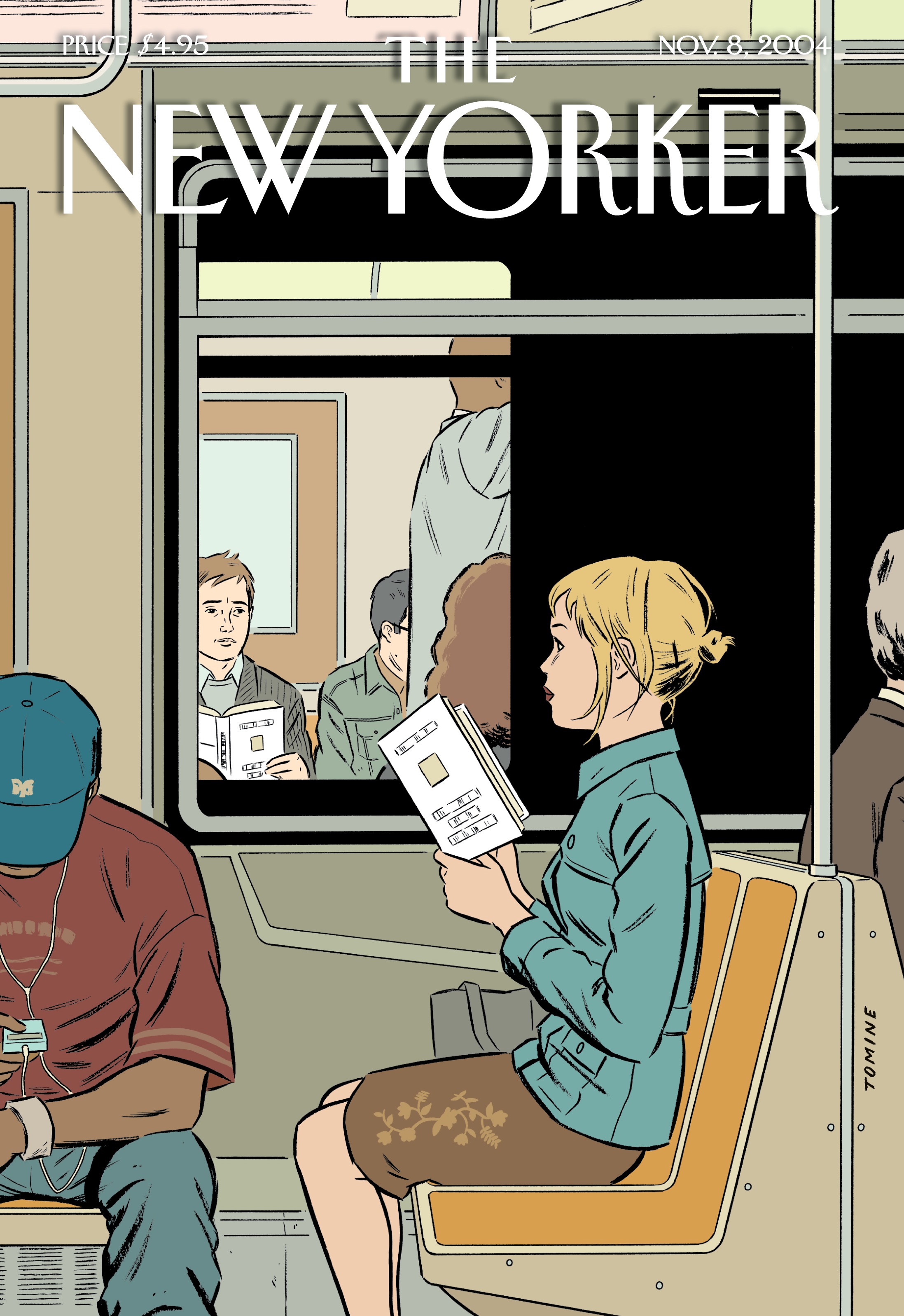
Elyse Moody imagines a literary alternative to Craiglist’s Missed Connections, pairing a title with the type of man she hopes to attract:

I’ve been asking myself some basic questions: What do I like? Reading. What am I looking for in a date? Someone who enjoys books and talking about them, and who can strike up good tny 11.8.04 cvrconversations with strangers. An idea started to gel. Maybe if I’m choosy about what I read on my longish interborough commute, the right guy—one with superlative taste who’s curious enough to make a move—will be drawn to me by the tractor beam the open book in my hands emits.

I ran this idea by my therapist, and she started nodding excitedly. “Books are such a great crutch,” she said. “I think of them like props.”

Exactly.

So this strategy’s been clinically endorsed. I’ve reviewed my journals, made a list of the most attractive qualities of potential soul mates past (setting aside their less desirable traits—e.g., substance addiction, monomaniacal narcissism, commitment phobia), and distilled it into archetypes of the charming men I hope to meet, if fate wills it, somewhere in the New York City public transit system.

Arrests Can’t Win The Drug War

Mexico has captured Miguel Ángel Treviño Morales, the ruthless leader of the infamous Los Zetas drug cartel. Juan Carlos Hidalgo expects little to change:

Sylvia Longmire and Alejandro Hope have good analyses [in Spanish] on what the capture of Treviño will mean in the near and medium term to the Zetas and to the configuration of organized crime in Mexico. Overall, we should expect a spike in violence as the Zetas might splinter into several violent “cartelitos” which will fight one another for control of territory. Also, we might see a renewed effort from the Sinaloa cartel of Joaquín “Chapo” Guzmán to challenge the Zeta’s control of the lucrative Nuevo Laredo transit route.

But isn’t the ultimate goal of the war on cartels to stop the flow of drugs into the United States? Should we expect a decline in the smuggling of narcotics after the arrest of Treviño?

No, according to reports from the U.S. government itself. The Office of Intelligence and Operations Coordination of the Custom and Border Protection agency looked at drug seizure data from January 2009 to January 2010 and matched it with the arrests or deaths of drug operatives (11 capos in total). It found that “there is no perceptible pattern that correlates either a decrease or increase in drug seizures due to the removal of key DTO [drug trafficking organization] personnel.”

Peter Watt agrees that little will change:

Treviño’s arrest will surely be a temporary blow to the organisational structure of Los Zetas. But so long as the conditions that allow organised crime to prosper in Mexico – paradoxically as a result of the so-called drug war – and so long as investors, banks, politicians and drug cartels share an interest in militarisation and conflict enveloping different parts of the country, we would be naïve to think that this latest capture of a capo represents much more than a job opening at the top of a very profitable enterprise.

James Gibney’s bottom line:

While it’s good that Mexican Marines have arrested a guy who liked to stuff his enemies in 55-gallon drums and set them on fire, in the short run his capture may lead to more, rather than less, violence.

The Best Of The Dish Today

Screen Shot 2013-07-12 at 2.57.52 PM

Floating houses; bathing corgis; depressed gang-bangers; washed up hacks; and nutty jurors. A glimpse into the rabid violence of sectarian religion; and the preservation of scents.

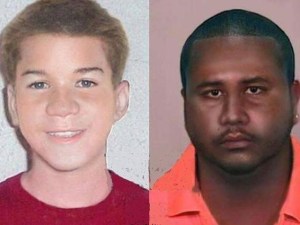
My first Trayvon piece remained the most popular, followed by the tricks of Fox News. The Faces Of The Day won’t leave my mind. The Window View above was located here.

See you in the morning.

Racism And Richard Cohen’s Reality

Richard Cohen is cutting edge for 1988. In fact, a huge amount of the op-ed crap published by Fred Hiatt appears to be frozen from the time liberals decided it was time to move to the center-right. I think they were as right to do so in the late 1980s as they are wrong to cling to that position as if it is embalmed in aspic today.

So Cohen describes what he calls a “uniform” that young black men wear that legitimately tumblr_mpz9xoYIvJ1qz4e1ro1_1280causes fear among whites (and presumably blacks too). For twenty years, as I wrote earlier, I lived on a crime-charged corner in DC, where the 17th and Euclid gang still operates (and I hope to return). For the first ten years, it was sometimes hard to get people to visit me (not that I did much entertaining). And they weren’t crazy. It was a crime-ridden hood. I lived through several murders on my block, a dead body found in my alley way, and a bullet that came through my upstairs neighbor’s window.
But I honestly never felt any real fear simply being around young black men in the hood. And I still don’t. Yes, if I saw drug deals from my window, I took pictures in case the police needed help. Yes, I could see that most of the miscreants were black men – but that could have been said of my neighbors who played basketball, or hung out on the local stoops. I lived by minding my own business, something Zimmerman could have done as well.

I think it may be the fact that I wasn’t born or raised in America; or obliviousness; or a simple, growing awareness of how many young black men are in no way related to that kind of violence – because I lived among them; or aware that I was a familiar face and so in no way a threat. But I never felt fear. Hoodies were not a “uniform”, either, unless there’s been a fashion craze since I left for New York. What Richard Cohen is describing in his attempt at political incorrectness is a vision in his own head that equates all young black men he may come across with the potential to kill. I can’t think of a word to describe lumping everyone of a certain race, gender and clothing into a category of potential murderers other than, yes, racist. Can you?

There’s no question that young urban black men commit a disproportionate number of crimes, compared, say, with young white men.

If you look at homicide, you’ll see, however, that a white person is far, far more likely to be killed by another white person than by a black one. 83 percent of white murders were committed by whites. In 2011, only 448 black men killed a white person in America. In a country of 300 million, that means that Richard Cohen’s fear of the young black men is as unjustified as Zimmerman’s description of Martin as a punk. The percentage odds of Richard Cohen being killed by a young black man is 0.00015 percent. And yet he’s scared. I guess it’s clarifying to have this fact of human nature expressed in a column. But it doesn’t make it any less repugnant.

Elspeth Reeve covers the rest. This is for me her best point:

“Urban crime” is shorthand for young black people committing crimes in big cities on the verge of collapse. But Martin wasn’t killed in Cabrini-Green. He was killed in Sanford, Florida (population 53,570), inside a gated community called the Retreat at Twin Lakes, which has about 260 townhouses. The alleged crime was a suburban crime. And, just for the record, it was not the black kid who was just acquitted of it.

(Photo-image by from the Tumblr “While Seated” by Michael David Murphy.)

Literary Clockwork

Christian Marclay’s 24-hour video collage “The Clock” consists of film clips in which people consult timepieces at each of a day’s 1,440 minutes:

Taking a page from Marclay’s playbook, The Guardian has invited readers to create a literary version of “The Clock”, which is set to debut at the Edinburgh International Book Festival this August. Some examples:

00:00:00 It is midnight. The rain is beating on the windows. I am calm. All is sleeping. Nevertheless I get up and go to my desk. I can’t sleep. — Molloy, Samuel Beckett

4:50:00 Even the hands of his watch and the hands of all the thirteen clocks were frozen. They had all frozen at the same time, on a snowy night, seven years before, and after that it was always ten minutes to five in the castle. — The 13 Clocks, James Thurber

11:45:00 “I will tell you the time,” said Septimus, very slowly, very drowsily, smiling mysteriously. As he sat smiling at the dead man in the grey suit the quarter struck, the quarter to twelve. — Mrs. Dalloway, Virginia Woolf

13:00:00 It was a bright cold day in April, and the clocks were striking thirteen.  — 1984, George Orwell

19:00:00 It was seven o’clock when we got into the coupé with him and started for Long Island. […] So we drove on toward death through the cooling twilight.  — The Great Gatsby, F. Scott Fitzgerald

Previous Dish on Marclay’s clock here.