Dissents Of The Day, Ctd

A reader quotes me:

I remain of the view that the best response to this case is to repeal these laws that empower vigilantes and all but encourage the murder of young black men – if you can find one alone, with few witnesses, and a semblance of a suspicion.

Why are you assuming that all “victims” of Stand Your Ground will be young black men? The above is a disgustingly inflammatory statement with no basis in fact. How about some balance in your argument here? All races of men and women have the right to defend themselves under Florida law. You assume whites will seek out and kill blacks because this law exists. This is sick. I, as a white man and a legal gun owner, find that so offensive.

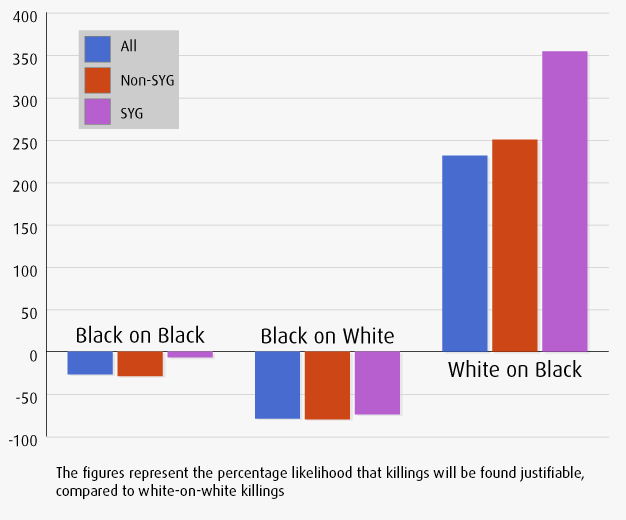
I referred to vigilantes and “some whites” – not all white gun-owners. And my view that black men are disproportionately victimized by Stand Your Ground laws is not a guess. It’s statistically proven. Another defends me somewhat:

People keep saying that Stand Your Ground played no role in the trial, because the defense did not explicitly invoke it during the deliberations.  But the judge DID explicitly use the Stand Your Ground language in her instructions to the jury. This is why people are saying the jury had no choice but to acquit Zimmerman. The attorneys for the defense presumably knew that this language would be in the jury instructions, so they could afford to ignore bringing it up themselves and focus generally on “self-defense.”

And yes, the juror interviewed by Anderson proved that this was a key factor in her judgment. Another reader:

I do not want to pile on, but I wanted to ensure that this post – “And he was told by the cops to stop his stalking. He decided to ignore them.” – was corrected. The transcript of the 911 call does not reflect your assertion:

Dispatcher
Are you following him?
Zimmerman
Yeah.
Dispatcher
Ok, we don’t need you to do that.
Zimmerman
Ok.

The transcript is clear, the 911 operator did not tell him to stop following Martin. Rather, the 911 operator’s comments (not a “cop” see infra) served to show that Zimmerman did not have an obligation or duty to continue to follow Martin. At no time did the operator tell Zimmerman to stop following Martin – this is an important distinction.

Furthermore, 911 operators are not police or cops; they are not deputized law enforcement officers. While this may vary from jurisdiction to jurisdiction, here the 911 operator was not a deputized police officer.

Hanging the argument, as Will did, on a 911 operator saying “we don’t need you to do that” as opposed to “don’t follow him any further” is a slim nuance, it seems to me. If a 911 caller had told me that (in DC, I lived for twenty years on a street-corner named after a gang, and witnessed countless suspicious activity day in and day out, with several gun-murders outside my condo), I’d have let it go. But then I’m not a wannabe hero like Zimmerman. Another:

If you listen to the unedited 911 call Zimmerman made, and look at a map of the neighborhood, you see Zimmerman gets out of his car, follows Trayvon, and then loses track of him. Zimmerman is on the phone for several minutes after he can no longer see Trayvon, talking with the dispatcher, then tells the dispatcher he will meet responding officers at a different part of the complex. He is returning to his car when Trayvon confronts him and the fight ensues. In short, Trayvon could have easily made it home but opted to double-back to engage Zimmerman. This has rarely been mentioned in the media. But this is supported by all the evidence in the case – the 911 call, Zimmerman’s statements to law enforcement and Trayvon’s call to his friend.

The question remains: does engaging in bad thoughts and “profiling” constitute a legal or moral basis for assault? The answer to the former is no. For those who answer yes to the latter, such a position invites the same concerns with Stand Your Ground laws. Can I now shoot someone if I’m profiled?

Another shifts gears:

I have to disagree with your statement, “But Martin was effectively put on trial as well; and an almost all-white six-person jury of women doesn’t seem to represent either Zimmerman’s or Martin’s peers.” It seems to imply that you think the juror should mimic either the defendant or the victim. Logically speaking then, would a white male rapist of a black woman be tried by an all white, all male jury or an all black, all female jury? Would only Wall Street executives serve on the jury if anyone is ever tried for the crimes that lead to the financial crisis in 2008? Who then would serve on a jury if war criminals are brought to trial?

I’m not a lawyer, and can only go by my HS civics class, but I think the premise is that we are all citizens of this nation and in that respect, all citizens are peers. I agree that the jury selected was unusual, but I’d still say they were Zimmerman’s peers and even Martin’s. I hoped for another outcome personally, but with the little that I heard about the evidence, I can understand the decision of the jury. There may be a problem with the laws (self defense, gun and stand your ground), but the system worked as designed.

I don’t doubt that. But the overwhelmingly white jury – without a single man on it – was indeed unusual. An expert goes into further detail on that point:

An accused’s right to a jury in a criminal prosecution is not a “technicality.” It’s a basic entitlement written with crystal clarity in the Sixth Amendment. Constitutional rights are not technicalities; they are enshrinements of basic human dignity. Your long and admirable record of criticism against holding Gitmo prisoners without charges or trial, for example, reflects that you hold such entitlements in higher esteem than dismissing them as mere “technicalities.”

The Sixth Amendment requires, among other things, “a speedy and public trial, by an impartial jury[.]” The word “peers” is absent. I stand to be corrected, but the common understanding is that “a jury of one’s peers” is (or was) an English, class-based practice going perhaps as far back as the Magna Carta: a nobleman was entitled to be judged by other noblemen, not by any commoner of a lower stratum. If that historical origin is accurate, the omission of the word “peers” from the Sixth Amendment is telling and characteristic of the Founding: all Americans are equal, none above or below another, before the law. It would be an ugly process indeed if every criminal defendant had the right to argue who is and is not worthy as his “peer” to consider the evidence against him and decide his fate. Racial politics would not always be the nastiest battleground in that regime.

The ideal of an impartial jury has been elusive, of course, but it did not evade Zimmerman or the people of Florida. Zimmerman had a jury of impartial fellow-citizens who deliberated well into a Saturday night whether or not to send him to prison. You’ve said yourself, and you are right, that they were equal to the task and clearly took it very seriously. He got what he was entitled to, under the law.

More reader pushback here.
A Fool, Not A Murderer?

George Zimmerman Found Not Guilty In Death Of Trayvon Martin

Saletan says that he “was going to write that Zimmerman pursued Martin against police instructions and illustrated the perils of racial profiling.” But, after watching all seven hours of closing arguments in the Zimmerman trial, he thinks better of it:

It turned out I had been wrong about many things. The initial portrait of Zimmerman as a racist wasn’t just exaggerated. It was completely unsubstantiated. It’s a case study in how the same kind of bias that causes racism can cause unwarranted allegations of racism. Some of the people Zimmerman had reported as suspicious were black men, so he was a racist. Members of his family seemed racist, so he was a racist. Everybody knew he was a racist, so his recorded words were misheard as racial slurs, proving again that he was a racist.

The 911 dispatcher who spoke to Zimmerman on the fatal night didn’t tell him to stay in his car.

Zimmerman said he was following a suspicious person, and the dispatcher told him, “We don’t need you do to that.” Chief prosecutor Bernie de la Rionda conceded in his closing argument that these words were ambiguous. De la Rionda also acknowledged, based on witness and forensic evidence that both men “were scraping and rolling and fighting out there.” He pointed out that the wounds, blood evidence, and DNA didn’t match Zimmerman’s story of being thoroughly restrained and pummeled throughout the fight. But the evidence didn’t fit the portrait of Martin as a sweet-tempered child, either. And the notion that Zimmerman hunted down Martin to accost him made no sense. Zimmerman knew the police were on the way. They arrived only a minute or so after the gunshot. The fight happened in a public area surrounded by townhouses at close range. It was hardly the place or time to start shooting.

That doesn’t make Zimmerman a hero. It just makes him a reckless fool instead of a murderer.

I have to say that whether Martin was a “sweet-tempered child” is irrelevant. And inferring that Martin initiated the scuffle because the cops were on their way seems a stretch. The cops were on their way before Zimmerman collided with Martin. I am not second-guessing the jury given the limited evidence available to prove something beyond reasonable doubt. But, unlike Will, I’m not going to infer that Zimmerman had no ill-intent or wasn’t racial profiling in his head.

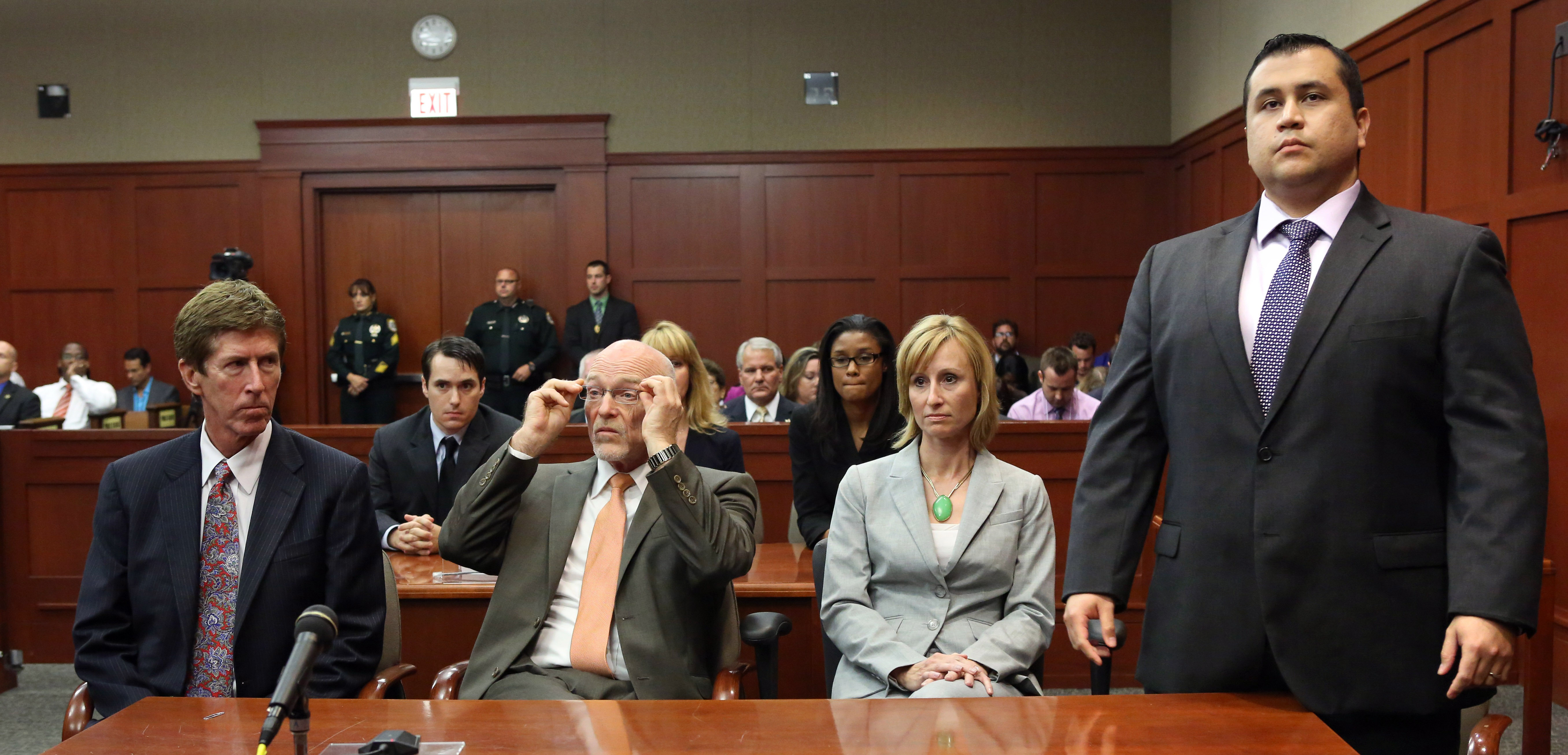
(Photo: George Zimmerman stands as the jury arrives to deliver the verdict, on the 25th day of his trial at the Seminole County Criminal Justice Center July 13, 2013 in Sanford, Florida. Zimmerman was found not guilty of second-degree murder in the 2012 shooting death of Trayvon Martin. By Joe Burbank-Pool/Getty Images)

This Is A Religious War

It’s sometimes hard for Westerners to understand the ferocity and passion behind sectarianism in the Middle East. I’m not an expert either – but the period of history I studied most exhaustively at Oxford was England and Europe in the sixteenth and seventeenth centuries. The town I grew up in has memorial grave-stones for the Protestants burned alive on the Tudor-era high street, as cheering Catholics gathered around. As an Irish-Catholic in England, I was taught the brutal history of the Protestant-Catholic wars that played out over three centuries – and were still killing people in my lifetime.

America never experienced this – which may explain in part the utopianism that led us into Iraq (and makes my own support of the fiasco even more indefensible in retrospect). I say this to introduce this video. I found it on a terrific new blog which is arguing for intervention in Syria, “Notes On Error“:

This scene is from Egypt, where a great meeting of political, economic, and religious rot is conspiring to sink the country. It is from June 23, was shot on the outskirts of Cairo, and depicts the reaction of Sunni mob – long inculcated in sectarian hate – to the news that a group of around thirty Shiites were praying to the successors of Ali in a private residence.

Here’s what it looks like when people really believe in religious distinction.

You can look at the barbarism and violence and ardent murderousness in this scuffle and see the imperative to stop it, or look at it and see the impossibility of intervening from the outside. I fear the Muslim world may have to go through much more of this before it gets past it. The wise foreigner stays out.

Right-Wing Media Whores

And, yes, that isn’t hyperbole. Having been busted a while back for writing positive articles about the Malaysian government, the hacks are back at the trough again:

Several conservative bloggers repeated talking points given to them by a proxy group for the Ukrainian government — and at least one writer was paid by a representative of the Ukrainian group, according to documents and emails obtained by BuzzFeed.

The Ukrainian campaign began in the run-up to high-stakes Ukrainian parliamentary elections last year, and sought to convince skeptical American conservatives that the pro-Russian Party of Regions, led by President Viktor Yanukovych, deserved American support. During that period, articles echoing Ukrainian government talking points appeared on leading conservative online outlets, including RedState, Breitbart, and Pajamas Media.

The stomach turns at this:

Warner Todd Huston was one of the more prolific of the writers tasked with writing pro-Yanukovych stories. He posted Ukraine content on Family Security Matters, the website run by the Center for Security Policy, anti-Muslim pundit Frank Gaffney’s think tank. Other posts appeared on small sites like Right Wing News, ChicagoNow’s Publius Forum, and Canada Free Press.

In a post titled “Russia’s Constant Interference in Ukraine,” Huston wrote that the imprisonment of Tymoshenko was justified.

“Too many in the west imagine that she was arrested by a Ukraine backsliding into a Soviet-styled police state where all opposition leaders are squelched,” Huston wrote. “This, however, just isn’t the case.” Huston called Tymoshenko “one of Putin’s best assets in the former Soviet-satellite nation.”

I can be snarky about Buzzfeed at times, but their reporting under Ben Smith is top-notch. I suspect the corruption of struggling young bloggers and writers by wealthy authoritarian regimes may be more widespread than many would believe.

Should Convictions Be Hard To Get?

Harlem Holds Vigil For Trayvon Martin

Wilkinson thinks so:

In Texas you can get away with shooting someone to death if they’re running away with your property. That’s insane, and it’s easy to see how a law like that rigs the system in favour of people with a lot of property—a class that remains disproportionately white and male. However, on the whole, our criminal-justice system is so frightfully racist because it’s too easy for prosecutors, not because it’s too hard. Of course, in a racist society, rules that help defendants are going to help the most privileged defendants the most, and that’s maddening. But that shouldn’t stop us from recognising that the least privileged, the most oppressed, the most discriminated against, are far and away most likely to stand accused. That’s why I suspect that a legal system making it harder for the likes of Mr Zimmerman to get away with it would be a system of even more outrageous racial inequity.

Cass Sunstein has a different view:

Reasonable doubt is far more difficult to meet than other legal standards, including “preponderance of the evidence” (used for most civil trials), “clear and convincing evidence” (used for deportation proceedings) and “substantial evidence” (used for administrative agency decisions). To be sure, any doubt must be “reasonable”; the law doesn’t require absolute certainty. But a good defense lawyer is often able to obtain an acquittal even if most jurors essentially agree with the prosecution’s account of the facts.

Among other things, the Zimmerman verdict shines a bright spotlight on the reasonable-doubt standard. Lord Blackstone famously said, “It is better that ten guilty persons escape than that one innocent suffer,” and most people think the reasonable-doubt standard reflects a judgment to that effect.

But that judgment isn’t self-evidently correct. If 10 guilty people escape punishment, then the deterrent effect of the criminal law will be significantly weakened, and wrongdoers will be set free to do more wrong, potentially putting innocent lives in jeopardy.

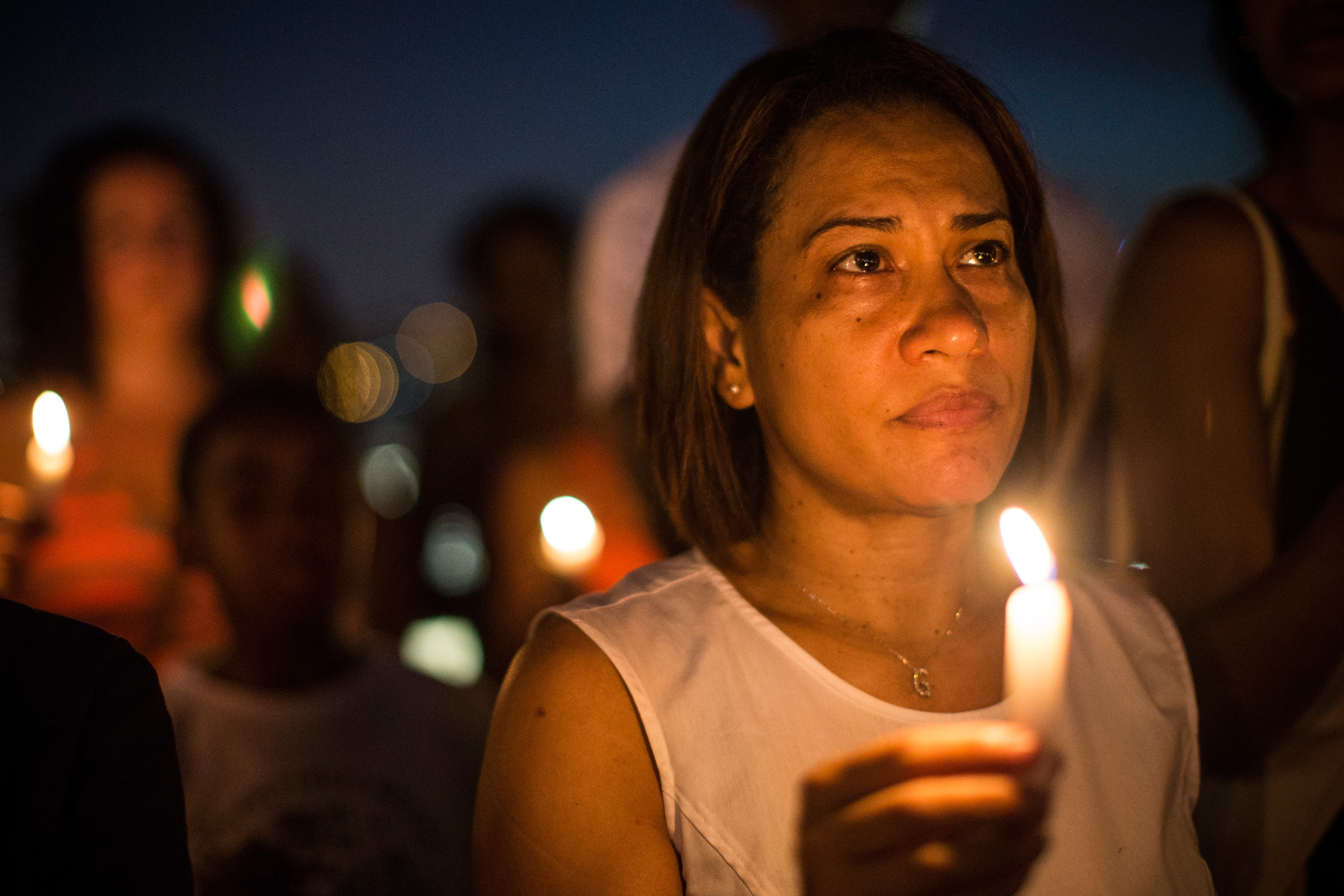
(Photo: Candida Feliz participates in a candle lit vigil for Trayvon Martin, the teenager who was shot and killed in Florida last year, on July 15, 2013 in New York City. By Andrew Burton/Getty Images.)

So “Stand Your Ground” Did Matter

Legally, it was irrelevant to the case, which hinged on basic self-defense. But listen to one of the jurors explain to Anderson Cooper how she came to her verdict:

COOPER: Because of the two options you had, second degree murder or manslaughter, you felt neither applied?

JUROR: Right. Because of the heat of the moment and the Stand Your Ground. He had a right to defend himself. If he felt threatened that his life was going to be taken away from him or he was going to have bodily harm, he had a right.

Geraldo got the jury dead to rights:

COOPER: It didn’t come up, the question of, did George Zimmerman profile Trayvon Martin because he was African-American?

JUROR: No, I think he just profiled him because he was the neighborhood watch, and he profiled anyone who came in acting strange. I think it was just circumstances happened that he saw Trayvon at the exact time that he thought he was suspicious.

The key to her was that Trayvon was allegedly just meandering around in the dark in the rain – but she concedes that that entire description was entirely from Zimmerman. It’s a glimpse into how the jurors balanced a black man’s corpse against a neighborhood watch’s testimony. And how racial profiling to some can seem like nothing of the sort to others.

The Tangible Tome

shackleton_web_1_med

“Books should always remain available in print,” Gracy Howard maintains:

When art enthusiasts enter an art gallery and survey freshly painted works, their first reaction is sensory. The canvases still bear the musty smell of pigments and glisten with wetness. In that moment, the spectator feels close to the painter. While an art aficionado can access Picasso’s paintings online, no one could argue such viewing is equivalent to firsthand observation. When Picasso devotees walk into a gallery, they are solely fixed on the artist and his reality.

Similarly, physical books limit readers and force them to ignore distractions. They enter the world of the author, and are obliged to forget or ignore the world outside. An e-reader allows easy shifts from reading to Facebook or a game app. But for the physical book reader, one must enter another universe.

Rachel Arons notes how lovers of physical books must increasingly reckon with craftspeople who re-purpose the printed page in the name of art:

Internet literary culture has also seen the flourishing of [a group] that celebrates books neither as precious physical objects nor as utilitarian vessels but uses them as the raw materials for works of art. The forms are varied—some are sculptures made from individual books, others use books as the building blocks for larger structures, while still others make books the canvas for paintings or drawings—but these projects have in common a way of playing off the near-spiritual aura that many of us associate with physical books, both augmenting books’ specialness by using them to make something beautiful, and undercutting it by ignoring their original purpose. …

The paper fetishists and text fetishists alike might view this kind of work as sacrilege—it does, after all, involve the destruction or deconstruction of books, and the disconnection of books from the act of reading. And yet, these works serve, perhaps more effectively than more straightforward forms of book worship, as moving expressions of our transforming relationship to books—and the potential for beauty, as well as loss, in that change.

Recent Dish on art crafted from books here and here.

(Image of “Shackleton’s Antarctic Adventure” by book sculptor Justin Rowe)

Being Sexual Without Sex

In an interview, the popular young adult novelist Judy Blume describes what the many letters she receives reveal about the emotional and sexual lives of teenagers today:

There are so many kinds of longing. The longing to fit in, the longing to figure it out, the emotional longing for friendship and being accepted—these are all as important as physical longing. Before all the hormones start raging, it’s the emotional longing that is most important, and boy, you have to learn to figure it out. In my day, the rules were there for us. Back then there was no abortion and no pill, and my friends and I knew that what we called “going all the way” could ruin our lives. It is not that we didn’t have physical sexual longing, but we went out with guys who understood that there were ways to satisfy—and it wasn’t oral sex. We kind of could be satisfied through touching; we could be physically satisfied with what we called petting. I went out with a lot of guys, and there was an understanding. I was never pushed to go all the way.

I think today’s kids miss out on being sexual without having intercourse.

There are a lot of sexual expectations today. Everyone is watching porn now. It turns you on, sure. I’m not saying don’t watch it. But what you see in porn is not what real love and sexuality within a long-term relationship are. Just like kids have to learn that the toy they see on TV is different from different from what it does in real life, I’d like to see the same thing taught about sex. I hate to see girls feeling like they have to emulate what they see in porn, with breast implants and pole dancing. I am actually glad that Amanda Bynes had her implants removed. This was a good development. What would I do if I was 16 now?

Avant-Garde Anime

Twenty-five years ago, Katsuhiro Otomo’s anime Akira broke the mold for animated storytelling. Phil Hoad pays tribute:

Anime (and its print sibling, manga) arrived in the west at the right time; its thrilling sense of spatial possibilities and destructive glee showed up Disney’s sentimental, character-focused approach and conservatism, as the American company slipped into its mid-90s slump. …

Led by Akira, anime expanded the idea of what animation could be: violent, abrasive, radically stylised, thoughtful and above all, adult. It arguably readjusted expectations ahead of the later revitalisation and maturation of the industry under Pixar – sweeping away the prejudice that anything with drawings was for kids. Along with a host of other cult and alternative influences percolating into the mainstream, its presence was widely felt by the late 1990s, from the west’s embrace of Pokémon fever, to tabloid moral panics, to the obvious visual transfusion received by The Matrix – which became the key touchstone for the next decade of Hollywood actioners. The Wachowskis put their debt on the record with their spin-off The Animatrix in 2003, just as Quentin Tarantino did with The Origin of O-Ren, the cartoon segment of Kill Bill Volume I.

The Trauma Of Gang Life

Members appear to be predisposed to mental illness:

The researchers aren’t certain why a third of these British gang members have tried to kill themselves, but believe suicidal behavior could be linked to other psychiatric illnesses or impulsive acts of violence directed inwards. Gang members are also quite young, [Professor Jeremy] Coid said. “The average age for gang membership is 15,” a demographic which wasn’t included in the study of 18 to 34 year olds. So do gang members become mentally ill as a result membership? Often extorted and pressured to express unfaltering loyalty, the study can’t say much about the psychiatric foundations of matriculating gang members.