Changing Climate, Changing Architecture

William Gething, coauthor of Design for Climate Changewarns that traditional construction materials will “behave differently” in a world wracked by global warming:

Brick, for example, is likely to become more saturated, particularly with increasing insulation standards, so it is likely to be less effective at keeping moisture out. Materials move more in higher temperatures, so joint design will need to take this into account. More intense rainfall events mean that gutters need to be sized differently.

Amid these challenges, Steve LeVine heralds the rise of the “extreme-weather architect”:

The emerging class of architecture suggests the onset of a global design-and-construction industry worth tens of billions of dollars in the coming years. Places such as the Netherlands have had to build around environmental- and weather-related challenges for years. But to the degree that extreme-weather architecture and construction moves to the mainstream, it would become one of the biggest infrastructure businesses on the planet, straddling US, Europe, Asia and Latin America. The cost of one recent set of recommendations alone, by New York Mayor Michael Bloomberg, responding to the ravages of Hurricane Sandy in October 2012, is estimated at $20 billion. Studies of the spending to come around the world range well into the hundreds of billions of dollars.

Recent Dish on Bloomberg and reforms to combat flooding here. As sea levels rise, architects continue to investigate the possibilities of buoyant buildings. One design firm recently finished work on a floating school in Lagos, with a floating neighborhood in the works.

In A Rush To Get Killed

Researchers studying evacuation strategies presented participants with a computer simulation depicting “a zombie-filled room with two available doorways on opposite sides”:

[T]heir task was to exit the room as fast as possible back to the corridor. During this evacuation phase, the zombies in the room were also attempting to get back out into the corridor. In a baseline condition, the participants showed no preference for either of the exits. However, when stress levels were ratcheted up with a prominent challenge to beat the current fastest time … participants were more likely than in the baseline condition to try to exit via the route they used to enter the room, even though this was the most crowded exit favoured by the majority of the zombies.

The result fits with anecdotal observations from real life emergencies. For instance when the Lowenbrauskeller building in Munich was evacuated in 1973, two people were killed in a crush at the main exit as fleeing occupants ignored eight other signposted exits on route.

“Our approach has revealed what can only be described as nonrational human decision making under the influence of the motivational, potentially stress-inducing, treatment,” said Bode and Codling. “We suggest that in evacuations with higher stress levels evacuees will be more likely to use known exit routes and less able or willing to adapt their route choices, even if this results in longer evacuation times.”

Return West, Young Man

The Atlantic‘s “By Heart” series features authors discussing their all-time favorite passages in literature. Novelist Susan Choi chose these lines from The Great Gatsby:

That’s my middle-west–not the wheat or the prairies or the lost Swede towns but the thrilling, returning trains of my youth and the street lamps and sleigh bells in the frosty dark and the shadows of holly wreaths thrown by lighted windows on the snow. I am part of that, a little solemn with the feel of those long winters, a little complacent from growing up in the Carraway house in a city where dwellings are still called through decades by a family’s name. I see now that this has been a story of the West, after all–Tom and Gatsby, Daisy and Jordan and I, were all Westerners, and perhaps we possessed some deficiency in common which made us subtly unadaptable to Eastern life.

Choi comments:

There’s something moving…in the straightforward phrase: “I am part of that.” Nick’s about to forswear his connection to the east, and to the rich, after he’s spent the whole book trying to establish a place among the elite. It’s not just a beautiful and ennobling image of returning to his origins in the Midwest, it’s the beginning of a kind of rolling movement into the future. Here’s Nick’s telling us that his involvement in the story, this period of his life, ended. In talking about the trains of his youth that took him home, Nick also allows the reader to understand that he’s traveled away from the story. You have this image of train travel, so it’s very literalized. He creates this visual image of leaving the East to go home when he’s young, when he was a student, but he’s making it clear that that’s what he did after this story, too.

The Best Of The Dish Today

11

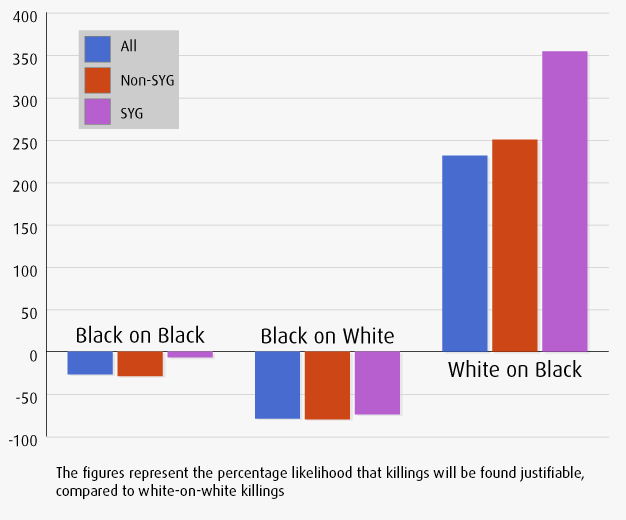
The tragedy of Trayvon Martin dominated the day – my first take here, second here, online reax here and dissents here.

The horrifying prospect of Republican gains in 2014 loomed into sight. These dancers have to be seen to be believed. And Roger Berkowitz talked of Arendt and Eichmann.

My first take on the Martin-Zimmerman case was the most popular post today, followed by this analysis of the propaganda tricks of Fox News.

See you in the morning.

(Chart via Frontline)

A Teen With An Internet Connection vs Cancer


At age 13, after losing a family friend to pancreatic cancer, Jack Andraka set out to discover why the available tests couldn’t detect the disease earlier and at a lower cost. Amazingly, he stumbled upon a way to do just that – he estimates his method is 168 times faster, 26,000 times cheaper and over 400 times more sensitive than the tests available at the time. He tells his story in the above TED talk. In a companion interview, Andraka provides context:

I was really shocked by the fact that we didn’t have any way to detect pancreatic cancer. I mean, with a lot of diseases you have one test that can detect it. Like with breast cancer you have the mammography, or with HIV/AIDS you have that screening test. But with pancreatic cancer you have to have this really invasive biopsy or you have to go through an MRI or CT scan. All those are really invasive and I couldn’t believe there wasn’t just a routine assay you couldn’t just get to see if you had pancreatic cancer.

Update from a reader:

Oh no, not Jack Andraka again. He took an existing idea and pretends it was his idea.

His statistics all seemed to improve by a factor of 10 from the Intel paper where he first won their prize until two so-called science journalists at Forbes started writing about him. An article at pancan.org correcting some of his errors got scrubbed just before his appearance at the SOTU address.

He did an interesting science fair project and then seemed to get caught up in a huge hype machine that distorted what he did 0 fueled mostly, it seems, by the Forbes “journalists”. All this was happening around the time of the Manti Teo/Lennay Kekua story and Sports Illustrated was getting reamed for not enough fact-checking on a feel-good story. I would love to see Forbes get reamed for their inadequate fact checking on this feel-good story.

Yes, the world needs more people interested in science. But it also needs fewer science journalists passing on bogus data from science fair projects.

Another reader:

This TED talk has recently been making the rounds (I’ve been sent it by two people this week alone).  Alas, here is the take on it from an actual pancreatic researcher I know, at a major US medical school:

This marker was discovered by Anirban Maitra about a decade ago.  The student applied it to an inexpensive device and seems to be getting the credit.  I think the competition judges were wrong on the selection.

From a scientific perspective, the test is useless.  This problem repeats countless times because only clinicians and basic scientists are involved in these studies, no epidemiologists.  The problem is that pancreatic cancer (or ovarian, liver, etc., the rare ones) has a lifetime risk of 1% in the US.  This means that a test that did nothing, said everyone tested was negative, would be correct much more than 99% of the time.  In addition, even if it were 99% accurate in giving positive results, for every person correctly identified as having pancreatic cancer, more than 10 people would be incorrectly identified even though they didn’t have cancer (false positives).  These individuals would then go on to have expensive invasive testing and suffer psychologically before determined that they didn’t have cancer, and there would be some potential morbidity associated with the unnecessary testing.

So the problem is that for a rare disease like pancreatic cancer, a test that is 99% accurate (we say 99% sensitivity and 99% specificity) is still not useful enough as a population screening tool.  The test in question is not close to 99%, let alone better.

Another:

If you find out you have pancreatic cancer early then the most likely outcome is that you know for a longer time that you’re going to die. The survival rates by stage are here. And don’t forget these are also biased. Imagine that if a disease is definitely going to kill you by a certain date then early detection gives the illusion of better survival simply because you know about it earlier.

Kudos to the kid, but until somebody comes up with a cure it’s just false hope. These stories are fundamentally cruel and don’t deserve this kind of publicity.
The Static Sport

After reading that “90 percent of baseball is apparently spent waiting around,” Lowen Liu steps up to defend the sport:

This will no doubt fuel those gleeful detractors who go on and on about how boring the sport is. But to disparage the inactivity in baseball, the seemingly interminable spaces between action, misses what makes the sport beautiful in the first place. The downtime is, in fact, functionally important to an appreciation of baseball. The kicking of the dirt, the look in, the waiting, the twitching, the time outs, the languid anticipation, compressing time into the tiny window where the pitcher is actually about to throw the ball and everyone’s eyes widen in possibility. What other sport teases your attention in this way, dares you to look away, to yawn, and then grabs hold of you with a resounding crack of the bat?

And with what other sport is not paying attention a part of the game? The exciting moments would not be so exciting without the preparatory tedium. Nodding off for a few minutes in the sixth inning after two beers, drooling on yourself a little, only to wake when others cheer is not a flaw of spectatorship but a charm.

Secret Santa On Steroids

[youtube http://youtu.be/phoUVH05kEg?t=17s]

Rachel Feltman explains how the online exchange Redditgifts created a culture – and eventually a business – of anonymous gift-giving:

Through a process that [developer Dan] McComas calls “friendly stalking,” users found out their recipients’ likes and dislikes based on the information given, which included their Reddit username, then sent them an anonymous present–laptopslobstersplush sharks stuffed with toys and t-shirtscruises, and even the odd serenade from Jimmy Fallon. In the first exchange, there were 4,375 participants from 62 countries, and they spent $183,118 on gifts for each other. …

In a TED talk this past May, McComas tried to figure out what Redditgift’s “secret” is.

He pointed to the research of  Harvard Business School’s Michael Norton, presented in a TED talk called “Money Can Buy Happiness.” Norton gave students envelopes full of cash, including instructions to spend the money on either themselves or others by the end of the day. At the end of the day, the self-spenders weren’t any happier than they’d been in the morning, but the gift-givers were—whether they’d had $5 to spend on coffee for a stranger in Starbucks or $20 to give to charity. “What he learned,” McComas told the crowd, “is that you can buy happiness with money. You just have to spend that money on a stranger.” The warm-and-fuzzies a Santa gets from spending their cash on someone they’ll never meet are only amplified by a few of the site’s features: Recipients post pictures and descriptions of their gifts, so a Santa knows just how happy she’s made them—plus, each Santa knows that she’ll eventually get a surprise of her own in the mail.

The GOP Exposed, Ctd

Rod Dreher shakes his head at the House Republican’s farm bill, which boosts Big Ag subsidies and forgoes food stamp aid:

The Republican Party is throwing corporate welfare at farmers, but telling people who are so poor they qualify for government aid to feed themselves that they are not a priority. As a matter of basic politics, the Republicans have lost their minds. This is Mitt Romney’s 47 percent remark all over again.

President Obama has vowed to veto this GOP farm bill if it hits his desk, so Congress is going to have to try again. You know who needs to find their voice and use it right now? Conservative Christian pastors and leaders. Christians need to seriously reconsider uncritical support for a political party that prioritizes lavishing subsidies on the agribusiness rich while telling the poor to sit quietly and wait for scraps.

Kinsley is puzzled:

Forget about kids going to bed hungry. (Melodramatic, but accurate.) Can this possibly be good politics?

Are there actually people out there waiting for a candidate who will kill the food stamp program? It takes your breath away. The Republicans have now cornered the heartless vote. But are there enough heartless people in this country to counterbalance the sane people fleeing the other way?

The net effect of the farm bill, as it stands now in the House, is to take money away from a successful program for making sure that no one starves, and giving it to a variety of programs whose goal is to raise the price of food, for the poor and everyone else. Even if you only care about how things look, this does not look good, it seems to me.

Fred Matzner walks through the wreckage of the bill:

To start with, the bill takes aim at the environment by first crippling, and then outright ending, conservation programs, as well as zeroing out mandatory funding for rural renewable energy and efficiency development. Thousands of farmers from every state have participated in these programs, generating income while helping restore wetlands and prairies, reducing fertilizer and pesticide pollution that poison our rivers and drinking water, and decreasing the nation’s reliance on polluting fossil fuels.

In stark contrast, the bill would make permanent billions of dollars in subsidies for corporate farmers. This would upend decades of precedent and lock taxpayers into these high costs, at least creating a deterrent to regular updating and improving of our farm policies, and at worst threatening the continuation of important policies to protect soil, water, wildlife, and public health.

More Dish on the GOP’s big government bill here.

When Idealism Enables Evil

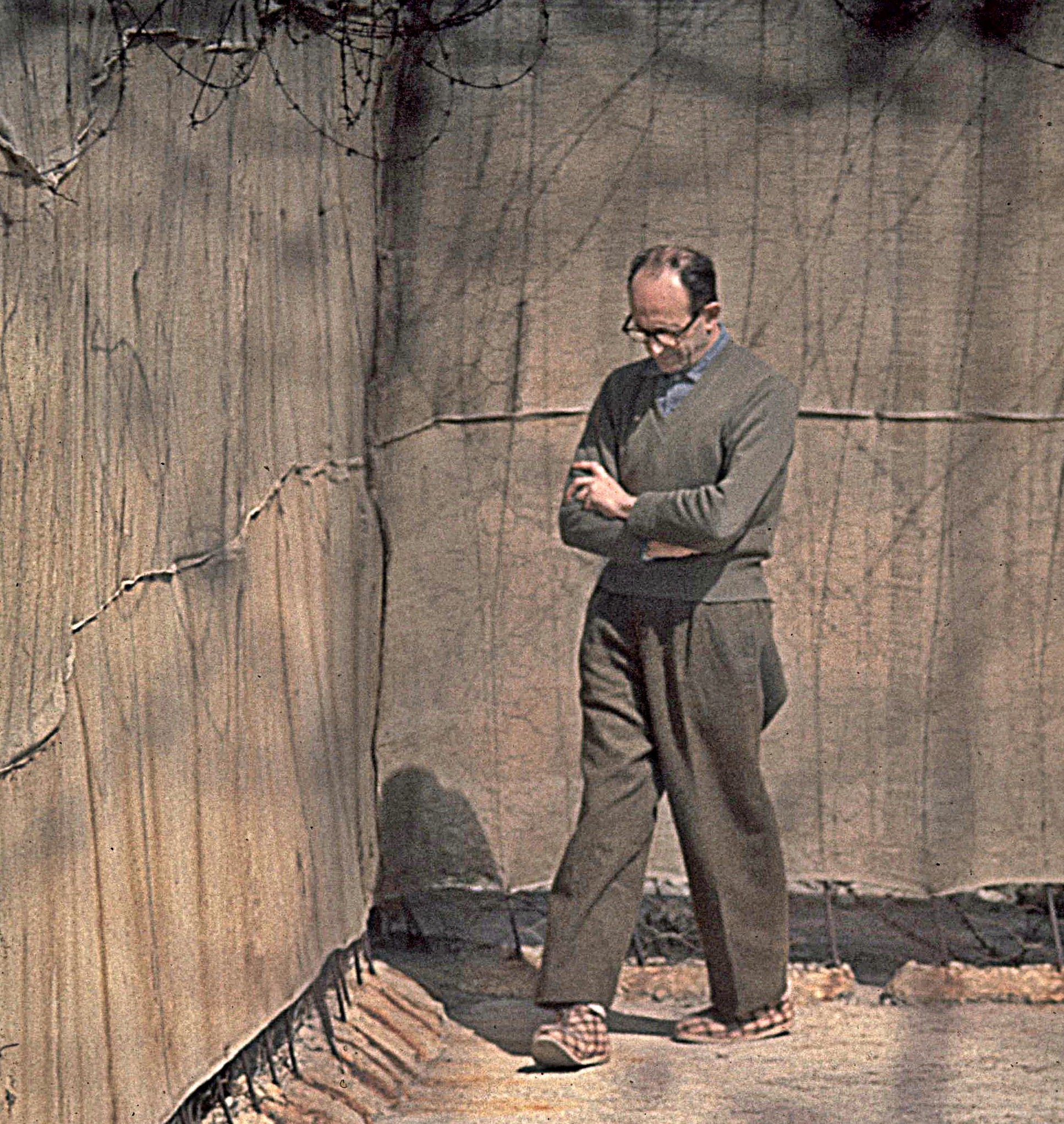
Flickr_-_Government_Press_Office_(GPO)_-_Nazi_war_criminal_Adolph_Eichman_walking_in_yard_of_his_cell_in_Ramle_prison

Reporting from Jerusalem on the trial of Nazi war criminal Adolf Eichmann, the political theorist Hannah Arendt famously coined the phrase “the banality of evil.” Roger Berkowitz explains what she really meant:

The insight of “Eichmann in Jerusalem” is not that Eichmann was just following orders, but that Eichmann was a “joiner.” In his own words, Eichmann feared “to live a leaderless and difficult individual life,” in which “I would receive no directives from anybody.” Arendt insisted that Eichmann’s professed fidelity to the Nazi cause “did not mean merely to stress the extent to which he was under orders, and ready to obey them; he meant to show what an ‘idealist’ he had always been.” An “idealist,” as she used the word, is an ideologue, someone who will sacrifice his own moral convictions when they come in conflict with the “idea” of the movement that gives life meaning. Evil was transformed from a Satanic temptation into a test of self-sacrifice, and Eichmann justified the evil he knowingly committed as a heroic burden demanded by his idealism.

“What stuck in the minds” of men like Eichmann, Arendt wrote, was not a rational or coherent ideology. It was “simply the notion of being involved in something historic, grandiose, unique.” Eichmann described how difficult it was for him to participate in the Final Solution, but took pride in having done so. He added: “if I had known then the horrors that would later happen to the Germans, it would have been easier for me to watch the Jewish executions. At heart I am a very sensitive man.” In a terrifying act of self-deception, Eichmann believed his inhuman acts were marks of virtue.

Recent Dish on Arendt here, here, and here.

(Photo: Eichmann walking in the yard of his cell in the Ayalon Prison, Ramla, Israel, circa 1961, via Wikimedia Commons)