Plants and flowers from seed to bloom:
Month: July 2013
What Would John Locke Do?
Declaring himself one of the “nones” – that is, someone without religious affiliation – George Will opines on religion’s place in the American experiment:
[T]he American founding owed much more to John Locke than to Jesus. The founders created a distinctly modern regime, one respectful of pre-existing rights — rights that exist before government and so are natural in that they are not creations of the regime that exists to secure them. In 1786, the year before the Constitutional Convention, in the preamble to the Virginia Statute for Religious Freedom, Jefferson proclaimed: “[O]ur civil rights have no dependence on our religious opinions, any more than our opinions in physics or geometry.”
In fact, religion is central to the American polity precisely because religion is not central to American politics. That is, religion plays a large role in nurturing the virtue that republican government presupposes because of the modernity of America. Our nation assigns to politics and public policy the secondary and subsidiary role of encouraging, or at least not stunting, the flourishing of the infrastructure of institutions that have the primary responsibility for nurturing the sociology of virtue. American religion therefore coexists comfortably with, but is not itself a component of, American government.
Religion’s independence of politics has been part of its strength. There is a fascinating paradox at work in our nation’s history: America, the first and most relentlessly modern nation, is — to the consternation of social scientists — also the most religious modern nation. One important reason for this is that we have disentangled religion from public institutions.
Robert Long comments on the distinctiveness of Wills’ approach:
Will travels ground seldom tread by today’s avowed unbelievers: he warmly praises American religions both for the democratic impulses they impart and for the intermediary role they play between citizen and state. And if natural rights don’t require religion, they are “especially firmly grounded when they are grounded in religious doctrine.”
The nones of America should “wish continued vigor for the rich array of religious institutions that have leavened American life,” he concludes.
Here Will differs sharply from today’s professional nonbelievers, who regard religious belief with something akin to revulsion, and who channel the old progressive view that religion must be eclipsed for humankind to secure a long and prosperous future. The George Will model combines unbelief with a fondness for religion, not a fear of it.
How Fox News Fools
Canonization Fodder
Garry Wills casts a cynical glance at the nearly simultaneous canonizations of John Paul II and John XXIII – the latter being the widely-hailed pope who called the Second Vatican Council:
Though John Paul II is not as hotly resented by liberals as Pius IX, he is still subject to deep criticism. He presided over the church during its worldwide pedophile scandal, and he gave the handling of that problem to Cardinal Joseph Ratzinger, the head of the Congregation on the Doctrine of the Faith—the very man who, succeeding him, would waive the time-lapse needed to begin his predecessor’s canonization. (Who can think that a saint in heaven ever protected a predatory priest?) John Paul had treated as “irreversible” his stands on matters such as homosexuality, married priests, and women priests. He is a symbol, for some people, of things that need remedy in the church.
But—not to worry—the “good Pope John” is again being pressed into service. He was beatified to take the sting out of Pius IX’s promotion. He is now being canonized to make a joint heavenly pair with John Paul II. To rush John XXIII forward, Pope Francis is even waiving the normal requirement of a second miracle for canonization. John XXIII is the feel-good pope in a time of turmoil, even though he is being used to sanction the turmoil caused by John Paul II.
New Atheists, Old Ideas
In the above video, Andrew Brown, an atheist sympathetic to religion, tangles with Daniel Dennett over his caustic dismissals of faith, pushing him on whether the New Atheists actually have any new arguments. Hemant Mehta, siding with Dennett, comments:
The New Atheists don’t bring anything new to the table because religion hasn’t brought anything new to the table. Theologians and religious mouthpieces are still using the same fallacy-laden arguments for the existence of God they’ve always used, so our rebuttals have never had to change; they’ve only had to adapt to new mediums, and we’ve done a pretty amazing job with that.
What the New Atheists (and I would lump many other atheist activists under this umbrella, too) offer is a no-holds-barred critique of religion that comes at you all at once from many different angles. Instead of the periodic trickles of atheism we saw a few decades ago, “New Atheism” hits you like a firehose. You can’t escape the books and podcasts and websites and non-religious celebrities. Nor can you ignore the media mentions of atheists that happen with increasing frequency… or the way we’ve dominated Internet discourse. The New Atheism has made it safer for people to declare their godlessness. (That’s not to say it’s easy everywhere, but it is certainly easier than it used to be.)
Staking Out Holy Ground
Matthew Harwood criticizes our expensive, resource-intensive infiltration of mosques – a tactic he argues never would be tolerated if aimed at ultra-conservative Christian churches:
[T]he chief of the NYPD Intelligence Division admitted in sworn testimony last summer that the Muslim surveillance program did not even generate a single criminal lead. The incredibly invasive, rights-eroding program was a complete bust, a total waste of the resources of the New York City Police Department.
And that’s without even considering what is surely its most harmful aspect: the likelihood that, at least in the short term, it has caused irreparable damage to the Muslim community’s trust in the police. Surveillance, concludes the Mapping Muslims report, “has stifled constitutionally protected activity and destroyed trust between American Muslim communities and the agencies charged with protecting them.”
When people fear the police, tips dry up, potentially making the community less safe. This is important, especially given that the Muslim-American community has helped prevent, depending on whose figures you use, from 21%-40% of all terrorism plots associated with Muslims since 9/11. That’s grounds for cooperation, not alienation: a lesson that would have been learned by a police department with strong ties to and trust in the community.
A Poem For Sunday
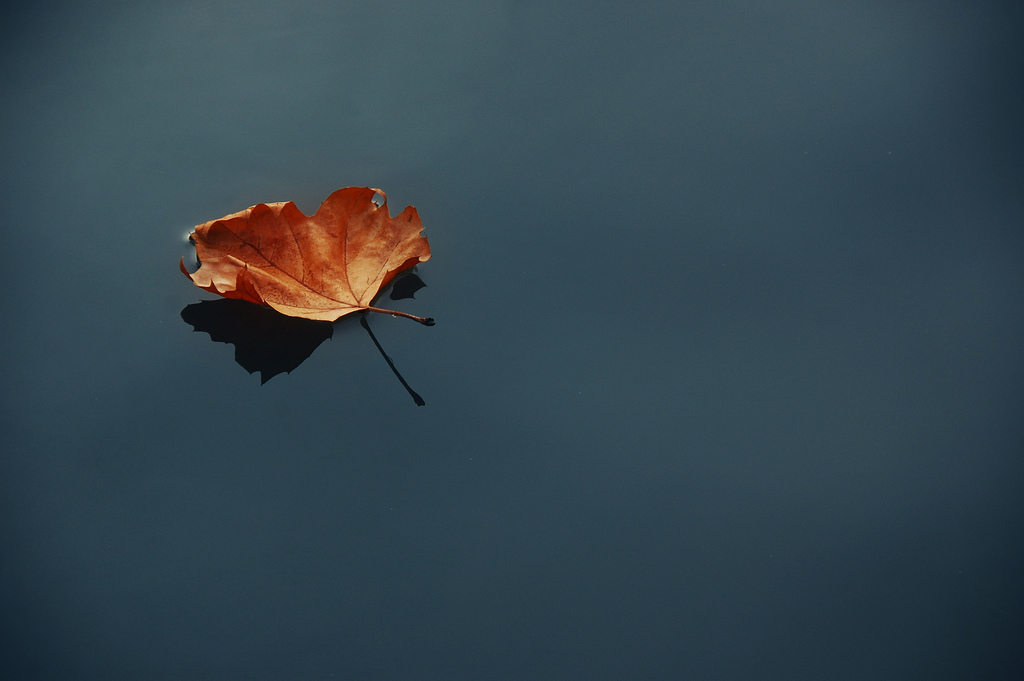
“The Peace of Wild Things” by Wendell Berry:
When despair for the world grows in me
and I wake in the night at the least sound
in fear of what my life and my children’s lives may be,
I go and lie down where the wood drake
rests in his beauty on the water, and the great heron feeds.
I come into the peace of wild things
who do not tax their lives with forethought
of grief. I come into the presence of still water.
And I feel above me the day-blind stars
waiting with their light. For a time
I rest in the grace of the world, and am free.
(From Collected Poems, 1957-1982 © 1984 by Wendell Berry. Reprinted with kind permission of North Point Press. Photo by Flickr user blinkingidiot)
“Do Scientists Pray?”
Maria Popova spotlights Albert Einstein’s 1936 response to a sixth-grader named Phyllis, who inquired on behalf of her Sunday school class:
Dear Phyllis,
I will attempt to reply to your question as simply as I can. Here is my answer:
Scientists believe that every occurrence, including the affairs of human beings, is due to the laws of nature. Therefore a scientist cannot be inclined to believe that the course of events can be influenced by prayer, that is, by a supernaturally manifested wish.
However, we must concede that our actual knowledge of these forces is imperfect, so that in the end the belief in the existence of a final, ultimate spirit rests on a kind of faith. Such belief remains widespread even with the current achievements in science.
But also, everyone who is seriously involved in the pursuit of science becomes convinced that some spirit is manifest in the laws of the universe, one that is vastly superior to that of man. In this way the pursuit of science leads to a religious feeling of a special sort, which is surely quite different from the religiosity of someone more naive.
With cordial greetings,
your A. Einstein
Hippies For Jesus
Reviewing the Larry Eskridge’s God’s Forever Family: The Jesus People Movement in America, John G. Turner concludes that “Jesus People” of the 1960s and ’70s “had the same basic beliefs as other evangelicals, but with an added fervency, literalism, and—in many cases—sweetness”:
Eskridge begins his story in the Bay Area, the birthplace of both the counterculture and the Jesus Movement. Skillfully capturing the cultural and intergenerational tension among the Christians of this era, he introduces Baptist pastor John MacDonald and a young hippie couple, Ted and Elizabeth “Liz” Wise. Liz attends MacDonald’s church “while coming down from the previous night’s acid trip.” Eventually, her excitement about Jesus proves contagious to her philandering and oft-stoned husband. Soon, he was telling his fellow joint-smoking friends, “Jesus is my Lord.” Then Wise went to MacDonald’s church and told the congregation, “He is back.” Wise did not explain what he meant by that statement, other than to share that the Lord had told him to tell it to everyone he met.
Although the Jesus People movement petered out, Turner says its influence lives on:
If executives eventually commercialized the Jesus generation’s music, the children of the long 1960s introduced “praise music” into countless American churches. More generally, they reminded evangelical leaders that it could be more effective to sacralize rather than to shun popular culture.
Eskridge, associate director of Wheaton College’s Institute for the Study of American Evangelicals, recently compiled a guide to “some of the most popular music acts of the 1970s that many American youth of that era never heard of,” including “grandfather of Christian rock” Larry Norman (above).
“An Almighty Paradigm Shift”
Damian Thompson notices the deep convergences between Justin Welby, the new Archbishop of Canterbury, and Pope Francis:
The similarities between Archbishop Welby and Pope Francis are almost spooky — once you get past the fact that one is an Old Etonian evangelical Protestant and the other a South American Jesuit who prays in front of garlanded statues of Mary. Archbishop Welby was enthroned two days after Francis was inaugurated. That’s simple coincidence, but the other parallels tell us a lot.
Both men were plucked from senior but not prominent positions in their churches with a mandate to simplify structures of government that had suffocated their intellectual predecessors, who also resembled each other in slightly unfortunate ways. Rowan Williams and Benedict XVI seemed overwhelmed by the weight of office; both took the puzzling decision to retreat into their studies at a time of crisis in order to write books — Dr Williams on metaphor and icon-ography in Dostoevsky, Benedict on the life of Jesus. When they retired, early and of their own volition, their in-trays were stacked higher than they had been when they took office. Their fans were disappointed and the men charged with replacing them thought: we’re not going to let that happen again.
Pivoting off the essay, James Mumford grapples with what the elevation of these two Christian leaders might portend:
Emerging there, [Thompson] argues, is an extraordinary thing: a new ecumenism centred around evangelism. ‘The alliance between Catholics and evangelicals is the most important and surprising development in global Christianity for decades,’ he writes.
This is indeed remarkable – that an Archbishop of Canterbury enamoured with Catholic Social Teaching and devoted to Ignatian spirituality and a Latin American Cardinal who likes reading the bible with Protestant ministers were appointed within weeks of each other; that American evangelicals love ‘our’ Pope Francis and conservative Catholics increasingly find common ground with Protestants around hot-button moral issues.
I don’t think it’s exaggerating to see this development as the twenty-first century church’s ‘perestroika’ (‘reconstruction’) and ‘glasnost’ (‘openness’). A sea-change in attitudes. An almighty paradigm-shift. An opening out onto the ecclesiastical other, rooted in a conviction that what unites Christians of different denominations is far greater than what divides them.
 The Dish