My first reaction to seeing the scrotum was yay for you, and this from a feminist who is also a lesbian. Think of all the (non porn) movies containing full frontal female nakedness and/or female privates. Think: how often does a movie show a really naked man? Think of all the paintings in which men are covered and a woman in the scene is naked. Think of all the naked women in art. Think how many public places would welcome a statue of a naked woman, but not of a man. Think of all the after-sex scenes in movies where the woman is lying there naked and the man has a sheet or blanket strategically placed. Same with coming-out-of-a-shower scenes, with towels, etcetera, etcetera.
I have to say this occurred to me too: that there is a sexual double standard here. A naked breast and a woman’s hairy armpit resulted in no complaints. But an abstracted view of a foreskin or a simple Wikipedia photograph of testicles created a furore. I’m not adding to the NSFW debate; that’s settled to protect readers from workplace sexual harassment laws when they are reading at work. I’m just noting a double standard with nudity.
Is my reader wrong? Are men (and women) more disturbed by public displays of the male anatomy than the female one?
The irony, of course, is that one possible reason for humans’ relatively large, descended scrota was display. Our ancient ancestors in England certainly seemed to think so (see right from Cerne Abbas). Compared with other apes, human balls are very “in your face”. The Liam Drew piece which we linked to provides this as one of a few potential reasons:
Portmann argued that by placing the gonads on the outside, the male was giving a clear indication of his “reproductive pole,” a sexual signal important in intergender communication. Portmann’s best evidence was a few Old World monkeys who have brightly colored scrota.
The human penis is also far bigger than any of the other African apes who are our closest genetic cousins. Humans’ dicks are three times the size of gorillas’. Again, among the most plausible explanations for this is display to attract females – and display will tend to be more common in warmer climes, where hanging loose is more comfortable than in, say, Japan. Hence Madeleine Kahn’s famous remark: “It’s twue!” Hence Chinpoko Mon‘s PR strategy in America.
So our civilization now conspires to hide what might once have been designed to display. Freud was onto something, wasn’t he?
Ambers thinks the bill probably “never had a chance”:
Boehner is not willing to sacrifice himself for the sake of immigration reform. He could easily bring a bill to the floor, any bill, and get it passed, and then appoint conferees who will move towards the Senate version of the bill. But he won’t. If he did that, he’d be canned. Hence his “majority of the majority” rule, the Hastert rule, which is both a reflection of, and a contributor to, the anti-governing spirit within the Republican Party.
The louder parts of the GOP base, the talk radio hosts, are resolutely against compromise on immigration. Even Sean Hannity, who flip-flopped the day after the 2012 election because he (temporarily?) agreed with the smarties in his party that principles had to be exchanged for expediency, is now back where he was. Why? That’s where his listeners and viewers are.
Jonathan Bernstein notes that most Republican supporters of immigration reform in the House appear “more scared of their shadows than they are of a bill failing”:
It gets to something very important to know about legislating. Yes, counting votes matters. But intensity also matters. There are plenty of bills that have theoretical majorities but never go anywhere, either because of strong opposition or, even deadlier, a lack of strong support. What it comes down to is that comprehensive immigration reform probably can be saved — but only if those Republican politicians, Republican operatives and Republican-aligned interest groups who support it are willing to go all-out, and not just behind closed doors, to get it.
The simplest way to explain the politics of the bill right now is that, after the election, the Republican Party was scared of the Hispanic electorate, and so they wanted to act. But Republicans are no longer that scared of Hispanic voters, and so they no longer want to act. Unless the Hispanic community can change that, there won’t be an immigration bill.
This makes you want to look away, as the NYT – after the WaPo’s disgrace – is caught recycling insinuations with no basis in fact. Margaret Sullivan actually gets a NYT editor to say this about anonymously-sourced, now-debunked speculation that Edward Snowden’s PRISM information had been downloaded by the Chinese government:
Mr. Kahn said that it’s important to see this passage in the story for what it is: An exploration of what might have happened, based on experts who did not claim to have direct knowledge.
That’s the NYT standard against a “non-journalist” like Glenn. It’s laughable. But the last laugh is Greenwald’s.
2-year-old Jack Rigby is comforted by his mother Rebecca as the coffin of his father Fusilier Lee Rigby leaves Bury Parish Church after a military funeral on July 12, 2013 in Bury, Greater Manchester, England. The Royal Regiment of Fusiliers soldier was killed whilst off duty near Woolwich Barracks in South-East London in May. Islamist barbarians, Michael Adebowale and Michael Adebolajo, are accused of the 25-year-old’s murder. By Peter Macdiarmid/Getty Images.
“I see those six ladies in the jury putting themselves on that rainy night, in that housing complex that has just been burglarized by three or four different groups of black youngsters from the adjacent community. So it’s a dark night, a 6-foot-2-inch hoodie-wearing stranger is in the immediate housing complex. How would the ladies of that jury have reacted? I submit that if they were armed, they would have shot and killed Trayvon Martin a lot sooner than George Zimmerman did. This is self-defense,” – Geraldo Rivera, Fox News.
That’s a staggering statement, effectively giving white people the right to kill anyone above 6′ 2″ in a hoodie. I haven’t been able to watch the cable coverage of this, but readers tell me that Fox is race-baiting in hysterical, reckless fashion. If Rivera’s understanding of “self-defense” is correct, then it’s open, hunting season on African-American men.
Yesterday, I declared that, “in deference to the readers, this blog will henceforth censor itself in one area: no more non-pornographic, non-sexual depictions of any faintly naughty bits of the actual human body.” A reader pushes back:
The reason I subscribe to The Dish is because I love the range of issues you cover. Politics and poetry, religion and pop culture, sex and, well, “non-pornographic, non-sexual depictions of faintly naughty bits of the actual human body.” You don’t have to let our anxieties drive your editorial decisions, but if you really ARE sympathetic to those who work in nanny corporatist states, how about you post such (YES, I AGREE) innocent-yet-controversial photos below the fold?
Because anyone who links to the post would immediately see the whole thing, rendering them just as vulnerable to lawsuits from office busy-bodies, regardless of a “read-on” NSFW warning. Another reader goes into more detail:
I was one of those people who was at work when I scrolled upon the scrotum story with its giant picture of the aforementioned body part. I quickly moved past it lest anyone in my office caught sight of it; I’m just glad I wasn’t on a public desk when I perused your website (I’m a librarian at a public library). I’ve had the same reaction before to the graphic pictures of war that you’ve posted. But in reading your reaction to the Dissent of the Day, I disagree with your conclusion.
It’s not a matter of Puritianism; it’s a matter of Internet etiquette.
The NSFW label gives people an option to make a choice which is whether to view a movie, picture, or website. For the people who are at work, they can make a mental note to visit the site later if they want to follow up and view the material without worrying about possible work consequences. For the people who are in the comfort of their own home, they can make a choice as to whether or not to view it; it is not thrust upon them unsuspectingly. By placing the materials sans label out there, you are usurping that choice.
It’s not that I object to the material in the slightest; it’s that I object to having my choice taken away. I do realize and fully appreciate that you want your readers to see these images and videos because they are so powerful. I trust in your news curation skills to bring forth the issues that need the light of day, to be talked about, and to be discussed in full measure. Placing material behind a label isn’t furthering Puritanism, it’s being a good friend to your readers in saying, “Hey, I have something that might be a bit shocking but it’s important to me that you see it and know about it.”
As a librarian, I don’t believe in holding things back either. But I do believe in letting people know what they are getting into. I inform them and let them make their own decisions. Trust your readers and they’ll follow you to where you point them.
I notice the the reader thought the image of the scrotum was “giant”. It was actually half the size of a full Dish photo and embedded in a pull-quote. But the reader has a point. Another:
If the offensive image is worth posting, then put it below the “read-on.” It’s a reasonable compromise. And I am asking you to compromise because of both workplace considerations and personal considerations. Wewould like to be able to choosewhen and if we want to look at potentially offensive material. This is why there are wrappers on porn magazines. This is why movie trailers omit graphic sex and violence. Your readers have varying sensibilities, and they have a right to determine what they will see on their computer and when they will see it. It’s about maintaining a civilized society, which requires negotiation, compromise, and mutual consideration.
I don’t just work in a place where co-workers would rather not see dick, but I also have three kids, two boys and a girl, ages 10 to 11, and a sensitive wife, who doesn’t prefer to glimpse close-up dick shots as she walks past my screen.
We’ve never published a “close-up dick shot,” unless you count this abstract close-up. I cropped the scrotum image precisely to avoid that. Another:
Putting a NSFW label or tucking an image under the fold is not censorship. Censorship is making it impossible to view something. NSFW is a warning: “Here there be balls.” It does not restrict me from viewing it, just gives me a heads up in case I work in a cubicle. Which I do.
And a final reader thinks I’m being inconsistent:
I understand the point you’re making in this post, but you’ve already set precedent by employing the NSFW label in the past, mostly when linking to videos containing profanity. If it’s Puritanical to warn people about nudity and violent content, then why should you give a heads-up to those who might take offense at “bad” language?
Videos come ready-made for choice to play them or not, so a warning can actually work. Not so with photographs.
Is there a compromise? I repeat that I think I’ve been unwittingly insensitive to the dangers readers face if these images pop up on their screens with co-workers nearby. But it kills me to have my freedom to publish anything curtailed by employment laws. (This may not be direct government censorship but it is indirect censorship. The sexual harassment laws, in the end, are enforced by government.)
Patrick suggested a way forward that maximizes our ability to post what we want, without risking readers’ jobs. We’ll carve out space in the middle of the weekends for adult visual content, particularly Saturday night. Think of it as a free speech zone as well as a free reading one. It grieves me to be constrained this way; but my readers are right. There needs to be a balance between my freedom and their livelihoods. If we link back to Saturdays in the week, we’ll add a warning. Thanks for all the input.
Michael explores the complexities of political Islam throughout the Middle East, and stresses that Islamists must not be repressed or otherwise excluded from the democratic process:
Michael Wahid Hanna is a Senior Fellow at The Century Foundation, where he works on issues of international security, international law, and US foreign policy in the broader Middle East and South Asia. He appears regularly on NPR, BBC, and al-Jazeera. Additionally, his Twitter feed is a must-read for anyone interested in Egyptian politics. Our ongoing coverage of the current events in Egypt is here. Michael’s previous answers are here. Our full Ask Anything archive is here.
David Brooks proffers the most succinct rebuttal to the nihilist partisanship – and civic cowardice – of Lowry and Kristol. He’s right on the substance, but also, critically, on the politics. Money quote:
The final conservative point of opposition is a political one. Republicans should not try to win back lower-middle-class voters with immigration reform; they should do it with a working-class agenda.
This argument would be slightly plausible if Republicans had even a hint of such an agenda, but they don’t. Even then it would fail. Before Asians, Hispanics and all the other groups can be won with economic plans, they need to feel respected and understood by the G.O.P. They need to feel that Republicans respect their ethnic and cultural identity. If Republicans reject immigration reform, that will be a giant sign of disrespect, and nothing else Republicans say will even be heard.
This is what so many on the right just don’t understand. Their very arguments against universal healthcare and gay marriage and immigration reform are all made as if the working poor, gays, and illegal Latino immigrants were not in the room. You think we don’t hear that in the tone and content of what they are saying? It’s the way in which people who desperately need healthcare are dismissed as abstractions, or in which gays are never offered any actual policy but avoidance and disdain, or in which hard-working immigrants – living in a kind of radical insecurity no white native-born Republican has ever fully experienced or imagined – are simply told to hang around for a few more years, or “self-deport”. That bespeaks a disconnect that obscures any capacity to govern this country as it actually is – rather than as they would like it to be.
Like David, I think this is a crucial moment. Actual conservatism should not be averse to an imperfect compromise to resolve a festering and difficult socio-economic problem. Actual conservatives should see the essentially conservative case for reform that Brooks outlines. But, alas, we are not dealing with actual conservatives, prepared to negotiate or reform the bill for the better. We are dealing with what Richard Hofstadter called “pseudoconservatives” – alienated, paranoid, visceral loathers of any concession to the party that just won popular vote majorities for House, Senate and the presidency.
You cannot reason people out of something they did not reason into. But I admire Brooks for trying.
Brad Plumer summarizes a new Department of Energy report (pdf) “which argues that large swaths of America’s aging energy infrastructure — from nuclear reactors and barges transporting coal to oil rigs and power lines — are at risk from the effects of global warming”:
If the United States keeps getting warmer, then many Americans will use air conditioning more often. Combine that with the risk of more frequent power-plant interruptions, and the Western United States will need an additional 34 gigawatts of generation capacity by 2050 to keep the lights on, according to a study by Argonne National Lab. That’s an extra $45 billion. On the flip side, however, some parts of the United States, like the Northeast, will have fewer heating needs in the winter.
Now, the DOE report does suggest that there are ways to adapt to many of these changes. Transmission lines can be hardened against wildfires. Fracking firms can pursue more water-efficient ways to drill for natural gas. Hydroelectric dams facing lower reservoir levels can install more efficient turbines. But this all costs extra.
 no complaints. But an abstracted view of a foreskin or a simple Wikipedia photograph of testicles created a furore. I’m not adding to the NSFW debate; that’s settled to protect readers from workplace sexual harassment laws when they are reading at work. I’m just noting a double standard with nudity.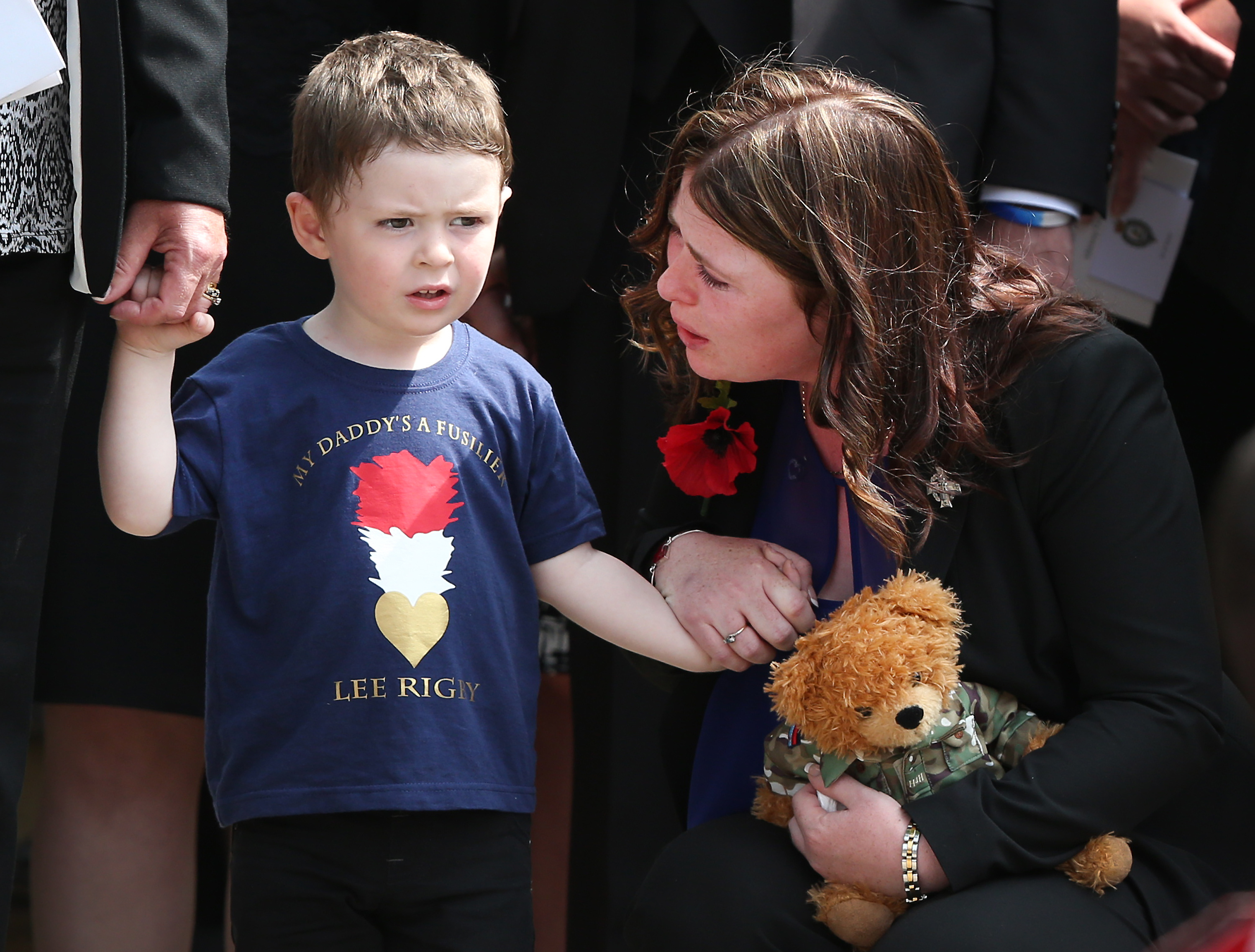


 The Dish