Is the failure of the Morsi government an example of how “time moves quickly now,” with the Egyptian public swiftly seeing Islamist rule for what it is and rejecting it decisively, opening the door for more liberal alternatives? Or is this a case where the process [Reuel Marc] Gerecht hopes for [in his book The Islamic Paradox] hasn’t even had time to get off the ground, and the military’s intervention will just return us to the same old cycle of secular dictatorships pre-empting democracy in order to keep the lid on fundamentalists, whose popular appeal endures and eventually prompts another upheaval down the road? The Morsi government was in power long enough to produce a mass protest movement against the Muslim Brotherhood, but was it in power long enough to actually discredit the Brotherhood (at least in its current form) as the most plausible alternative to military rule? If the military actually holds new elections now, will they produce anything like a viable third way between Islamism and dictatorship, Morsi and Mubarak, the minaret and the tank?
Long-time reader, recent subscriber, first-time writer. Your entries on bisexuality have been fascinating, and frankly, long overdue. As a closeted bi male who has been sexually active with both men and women for nearly 15 years, I’ve agreed with most of your readers’ analysis. I just want to point out that I think people’s understanding of genuinely bi people, and particularly bi men, is severely lacking for the reason that Dan Savage hinted at on your blog. Most men who are actually bisexual cannot come out because the vast majority of heterosexual women (and likely even bisexual women) would eliminate them as sexual partners. Hence, I share Dan’s skepticism that many out “bi” men are actually bisexual. On very rare occasions I’ll come across women who are turned on by male-male contact, but these instances are few and far between. In contrast, men are often turned on by the prospect of dating a bi woman, which makes it easier for them to be open.
So bottom line: if you’re a bi guy who wants to continue having sex with women, you really don’t have a choice but to keep quiet in most scenarios. Perhaps if more bi people came out, this attitude might change, but I’m not so sure.
Another is on the same page:
If male-on-male sex was as big of a turn-on for women as girl-on-girl is for men, I guarantee there would be more male bisexuals. If anything, guy-on-guy sex is a turn-off for most hetero woman. Check out the number of women’s profiles on adult dating sites that say no bisexual men.
Another:
Those who say there is no such thing as a male bisexual really need look no further than the pages of Craigslist for a refutation. The number of men who are straight-identified but also have sex with men is legion. You go to Grindr or any of dozens of m4m hook-up sites and the married men there are ubiquitous. Maybe they’re all just deeply closeted gays, but I rather doubt it. There are so many men who are married, happily enough, willing and able to perform with their wives, but also crave a little cock on the side. Most of these men who I have met wouldn’t identify as bi, but as straight, and unless you cruise their scene you wouldn’t know they exist. But they assuredly do exist on the down-low.
As for myself, I’m monogamous and married happily to a woman, but before marriage I had sex with both men and women. I liked women somewhat better, and it was certainly the path of least resistance, socially, so I wound up partnered with one. But it was not a foregone conclusion by any means. Had I met the right guy … you never know.
Another reader:
I will try to keep this brief so that my wife of almost 20 years does not walk in before I send this off – and then I will delete the message from my sent folder afterwards. You guessed it. I’m not out. Not very much. I’m bisexual, and I am a man, and I have struggled for most of my adult life with how to be live in a way that respects my own integrity and the integrity of my relationship with my wife.
I am sometimes attracted to men – good-looking men (go figure) who are better looking and in better shape than I am – but I am also attracted, and with equal intensity, to good-looking women, especially women who seem to have their shit together and who seem like caring people. On a less elevated plane: I find women with beautiful, tanned breasts a huge turn-on. (Yes, Freudians can get to work on me now.) I have not acted on any attraction in either direction – except for seeking out pornography of both the straight and gay varieties. (Actually, I’m more interested in either a straight couple making love in a seemingly tender, loving way or a man satisfying himself solo – much less attracted to gay couples having sex, though I will look at that occasionally online. Not interested at all by any couple, straight or gay, having anal sex. Not my thing.)
I worry sometimes that I am addicted to pornography. I’d like to kick it altogether. But I am essentially in a sexless marriage; my wife has not had much interest in making love, or even engaging in a quickie, more than every four or five months. And then, I know she’s doing it only for me; her libido has been low for most of the past decade, though I try to be tender, patient, and I do my best to make her feel good when we do make love. It’s not my wife’s fault that I turn to porn. I’m an adult, and that’s on me. But I would rather make love to her than satisfy myself in front of a lonely computer screen once she has gone to work. And I know with all my heart that I will never try to sneak out on her with anyone else, woman or man. I’m bisexual, and I have integrity. I’m as monogamous as someone who turns to porn can be.
Eight years ago, I tried to fess up to my wife that I thought I might be bisexual. I knew I was – no doubt in my mind – but that’s how I tried to ease into the conversation. My wife believes in LGBT rights, marriage equality, stomping out stereotypes on campus, making everyone feel welcome – all that. She truly does. Except she tried to persuade me, in gentle terms, that I probably wasn’t bisexual.
When I was a pre-teen, I was sexually abused by an older male relative, and my wife wondered out loud whether I was perhaps looking at male porn online as a way of dealing with that experience. No. I honestly do not believe that experience is what caused my bisexuality. I sought out counseling in my early twenties for the after effects of that abuse (low self-esteem; lack of confidence when I was attracted to women I wanted to date during my bachelor days; anger toward the person who abused me and robbed me of my innocence before my 12 birthday). I know that gay-bashers and LGBT-bashers would like to argue that people who are bisexual or gay have been “warped” in that direction through abuse or “indoctrination” during their youth. I reject that idea with all my heart. I believe strongly that I am bisexual not because of what someone DID to me, but because that’s just who I am.
And it’s okay that I’m bisexual. I’m sometimes attracted to men, sometimes to women, but most of all I love my wife despite the imperfect marriage we share. But do I exist? Do bisexuals exist? Yes, of course we do. Even if many of us don’t feel like we can come out very far, or very often, with our friends, coworkers, or even our spouses. We exist, and my hunch is that most of try to stay healthy inside and get past the self-loathing that plagues too many in the LGBT community. We’re part of that community. And, once more: we exist.
Another:
I’m a straight, happily married man – 90% of the time, I am solely attracted to women and haven’t had any sexual experiences with men… at least, since I was a kid. Back then, I fooled around twice, with two different friends. We were very young. There was no penetration, just play. I didn’t achieve orgasm, but I don’t think I knew how at that point. I do remember being extremely turned on.
Since then, I’ve occasionally found myself desiring a man. I don’t identify as gay, and honestly don’t see myself ever being in a homosexual relationship. I do wonder if I need to be with someone more sexually adventurous. It’s so complicated, and I worry a lot about ruining the good thing my wife and I have by making her feel either inadequate, or suspicious. I wonder if I came out as “bi” if she would still want to be with me. I think she would, but that’s a big chance to take. And I simply don’t care enough about labels to take it.
Another:
You have gotten many emails from readers and they tend to be from the Western world. The discussion about sexuality is much more mature than where I am from. I grew up in Pakistan before moving to US when I was 22. I went to an elite all-boys boarding school, ages 13-18. There are raging hormones and no outlet. While messing around with other boys my age, I had strong crushes on girls. On the weekends when parents and families could visit their kids at the school, many of us would walk around and talk about all the girls who came to visit their friends, and we talked about all the MILFs (yes, my friends mothers!) and how hot they were. Now, is it simple to figure out one’s straightness or bisexuality?
I have crushes on guys even now, but I have stronger feeling towards girls. I actually know at least two dozen guys who were with me in boarding school who were the same way. Most of them are married and will probably never admit to all the experimentation. For all intents and purposes they are straight now.
A female reader:
I’m late to the thread but feel compelled to respond. I still consider myself bisexual by orientation – I first fantasized about men, have had many fulfilling sexual relationships with them, and was very late coming out – but now, lesbian by definition. Because whatever came before, I’m only interested in women going forward. I found that out when I was engaged to a man, but still sometimes thinking about women. I knew if it happened with him, it would happen with any man I was with. After that break-up, I started dating women … and with my first serious girlfriend, I never thought twice about being with men. I suppose on some level I still consider my definition fluid, but not enough to affect who I choose to pursue.
If the experience has taught me anything, it is that sexuality really is about who you want to be with romantically, not who you want to sleep with. Who makes your heart beat faster.
Another:
Here’s my deal: I identify as a straight woman, am happily married to a guy. But about 97 percent of my sex fantasies are about women – very feminine, large-breasted women. But these fantasies involve zero kissing, holding or emotional content – just fucking, and the women needn’t be actual people I know or have seen.
BUT in person, in reality, I’m attracted to very beefy, masculine men (I married one). They’re the ones I look at in yoga class, the ones I’ve slept with in real life, want to kiss and hold and have had satisfying relationships with. When I fantasize about sex with men, it takes me longer to get worked up, and I can only get off thinking about real guys – whether it’s my husband or some guy on TV or at the gym. I can’t conjure up male body parts and get aroused, the way I can with women.
I’ve only had sex with one woman and found it awkward and off-putting. I really don’t want to touch a woman’s slender shoulders or curvy butt or whatever – I’m just not interested. I especially do not want to kiss a woman or have a relationship with her. And no, I’m not a closet case in denial – I’ve explored that idea, and it’s just not accurate.
Weird wiring, eh? But what else to call me but bisexual?
One more:
It seems to me we will find out how many bisexual folks are truly out there when being gay is overwhelmingly accepted. At that point there will be no point in gay folks identifying as bi to try and hide the fact they are gay. One can only hope that some day in the future sexual identity will no longer matter and people can be who they are and find pleasure with whatever sex they choose. I suspect that for every 100% straight person there is someone out there of the same sex that could turn them on. The same applies to 100% gay people.
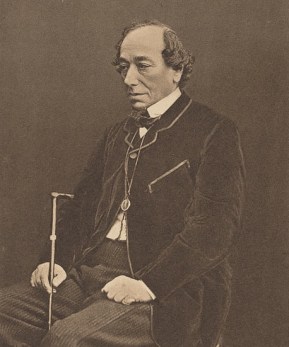
Stephen Donoghue is impressed by the insights of Robert P. O’Kell’s book on the life of Benjamin Disraeli, gleaned from the cringe-inducing novels of the former British prime minister:
[T]here’s a method to the utter madness of plumbing [the novels’] depths; the genius of O’Kell’s book is the way it gently prompts a re-assessment not of the merits of Disraeli’s fiction but rather its motivations. O’Kell holds that the books represent “an embodiment of [Disraeli’s] fantasies about himself,” that fiction offered “a form of compensation for failure or defeat by imagining transcendent success.”
It’s nothing short of a revelation in insight, and it carries this marvelous book from beginning to end, throwing entirely new light on the frail heroisms of this ungainly, irresistible figure. Disraeli was a vocal Anglican, but he was also a proud Jew, famously retailing stories of how his ancestors, heroic Sephardim, fled from Spain rather than submit to the Inquisition, and O’Kell rightly points out the entrenched opposition that could greet a politician of Jewish descent in a Parliament that had excluded Jews until 1858 unless they swore an oath proclaiming the Christian faith. That Disraeli might have been in part using his fiction as an emotional release-valve for the pressure of his eternal outsider status in British society and politics is a stunning stroke of interpretation. On the one hand, O’Kell explains, “the novels are means of rationalizing the past and reshaping the formative experiences of his identity; on the other, they are a way of keeping the question of identity open by exploring imaginatively the possibilities of further commitment.”
It is probably unlikely that the Obama administration will want to substantially cut aid to Egypt. (Put aside the Camp David money for a moment — it’s not clear to me that this is effected by the Foreign Assistance Act, and even if it is, it’s very difficult to imagine Congress or the White House being willing to jeopardize this lynchpin of peace with Israel.) Like many aid programs, the hundreds of millions of dollars that goes to Egypt is not meant as a present or a reward; it’s considered to ultimately serve U.S. interests. Egypt’s troubled economy has been a key contributor the political instability there. That instability is bad for everyone, including U.S. interests.
Marc Lynch worries about the consequences of today’s coup:
There remains a very real, urgent risk of major violence and further political or even state collapse, of course. But even if the worst is avoided, Egypt faces a real risk of becoming trapped in an endless loop of failed governments, military interventions, and popular uprisings. The very idea of democratic legitimacy has taken a severe beating, and the coming constitutional reforms and new elections will not pass easily. Building real consensus behind genuinely democratic institutions has to remain the guiding light for U.S. policy and the Egyptian political class, no matter how difficult this appears.
Larison expects that “large numbers of Morsi supporters will regard any new government created as a result of the coup as illegitimate and will seek to sabotage and undermine it”:
That bodes ill for religious and political minority groups that will probably be scapegoated in response to Morsi’s overthrow, since they will make for easier targets and have been identified with the coup. Perversely, the coup may have done what the Muslim Brotherhood could not have done for itself, which is to return it to the role of a persecuted opposition movement.
It stretches “all the way back to the age of Shakespeare, at least”:
“The meaning of the word has changed a lot over the last four centuries,” said Dana Ste. Claire, a Florida historian and anthropologist who studies, er, crackers. … Ste. Claire pointed me to King John, published sometime in the 1590s. One character refers to another as a craker — a common insult for an obnoxious bloviator.
What craker is this same that deafs our ears with this abundance of superfluous breath?
“It’s a beautiful quote, but it was a character trait that was used to describe a group of Celtic immigrants — Scots-Irish people who came to the Americas who were running from political circumstances in the old world,” Ste. Claire said.
Those Scots-Irish folks started settling the Carolinas, and later moved deeper South and into Florida and Georgia. But the disparaging term followed these immigrants, who were thought by local officials to be unruly and ill-mannered. “In official documents, the governor of Florida said, ‘We don’t know what to do with these crackers — we tell them to settle this area and they don’t; we tell them not to settle this area and they do,” Ste. Claire said. “They lived off the land. They were rogues.”
The immediate reaction among its members will be to complain that the Brotherhood was cheated. And in a sense it was, but complaint will not substitute for reflection forever. What will be the movement’s more studied reaction? In a conversation two months ago with a Brotherhood leader Amr Darrag, I made a bold prediction that in ten years, the organization will regret having sought the Egyptian presidency in 2012. He politely disagreed. In retrospect we were both wrong: The regret will likely set in over the next several months.
And what will this reflective organization regret?
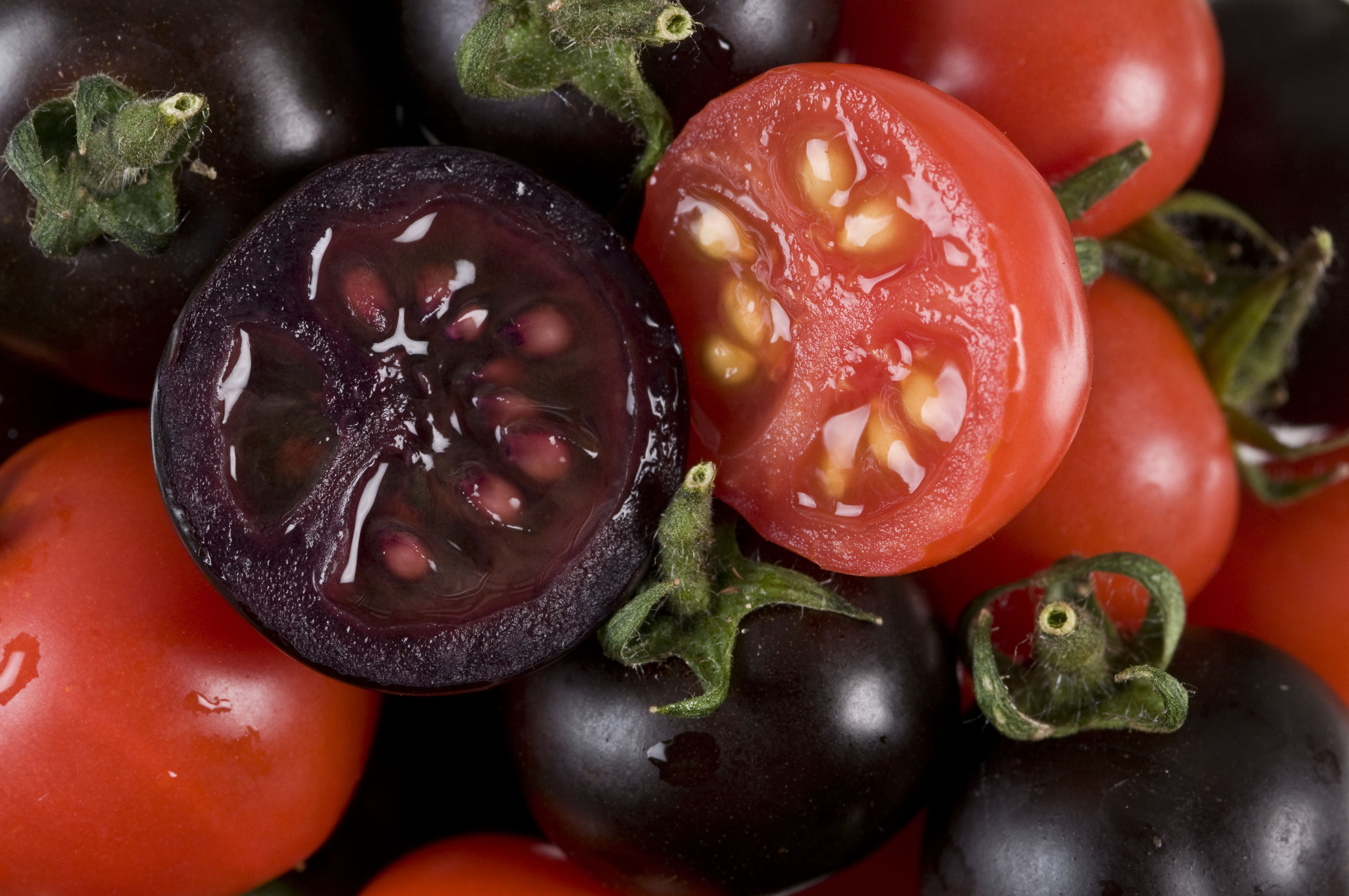
Consider the “purple tomato,” engineered to preserve the nutrients by splicing “two genes from snapdragon plants into normal red tomatoes”:
Purple tomatoes are not only more nutritious than red ones, but they also have a long shelf life, as researchers recently found. The short shelf life of many fruits and vegetables poses major logistical issues. To get fresh-looking, ripe tomatoes into your local grocery store, tomatoes are harvested while still green, kept in cold storage, and then artificially ripened right before they’re put up for sale. We’re all familiar with the result: pale, tasteless tomatoes that have a lower nutritional value than tomatoes that are allowed to ripen while still on the vine. … The researchers found that purple tomatoes produce lower amounts of these self-destruction enzymes. As a result, purple tomatoes are less susceptible to fungus, and they remain firm more than twice as long as red tomatoes. This means that purple tomatoes could be harvested later, after they’ve ripened naturally.
The article concludes, that, as “the technology to make them improves, GMO foods designed to be healthier could become a bigger part of your diet.” Recent Dish on the benefits of GMOs here and here.
(Photo: Scientists from the John Innes Centre, UK have genetically engineered tomatoes to contain very high levels of the cancer-fighting antioxident ‘anthocyanins’, which as a result have turned the usually red fruit into a deep purple. By John Innes Centre UK/Getty Images)
John McWhorter writes that “there’s a difference between, say, the white man who once dismissed me as ‘just another nigger’ when I bested him in an argument in 1993 and [Trayvon] Martin referring to [George] Zimmerman chasing him as a ‘creepy-ass cracker’: power.” He also considers the intended audience:
Martin didn’t call someone a cracker in a public forum, nor did he call someone a cracker to his face. He referred to someone as a cracker in a private exchange that he had all reason to suppose would never be heard again by anyone. That’s different, even to the extent that using the term wasn’t ideal.
One must be consistent here, and I am: I argued last week that Paula Deen’s use of the N-word in private in 1986 was different from her hauling it out upon someone or popping up with it on the air or at a booksigning. Again, degree matters. I think Deen’s apologies were sincere—and enough. People almost never completely erase the psychological conditioning of their childhoods. Many note that Deen has spent most of her life living after the Civil Rights revolution, but remember, as a 66-year-old, Deen’s formative years were the fifties, in the Deep South. Of course such a person might pop out with the N-word in a private heated moment, even in her forties. Unideal, but unsurprising at her age (although I don’t mean that all Southerners of her years are so likely to pull it) and so many people do so much worse: I don’t think Deen should suffer the penalty of losing her livelihood because of it. I’d feel otherwise if she were 30: degree, again.
Alyssa thinks Deen’s use of the racial slur is only part of the story:
An investigation by the Rainbow/PUSH Coalition into Deen’s employment practices suggest that many workers in Deen’s businesses have had good experiences, but also that many of them fear retaliation, and that some feel there’s an environment of racial discrimination in promotions and raises. Those allegations are significant and important, and deserve just as much attention as Deen’s language. But they’re also less shocking and sexy, and less easy to dismiss as a somehow-forgivable relic of the past than Deen’s use of ugly words or antiquated sense of aesthetics.
In other words, Deen’s potential use of the word “nigger” renders her exactly the kind of figure the Hollywood vulture industry likes: a little old lady who did wrong without knowing what she did, and who can be rehabilitated and educated for everyone else’s profits and amusement. Addressing her as a bad boss would make her greedy and vindictive in a rather more commonplace way, and in a way that reflects on quite a large number of other people whose racial biases may not show up in their words, but are obvious in the composition of their workforces.
 O’Kell’s book is the way it gently prompts a re-assessment not of the merits of Disraeli’s fiction but rather its motivations. O’Kell holds that the books represent “an embodiment of [Disraeli’s] fantasies about himself,” that fiction offered “a form of compensation for failure or defeat by imagining transcendent success.”
 The Dish
