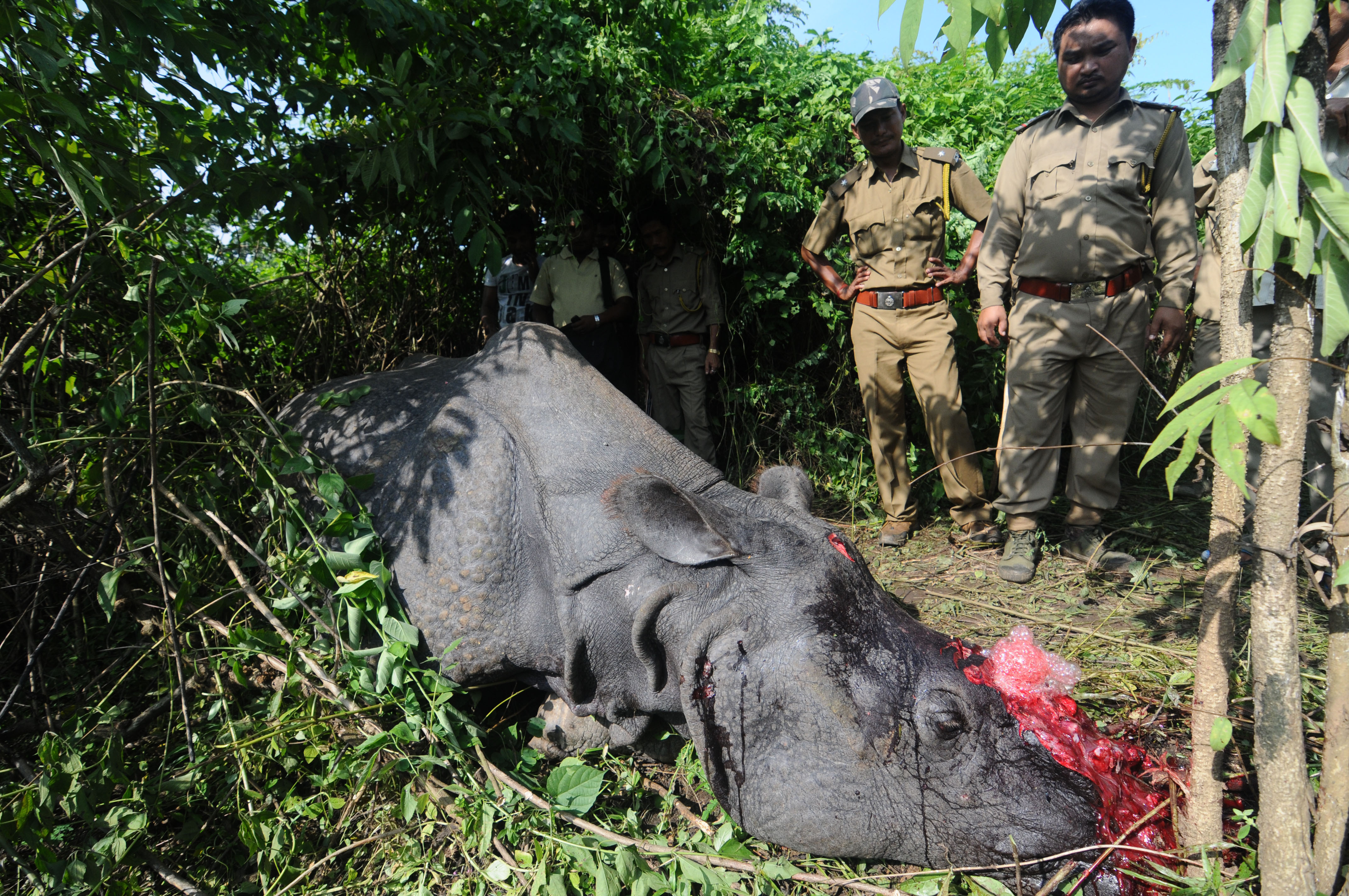
Lauren Kirchner updates us on the devastating black market for rhino horns:
South Africa, where 75 percent of the world’s rhinos live, [is] at the forefront of a counterintuitive move to legalize the rhino horn trade. If adopted, the new policy would promote safer rhino-horn farming: rhinos could be sedated while parts of their horns were cut off, and then the horns would grow back. A team of Australian conservationists signed on to the idea in March.
Legalization remains highly controversial among animal rights activists and wildlife conservationists.
The World Wildlife Fund, the Environmental Investigation Agency, and the International Fund for Animal Welfare have all been critical of the idea. What if lifting the ban increases demand, as it did in fact following similar, previous experiments with the ivory market? Or what if a legal trade simply establishes a parallel but separate market, while illegal (whole) rhino horns and heads continue to sell underground?
Likewise, would legitimizing the sale of rhino cups encourage and validate the baseless myth that they actually have medicinal properties? Perhaps conservationists’ and governments’ efforts would be better directed toward fighting the very misconception that drives the demand in the first place.
Update from a reader:
Has anyone suggested flooding the market with fake rhino powder? It’s not like there is an FDA certification or Good Housekeeping seal of approval for rhino horn guaranteeing authenticity. If the fake can’t be distinguished from the real, then flood the market with fake. Then the expense of getting the real may make it not worth doing since there’s so much more profit with the fake.
Previous Dish on the subject here and here.
(Photo: Indian forest officials stand near a one horned horn Rhinoceros, which was killed and de-horned by the poachers at Karbi hills near Kaziranga National Park, some 250km east of Guwahati the capital city the northeastern state of Assam on September 27, 2012. A rhino was killed by poachers and its horn removed in the early hours on Thursday, barely a day after one was killed and another left bleeding in the world-famous Kaziranga National Park. By Biju Boro/AFP/Getty Images)
 The Dish