Three centuries of doctors treated nostalgia as a disease:
Swiss physician Johannes Hofer coined the term in his 1688 medical dissertation, from the Greek nostos, or homecoming, and algos, or pain. The disease was similar to paranoia, except the sufferer was manic with longing, not perceived persecution,
and similar to melancholy, except specific to an object or place. Though Hofer is credited with naming nostalgia, it existed prior to that. During the Thirty Years War, at least six soldiers were discharged from the Spanish Army of Flanders with el mal de corazón. The disease came to be associated with soldiers, particularly Swiss soldiers, who were reportedly so susceptible to nostalgia when they heard a particular Swiss milking song, Khue-Reyen, that its playing was punishable by death.
Apparently, almost anything under the sun could cause nostalgia. A too-lenient education, coming from the mountains, unfulfilled ambition, masturbation, eating unusual food, and love (“especially happy love,” Roth’s paper notes) could all bring on the disease. In the 18th and 19th centuries, some doctors were convinced nostalgia came from a “pathological bone” and searched for it to no avail. Some of the symptoms victims presented with are fairly logical – melancholy, sure; loss of appetite, okay; suicide, upsetting but understandable. But many other symptoms that were gathered under the umbrella of nostalgia almost certainly had causes other than homesickness – malnutrition, brain inflammation, fever, and cardiac arrests among them. Some of the early symptoms, according to Dr. Albert Van Holler, were hearing voices and seeing ghosts of the people and places you missed, though whether these were hallucinations or just regular old dreams is unclear.
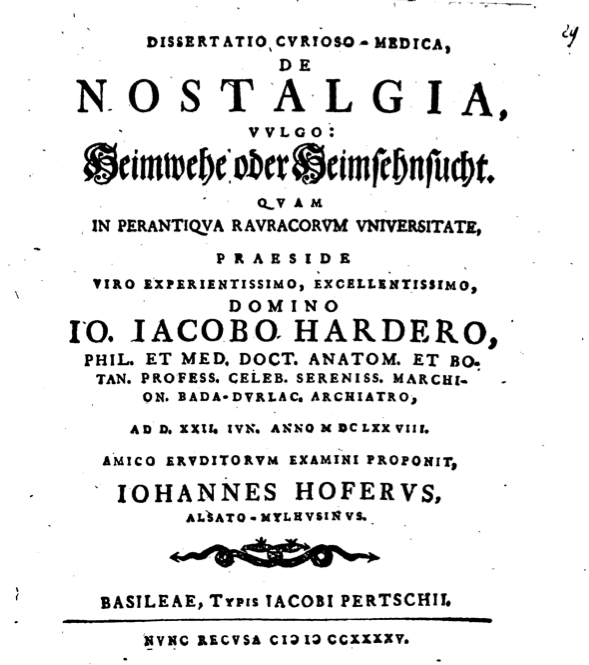
Hofer’s dissertation is available (in Latin, motherfuckers) here.
 The Dish