by Tracy R. Walsh
Garance Franke-Ruta thinks college graduates should have some student loans forgiven if they move to struggling areas:
Cities like Detroit; Cleveland; and Gary, Indiana, need people: young people, college-educated people, people with an entrepreneurial spirit who might be willing to put down roots and pay local taxes and taken on renovation projects and bring new views and businesses and opportunities to distressed, underpopulated communities. Debt-burdened recent college graduates, for their part, need cheap housing and to pay off their student loans. . … Maybe it’s time to try to yoke these two problems together and allow for partial loan forgiveness for people who commit to living in distressed communities for a set period of time. The rents in Detroit couldn’t be cheaper, nor could houses, should anyone want to lay down deeper roots. Think of it as something akin to Washington’s first-time-homebuyer tax credit, but available to renters, too, and accomplished through educational-debt reduction rather than the tax code.
Meanwhile, Aaron Renn wants city governments to take a page from corporate America and recruit residents:
While most cities have paid lip service to attracting newcomers, few have put any real muscle behind it. There might be a website or marketing-type materials, but often these are not very good. The lack of seriousness in these efforts is shown by the critical missing piece: sales. That is, going out and actively recruiting individual, specific people to want to live in a place, not just to fill a specific opening at a specific company. Ask yourself this: The last few times you visited a place, did anyone try to sell you on it as a community you might want to live in or build a career or business? In my experience, the answer is almost always no.
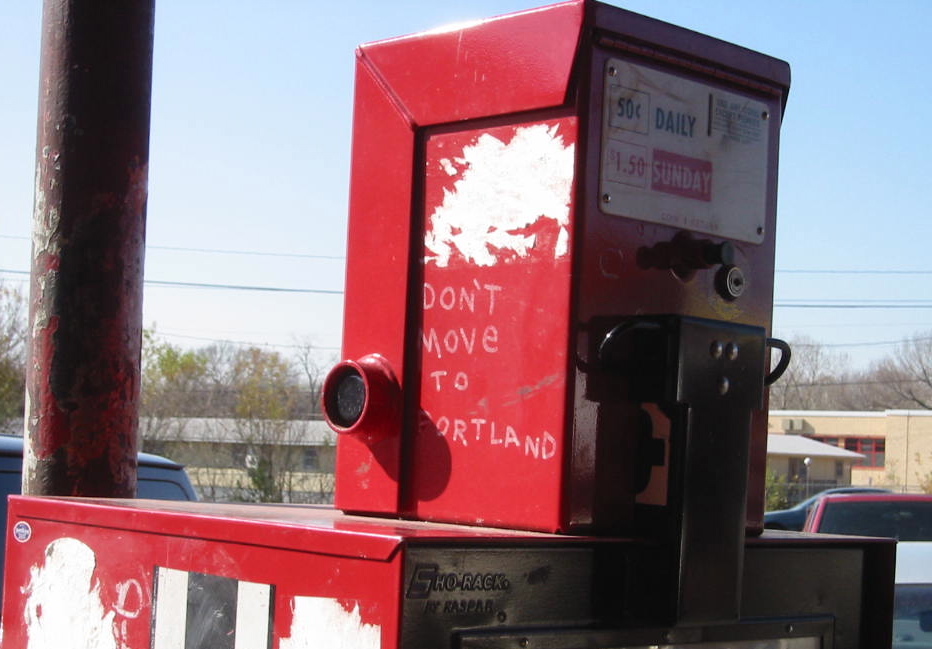
(Photo by Michael Coté)
 The Dish