The Nanny State Leaves Nannies Alone

While hiring a nanny for his daughter, Pascal-Emmanuel Gobry realized that there are “no occupational licensing rules for nannies as there are for, say, teachers and nurses.” He argues that “if anyone actually believed that occupational licensing ensures safety and raises quality, we would have occupational licensing rules for nannies”:

Somehow, most parents entrust their children to nannies without a law to say who can be a nanny and who may not and, somehow, the system works.

The example of the nanny really drove home for me the extent to which occupational licensing is a sham. Here is an occupation where the concerns of safety and quality are paramount to the consumers, and where these consumers have political clout such that if they demanded occupational licensing rules, they would be immediately enacted. But because it is the consumers who have the political clout, not the producers, occupational licensing rules were not enacted. And nobody–quite rightly!–views this as a problem.

Who Needs Galleries?

Photos 2

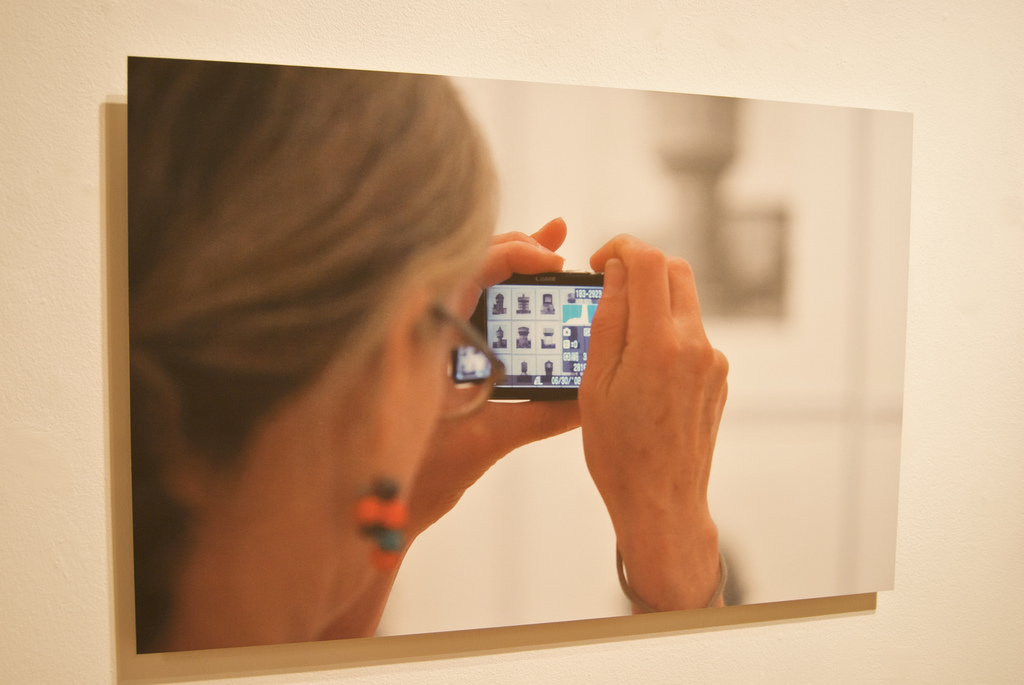
Arguing that “far more people see art on screens than in museums,” Loney Abrams thinks Facebook, Tumblr, and contemporary art blogs could supplant the traditional white cube:

As documentations – photographs or videos that capture a finished work of art, usually installed within a gallery – are posted to the Internet and then dispersed and multiplied via likes and shares, online viewers become the overwhelming majority of an exhibition’s audience. … The gallery, then, serves not as the “true” exhibition venue but the site of a photo shoot — the backdrop to the installation photo. It provides the opportunity to document art within an institutionalized context in preparation for its release into online circulation.

The logical next step may be online-only galleries:

Without the expenses demanded by the physical gallery (i.e. high rent, utility bills, property insurance, art insurance, building maintenance, etc.), an online gallery would need to generate significantly less income to cover its cost of operations. With virtually no overhead expenses, these “galleries” could afford to offer their artists a significantly larger percentage of money from sales while generating the same profit margin for themselves. … [And] as galleries have been the home of art objects, URLs are the homes of documentation images and could potentially connote the prestige and cultural value traditionally monopolized by the institution. URLs will stand side-by-side with the names of reputable galleries on artists’ curriculum vitae, and artists will be rewarded as much for their self-sufficiency as for their ability to game the gallery system.

Previous Dish on the decline of gallery shows here.

(Nicholas Knight’s Taking Pictures (Becher and Becher) displayed at Steven Wolf Fine Arts in San Francisco. Photo by Steve Rhodes.)

Are Hackers Less Able To Hack It?

In the wake of several high-profile suicides, mostly notably Aaron Swartz, the hacker community has become much more attuned to depression within its ranks. But are they any more vulnerable than the average American?

The typical hacker lifestyle doesn’t exactly sound like a breeding ground for good mental health. Erratic sleep patterns and prolonged isolation in front of a computer monitor are common. Prosecution by law enforcement is a constant threat, if not a reality. (Swartz spent the two years before his death under prosecution for downloading more than a million journal articles en masse from the Massachusetts Institute of Technology. His family believes that the threat of imprisonment contributed to his death.) It’s tempting to infer that the hacker world attracts introverted outcasts, subjects them to pressure from law enforcement or the soul-sucking technology industry, and finally sequesters them behind a screen until they give up hope.

That scenario is pretty far from the truth, however, based on the few studies that have been done on the elusive cohort. …

“I kept looking for everything that would support these myths,” [Bernadette Schell, vice-provost at Laurentian University, who studied hackers for more than a decade] said. “What I found was that the hacker community was a very well-adjusted group of individuals.”

At the time, the perception was that hackers were computer addicted, high-strung type A personalities. But the hackers in Schell’s study turned out to be emotionally balanced, “self-healing” type B personalities. They were a bit more introverted than the average population, but still socially connected. Most were employed and made more than the median income level. Incidence of depression was not higher than in the general population. (In fact, some studies have shown that engineers, a group that has a lot of overlap with hackers, have one of the lowest depression rates compared to other occupations.) The hackers were so resilient that even being sent to jail or charged for hacking crimes did not affect their reported stress levels long term.

Learning To “Lockstep”

Sarah Carr worries that the college-for-all movement, while egalitarian in theory, is “often quite paternalistic” in practice:

In their efforts to set poor children of color on the path to college, the idealistic young educators attempt to inculcate middle-class aspirations in their students through a form of body and mind control: instructing them in everything from how to take notes to how to sit, talk, walk, and move; embracing the goals of “re-acculturating” and “re-calibrating” them; and calling them “scholars,” in honor of the new pursuit. One veteran principal refers to it as “lockstepping.” In a not atypical scene inside a New Orleans charter school, a kindergarten teacher told her young charges, “We have a lot to do this year—a lot if we want to go to the first grade. The first graders already have read this book and moved on to other books. I know all of you want to go to first grade because all of you want to go to college. But you need to show discipline over your bodies to do that.”

Many parents (and even some “scholars”) welcome this structure and the intense focus on college. But some would like to see the new charters incorporate more trade and technical training in addition to their heavy college-prep emphasis. And others see a disconnect between the reformers’ goals and their methods. New Orleans grandfather Ronald McCoy shook his head during a 2010 interview with NPR when he thought about some college-prep charter schools that force their students to walk a straight line—marked out with tape—in the hallway between classes. “This walking the line?” he said. “I have been incarcerated, and that’s where I learned about walking behind those lines and staying on the right-hand side of the wall.” Applying the college-for-all ethos in a top-down fashion in low-income communities of color creates the risk of being more imperialistic than egalitarian.

John McWhorter wants to free “black America from the myth that the only way to have a decent existence and raise a family is to get a B.A.”:

The op-ed pages tell us this week after week. But did your cable technician, ultrasound technician, mechanic, building inspector or bail bondsman go to college? And do you get the feeling those jobs are in any danger of disappearing anytime soon? Community colleges and vocational schools are Black Power too.

When Words Fail

Jen Doll learns how dictionaries cull obsolete words from their pages:

Frequent targets for deletion include abbreviations, biographical entries, and geographical names, as well as scientific and medical terms, which are regularly rendered obsolete by new phraseologies. Goodbye, Vitamin K. Hello, riboflavin. “The kinds of entries we’ve removed include ’70s slang—like Panama Red, a type of marijuana—and obsolescent technology terms like cassette memory,” says Steve Kleinedler, the executive editor of The American Heritage Dictionary. Complicating matters, usage can be fickle. In the late 1990s, lexicographers considered chad a serious candidate for deletion—but then came the 2000 presidential election. Which words now hang, chad-like, in the balance? Eath (“easy”) has not been widely used since the 19th century, says Stamper. Poor old landlubberliness (“the state of being like a landlubber”) doesn’t get much love, either.

While defending non-literal uses of the word “literally,” Dick Wisdom looks at how language evolves:

Words change their meanings all the time. Even Buzzfeed readers know that. Angels used to be messengers, awful used to mean “inspiring wonder,” brave used to mean “showy or gaudy,” and so on. Literally ad infinitum. And have you read Shakespeare? That idiot thought calling somebody a “ho” was a way to greet them. Even God can’t get it right: many words in the Bible could be confusing to the contemporary reader.

Pick a word. Any word. Now look up its etymological history. Chances are, it used to mean something quite different. Language changes, at times quite fast.

Sailing Towards Utopia

Paula Marantz Cohen traces the origins of the modern cruise ship to the widespread idealism of the 1950s and ’60s:

UNESCO recognized Esperanto, the universal language developed in the late 19th century, as a Screen Shot 2013-08-15 at 3.15.44 AMlegitimate language in 1954. The United Nations, founded in 1945, reached the high point of its popularity — its seeming promise — in the late 1950s and ‘60s. I was in grade school in the 1960s and my teachers spoke about the UN and Esperanto in reverential tones. Despite the Cold War — or because of it — people truly believed that the world could be changed, unified under one flag or many. Everyone was serious about the “global village”(the term coined by Marshall McLuhan in 1962).

The modern cruise industry was born during this period and, in its earliest form, had an explicit affinity with this sort of idealism. The first cruise entrepreneurs, Tod Arison and Knut Kloster, founded the Norwegian Cruise Lines in 1966, and they originally conceived of their cruise ships as floating embassies. Passengers would visit remote locales in order to learn more about other cultures and peoples; they would promote world peace. The concept fit well with the One-World Movement, the United Nations, Esperanto, and the many sociological and anthropological projects that were circulating at the same time.

The Rich Aren’t Immune To Idiocy

Alex Seitz-Wald discovers that upper-class Americans are prone to not vaccinating their children:

Public health officials see large clusters of unvaccinated children in latte-drinking enclaves everywhere, like Ashland, Ore., and Boulder, Colo., where close to 30 percent of children are exempted from one vaccine or another. In some schools in Ashland two-thirds of the students have exemptions, according to Mark Largent, a James Madison College professor who wrote a book about the vaccine debate last year.

And new data out this month from the Centers for Disease Control shows what Paul Offit, a pediatrician at Children’s Hospital of Philadelphia, calls a disturbing uptick in the number of children forgoing vaccinations. “For the first time ever, there are a handful of states which now have people who are choosing not to get vaccines at the greater than 5 percent level, which is a problem. That’s where you’re going to start to see some of these diseases coming back. And you’re already seeing it with whooping cough and other diseases,” he told Salon. Indeed, the anti-vaccination movement was blamed for helping cause the worst whooping cough epidemic in 70 years.

Marcotte wonders why the rich are becoming more anti-vaccine:

Seitz-Wald interviews some experts like Nina Shapiro, a professor at UCLA, who notes that anti-vaxx sentiment is “a little bit of a trend.” She describes it as “I’m going to be pure and I want to keep my child pure.” But that doesn’t quite get at why there’s such class differences here, since presumably people of all stripes object to the notion of poisoning their children and therefore are vulnerable to propaganda that paints vaccinations as poisonous. I’d posit that refusing vaccination has become something of a status symbol, a way to distinguish your special snowflake from the herd. It’s in line with other trends of varied inherent value, such as putting your kid in a private school, not allowing him to ever eat trashy “kid” food like hot dogs or macaroni and cheese, or forbidding her from engaging with pop culture.

The Best Of The Dish Today

dish_octophant

Five recommendations: Snoopy meets Morrissey; another round in the debate on testosterone, culture and rape; how Chris Christie could win the Republican nomination; evidence that the Republican party is getting even more radical in the wake of their electoral defeat; and a pragmatic, conservative defense of Obama’s pragmatic economic policies.

The most popular posts were the same as yesterday’s: my takedown of Maureen Dowd on Obama and of the latest crazy conspiracy theory – FDR was controlled by Stalin, just as Obama is controlled by the Muslim Brotherhood – on what’s left of the intellectual right. I’ll have an update on that debate tomorrow. The most popular post of the last month remains “The GOP Calls Its Own Bluff.” Our full, live coverage of the Egyptian bloodbath and coup is gathered here.

See you in the morning.

(Image of Alexis Diaz‘s work via Colossal)

Sunset Burnout

sunset-instagram

Katy Waldman considers the deeper significance of Instagram users’ obsession with sunset photos:

The genre has turned into a commonplace—a grab at easy beauty. My friend, an amateur photographer, likened shooting sunset pictures to “eating Lucky Charms for breakfast.” “What do you mean,” I pressed, speaking as someone who faults Lucky Charms only insofar as they aren’t Fruit Loops. She elaborated: “They’re sweet and anodyne. The effect is like a sugar rush that disappears.”

Buried in her objection is the hoary philosophical distinction between the beautiful and the sublime, between prettiness that doesn’t challenge us and sights that fill us with awe and terror. Romantic writers expressed a preference for sublimity over attractiveness in the late 18th and 19th centuries. Edmund Burke wrote, “For sublime objects are vast in their dimensions, beautiful ones comparatively small: beauty should be smooth and polished; the great, rugged and negligent … beauty should not be obscure; the great ought to be dark and gloomy: beauty should be light and delicate; the great ought to be solid, and even massive.”

The experience of watching a sunset usually counts as sublime. The scene unfolds on a grand scale, loud with color and radiance; you get a shivery feeling of time passing as you sip your G&T; death draws just a bit nearer. Sunset pictures, though, reduce and tame that sublimity. Instead of your mortality rising to meet you, you see pretty colors, locked in a small and tidy moment.

The photographer of this sunset writes:

Sunsets are such a cliche. [But] how can you resist the temptation to run and get the camera before the light fades? The impulse of trying to hold onto the moment just takes over. It’s an illusion – all you hold onto is a picture, not a sunset – but it’s a powerful one. I plead guilty.

Previous Dish on Instagram and its discontents here and here.

(Instagram of a sunset in Cobh, Ireland from BlackieWarner)

Face Of The Day

LEBANON-UNREST-BLAST-BEIRUT-HEZBOLLAH

A boy and his mother are seen at the site of a car bomb between the Bir el-Abed and Roueiss neighborhoods in the southern suburb of Beirut on August 15, 2013. A powerful car bomb killed at least 14 people and more than 200 wounded in a Beirut stronghold of Shiite movement Hezbollah, an army source and Lebanese Red Cross said. By AFP/Getty Images.