Chait asks why the GOP would “nominate a candidate who looks and sounds like a right-wing ogre but actually isn’t?”
Voters in a general election judge candidates by a combination of personal and ideological characteristics. George W. Bush deflected on his unpopular, regressive tax cut by acting like a gentle, normal guy. The nicer and gentler you seem, the more room you have for an election platform that’s neither nice nor gentle. That’s Paul Ryan’s formula — match a radical program with a soft-spoken persona. Eventually, the contradiction between Ryan’s persona and his agenda became too great to sustain, but Ryan is trying to patch up the problem using the same method. He’s talking about poverty all the time. What he’s not doing is changing his proposals to eviscerate funding for programs for the poor.
Ryan’s method makes sense. As a party, you want to spend your “frighten swing voters” budget on real policies. Spending it on personality is a total waste. Ryan himself may go so far on policy that no amount of aw-shucks Midwestern wholesome I’ve-never-heard-of-foreign-beer-I-drink-Miller-Lite charm can make up for it. But he has the general idea. Christie is the anti–Paul Ryan.
Chait is confusing his reaction to Christie’s combative style with the way that Christie is perceived outside his home state.Any discussion of polling on whether most Americans like Christie is notably absent from Chait’s post. If he were viewed as “unbearably obnoxious,” his favorability ratings wouldn’t be so good. 52% favorability nationwide for a politician who has only been in state office for one term is quite high. Other national Republican figures would love to be so “unbearably obnoxious” that a majority of Americans across party lines likes them.
Massie recently argued that, above all, voters “need to be able to imagine the candidate sitting behind that big desk in the Oval Office”
Being likeable is one thing but it’s more important for a candidate to be respected. That means they need to project some brand of presidentialism which is not quite the same thing as being able to talk Average Joe even if that quality may also be extremely useful. We don’t know if Christie can do that yet.
Scott Wilson and Zachary Goldfarb lay out the proposals from the president’s speech on Friday:
Obama said he intends to work with Congress on proposals that would add an adversarial voice – effectively one advocating privacy rights – to the secret proceedings before the Foreign Intelligence Surveillance Court. Several Democratic senators have proposed such a measure. In addition, Obama said that he intends to work on ways to tighten one provision of the Patriot Act – known as Section 215 – that gives the government broader authority to obtain business phone data records. He announced the creation of a panel of outsiders – former intelligence officials, civil liberty and privacy advocates, and others – to assess the programs and suggest changes by the end of the year.
Tomasky thinks the administration is going in the right direction:
[Obama] took a couple steps away from the imperial presidency. I think that’s the first time since the presidency became imperial – after World War II, more or less – such a thing has happened. And Obama was, as he claimed Friday, headed down this course before the Snowden leaks. Those began on June 5. But on May 23, he gave a speech at the National Defense University in which he foreshadowed the moves he just announced. Combine all this with John Kerry’s recent announcement that we have a plan for ending drone strikes in Pakistan, and you might have thought liberals would be cheering. I suppose some liberals are. I am. But not civil libertarians. With them, it’s all or nothing. If you’re not signed on to the whole program, you might as well be Joe McCarthy.
Obama is still lying, obfuscating and misleading the American people. In doing so, he is preventing representative democracy from functioning as well as it might. With the stakes so high, and his performance so dubious in so many places, Friday’s speech has got to be one of the low points of his presidency.
Greg Sargent is cautiously optimistic, and David Ignatius believes some of the proposals could have a “real impact”:
[T]he murkiest of Obama’s surveillance proposals, for a commission that would examine new technologies dealing with surveillance, might actually have the most impact. That’s because some leading technologists believe that there may actually be systems that could enhance privacy rights while also allowing aggressive surveillance in cases where there was a genuine threat to national security.
Obama deserves some credit for recognizing that the grounds for debate on surveillance are shifting. … Really, though, only one of these steps is “specific”: the release of the legal rationale in a white paper, which happened today. The rest, as welcome as they may be, are vague promises, predicated on “work with Congress” – something that he hasn’t had a lot of success with in recent months, or even years.
The president’s mission, as set out on Friday, is to take credit for all the reforms that sound the best, and to re-establish the government as a trusted actor without doing much that’s new. In that May speech at the National Defense University, Obama committed to “a strong Privacy and Civil Liberties Board to review those issues where our counterterrorism efforts and our values may come into tension.” On Friday, he said that he’d “asked the Privacy and Civil Liberties Oversight Board to review where our counterterrorism efforts and our values come into tension.” Created in 2004, on the recommendations of the 9/11 Commission, the board was effectively powerless until three months ago, when it finally got a chairman, and the president’s still bland when it comes to its goals.
Obama also caught heat for saying, “I don’t think Mr. Snowden was a patriot.” As I’ve noted, the pledge to reform precisely those programs Snowden opposed belies that assertion. As Trevor Timm points out:
More than a dozen bills have already been introduced to put a stop to the NSA’s mass phone record collection program and to overhaul the Foreign Intelligence Surveillance Court, which has reinterpreted the Fourth Amendment in secret, creating a body of privacy law that the public has never read. A half-dozen new privacy lawsuits have been filed against the NSA. The Pentagon is undergoing an unprecedented secrecy audit. U.S. officials have been caught deceiving or lying to Congress. The list goes on. … If Congress passes meaningful NSA reform, Snowden may go down in history as the most influential whistleblower in American history. What could be more patriotic than that?
Snowden could be both a hero and a villain, Max Fisher argues:
Snowden has made other leaks that were not discussed at Friday’s press conference, including revealing U.S. espionage programs against China, where he was seeking shelter at the time. Espionage between nations is both legal and an accepted norm of the international system; it’s also a two-way street that China treads quite heavily. Some have argued that the cyberespionage programs that Snowden revealed may have been targeting Chinese arms control, although this is circumstantial and the exact target remains unknown. So does Snowden’s internal motivations in making these leaks, just like his others. But it’s extremely difficult to imagine a way in which these particular leaks were driven by patriotism. That’s not an argument on behalf of considering him a traitor, as some do, but just a reminder that these cases are not always as simple as binary divisions between good or bad, hero or villain.
Meanwhile, Matt Berman and Brian Resnick warn Americans not to hold their breath for any policy change:
Task forces like the one laid out [Friday] don’t have a huge history of recent success. Just look at Vice President Joe Biden’s gun task force, announced by Obama following the shooting in Newtown, Conn., last year. “This won’t be some Washington commission” that goes nowhere, Obama said in December. The task force issued recommendations in January. And aside from a failed Senate amendment, it has not resulted in any tangible change.
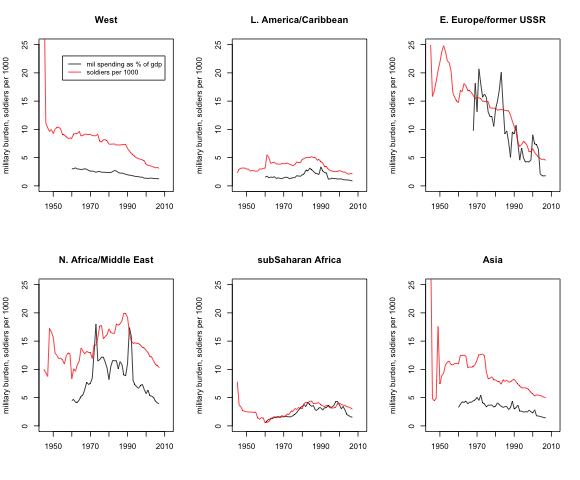
We get distracted by headlines of conflict and awful stories of grotesque war crimes in Syria, Iraq and elsewhere. But it remains true that the globe is devoting a smaller percentage of its income and manpower to war:
The black line is the average across countries of military spending as a percentage of GDP, using the Correlates of War (COW) estimate of total spending divided by World Bank GDP figures (which only start in 1960). The red line is the average across countries of armed forces per 1,000 population, again using COW estimates.
You see really striking long-run declines in the West, Eastern Europe and the former Soviet Union, and Asia. In these areas it almost looks as if demobilization from World War II has taken place gradually and over 60+ years. In Latin America and North Africa/Middle East, you see pretty striking declines since the end of the Cold War, and perhaps some decline in subSaharan Africa since around 2000.
It is this context that makes a military drawdown not only essential for our future fiscal health – but also less dangerous than it might otherwise have been in terms of global security. And the primary threat – Jihadist terrorism – is not very effectively countered by new aircraft carriers or the impact of occupying troops. We may eventually have to adjust to, you know, reality. But as yet, only the Paulites have truly gotten the message.
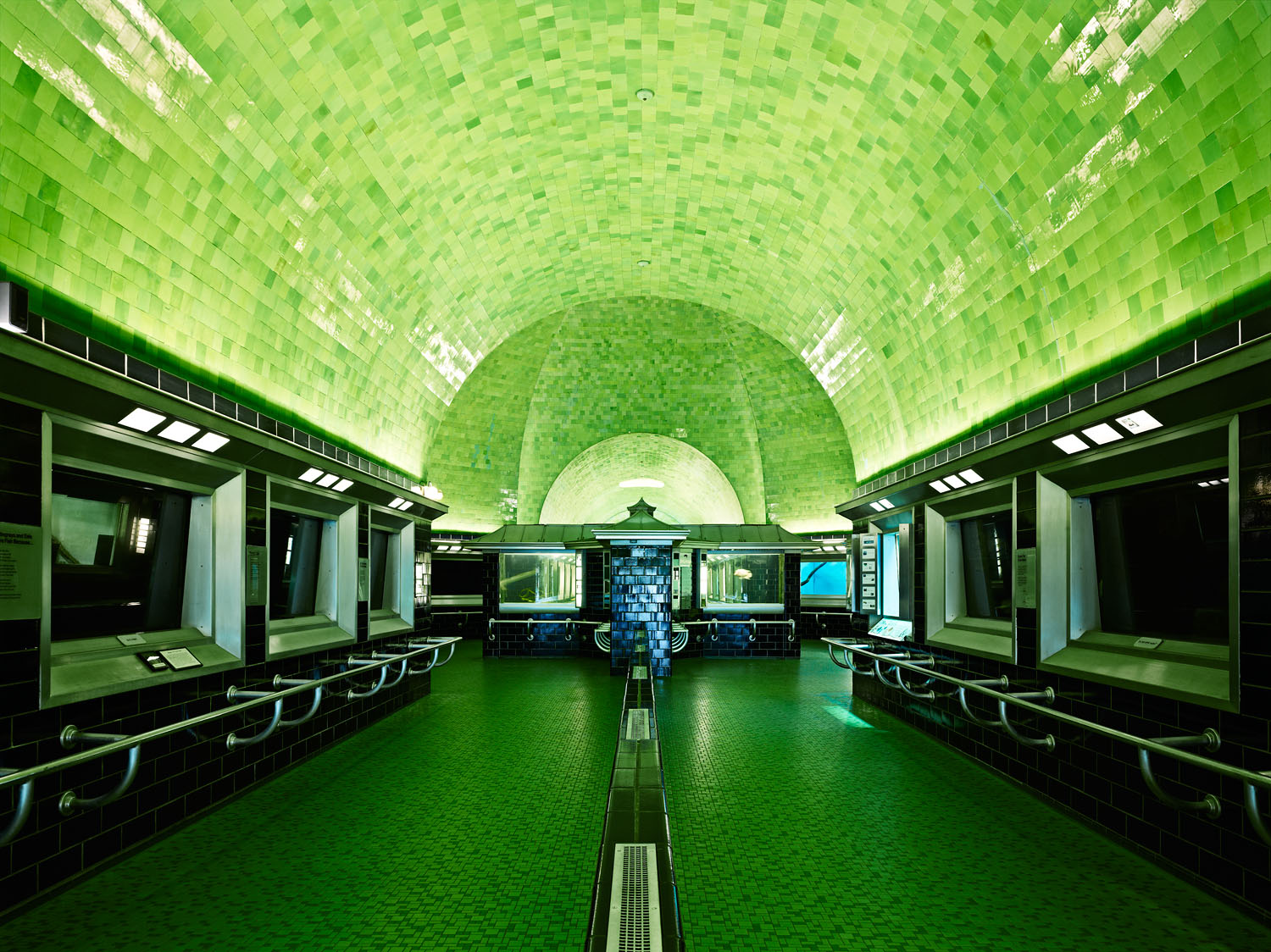
“What I’m trying to do is document these buildings carefully and with craft,” Jarmain says. “The buildings are part of a history filled with ingenuity, innovation and entrepreneurship. They’re part of a record that is about brilliant minds coming together to create the capitalist frontier and the middle class of America.” … Many famous architects, such as Albert Kahn, helped the city become an architectural hub, and Jarmain’s title, American Beauty, is named after Kahn’s American Beauty Iron Building. Even though Detroit is shrinking and structures are being destroyed almost daily, it still has one of the country’s best collections of late 19th- and early 20th century buildings.
Jarmain says he tries not to judge the city for demolishing structures in an effort to shrink its enormous urban footprint. He also understands people are stripping the buildings because they desperately need money or supplies. He just wants to make sure he can get as many buildings recorded as he can before they disappear.
That captures the irony of a president who both needs to prevent terror attacks and motivate his counter-terrorism staff and who doesn’t particularly care for the intrusive surveillance state. But it’s an easy irony. It mocks a president caught between two legitimate objectives and waiting on public opinion to nudge him toward reform.
Still, how can one interpret Friday’s confirmation that FISA courts and NSA surveillance are under major review without crediting Edward Snowden and Glenn Greenwald? I was distracted at the end of last week, but it seems inescapable to me now that Snowden leaked information to get reform of the system and succeeded in doing so. The government Snowden hacked has vindicated his goal of greater transparency. That pushes Snowden far closer to the whistle-blower role than the leaker-as-traitor one, doesn’t it? Ezra gets to the nub of it:
Obama’s frustration with Snowden is that he interrupted what could have been “a lawful, orderly examination of these laws; a thoughtful, fact-based debate.” The White House believes Snowden’s leaks — and the drip-drip-drip way the Guardian released them — left the public misinformed. And at times, that’s certainly true. The initial reports on PRISM, for instance, clearly suggested that the program was wider in scope than it actually is.
But the White House could have led that thoughtful, fact-based debate, and despite Obama’s protestations to the contrary, they didn’t. They prevented it. If this conversation, and these reforms, are as positive for the country as Obama says they are, then it’s hard to escape the conclusion that Snowden did the country a real service — even if the White House can’t abide crediting him with it.
If the only reason to treat Snowden as a criminal is that he disrupted Obama’s control-freakiness (in this case, transparently bogus) then the president needs to understand that the public will not stand for it. Least of all his own core base of supporters.
The country may appear to be fairly conservative, if one looks at its widespread homophobia or public condemnation of irreverence toward Russian Orthodox Church. Yet when it comes to other social habits, such as divorce, abortion, or birth rate, the picture is very different. Russia has one of the world’s highest rates of both divorce and abortion, and some of the most liberal laws on the latter. Russia’s birth rate is not dissimilar from that of secular cultures of western Europe. Premarital sex and single motherhood are fairly common; in one survey, a mere fourteen per cent of respondents said they believed a single parent can’t raise a child properly. And while a large majority of Russians identify themselves as Orthodox Christians, the proportion of those attending services or observing religious rituals in Russia is not dissimilar from many European countries.
A partial explanation of this discrepancy can be found in Soviet history. The early Soviet period involved a radical rejection of the ancien regime, a forced modernization by the Bolsheviks that included universal literacy and suffrage (along with the elimination of political choice, of course), as well as brutally imposed secularization, among other things. But the Soviet Union mostly missed the later, post-war stages of the Western social modernization, and especially the gay-rights movement. In the U.S.S.R., it was a crime to be a gay man. The atmosphere grew much freer for gays in the post-Communist period, yet gay rights have not become a nationwide issue until now, as the government has abruptly moved toward social conservatism.
As always with Masha, it’s a nuanced piece – revealing Russia, like America, as two separate and colliding cultures, in this age of accelerating global change. Unlike America, however, there is no First Amendment and the new anti-gay law specifically criminalizes the right to speech and assembly. I’m not generally in favor of boycotts, but I am in favor of civil disobedience. What we have is an invitation to legitimate protest in Sochi. Unpack your rainbow flags! Get ready to be arrested! Expose the neo-fascist regime’s classic tactics to maintain popular support by demonizing an already despised and marginalized minority.
Putin wants the attention of the world in Sochi. Let’s make sure he gets it.
Two recent examples spring to mind, because they are representative of the complexity of this kind of issue in a world of such staggering social and cultural change. Here’s a quote from the UKIP member of the European parliament, Godfrey Bloom, on the perils of foreign aid:
How we can possibly be giving a billion pounds a month when we’re in this sort of debt to bongo bongo land is completely beyond me.
That’s a weird formulation – aid is not debt. But the context reveals that the man’s main ire is directed at the European Union, and not just at developing countries:
Mr Bloom, who pointed out he has a Polish wife and Kashmiri staff, said that his comments were not racist. Asked by the BBC where “bongo bongo” land is, Mr Bloom referred to “Ruritania” – a fictional country in Europe that formed the setting for three novels by Anthony Hope.
Does that make him a racist or just a xenophobe? This hilarious interview – dissecting the origins of the term “bongo-bongo-land” – suggests both to me:
But I’m not sure I’d be able to prove that point beyond a reasonable doubt. Sometimes, a racist expression is so foul and unrelated to any broader context that it merits no debate – like this tirade from Eagles player Riley Cooper. The trouble is: racism is often also interwoven with all sorts of other factors. It collides with legitimate resistance to fast cultural change, xenophobia, generational attitudes, and legitimate questions, such as immigration policy, in which one side should not be deemed irrational because of an implied racist motivation. Take this explanation of Smith’s broader point:
When a country has a trillion pounds of debt and we’re cutting our hospitals, our police force and we’re destroying our defense services, that the money should stay at home and people who want to give money to worthwhile charities…what I would argue is that is for the individual citizens. It’s not for the likes of David Cameron to pick our pockets and send money to charities of his choice.
That may in some way be a reflection of racism, but it is also a legitimate political argument. And it’s hard to tackle the latter if you are constantly wrapped up in debates about the former. Then there’s the complex interaction of tradition, culture and social change. So this sure looks like racism on the surface:
T.J. Hawkins rolled out the big inner tube, and the bull lowered his head, shot forward and launched into the tube, sending it bounding down the center of the arena. The crowd cheered. Then the bull saw the George Bush dummy. He tore into it, sending the rubber mask flying halfway across the sand as he turned toward the fence, sending cowboys scrambling up the fence rails, hooking one with his horn and tossing him off the fence.
What might be seen as racist in one context – because the president is black – may not be in another. What some may see as a legitimate reclaiming of sovereignty from European bureaucrats can also be motivated by bald “bongo-bongo-land” racism. This is not either-or. And if it’s not either-or, we have to make a decision as to whether to hunt for these manifestations of racism or ignore them and get on with the actual arguments at hand, regardless of their psychological motivation. I favor as a purely pragmatic measure not jumping on every incident like this to yell racism – not because it is never racist, but because that charge cannot truly be proven without peering into opaque human souls, because it diverts potentially constructive debate into moral posturing, and because it is crowding out our discourse with gotchas that don’t really advance substantive debate.
And now I’ve written an entire post about whether certain people are racists. See how the cycle continues?
The upcoming book To Be or Not to Be is an illustrated “chooseable-path adventure” version of Hamlet. Cartoonist Ryan North explains his inspiration:
“It occurred to me that [Hamlet’s] favorite speech, ‘To Be Or Not To Be’, is structured like a choice, almost like those old Choose Your Own Adventure books, and I thought, ‘Oh my God, I have to write this.'” North says. So he wrote his version of Hamlet in the style of the classic children’s book series, in which the reader would be prompted to make the main character’s decisions — turn to page 3 for this, turn to page 5 for that — and take the story in many different directions.
Alison Hallett credits the Kickstarter project’s record-breaking $580,905 to North’s business savvy:
[T]hanks to North’s voluble backer updates and creative reward tiers, being a part of his campaign didn’t feel like simply preordering something, as Kickstarter so often does these days; nor did it have the faint whiff of desperation that often comes with artists asking their friends and family for money. This felt like being a part of the creative process, and having a front-row seat to an artist giddily realizing that his biggest dreams are now possible.
And she deems the result is a success:
In Hamlet, the Prince of Denmark has one of the most famous existential crises in literary history, as he ponders aloud whether suicide is worth the risk that whatever happens after death might be even worse than life itself. North’s version puts the being vs. not-being decision square in the reader’s hands, though it turns out choosing “Not to Be: turn to page 17” isn’t much of an adventure at all: It leads to artist Mike Holmes’ illustration of Hamlet chugging from a vial of poison, one pinky lifted genteelly, while Ophelia peeks from behind a curtain. There’s no sign of the terrifying death-nightmares Hamlet’s so worried about; just the words “The End.” But even asking the reader to make the decision highlights how much of the original play—and how much of life itself—revolves around possibly crazy people bumbling through situations they barely understand, possessing a fraction of the information they need to get from one scene to the next.
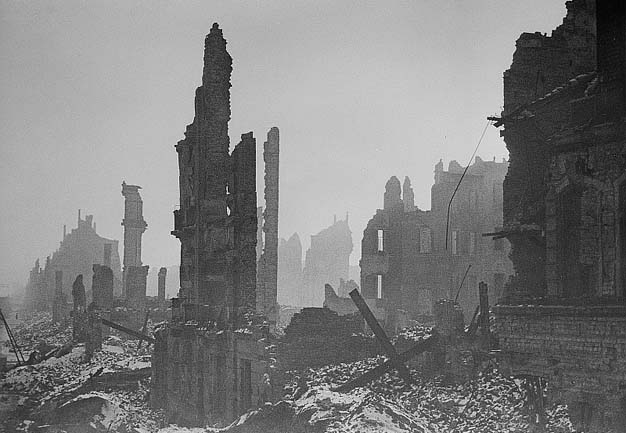
Keith Lowe explores how historians are increasingly reevaluating idealistic beliefs about World War II. Aaron William Moore, for instance, examines the wartime diaries of Japanese, Chinese, and American soldiers in his book Writing War:
Perhaps most disturbing of all is the way that Moore analyses the actual process of diary writing by these men. In all three countries, he reveals, the thoughts and feelings of soldiers were closely monitored by their superior officers. As a consequence the sentiments they expressed were self-policed: soldiers effectively used their diaries as a way of convincing themselves to act in the way that was required of them by the state.
The implications of this are huge, and draw a question mark over one of our strongest taboos about the war. When Chinese, Japanese or American soldiers spurred themselves on to commit acts of bravery, or atrocity, how much were they expressing their own desires and how much were they resigning themselves to things that were expected of them? Does this – can this ever – at least partially absolve them of the things they did during wartime?
The fact that we can ask such questions says as much about our own time as it does about the second world war. Perhaps we are more comfortable expressing doubt now than we were a generation ago, or even 10 years ago, when we were deeply embroiled in the black-and-white certainties of the cold war or the war on terror. Perhaps the behaviour of our armed forces today – such as the Abu Ghraib scandal – has allowed us also to ask questions about how our soldiers behaved in the past.
 The Dish