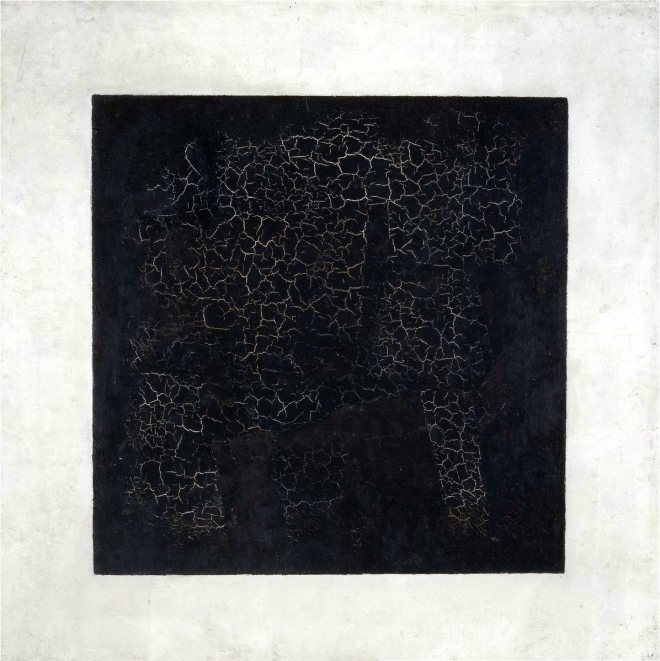
Daniel Estrin says it’s Russian modernist painting:
Art works of the Russian avant-garde, the transition period between Imperial Russia and the Soviet Union which gave birth to painters like Kandinsky and Malevich (some also group Chagall into the genre), are the hottest category of paintings on the international forgery circuit. Lists of painters’ works are incomplete, and a number of lost paintings from the period have resurfaced, making it easy to claim you’ve found a Kandinsky in your grandmother’s attic. What’s more, it turns out it’s easier to mimic the squiggly lines of Russian avant-garde works than to copy the Mona Lisa. And it’s still possible to buy the same exact canvas and paints that Russian avant-garde artists used.
Another reason for the forgeries: demand for Russian modernists has skyrocketed since the fall of the USSR, according to Amar Toor:
When Joseph Stalin came into power in the mid-1920s, he cracked down on Malevich and other artists, excoriating their work as “bourgeois” and confiscating many paintings. Once Russia liberalized its economy in the 1990s, Malevich and his contemporaries assumed a more lofty status among Moscow’s ultra-rich oligarchs, and prices shot skyward. By [auction house director William] MacDougall’s estimates, prices for avant garde works have increased by “800 or 900 percent” over the past 20 years.
(Photo: Kasimir Malveich’s “Black Square on a White Ground”)
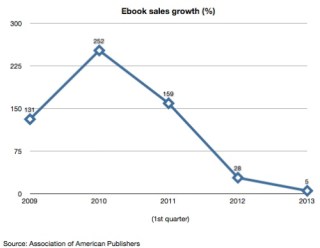 into question the strength of the so-called “digital revolution” in the book business. E-books now represent about 25 percent of total book sales, a healthy share but still a long way from dominance. The AAP findings are backed up by a new Nielsen report indicating that worldwide e-book sales actually declined slightly in the first quarter from year-earlier levels.
 The Dish
