This morning Procter & Gamble (PG), which rules the category with Mach-3-maker Gillette, said its razor sales are falling in developed markets. This followed yesterday’s announcement by Energizer (ENR) that unit sales of its Schick men’s razors have dropped 10 percent in the past year—a literal decimation.
Energizer blames the sales slide on aggressive promotions, specifically P&G’s. Meanwhile, P&G focused on its gains abroad and glossed over its losses in major markets. Euromonitor points to another culprit: “the vogue for stubble” and a “growing acceptance of the unshaven look in the workplace.” In other words: hairy dudes. And this is one market where China may not save the day; Euromonitor claims Chinese men are relatively “nonhairy.”
Month: August 2013
Tempers Are Hot
New research finds that upticks in the temperature encourages conflict, ” from interpersonal spats — such as aggressive horn-honking by automobile drivers — to full-blown civil war and societal collapse”:
The researchers found that a temperature rise of one standard deviation — which, in the United States today, occurs when the average temperature for a given month is about 3° Celsius higher than usual — increases the frequency of interpersonal violence by 4%, and the risk of intergroup conflict, such as civil war or rioting, by 14%. “The level of consistency in how people are responding was surprising to us,” says Solomon Hsiang, an econometrician at the University of California Berkeley, who led the study. He and his team warn that climate’s influence on behavior is likely to become more apparent as the planet warms and precipitation patterns change.
Tim McDonnell provides examples:
The Syrian conflict is just one recent example of the connection between climate and conflict, a field that is increasingly piquing the interest of criminologists, economists, historians, and political scientists. Studies have begun to crop up in leading journals examining this connection in everything from the collapse of the Mayan civilization to modern police training in the Netherlands. A survey published today in Science takes a first-ever 30,000-foot view of this research, looking for trends that tie these examples together through fresh analysis of raw data from 60 quantitative studies. It offers evidence that unusually high temperatures could lead to tens of thousands more cases of “interpersonal” violence—murder, rape, assault, etc.—and more than a 50 percent increase in “intergroup” violence, i.e. war, in some places.
Face Of The Day
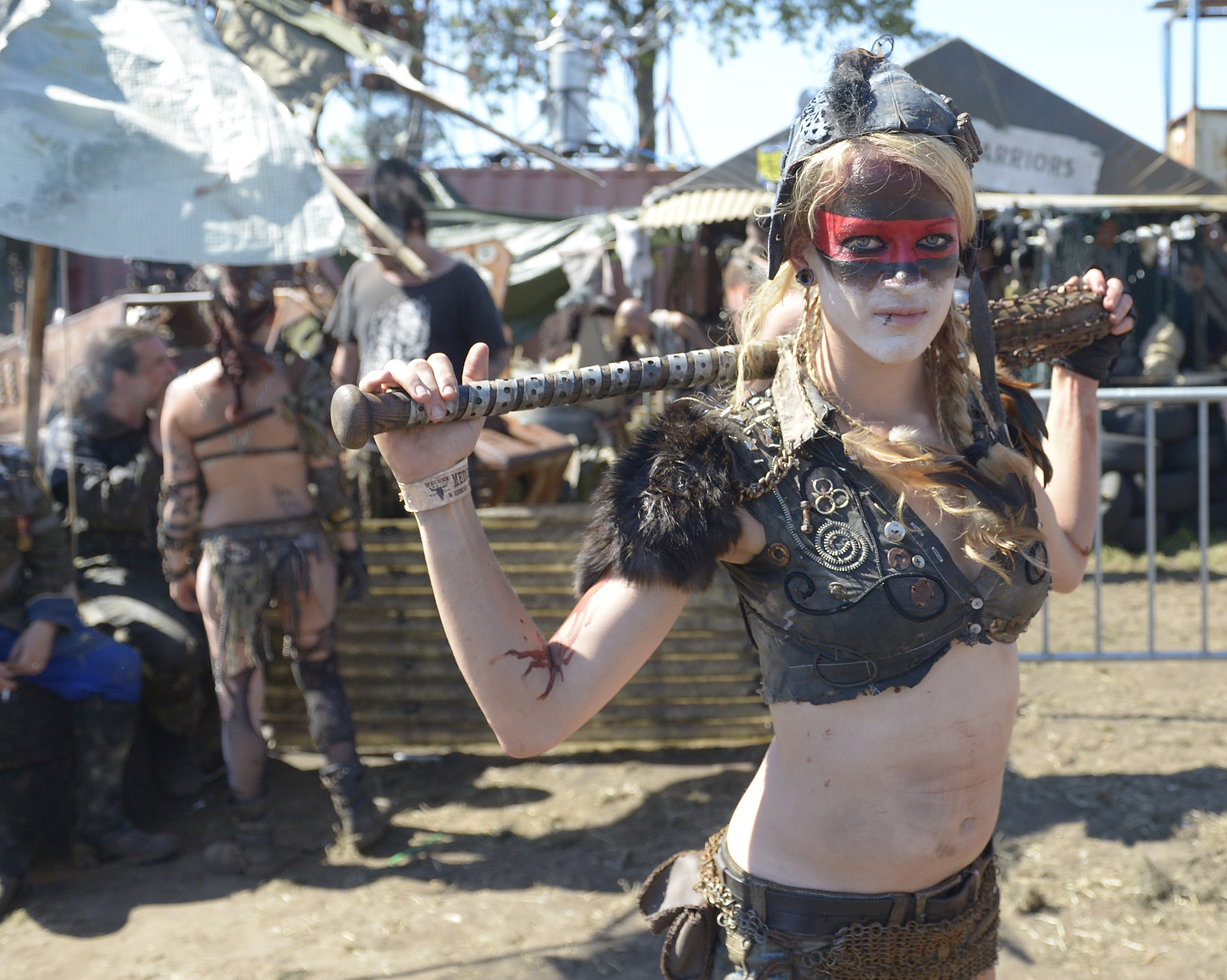
Visitors from a group of end time role gamers enjoy the Wacken Open Air heavy metal music fest on August 2, 2013 in Wacken, Germany. Approximately 75,000 heavy metal fans from all over the world descend every year on the north German village of 1,800 residents for the annual three-day fest. By Patrick Lux/Getty Images.
A Pit Stop On The Road To Democracy? Ctd
The Economist is pleasantly surprised about Mali’s election to restore democratic government in the wake of its civil war:
The election [on Sunday] was praised by observers for its high turnout and overall transparency. But coming just six months after a French-led force chased away Islamist militants who had seized control of the country’s vast north, and hastily arranged under intense international pressure, it was nonetheless riddled with flaws. Hundreds of thousands of voters were disenfranchised for lack of new biometric identification cards. Even some who made it to the polls, cards in hand, could not find their names on voter lists.
Still, it was not the debacle many outsiders had forecast. On an otherwise quiet day, voters crowded the streets leading to polling stations. Many marvelled that they had never seen such numbers at the ballot box. The 53.5% turnout shattered the previous record by 15 percentage points. Perhaps most important in a country still jittery after the jihadist occupation of the north, the day passed without violence.
Meanwhile, Michael Totten praises Morocco as a model of moderation in the Arab World:
Morocco has free and fair elections, but not for its head of state. That has to change sooner or later. The Moroccan monarchy will eventually have to sideline itself or face being sidelined by others. Smart Arab kings know this is true of the institution in general. As Jordan’s King Abdullah said to Jeffrey Goldberg of The Atlantic, “where are monarchies in 50 years?” In the meantime, Morocco provides a safe space for peaceable coexistence between liberals and Islamists, Muslims and Jews (including Israelis on holiday), Arabs and Berbers, modernists and traditionalists.
The Western press has wasted a lot of words lately describing the Muslim Brotherhood as moderate. But Muhammad VI is a real moderate. He’s a conservative in the sense that he belongs to a very old tradition and order, and he’s a liberal insofar as he advances women’s rights and has willingly abdicated some of his power. He’s a Muslim ruler who not only protects Jews, but declares Jewishness a part of Moroccan identity. He pushes for careful and deliberate change without overwhelming the country with too much at once, thus avoiding a hostile and potentially violent reaction from traditionalists.
Morocco is a little like Costa Rica during the Cold War—a calm, friendly, stable, sane, peaceable, and essentially civilized oasis in a region that has known precious little of those things.
Previous Dish on the recent upheavals in the Arab world here, here, and here.
Adorably Divisive

Jon Mooallem says the polar bear is losing its potency as an environmental symbol:
I don’t know whether you saw the YouTube video that Obama put out to accompany his big climate speech in June, but I was surprised: There wasn’t a single polar bear image in it. It was all floods and storms and dried-up corn. Four years ago, there would have definitely been polar bears in that video. Today, though, the polar bear is just not as potent a symbol. It’s become too political. It doesn’t really resonate with environmentalists anymore and it ticks off everyone else. What’s amazing is that it’s just a freaking bear, yet it’s become as divisive a figure as Rush Limbaugh.
Previous Dish on polar bears here, here, and here.
(Photo by Susan Poupard)
A Green Cremation
Josh Clark and Chuck Bryant outline various ways to process human corpses. One option on the horizon:
Alkaline hydrolysis is an established technology that is already in use—albeit for the disposal of cattle infected with spongiform disease and cadavers that have outlived their usefulness at teaching and research institutions. Because of the utter lack of sentimentality attached to the process and the resulting goo it produces, alkaline hydrolysis has been largely left untouched for regular old funerals, even in places where it’s a legal means of disposing of corpses.
If the green lobby ever gets true power and starts wielding it against end-of-life norms, you will soon likely have no choice, however, so getting on board with the idea of having your body reduced to an oily, neutral substance sooner rather than later can help you to be a true early adopter in this area. Even more appealing, it uses about five to ten percent of the energy cremation does.
How it works:
In the process of alkaline hydrolysis, your corpse will be slid into a large stainless steel contraption that looks a bit like a freestanding pressure cooker, mainly because that’s what it is. An alkaline solution is introduced into the sealed chamber and heated to between 170 and 350 degrees Fahrenheit (depending on which method is used) and allowed to stew until your skin, organs, tissue and viscera have completely dissolved into the solution. A similar process also introduces pressure to the mix to speed up the process.
All that’s left over is a squishy version of your bones, which are then crushed and presented to your family. The rest of you is gone in virtually every sense of the word: The alkaline solution and heat completely destroy DNA; even a transhumanist would have a hard time conceiving of you being present in the solution at the end of the four hours.
Update from a reader:
As others will certainly point out, the technique described in your post was documented in the Mary Roach book, Stiff: The Curious Lives of Human Cadavers. Highly recommended.
Mental Health Break
A stirring tribute to European architecture:
It Was The Best Of Lines, It Was The Worst Of Lines, Ctd
Readers offer their own nominees of the best and worst book openers:
My wife consumes books like no person I have ever met. At times she will share with me opening lines that she knows I may find interesting. One such line is from a book by Toni Morrison, Paradise, and it has stuck with me for a long time:
“They shoot the white girl first.”
Six words – none longer than five letters – that set a scene loaded with tension. The author has already brought us violence and racial issues and possibly gender- and/or sex-related plot lines. How could you not read on?
Another reader:
You mentioned the Bulwer-Lytton contest for bad first lines of novels, but you should also know about this spinoff contest, for bad first lines of novels, which tend to be much funnier. This year’s winner: “The men greeted each other, wearing various smiles on their faces.” My favorite from this year: “‘BOOM!’ said the bomb very loudly.” Another fave from an earlier contest: “In anticipation, John licked his own lips.”
A compilation of other candidates from readers:
“I am a sick man … I am a wicked man,”
– Notes From The Undergound, Dostoevsky.
The ellipsis alone offers so much insight into the character of the narrator: his self-consciousness as a writer, his awareness of the judgments of others (who will be quick to correct him if he does not correct himself), his insecurity, his brutal honesty.
“He was born with the gift of laughter, and a sense that the world was mad,” – Scaramouche, Rafael Sabatini.
“Mother died today. Or yesterday maybe, I don’t know,” – The Stranger, Camus.
“Call me Ishmael”- Moby Dick, Melville.
From that single, simple point of information a complex world of meaning and parable spreads open.
“A screaming comes across the sky,” – Gravity’s Rainbow, Pynchon.
You know that this is going to be a hairy ride.
“There was a boy called Eustace Clarence Scrubb, and he almost deserved it,” – The Voyage of the Dawn Treader.
The author of that sentence, one Clive Staples Lewis, must have enjoyed writing that.
Another reader:
You missed the best opportunity ever to loop a post full circle by neglecting one of the best opening lines of all time by the man himself:
“The man in black fled across the desert, and the gunslinger followed,” Dark Tower, Stephen King.
For a guy obsessed with an opening sentence, he laid down one helluva one. And he knows it (as obsessive Dark Tower readers will know).
One more completes the short thread:
For my money, the best first line of a story was for one never written. On an episode of “The Mary Tyler Moore Show”, Lou Grant is explaining to Mary how to write the lead in a good story, and he gives this as an example: “Bang! Bang! Bang! Bang! Four shots slammed into my gut, and I was off on the greatest adventure of my life.”
Readers are also offering suggestions over at our Facebook page.
The View From Your Window
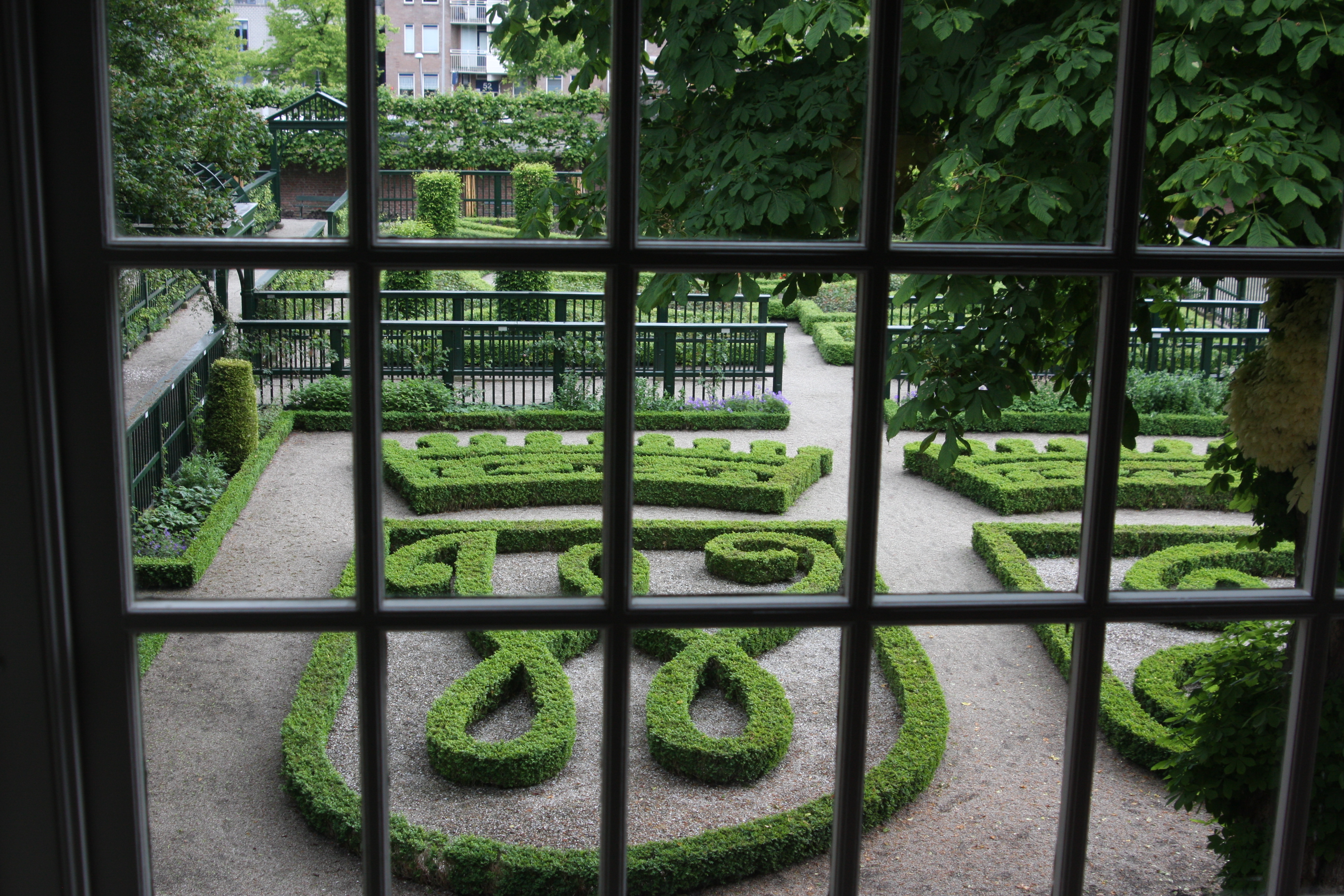
Groningen, Netherlands, 8 am
Hewitt Award Nominee
“What I need from you is to know what you can do, you and your fellow non-communist colleagues in the lower House, what you can do to stop these communist tyrannical executive orders laid down by this foreign-born, America-hating communist despot?” – an Alabama tea-party supporter to congresswoman Martha Roby at a town hall meeting. (Awards glossary here.)
Roby did not refute the questioner’s lunatic question, and in fact followed up with a list of her oversight activities.
 The Dish