Sara Gorman cautions against laws that would prevent mentally ill people from acquiring firearms:
There are two main reasons to approach these kinds of laws with a healthy dose of caution: one reason is that gun control efforts focusing on mental illness have the potential to exacerbate public stigma about the potential violence associated with mental disorders; the second reason is that gun laws that in particular involve collecting the names of people with mental illness in national databases have the potential to deter people from seeking the care they may desperately need.
Ample evidence has suggested that stigma and discrimination against people with mental illness is often correlated with perceptions that people with mental illness are inherently violent. People who believe that mental illness is associated with violence are more likely to condone forced legal action and coerced treatment of people with mental illness and may feel that victimizing and bullying people with mental illness is in some way justified.
The idea that mental illness and violence are closely related is quite common. A 2006 national survey found that 60% of Americans believed that people with schizophrenia were likely to act violently toward another individual. Even so, research has repeatedly established that psychiatric disorders do not make people more likely to act in a violent manner. Gun laws targeting people with mental illness are likely to worsen the perception that mental illness and violence go hand in hand, and, as a result, stigma and discrimination are likely to be exacerbated.
Marina Galperina flags the above video, shot today in Russia. It’s a scene reminiscent of fascist states in the early 1930s:
If anyone has any confusion about what Russia’s recently-adopted anti-gay laws do to its public, let me translate some of the audible dialogue in the video above[:] A young man [Gay rights activist Kirill Kalugin] decides to picket in Palace Square. He stands there alone with a rainbow flag, knowingly breaking this summer’s new anti-”gay propaganda” bill. Then, a large group of Airborne service members (striped-tank tops) circle around him and their leader starts the guerilla interrogation.
“What are you doing here on Airborne Army Day?”
“I am picketing,” he says, trying to keep on his feet while being manhandled by the group.
“Well, we do not agree with this and ask you to stop this sort of action and your one-man picket.” They begin to push him around. He falls.
“Oh, look he slipped and fell. Don’t do that,” the soldier says, performatively at the journalists trying to get closer. The man is visibly frightened as the soldiers form a chain around him and began to chant, smacking their fists into their palms.
“CALL THE POLICE ON HIM,” someone jeer. “STAND RIGHT THERE,” a few yell. The police arrive (blue shirts, police hats) and attempt to drag the man out of the circle, so the soldiers move closer, block their access and pushing the cops.
“What the fuck were you thinking, showing up at the Palace Square, faggot?” the leader yells.
“You guys are animals,” the protestor rasps, while another soldier chokes him and shakes him by his neck. As the cops try to remove the illegally protesting young man, the soldiers start shoving them and throwing punches. In the next shot, they encircle the police vehicle — “We’re not going to let them fucking move anywhere.” — after their leader tries to get into the cruiser and drag the protestor out, yelling, “Why are you defending him?!”
Is it me or don’t the steroidal paratroopers look like French circuit queens? The displaced homo-eroticism is almost comically obvious, while being equally disgusting.
Update from a reader:
How the hell did you guys miss the fact that the back of every police officer’s uniform says “OMOH” … “HOMO” spelled backwards.
This month Louisiana police illegally arrested more than a dozen men for “crimes against nature” (agreeing to have sex within private residences, with no money exchanged). It raises the question: How can 13 states still have such laws on the books? Because state-level Republicans love ’em:
Lawmakers in Texas have quietly killed every legislative effort to erase its anti-sodomy statute (the one that was actually stricken down by the Supreme Court), which makes sense when you consider Gov. Rick Perry is on the record defending it, and the state GOP recently made a sodomy ban part of its official platform. Kansas Gov. Sam Brownback left his state’s sodomy statute out of a 2012 push to purge outdated laws. The last serious repeal push in Louisiana came in 2003, shortly before the Supreme Court decision, with opponents warning that legalized sodomy would lead to disease and child abuse—two things that, thanks to the sodomy ban, Louisiana had been mercifully free of for the last 207 years.
Keeping anti-sodomy statutes on the books serves no real function, since the crimes are impossible to prosecute. Mostly, the laws’ supporters just don’t want their states to legally acknowledge that there’s something okay about homosexuality. So-called crimes against nature, like other 19th-century relics such as mutton chops, DIY canning, and income inequality, are kind of “in” right now. In July, Virginia attorney general Ken Cuccinelli, who is running for governor as a Republican, launched a new website to defend his state’s anti-sodomy law.
The Dish recently covered Cuccinelli’s bigotry here.
Zan McQuade muses over the growing intimacy of the Internet:
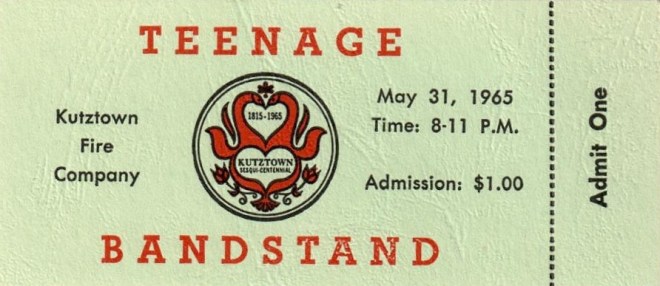
Along with things that were already in the public domain, the television shows and baseball games that were broadcast to everyone, there are an increasing number of personal souvenirs of the past gradually appearing on the Internet. It’s these personal souvenirs that seem to most impressively contribute to our collective memory. Scanned brochures, ticket stubs, blurry photographs of family vacations. Somewhere on the Internet might even be a picture of someone else’s childhood, a trip to King’s Island perhaps, with me in the background. Detailed accounts in forums of events that few people might have experienced, but, once accessed, brings back a flood of new memories to be assembled and posted and disseminated. Like a postcard from the Lauderdale Biltmore, and a memory of a family vacation.
As more of these mementoes are brought forward and become publicly accessible, as we find better ways to tag and search, we are coming closer and closer to creating a massive online collective memory; a living, breathing, changing vision of the world from our perspective, to be shared and passed along and consumed and sighed over. Were you there? Did you see it when…? I was there!
What better way to wrap up a week of Weiner than one final round of prurient-sounding names submitted by readers:
Did you notice – how could you not? – that the New York Post item about the Clintons and Weiner that had you so livid this week is written by one Frederic U. Dicker? No, I am not making this up. I don’t think anyone could.
Another asks:
Did you just write “pounding Weiner” in a blog post? If that was unintentional, I think all those giggle-inducing names are subconsciously getting to you.
I’m English by origin. As a people, we will never stop giggling at funny names and Asian accents.
Another reader:
I’m surprised that none of your baseball fan correspondents have pointed out my favorite horribly unfortunate name, the late Johnny Dickshot. That’s bad enough, but his nickname was “Ugly,” making him Ugly Dickshot.
Another:
I give you Austin, TX urologist and vasectomy specialist Dr. Dick Chopp. He wears it loud and proud too; he regularly goes on local radio stations and revels in the double entendres the morning jocks come up with. And in my opinion, he’s actually done a good amount of de-stigmatizing the conditions that lead to visiting a urologist, making it no big for dudes to get their junk checked out.
Another presents:
Iowa girls basketball star Fonda Dicks, still remembered here for her scoring … 3,598 career points!
Some readers are not amused:
Enough with the “funny” names with sexual implications. Look, names are generally given to us by our parents, and surnames are inherited from ancestors in most cultures. Making fun of someone because of the name someone else gave them is sophomoric and gets pretty stale, pretty fast. As someone with an unusual last name in which teenagers and adolescents can find a sexual reference if they try hard enough, I can assure you that all those “Dicks” and “Weiners” out there have heard the same jokes over and over. How about moving along?
You think I have my own blog so I can “move along” when talking about funny names? You jest. For those who want to move along: don’t click the read-on. For those who don’t – wait! – there’s more:
As a high school teacher, I find myself in meetings with parents, counselors, and students pretty frequently. I have a hard time keeping a straight face every time someone brings up a kid’s scores on the Woodcock-Johnson Test of Cognitive Abilities. According to Wikipedia: “The Woodcock–Johnson Tests of Cognitive Abilities is a set of intelligence tests first developed in 1977 by Richard Woodcock and Mary E. Bonner Johnson.” That’s right, Dick Woodcock.
Another:
I’m a 38-year-old woman, and it appears my first email to you is in relation to a silly, sexual name thread. I will own that just to share that my husband has worked with a Hollywood producer named Dick Suckle.
Ah, that felt good to share.
Another:
When I moved to the Rochester, NY area around 15 years ago, one of the first local ads I noticed was for a local car dealership. Apparently the locals were so used to it that they didn’t find it funny, but I still laugh every time I see an ad for Dick Ide.
Another:
Oh gosh, I guess I have to contribute. I grew up in St. Louis, where a prominent local family were the owners of the old Falstaff brewing company. Their name was “Griesedick” – pronounced pretty much as you would guess. I see from Wikipedia that the family has now re-entered the beer business.
Another:
Not sure if this one has made it in yet. Most Texans know the story about “Big Jim” Hogg, governor of Texas, and his unfortunately named daughter, Ima Hogg.
Another:
OK, since you’ve had about 30-odd posts on this, I thought it would be a great time to add some diversity into the topic. My former dentist’s name is Anita Fok.
Another:
More than a decade ago, I had a customer at the brokerage firm where I worked whose name was Irim Butt.
Another:
Since we’re all being a little puerile, I recently saw this Nixon campaign badge in a memorabilia store in LA:
All I can say is that it appeared to be genuine.
Another:
Maybe it is too late for this, but in my teens back in the ’60s I had a friend named Richard Zucker. He did not go by Dick.
Another:
In junior high school in Michigan I played basketball with one Harry Glanz.
Dish fave:
I always thought “Magic Johnson” was the best name ever.
One final reader:
My name can be interpreted as meaning “hairy male genitalia.” The best part is that this is a family name. No pressure there. I’ve been following the thread (Dishhead since 2008) and feel that, as an unfortunately named person, I should weigh in.
I used to be really bothered by it. Middle school in particular was just awful. But as I’ve gotten older it’s become less and less of a big deal. Obviously I’m not going to ever send dick pics to someone or get caught up in a public sex scandal, so I don’t have to worry about that. In my adult life, though, I have noticed two things about my name.
The first is that people usually don’t forget me. My name is memorable and chuckle-inducing, so it sets me apart from other folks. That’s helped me in building networks and relationships over the years. The second thing I’ve noticed is that someone’s reaction to my name usually says more about them than it does about me. I’m the first to admit that my name is funny, and most people will either not make mention of it or mention once or twice before moving on. There is a small subset of people, however, that can’t get over my name, and this inability to act like an adult usually tips me off (correctly) that they suffer from a massive lack of perspective.
So my takeaway in this is that an “unfortunate name” is only a real negative as long as one’s actions don’t mimic their name. In other words, don’t be a dick.
I agree with everything you said. I’ve gotten in some trouble with my girlfriend for utilizing certain sites you mentioned as well as the occasional Weiner-esque chat session (sans dick pics). When I did it, I was wrong only because my girlfriend told me that to her it was a form of cheating and I did it anyway. Pretty black and white: she feels cheated on, so don’t do it (you aptly mentioned this in your post as well). I agreed that it was wrong if that was how it made her feel.
However, you would be surprised (or maybe you wouldn’t) at how she talked about the stuff I was doing when we were discussing it. The way she talked about it made me feel like some sort of sexual deviant. Like going online for sexual arousal was something only fat dudes with BO, bad skin, and Cheetos stains all over their gut did. Even the more legit dating sites (i.e. Match.com, OKCupid) seemed to creep her out. It seemed like she was just completely uncomfortable with the idea that if you didn’t meet someone within you’re actual vicinity or at a bar or any other “traditional” setting, then you were just creepy. Nevermind the fact that my older brother just got engaged the week before to a wonderful person he met on Match.com.
I dunno, that sort of thinking seemed so ancient to me and just made me want to shake her and say, “Wake the fuck up! Do you know how many normal, professional, sane, wonderful people are online doing this?” Because they don’t stick to the generic idea of what “porn” is, that makes them a creep?
The holier-than-thou attitude of everything makes me crazy sometimes. But, like I said, your post on the subject was thoughtful and, I feel, very accurate. Thank you for helping me reinforce the thought that while I may be a flawed boyfriend I am not, in fact, a sexual deviant.
Another reader shows how virtual sex and relationships are by no means mutually exclusive:
The vast majority of articles and blog posts I have read on this subject start with the premise that photographic or video sexting is basically virtual sex with strangers, masturbation to video of a live person (in lieu of a magazine or porn site), who might as well be a stranger, and/or are often unwanted and in some sense abusive. But I think the reality is that a lot of sexting takes place between people who are married, or lovers, or who are close friends, but who happen to live or work in different cities, and are looking for ways to connect with each other sexually and emotionally, in a way that is far more visual and satisfying than a phone call or instant messenger. When I see her face, I smile. When I see her body, I get aroused. When we cum, it is as close to actual sex as we are able to get. There is nothing casual, or pseudo-pornographic, about it. And it is considerably better than the alternatives.
Another broadens the topic a little:
I agree with you that pornography/masturbation may at times be harmless and can feel better than bad sex. But it leaves me with some questions:
Does masturbating increase the likelihood of not reaching out sexually to one’s spouse? My experience tells me yes and no. If I haven’t had an orgasm in a while (say a week or more), I find that I have less desire. And so masturbating one day actually increases my sex drive the next day. On the no side, if I masturbate on a particular day and my wife is interested that night, it’s going to be a lot more difficult to get myself interested. I’m not 15 anymore, and it’s much more difficult to orgasm if I already have that day. I can if I’m masturbating, but that’s only because I know my body and what triggers it more intimately than anyone else ever can.
Does pornography increase the likelihood of masturbating? My experience tells me yes. If I’m bored, the rush of pornography can be quite a lure. And it’s rare that I would look at porn and not masturbate.
As a result, I think pornography makes it significantly more difficult for me to be sexually healthy with my wife. As you note, it can be even more enticing than sex. But if I use it too often then it significantly decreases my desire for actual sex and intimacy. And porn is difficult to use only occasionally, or only when I know my wife will be out of town for a couple of days, or only when I know she’s not going to be interested. Can it be done? Yes. But not easily. And certainly not without making painful mistakes.
I clearly remember the night when my wife came home and wanted to wake me up with a blowjob, but I couldn’t orgasm because I had just masturbated an hour earlier. And so after about 20 minutes I had to tell her to stop (I explained what happened and apologized for not saying something before she started). That is a real cost. And no one likes to be told, “oh, I’d have sex with you right now but I masturbated an hour ago so I can’t.”
Another reader:
Seems to me that sexting, chatting, or even old-school phone sex offer a benefit that’s being overlooked: To engage in it, you need to actually verbalize something in order to transfer the fantasy to another. As Dan Savage says in your Ask Anything video about what gay people can teach straight people about sex, this is a skill that we need to develop in order to have more fulfilling sexual relationships.
(Photo by Mathieu Grac, from a great collection of “Amusing and Poignant Photos of Social Media Self-Portraits in Progress.”)
The economy added 162,000 jobs in July, according to government data released this morning, helping to bring the nation’s unemployment rate down but still short of what analysts had expected. The Labor Department reported robust hiring in industries such as retail, trade and professional services. But key sectors, including manufacturing and construction, were essentially unchanged. The jobless rate fell to 7.4 percent, although part of the decline was due to workers dropping out of the labor force. …
“Overall this is not a strong labor report,” said Alan MacEachin, an economist at Navy Federal Credit Union. The data are “consistent with a sluggish, lackluster economy.”
Chad Stone illustrates the numbers with a slew of charts:
Today’s disappointing jobs report reflects a familiar pattern.
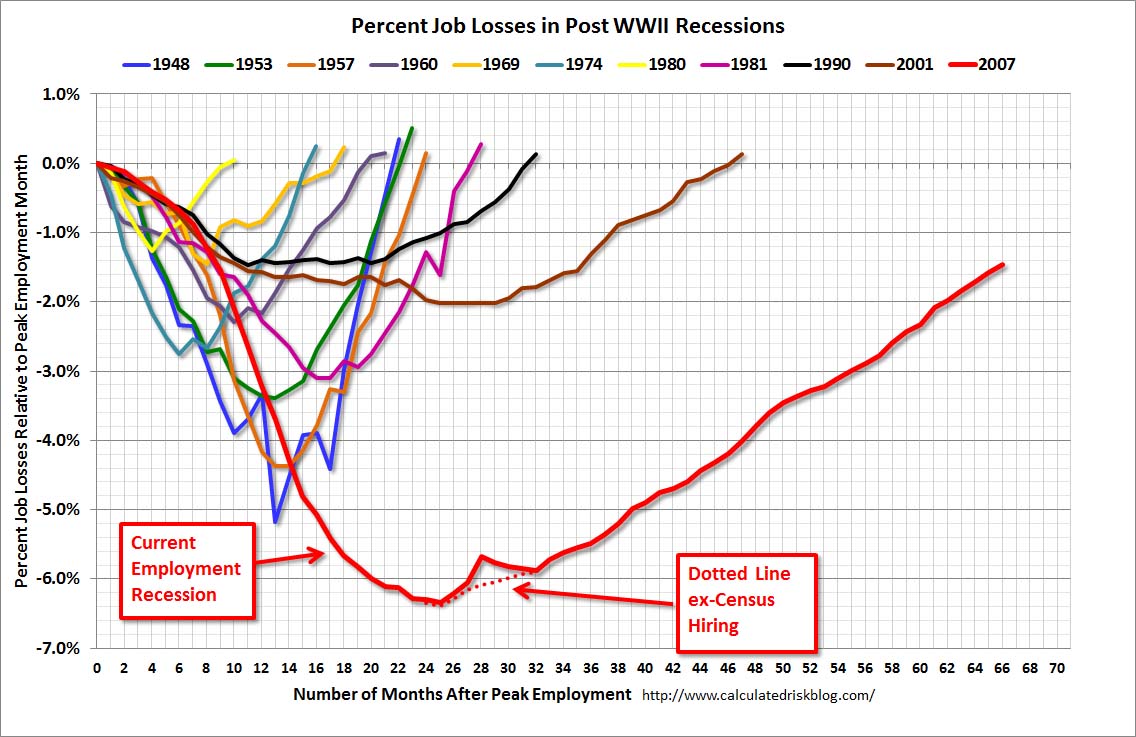
Though private employers added jobs for the 41st straight month, nonfarm payroll employment remains lower than at the December 2007 start of the recession (see chart) — and well below what’s required for full employment. The unemployment rate fell to 7.4 percent, but as Federal Reserve Chairman Ben Bernanke stated recently, the current unemployment rate “overstates the health of our labor markets.” In particular, the share of the population with a job remains stuck near levels at the depth of the recession.
Yes, the economy has been growing, but not fast enough to generate a robust jobs recovery that not only puts job seekers back to work more quickly but also convinces more people who would like a job to look for one.
The best news in the report may be for teachers, who lost tens of thousands of jobs over the course of the economic downturn. Today’s report indicates that local governments hired over 10,000 people in the education sector, offsetting 4,000 other local government job losses. Together, local government gains offset modest losses at the state (-3,000) and federal (-1,000) levels. Perhaps the worst news, though, is that hourly earnings fell — slightly. Down 0.1 percent.
The report weakens the case that the Federal Reserve should begin tapering the support its been providing to the economy for several months — but the top line drop in unemployment rate significantly masks that fact.
A lot of professional forecasters who’d been looking at other aspects of the data anticipated a better number than this. And perhaps they’ll be vindicated when revisions are in. These numbers really do move quite a bit as more information becomes available. But, of course surprises, on the downside are possible as well as surprises on the upside. The fact that this happens is a reminder of how insane it is that we’ve had months of speculation about when the Federal Reserve is going to start “tapering” its quantitative easing bond purchases.
Bill McBride refers to the above chart:
This shows the depth of the recent employment recession – worse than any other post-war recession – and the relatively slow recovery due to the lingering effects of the housing bust and financial crisis.
He follows up with a comprehensive review of the new report here.
Welcome to poverty-ridden Venezuela’s Tower of David. Squatters took over this very unfinished 45-story skyscraper in the early 1990s, and they’ve been there ever since. The tower was originally intended to be a symbol of Caracas’ bright financial future, complete with a rooftop helipad, but construction stopped because of a banking crisis and the sudden death of the tower’s namesake, David Brillembourg.
We sometimes think a dystopian future is terrifying without fully absorbing how so many already live in it.
Nate Cohn sees signs that “the next Republican nominee is screwed”:
[A] new Pew Research survey suggests that Republican presidential candidates won’t find it easy to move toward the center. The poll shows that Republicans recognize the need for change—with 59 percent even suggesting they need to change on the issues. But when it comes to the specifics, most Republicans support maintaining the party’s current positions or even moving further to the right. When asked about the party’s current stance on gay marriage, immigration, government spending, abortion, and guns, at least 60 percent of Republicans said they thought the party was about right or too moderate.
Desire for change was greatest, if still very limited, on cultural conservative issues. On gay marriage, 31 percent of Republicans said they wanted the party to moderate. But 27 percent thought the party wasn’t conservative enough (do they want a return to sodomy laws?) and another 33 percent were satisfied with the party’s current stance. … On immigration, where the party’s current position is potentially less clear to voters, the Republican rank-and-file isn’t itching to get behind a compromise. 17 percent support moving to the left on immigration, compared to 36 percent who want the party to get more conservative.
In a later post, on why Rubio’s 2016 chances are “alive and well” despite his stumbles on immigration, Cohn outlines the kind of Republican that wins nominations:
Yeah, you’d rather be a Tea Party candidate than a dreaded moderate, but the optimum Republican presidential candidate is a mainline conservative—someone who’s conservative enough for the Tea Party, doesn’t scare away the establishment, and doesn’t alienate either the religious or business wing of the party. From there, the candidate either needs to build a critical mass of support within the party (the so-called invisible primary), or go out on the ground and convince voters in Iowa or New Hampshire (while hoping that no other candidate wins the invisible primary). …
[F]or the moment, there isn’t another prominent, active Republican candidate with broad appeal throughout the party. For now, Chris Christie, Rand Paul, and Ted Cruz are best positioned to run as factional candidates. Perhaps one or all will broaden their appeal, especially Christie. They have time, but it hasn’t happened yet. Jeb Bush or Paul Ryan would have broad appeal, but it’s unclear whether they’ll run. Bobby Jindal, John Thune, Scott Walker, and Rob Portman could all run mainline campaigns, but they won’t win the invisible primary and their national electoral appeal is unproven, even compared to Rubio.
A quick review of those Pew numbers on the likely candidates:
Paul Ryan led in favorability among all Republicans, with a 65% favorable rating. Eighty-one percent of Tea Partiers gave that response. Rand Paul was 10 points behind Ryan in favorability among all Republicans. Seventy percent of Tea Party Republicans liked him. Marco Rubio had a 50% favorable rating among all Republicans and Chris Christie a 47% rating. Tea Party Republicans were much higher on Rubio (59%) than they were on Christie (47%). At this point, 53% of Republicans had no opinion of Ted Cruz. Of those who had an opinion, 33% had a favorable view of him and 13% an unfavorable view.
In today’s video, Fred explains how his Catholic upbringing and subsequent atheism influenced the ideas in his novel Christian Nation:
Frederic Rich is an American lawyer, environmentalist and author. His new book, Christian Nation, is a work of speculative fiction imagining what would have happened if McCain had won the 2008 election and subsequently died, making she-who-will-not-be-named the president and putting America on the path to theocracy. His previous Ask Anything answers are here. Our full AA archive is here.



 The Dish