Harmony Huskinson highlights the work of John Delaney, the Natural Gallery of Art’s senior imaging scientist who uses a special camera to “reveal not just what’s under the paint, but also what is happening at each layer of paint that lies under the surface” of famed works of art. One example of how he deploys the technology:
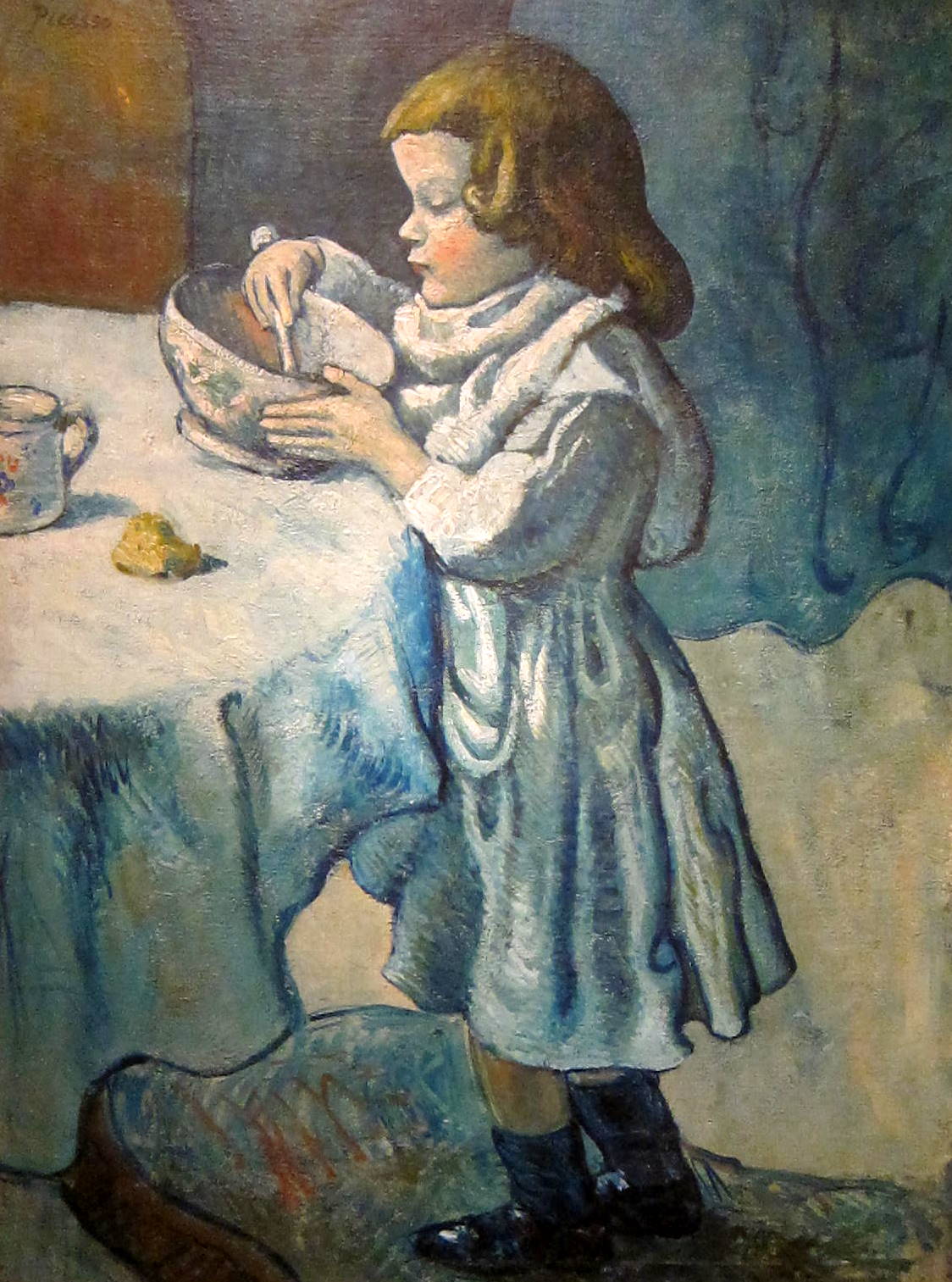
One of Picasso’s most distinctive pieces from his Blue Period, “Le Gourmet,” depicts a child
scraping his bowl for the last morsels of food. But underneath the azures and cobalts on the canvas, there’s a hidden portrait—of a veiled woman gazing serenely out into the distance. This hidden portrait, which Picasso worked on before his Blue Period, uses bolder dabs of white paint and may contain other unknown pigments.
The ability to view early sketches and paintings hidden underneath the surface has been around for decades, thanks to infrared reflectography, which was used to uncover the veiled woman at the National Gallery in the mid-1990s.
But Delaney’s technology goes far beyond seeing a concealed drawing. His infrared imaging method takes pictures of Picasso’s mysterious woman at a range of infrared exposures. Delaney then turns these images into a flipbook of sorts, allowing viewers to see the little boy fading as the woman emerges from the canvas.
To see the portrait hidden beneath “Le Gourmet,” go here.
(Picasso’s “Le Gourmet,” 1910, via Wikimedia Commons)
 The Dish
