Kenan Malik recognizes the political rise of Pablo Neruda:
Gabriel García Márquez once called Neruda ‘the greatest poet of the 20th century in any language’, though as New York Times Book Review critic Selden
Rodman observed after the poet’s death ‘No writer of world renown is perhaps so little known to North Americans’, or indeed to the wider Anglophone world. … Neruda’s friendship with [Spanish poet Federico García] Lorca, and Lorca’s execution by Franco’s nationalists, drew him into the Spanish Civil War (he was at that time in Spain as a consul for the Chilean Government). The civil war, and his involvement, transformed both his poetry and his politics. In 1937 he published from the frontline España en el Corazon (‘Spain in our Hearts’), an angry, polemical collection, very different to Veinte poemas de amor y una canción desesperada. Neruda joined the Communist Party and, on returning to Chile, was elected to the Senate. In 1971, he ran for the presidency on a Communist ticket, though he withdrew his nomination after reaching an accord with Salvador Allende, the socialist candidate. Neruda’s attachment to Stalinism cannot easily be brushed away. But his fierce political commitment, and his extraordinary poetic sensibility, are both to be celebrated.
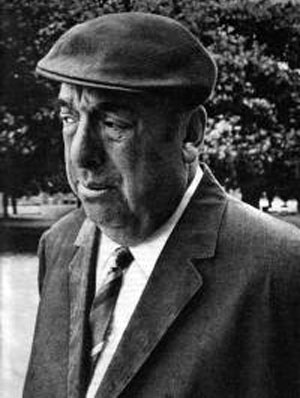
Previous Dish on Neruda’s poems here and here. Our 115th window contest featured Neruda’s former home in Valparaiso, Chile.
(Hat tip: 3QD. Photo via Wikimedia Commons)
 The Dish
